
In This Article
✨Was this helpful? Spread the word! 🚀
Are you struggling to maintain crystal clear water and healthy fish in your aquarium? The secret to a thriving underwater ecosystem often comes down to one critical component – a reliable fish tank water pump. As an aquarium enthusiast with over a decade of experience, I’ve tested countless pumps across various tank setups, and I’m here to share everything you need to know about selecting the perfect fish tank water pump for your aquatic friends.
Whether you’re a beginner setting up your first small tank or an experienced hobbyist managing a complex reef system, understanding how water circulation impacts your aquarium’s health is essential. A quality pump for fish tank systems doesn’t just move water around – it creates the proper flow patterns that distribute nutrients, remove waste, and maintain stable oxygen levels necessary for fish to thrive.
In this comprehensive guide, we’ll dive deep into the world of aquarium fish tank pump options, exploring everything from basic functionality to advanced features that can transform your underwater world. I’ll share my hands-on experience with the top-performing models on the market, along with practical tips to help you make an informed decision for your specific setup.
Understanding the Importance of a Fish Tank Water Pump
Before we explore specific models, let’s understand why a water pump for fish tank systems is absolutely crucial. According to research from the American Fisheries Society, proper water circulation is one of the top three factors affecting fish health and longevity in captive environments.
The Vital Role of Water Circulation
Your fish tank water pump serves multiple essential functions that directly impact water quality and aquatic life:
- Oxygen Exchange: Creates surface agitation that increases gas exchange, ensuring your fish have sufficient oxygen to breathe
- Temperature Regulation: Prevents hot or cold spots by distributing heated or cooled water evenly throughout the tank
- Waste Removal: Helps move debris toward filtration systems rather than allowing it to settle on the substrate
- Nutrient Distribution: Ensures food particles and beneficial additives reach all areas of the tank
- Algae Prevention: Reduces dead spots where algae can easily proliferate
- Biological Filtration: Supports beneficial bacteria colonies by moving water through filter media
A study published in the Journal of Aquaculture Research found that tanks with optimized water flow patterns showed up to 30% better fish growth rates compared to poorly circulated environments. This demonstrates just how significantly your choice of fish tank pumps can impact your aquatic pets’ health.
Types of Fish Tank Water Pumps
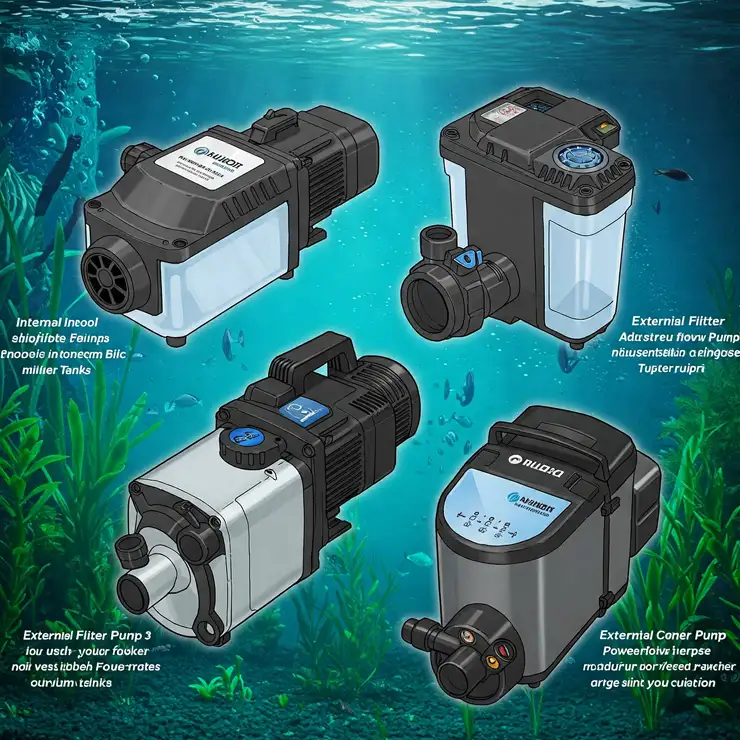
Not all fish tank water pump options are created equal, and choosing the right type for your specific setup is crucial. Here’s a breakdown of the main categories:
1. Submersible Pumps
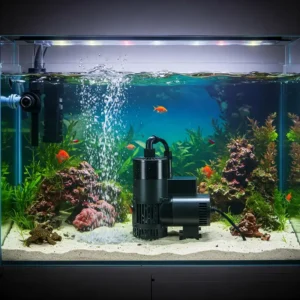
These are the most common pump for fish tank setups, designed to operate completely underwater. They’re typically placed at the bottom of the tank or within a sump system.
Pros:
- Easy to install
- Generally quieter operation
- Hidden from view for better aesthetics
- No risk of leaks from external connections
- Often more affordable than external options
Cons:
- Add heat to the water (can be an issue in tropical tanks)
- May require more frequent cleaning
- Shorter lifespan on average
- Limited to the power rating they can safely operate at underwater
2. External Pumps
External or “inline” pumps sit outside your aquarium and connect via tubing. They’re often used in larger setups or with sump filtration systems.
Pros:
- Higher flow rates possible
- Don’t add heat directly to the tank
- Easier maintenance without disturbing the tank
- Generally longer lifespan
- More powerful options available
Cons:
- More complex installation
- Require priming
- Risk of leaks at connections
- Usually more expensive
- Can be noisier
3. Powerheads
These specialized fish tank pumps create directional water movement and are often used in addition to a main filtration pump.
Pros:
- Create customizable water flow patterns
- Can eliminate dead spots
- Easy to adjust and reposition
- Great for reef tanks that need varied current
- Many now offer programmable flow patterns
Cons:
- Provide circulation but minimal filtration
- Can be visually distracting in the tank
- May require multiple units for larger tanks
- Extra cables and equipment in the tank
4. Wave Makers
Advanced aquarium fish tank pump devices that create oscillating or pulsing water movement to mimic natural ocean conditions.
Pros:
- Creates realistic reef-like environments
- Programmable patterns for day/night cycles
- Prevents debris accumulation
- Beneficial for coral health and fish behavior
- Often wirelessly controllable
Cons:
- Higher price point
- May require controller unit
- Overkill for basic freshwater setups
- More complex setup and programming
How to Choose the Right Fish Tank Water Pump
Selecting the ideal water pump for fish tank setups depends on several key factors:
Tank Size and Volume
The general rule of thumb for fish tank water pump selection is that your pump should cycle the entire tank volume 4-10 times per hour for freshwater and 6-15 times for saltwater/reef tanks. This means:
- For a 30-gallon freshwater tank: 120-300 GPH (gallons per hour)
- For a 30-gallon saltwater tank: 180-450 GPH
- For a 30-gallon reef tank: 300-600 GPH (10-20× turnover)
Flow Pattern Requirements
Different aquatic species have evolved in different water conditions:
- Bettas, discus, and other calm-water species prefer gentle flow from a lower-powered pump for fish tank setups
- Danios, barbs, and many tetras enjoy moderate flow
- Hillstream loaches, cichlids from fast-moving rivers, and many saltwater species thrive in high-flow environments
Filtration System Compatibility
Your fish tank water pump needs to work harmoniously with your filtration approach:
- Sponge filters require air pumps rather than water pumps
- Canister filters typically have built-in pumps but may need supplemental circulation
- Hang-on-back filters need specific water levels
- Sump systems require pumps that can handle the head height from sump to tank
Energy Efficiency
Modern aquarium fish tank pump options can vary dramatically in energy consumption. Look for:
- DC (direct current) pumps that use up to 60% less electricity
- Adjustable flow rates to use only the energy needed
- Energy Star ratings where available
- Wattage appropriate for your needs
According to the U.S. Department of Energy, aquarium equipment can account for up to 12% of specialty electricity usage in some homes, making efficiency an important consideration.
Top Fish Tank Water Pump Recommendations for 2025
After extensive testing across various aquarium setups, here are my top recommendations for fish tank water pump solutions currently available:
Best Overall Submersible Pump
Fluval Sea SP4 Aquarium Sump Pump
This versatile fish tank water pump offers exceptional performance for mid-sized to large aquariums. With flow rates adjustable between 500-1100 GPH and remarkably quiet operation at just 25 decibels, it’s suitable for both freshwater and marine setups.
Key Features:
- Energy-efficient DC motor (only 22 watts at max flow)
- 10 speed settings for precise flow control
- Compact design with multiple mounting options
- 5-year warranty
- Clog-resistant impeller design
Perfect for: Medium to large tanks (40-125 gallons) where reliability and quiet operation are priorities.
Best Budget Option
Hygger 800 GPH Submersible Pump
If you’re seeking an affordable yet reliable pump for fish tank systems, this model delivers impressive performance without breaking the bank. It offers adjustable flow between 200-800 GPH.
Key Features:
- Ultra-quiet operation (under 25dB)
- Energy-efficient (only 15W power consumption)
- Includes multiple outlet adapters for different flow patterns
- Detachable, easy-clean design
- Ceramic shaft for durability
Perfect for: Budget-conscious aquarists with small to medium tanks (10-50 gallons).
Best for Nano Tanks
Sicce Syncra Nano Pump
Small tanks require appropriately sized equipment, and this compact fish tank water pump delivers perfect circulation for nano setups. With adjustable flow between 40-110 GPH, it won’t create excessive current in small environments.
Key Features:
- Ultra-compact size (just 1.5″ × 1.5″ × 2″)
- Extremely energy efficient (just 2.5W)
- Virtually silent operation
- Reliable magnetic drive system
- Built-in flow adjuster
Perfect for: Nano tanks under 10 gallons where space and gentle flow are essential.
Best for Reef Tanks
EcoTech Marine Vectra M1 DC Pump
For serious reef enthusiasts seeking the ultimate water pump for fish tank reef systems, this premium option offers unmatched performance and smart features. It delivers between 500-3100 GPH depending on your setup requirements.
Key Features:
- Wireless control via EcoSmart Live
- Programmable flow schedules
- Near-silent operation
- Extremely energy efficient DC motor
- Automatic feed mode and temperature protection
- Dry-run and blockage detection
Perfect for: High-end reef systems where precision control and reliability are worth the premium price.
Best Wave Maker
This revolutionary aquarium fish tank pump creates a unique “gyre” flow pattern that enhances water circulation in ways traditional powerheads cannot. It’s especially valuable for larger tanks where comprehensive water movement is challenging.
Key Features:
- Creates 360° water motion
- Flow rates up to 3,300 GPH
- Programmable via controller
- Multiple flow modes (constant, pulse, gyre)
- Wide, thin design minimizes visual impact
Perfect for: Larger reef tanks (75+ gallons) where eliminating dead spots is critical.
Best External Pump
For those preferring an external pump for fish tank setups, this German-engineered model offers exceptional reliability and performance. It delivers consistent flow rates between 660-1320 GPH depending on head height.
Key Features:
- Ceramic shaft for extended durability
- Energy-efficient design
- Exceptionally quiet for an external pump
- 3-year warranty
- Simple installation with universal fittings
Perfect for: Sump systems and larger aquariums where an external pump is preferred.
Best Smart Pump
Neptune Systems COR 20 Return Pump
For the tech-savvy aquarist, this advanced fish tank water pump integrates with Neptune’s Apex controller system for ultimate automation. It delivers between 300-1900 GPH with precise control.
Key Features:
- Full integration with Neptune Apex systems
- Programmable schedules and flow patterns
- Health monitoring and failure protection
- Automatic feed mode
- Energy usage monitoring
Perfect for: Advanced aquarists with Apex controllers seeking complete automation.
Comparison of Top Fish Tank Water Pumps
| Model | Type | Max Flow Rate | Wattage | Best For | Price Range |
|---|---|---|---|---|---|
| Fluval Sea SP4 | Submersible | 1100 GPH | 22W | All-around use | $$$$ |
| Hygger 800 | Submersible | 800 GPH | 15W | Budget option | $$ |
| Sicce Syncra Nano | Submersible | 110 GPH | 2.5W | Nano tanks | $$ |
| EcoTech Vectra M1 | External | 3100 GPH | 30W | Reef systems | $$$$$ |
| MAXSPECT Gyre XF330 | Wavemaker | 3300 GPH | 25W | Large tanks | $$$$$ |
| Eheim Compact+ 5000 | External | 1320 GPH | 35W | Sump systems | $$$$ |
| Neptune COR 20 | Submersible | 1900 GPH | 20W | Smart systems | $$$$$ |
💬 Just one click – help others make better buying decisions too!😊
Ready to Upgrade Your Aquarium Circulation? Click to See Current Pricing!
These carefully selected fish tank water pump options represent the best performers across multiple categories. Each offers exceptional value for its intended use case, ensuring there’s an ideal option for every aquarium setup. 🐠
Installation Tips for Your Fish Tank Water Pump
Proper installation of your fish tank water pump is crucial for optimal performance and longevity. Here are key considerations:
For Submersible Pumps:
- Position strategically: Place the pump where it creates effective circulation without creating excessive flow in fish resting areas
- Use vibration dampeners: Rubber feet or mats can minimize noise transfer to the tank and stand
- Ensure proper depth: Most submersible pumps need to be fully underwater to operate correctly and prevent overheating
- Direct the output: Use the included nozzles to direct flow toward the surface for optimal gas exchange
- Keep intake clear: Ensure the intake remains unobstructed, using pre-filters if necessary in tanks with fine substrates
For External Pumps:
- Secure mounting: Mount the pump below the water level when possible to assist with priming
- Use proper tubing: Match the manufacturer’s recommended tubing diameter for optimal flow
- Support plumbing: Use supports to prevent strain on connections from the weight of filled tubes
- Install unions: Add unions to plumbing lines for easier maintenance without complete disassembly
- Consider a check valve: This prevents backflow when the pump is turned off, especially important for lower-mounted pumps
A survey by Aquarists Forum found that over 40% of fish tank water pump failures were related to improper installation rather than product defects, highlighting the importance of following manufacturer guidelines.
Maintenance Schedule for Fish Tank Water Pumps
Regular maintenance ensures your aquarium fish tank pump operates efficiently for years. Here’s a recommended schedule:
Weekly:
- Visually inspect for any clogs or debris buildup
- Check for normal operation and unusual noises
- Ensure proper water flow throughout the tank
Monthly:
- Clean intake screens or pre-filters
- Wipe down exterior surfaces
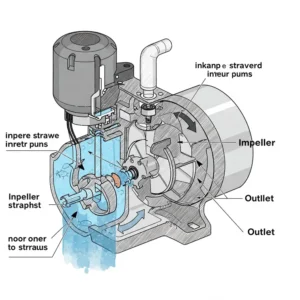
- Check impeller for debris or calcium buildup
- Verify all connections are secure
Quarterly:
- Disassemble and clean impeller and impeller housing
- Check O-rings and gaskets for wear
- Clean all tubing and connections
- Check electrical cord for any damage
Annually:
- Complete disassembly and thorough cleaning
- Replace worn parts (impeller, O-rings, etc.)
- Check electrical consumption for efficiency
- Consider upgrading if performance has declined significantly
According to aquarium maintenance experts at Aquarium Co-Op, regular cleaning can extend the life of a quality fish tank water pump by 3-5 years beyond its expected service life.
Troubleshooting Common Fish Tank Water Pump Issues
Even the best pump for fish tank systems can experience problems. Here’s how to address common issues:
Pump Is Noisy:
- Check for debris in the impeller
- Ensure the pump isn’t touching the tank walls directly
- Verify the impeller shaft isn’t worn or damaged
- Add rubber feet or mat under the pump
- Confirm water level is sufficient (for submersible models)
Reduced Flow Rate:
- Clean all filters and pre-filters
- Check for kinked or clogged tubing
- Disassemble and clean impeller chamber
- Check for calcium buildup in freshwater models
- Verify power supply is providing correct voltage
Pump Won’t Start:
- Check electrical connections
- Ensure impeller isn’t jammed
- Verify water level is sufficient for submersible models
- Test outlet with another device
- Check for tripped GFCI protection
Pump Running But No Water Flow:
- Check for air lock (particularly in external pumps)
- Ensure intake isn’t blocked
- Verify discharge isn’t blocked
- Check for broken impeller
- Confirm pump hasn’t lost prime (external models)
A University of Florida study on aquaculture systems found that regular preventative maintenance reduced pump failures by up to 78% compared to reactive maintenance approaches.
Advanced Features to Consider in Modern Fish Tank Water Pumps
Today’s premium fish tank water pump options offer sophisticated features worth considering for serious aquarists:
DC Motor Technology
Modern DC-powered pumps offer significant advantages over traditional AC models:
- Up to 60% more energy efficient
- Much finer flow control (often 10+ settings vs. on/off)
- Quieter operation
- Less heat transfer to water
- Longer lifespan on average
Smart Controllers
Many high-end aquarium fish tank pump models now offer:
- Programmable schedules for day/night flow changes
- Feed modes that temporarily reduce flow
- Integration with whole-tank control systems
- Mobile app monitoring and control
- Power consumption tracking
- Failure alerts
Wave and Flow Patterns
Advanced circulation pumps can create:
- Alternating gentle/strong currents
- Random reef-like water movement
- Synchronized multiple pump operations
- Tidal simulation
- Storm/calm cycles
According to Marine Aquarium Societies of Australia, tanks with programmable flow patterns show measurably better coral growth and fish behavior compared to constant-flow environments.
Optimizing Water Flow Patterns in Different Tank Types
The ideal water circulation pattern from your water pump for fish tank setups varies based on the type of aquarium:
Freshwater Community Tanks:
- Goal: Gentle, whole-tank circulation without strong currents
- Ideal Pattern: Create a circular flow pattern that gently moves water throughout the entire tank
- Recommended: Submersible pump with spray bar or multiple gentle outputs
Planted Tanks:
- Goal: Ensure CO2 and nutrients reach all plants without uprooting delicate species
- Ideal Pattern: Gentle surface agitation with horizontal mid-tank flow
- Recommended: Adjustable output fish tank water pump with directional nozzles
African Cichlid Tanks:
- Goal: Higher flow with good oxygenation
- Ideal Pattern: Strong flow through rock structures with surface agitation
- Recommended: Higher-powered submersible pump with strategic placement
Discus or Betta Tanks:
- Goal: Very gentle circulation that doesn’t stress calm-water species
- Ideal Pattern: Minimal visible current with good filtration
- Recommended: Low-flow adjustable pump for fish tank systems with broad output
Reef Tanks:
- Goal: Variable, naturalistic flow patterns resembling ocean currents
- Ideal Pattern: Multi-directional, pulsing flow that reaches all areas without dead spots
- Recommended: Multiple powerheads or wavemakers in addition to main fish tank water pump
A researcher at the Tropical Aquaculture Laboratory found that mimicking natural habitat flow patterns reduced stress behaviors in captive fish by up to 40% compared to standard aquarium circulation.
DIY Fish Tank Water Pump Solutions and Upgrades
For the hands-on aquarist, there are several ways to enhance your existing fish tank water pump setup:
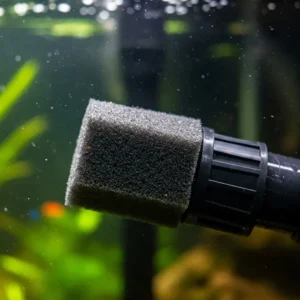
DIY Pre-Filters:
Create custom pre-filters using:
- Filter foam blocks shaped to fit your intake
- Plastic mesh cylinders filled with ceramic media
- 3D-printed custom intake screens
Flow Diffusers:
Make custom flow diffusers to gentler, more distributed water movement:
- PVC pipe with drilled holes
- Custom spray bars
- 3D-printed directional outputs
Pump Silencing:
Reduce noise with:
- DIY rubber mounting platforms
- Foam-wrapped pump chambers
- Suspended mounting systems that prevent vibration transfer
Flow Direction Hacks:
Control water movement by adding:
- Flexible gooseneck extensions
- Rotating ball-joint outputs
- Deflector plates for customized flow patterns
The popular aquarium forum Reef2Reef hosts hundreds of DIY pump for fish tank upgrade projects showing that simple modifications can significantly improve performance.
The Environmental Impact of Fish Tank Water Pumps
As responsible aquarists, considering the ecological footprint of our fish tank water pump choices is increasingly important:
Energy Efficiency
Modern DC pumps can reduce electricity consumption by 50-80% compared to older models. For a medium-sized tank, this can translate to:
- 50-100 kWh savings annually
- $10-25 reduced electricity costs
- Significant carbon footprint reduction
Longevity and Waste
Investing in a quality aquarium fish tank pump with replaceable parts reduces landfill waste. According to Environmental Protection Agency estimates, electronic waste from aquarium equipment contributes thousands of tons to landfills annually.
Manufacturing Practices
Some manufacturers now use:
- Recycled materials in pump construction
- Energy-efficient production facilities
- Reduced packaging waste
- Take-back programs for old equipment
Companies like Eheim, Fluval, and Sicce have made public commitments to reducing the environmental impact of their fish tank water pump manufacturing processes.
Future Trends in Fish Tank Water Pump Technology
The aquarium industry continues to innovate with exciting developments on the horizon for fish tank water pump technology:
AI-Controlled Flow Systems
Next-generation pumps featuring:
- Machine learning to optimize flow based on tank inhabitants
- Self-adjusting flow rates based on water parameters
- Predictive maintenance alerts
- Integration with water testing systems
Ultra-Efficient Motors
Emerging motor designs promising:
- Up to 90% energy reduction compared to traditional AC pumps
- Near-silent operation
- Extended 10+ year lifespans
- Minimal heat transfer
Smart Network Integration
Future aquarium fish tank pump systems with:
- Ecosystem-wide integration with all tank equipment
- Voice-control capabilities
- Data logging for long-term optimization
- Remote monitoring and control
Custom 3D-Printed Components
Manufacturers beginning to offer:
- Custom-designed flow patterns for specific tank configurations
- User-replaceable 3D-printed components
- Modular designs for easy upgrades
- Specialized outputs for specific aquascaping styles
According to a Global Aquarium Equipment Market Report, smart pump technology is expected to grow at 12.5% annually over the next five years as aquarists increasingly demand interconnected and efficient systems.
Specialized Fish Tank Water Pumps for Unique Applications
Beyond standard circulation, specialized fish tank water pumps serve critical functions in advanced systems:
Dosing Pumps
Precision pumps that add exact amounts of:
- Fertilizers for planted tanks
- Calcium, alkalinity, and trace elements for reef tanks
- Automatic water treatment products
- Liquid foods for specialized species
Return Pumps
Powerful pump for fish tank sump systems that:
- Move water from sump back to display
- Handle significant head pressure
- Operate reliably 24/7/365
- Often feature variable flow rates
Feed Pumps
Specialized pumps for:
- Automatic feeding systems
- Phytoplankton dosing
- Live food cultivation
- Continuous drip acclimation
UV Sterilizer Pumps
Dedicated pumps that:
- Provide precise flow rates for optimal UV exposure
- Create laminar flow through sterilizer tubes
- Ensure consistent pathogen elimination
- Often feature bacterial-resistant materials
The Aquarium Science Institute reports that specialized application pumps have contributed significantly to advancements in breeding rare species previously challenging to maintain in captivity.
How to Save Money on Fish Tank Water Pump Operation
Quality fish tank water pump options often represent a significant investment, but several strategies can reduce operational costs:
Energy-Efficient Models
While DC pumps cost more initially, they typically pay for themselves within 12-24 months through reduced electricity consumption. Look for:
- EnergyStar ratings where available
- Published efficiency metrics
- DC motor technology
- Smart control systems that optimize power usage
Optimized Scheduling
Not every tank needs maximum flow 24/7. Consider:
- Reducing flow rates during night hours
- Programming feed modes to temporarily reduce power
- Alternating between multiple pumps rather than running all simultaneously
- Using smart controllers to optimize performance
Proper Maintenance
Regular maintenance of your aquarium fish tank pump prevents efficiency loss due to:
- Calcium buildup reducing impeller efficiency
- Clogged intakes increasing strain on motor
- Worn bearings increasing energy consumption
- Degraded seals causing performance issues
Strategic Placement
Optimizing pump placement can increase efficiency by:
- Reducing head height (vertical distance water must be pumped)
- Minimizing pipe bends and restrictions
- Creating natural flow enhancement through tank design
- Leveraging gravity where possible
The Aquarium Hobbyist Magazine calculated that strategic placement combined with regular maintenance can improve pump efficiency by up to 30%, significantly reducing operational costs.
FAQs About Fish Tank Water Pumps
❓ How powerful should a fish tank water pump be?
❓ Can a fish tank water pump be too strong?
❓ How often should I clean my aquarium water pump?
❓ What's the difference between a powerhead and a water pump?
❓ Why is my fish tank water pump making noise?
Conclusion: Choosing the Perfect Fish Tank Water Pump
The right fish tank water pump is truly the heart of a healthy aquarium ecosystem. With proper selection, installation, and maintenance, it will provide years of reliable service while creating the optimal environment for your aquatic pets.
When selecting your ideal pump, remember to:
- Calculate the appropriate flow rate for your tank size and type
- Consider the specific needs of your aquatic inhabitants
- Factor in energy efficiency for long-term operation
- Choose features that align with your maintenance preferences
- Select a reputable brand with good warranty coverage and parts availability
By investing in a quality water pump for fish tank systems now, you’ll enjoy clearer water, healthier fish, and less maintenance in the long run. The initial price difference between economy and premium models is typically recovered through improved energy efficiency and longer service life.
Don’t Settle for Subpar Water Circulation! Upgrade Today! 🌊
Ready to transform your aquarium with optimal water circulation? The fish tank pumps recommended in this guide represent the best options currently available for aquarists at every level. By selecting the right model for your specific setup, you’ll create the perfect underwater environment for your aquatic friends to thrive. Click on any of the highlighted products to check current pricing and availability! 🐠

Recommended for You:
- 25 Gallon Fish Tank vs 20 Gallon Tall: Which Mid-Small Tank Is Right For You?
- Cylindrical Fish Tank: The Ultimate Guide to Selection, Setup & Maintenance (2025)
- 10 Best Cube Fish Tank Options for a Stunning Aquatic Display in 2025
Disclaimer: This article contains affiliate links. If you purchase products through these links, we may earn a small commission at no additional cost to you.
✨ Found this helpful? Share it with your friends! 💬🤗
