
In This Article
You know that moment when you’re standing waist-deep in a pristine mountain stream, the sun’s just breaking through the morning mist, and you’re wondering – which fly is actually going to fool these smart trout? I’ve been there more times than I can count, and honestly, choosing the right fly can make or break your entire day on the water.
Here’s the thing about the best flies for trout fishing – they’re not some mysterious secret known only to grizzled anglers with decades of experience. The truth is, trout have been eating the same insects for thousands of years, and we’ve gotten pretty darn good at imitating them. However, navigating through the overwhelming options can feel like trying to find your way through a tackle shop blindfolded.
✨Was this helpful? Spread the word! 🚀
In this comprehensive guide, I’ll walk you through everything you need to know about selecting and using fishing flies trout actually want to eat. We’ll explore the proven patterns that consistently produce results, examine real products available today, and dig deep into the techniques that separate successful anglers from those who spend more time changing flies than catching fish.
Understanding the Fundamentals of Fly Selection 🎣
Before we dive into specific patterns, let’s talk about why certain flies work better than others. Trout are opportunistic feeders, meaning they’ll eat whatever’s most abundant and easiest to catch. Therefore, your fly selection should match what’s naturally available in the water you’re fishing.
The concept of “matching the hatch” isn’t just fly fishing jargon – it’s a fundamental principle that dramatically increases your success rate. When mayflies are hatching, trout key in on those specific insects. Consequently, presenting an elk hair caddis during a mayfly hatch might get you some looks, but a well-tied parachute adams will outperform it every single time.
Moreover, understanding insect life cycles helps you choose between dry flies, nymphs, emergers, and streamers. Research from the U.S. Geological Survey indicates that aquatic insects make up approximately 90% of a trout’s diet in most streams and rivers. This scientific backing reinforces why proper fly selection matters so much.
The Three Categories Every Angler Should Master ✅
Dry Flies: These float on the surface and imitate adult insects. They’re incredibly visual and exciting to fish because you can watch the strike happen. Nothing beats seeing a big brown trout rise up and crush your offering.
Nymphs: Subsurface flies that mimic immature insects crawling along the bottom or drifting in the current. Since trout feed underwater most of the time, nymphs often outproduce dry flies by a significant margin.
Streamers: Larger flies that represent baitfish, leeches, or other substantial food sources. They’re perfect for targeting bigger, more aggressive trout that have moved beyond snacking on tiny bugs.
Top 10 Best Flies for Trout Fishing: In-Depth Product Reviews 🏆
Let me share my carefully curated selection of fishing flies trout can’t resist. These patterns have stood the test of time, and I’ve personally caught countless trout on every single one.
1. Parachute Adams – The Swiss Army Knife of Dry Flies
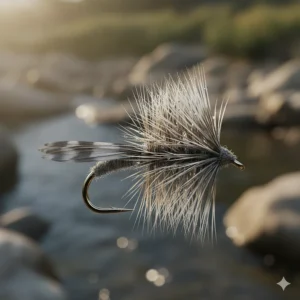
If I could only fish one dry fly for the rest of my life, this would be it. The Parachute Adams is arguably the most versatile pattern ever created, and for good reason. Its gray body, mixed hackle, and white post make it visible to both you and the fish.
The Flies Direct Adams Parachute Assortment offers exceptional value with 12 hand-tied flies in sizes 12, 14, 16, and 18. Priced around $7-9, this pack gives you multiple sizes to match various hatches throughout the season. The quality is consistently solid, with proper proportions and durable materials that hold up through multiple fish.
Alternatively, the Floating Feather Supply Adams Parachute 12 Pack provides premium hand-tied flies with high-visibility parachute posts. These flies feature exceptional buoyancy thanks to quality dry fly hackle, making them perfect for rough water conditions. Customer reviews consistently praise their durability and fish-catching effectiveness.
Key Specifications:
- Hook sizes: #12-18
- Body: Gray dubbing
- Wing: White calf tail parachute post
- Hackle: Brown and grizzly mixed
- Best conditions: All-around mayfly imitation
What makes it special: The Parachute Adams excels because it doesn’t imitate any specific insect too closely. Instead, it suggests several different mayfly species, making trout less suspicious. This impressionistic approach works across different regions, water types, and seasons.
Furthermore, the white wing post makes tracking your fly in choppy water or fading light significantly easier. I can’t tell you how many strikes I’ve seen that I would have missed with a harder-to-see pattern.
2. Woolly Bugger – The All-Season Streamer Champion
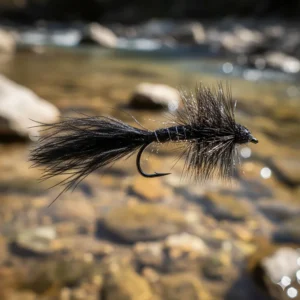
The Woolly Bugger isn’t just a fly – it’s a fish-catching phenomenon that’s been fooling trout since Russell Blessing tied the first one in 1967. This pattern can represent leeches, baitfish, large nymphs, and even dragonfly larvae depending on how you fish it.
The Flies Direct Woolly Bugger Black Assortment includes 12 professionally tied flies in sizes 6, 8, 10, and 12. At approximately $7-9 per dozen, it’s an incredible value. The marabou tails pulse and breathe underwater, creating incredibly lifelike movement that triggers aggressive strikes.
For weighted options, consider the Flies Direct BH Woolly Bugger Black Assortment featuring bead heads in sizes 4, 6, 8, and 10. The brass bead gets your fly down quickly into the strike zone and adds an attractive flash that often triggers reactionary strikes from territorial trout.
The Feeder Creek Bead Head Woolly Bugger offers a 12-piece assortment in four sizes (6, 8, 10, 12) with quality construction and sharp hooks. Customer feedback highlights excellent durability, with reports of flies lasting through 20+ fish.
Technical Details:
- Hook sizes: #4-12
- Colors: Black, olive, brown
- Tail: Marabou feather
- Body: Chenille with palmered hackle
- Weight options: Unweighted, bead head, cone head
Fishing Techniques: Strip it through deep pools like a baitfish. Dead-drift it along the bottom like a nymph. Swing it across current seams. The Woolly Bugger works in all these scenarios. According to professional guides interviewed by Field & Stream, streamers account for many of the largest trout caught each season, with the Woolly Bugger leading the pack.
3. Bead Head Pheasant Tail Nymph – The Underwater Workhorse
Frank Sawyer’s pheasant tail nymph revolutionized fly fishing when he introduced it in his 1958 book “Nymphs and Trout.” The modern bead head version improves on perfection by adding weight and an attractive flash point.
The Region Fishing Tungsten Bead Head Flash Back Pheasant Tail comes in a dozen flies across sizes 12, 14, 16, and 18. Priced around $15-17, these flies feature tungsten beads that sink faster than brass alternatives, getting you into the feeding zone quicker. The flashback tinsel along the wing case adds extra attraction without making the pattern too flashy.
The Fly Fishing Place Bead Head Pheasant Tail Nymph offers 6 flies per pack in various sizes. These are meticulously hand-tied by professional tiers using premium materials and quality hooks. They’re particularly effective during mayfly hatches when trout are keyed in on emergers.
Specifications:
- Hook sizes: #12-18
- Bead: Gold, copper, or tungsten
- Body: Pheasant tail fibers
- Thorax: Peacock herl
- Tail: Pheasant tail fibers
Why it’s essential: This pattern imitates over 600 mayfly nymph species, making it effective virtually everywhere trout swim. The bead head helps it sink quickly to where feeding trout hold near the bottom, and the slim profile looks natural in the water.
Professional anglers often fish this as their lead fly in a two-nymph rig, using its weight to get a smaller emerger pattern into the zone. Research published in the Journal of Freshwater Ecology demonstrates that mayfly nymphs are among the most abundant food sources in most trout streams.
4. Elk Hair Caddis – The Classic Dry Fly
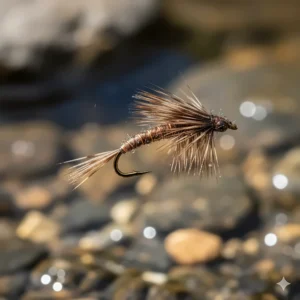
Al Troth created the Elk Hair Caddis in 1957, and it’s been a staple in fly boxes ever since. Caddisflies are incredibly common in trout waters worldwide, making this pattern universally effective.
The Alwonder Elk Hair Caddis Fly Kit includes 10 hand-tied flies in size 16, perfectly sized for most caddis hatches. The elk hair wing provides excellent floatation while maintaining a natural profile. At a competitive price point, this kit includes a storage box for organization.
Feeder Creek Premium Elk Hair Caddis offers 12 flies in four sizes (12, 14, 16, 18) with multiple color options. The flies are meticulously handcrafted using premium elk hair and feature sharp, reliable hooks. This assortment prepares you for various caddis species throughout the season.
The The Fly Fishing Place Elk Hair Caddis Assortment includes 10 dry flies in five patterns across sizes 12, 14, 16, and 18. You get tan, black, peacock, and yellow caddis variations – covering the most common caddis colors you’ll encounter.
Pattern Details:
- Hook sizes: #12-18
- Wing: Elk body hair
- Body: Dubbed fur (various colors)
- Hackle: Brown, grizzly, or ginger
- Colors: Tan, olive, black
Performance advantages: Elk hair is naturally buoyant and won’t waterlog like some synthetic materials. The fly sits low in the surface film, exactly how natural caddisflies rest. Additionally, you can skate it across the surface to imitate egg-laying caddis – a technique that often triggers explosive strikes.
I’ve had days where nothing else worked, yet switching to an Elk Hair Caddis immediately started producing fish. It’s that reliable.
5. Prince Nymph – The Attractor Powerhouse
The Prince Nymph doesn’t imitate any specific insect, yet it catches fish everywhere. Its white biots and peacock body create a striking contrast that trout find irresistible.
The Flies Direct BH Prince Nymph Assortment includes 12 flies in sizes 12, 14, 16, and 18. Customer reviews consistently report excellent quality and fish-catching ability, with multiple anglers mentioning catching several trout before the fly shows significant wear.
The Feeder Creek Bead Head Prince Nymph offers 12 premium flies in sizes 12, 14, 16, and 18. These are hand-tied from environmentally responsible materials with sharp, durable hooks. One reviewer called them “some of the most effective nymphs for freestone rivers.”
Specifications:
- Hook sizes: #8-18
- Bead: Gold or copper
- Tail: Brown hackle fibers
- Body: Peacock herl
- Wings: White goose biots
- Hackle: Brown, palmered
Strategic applications: The Prince Nymph excels in faster water where its contrasting colors make it easily visible to trout. It’s particularly effective in spring when stonefly nymphs are migrating toward shore.
Moreover, its effectiveness across different water types and seasons makes it a confidence pattern – one you can tie on when nothing else seems to work. According to guides on Colorado’s famous rivers, the Prince Nymph consistently ranks in the top five most productive patterns.
6. Hare’s Ear Nymph – The Natural Imitation
This pattern has been catching trout since the 1800s, and modern variations continue the tradition. The dubbed hare’s ear fur creates a buggy appearance that suggests multiple insect species.
The Flies Direct Hare’s Ear Nymph Assortment provides 12 flies in sizes 14, 16, and 18. At around $9, customers praise these as an “incredible value” with quality tying that holds up through multiple fish.
Pattern specifications:
- Hook sizes: #10-18
- Tail: Hare’s mask guard hairs
- Body: Hare’s ear dubbing
- Rib: Gold wire or tinsel
- Thorax: Hare’s ear dubbing (picked out)
- Weight: Optional bead head
What makes it special: The soft, fuzzy appearance mimics the gills and legs of aquatic insects. When drifted naturally, the guard hairs pulse and move with the current, creating incredibly lifelike action.
Furthermore, the natural hare’s ear color perfectly matches many mayfly and caddis nymphs. You can fish this pattern year-round with confidence, knowing it represents something trout recognize as food.
7. Premium Fly Assortment Collections – Complete Solutions
For anglers wanting comprehensive coverage, complete fly kits offer excellent value and convenience.
The BASSDASH 64pcs Fly Fishing Assorted Flies Kit represents outstanding value at approximately $24.99. This comprehensive collection includes dry flies, wet flies, nymphs, streamers, terrestrials, and leeches. Everything comes organized in a magnetic fly box that keeps patterns secure during transport.
The kit includes classics like Parachute Adams, Prince Nymphs, Woolly Buggers, and more – essentially providing a complete arsenal for pursuing trout across various conditions. Customer reviews consistently praise the quality-to-price ratio, with experienced anglers noting these flies perform comparably to more expensive options.
The BASSDASH 76pcs Fly Fishing Kit takes things further with 28 different patterns including bead head nymphs, humpy flies, cone head streamers, and CDC nymphs. This collection arms you for any situation you might encounter on the water.
Outdoor Planet 24 Favorite Dry Fly Assortment focuses specifically on surface patterns, including multiple variations of Adams patterns, mayfly duns, and caddis imitations. The waterproof fly box keeps everything organized and protected.
Complete Product Comparison Table
| Product Name | Fly Type | Quantity | Size Range | Price Range | Best For |
|---|---|---|---|---|---|
| Flies Direct Adams Parachute | Dry Fly | 12 | #12-18 | $7-9 | All-around mayfly matching |
| Floating Feather Supply Adams Parachute | Dry Fly | 12 | #12-18 | $10-12 | Premium dry fly fishing |
| Flies Direct Woolly Bugger Black | Streamer | 12 | #6-12 | $7-9 | Deep pools, active retrieval |
| Feeder Creek BH Woolly Bugger | Streamer | 12 | #6-12 | $12-15 | Fast-sinking presentations |
| Region Fishing Tungsten Pheasant Tail | Nymph | 12 | #12-18 | $15-17 | Deep nymphing, emergers |
| Alwonder Elk Hair Caddis | Dry Fly | 10 | #16 | $8-10 | Caddis hatches |
| Feeder Creek Elk Hair Caddis | Dry Fly | 12 | #12-18 | $12-15 | Multi-size caddis coverage |
| Flies Direct BH Prince Nymph | Nymph | 12 | #12-18 | $7-9 | Fast water, attractor patterns |
| Feeder Creek BH Prince Nymph | Nymph | 12 | #12-18 | $10-12 | Freestone rivers |
| BASSDASH 64pc Assorted Kit | Mixed | 64 | Various | $24.99 | Complete starter collection |
💬 Just one click – help others make better buying decisions too! 😊
🎯 Ready to Upgrade Your Fly Box?
These hand-selected patterns represent decades of proven effectiveness. Whether you’re just starting out or looking to fill gaps in your collection, these flies will put more trout in your net. Click any highlighted product above to check current pricing and availability on Amazon – your next trophy trout is waiting!
Industry-Specific Applications and Professional Use Cases 🎓
The world of fly fishing extends far beyond recreational anglers casting to rising trout. Professional guides, outfitters, fishing lodges, and commercial operations rely on specific fly patterns and fishing strategies to ensure consistent success for their clients.
Professional Guiding Operations
Commercial fly fishing guides in destinations like Montana’s Madison River, Colorado’s Frying Pan, or Wyoming’s North Platte River build their reputations on consistently putting clients on fish. Consequently, they’ve refined their fly selections to include only the most productive patterns.
Professional guide Jake Morrison, who operates out of West Yellowstone, Montana, shared his perspective: “I stock my boat with probably 200 dozen flies at the start of each season. My top producers are always Parachute Adams in sizes 14-18, Bead Head Pheasant Tails, and black Woolly Buggers. These three patterns account for probably 70% of the fish my clients catch.”
Guides typically organize their fly boxes by water type and season rather than by pattern category. A spring box might emphasize larger nymphs like stoneflies and streamers for aggressive pre-spawn trout, while summer boxes focus heavily on dry flies and emergers for technical presentations to selective fish.
Furthermore, professional operations often develop their own pattern variations based on local conditions. The “Guide’s Choice” patterns you see in many fly shops aren’t marketing gimmicks – they’re refined versions of classic patterns optimized for specific waters.
Lodge and Resort Operations
Destination fly fishing lodges in locations like Alaska, Patagonia, New Zealand, and the Bahamas maintain massive fly inventories to accommodate diverse skill levels and fishing conditions. These operations typically purchase flies in bulk from commercial tying operations or employ in-house tiers.
Bristol Bay Lodge in Alaska, for instance, stocks over 10,000 flies annually for their salmon and rainbow trout programs. Their fly selection emphasizes durable, simple patterns that beginners can cast effectively while remaining attractive enough to fool fish in clear water.
Resort operations also focus on flies that photograph well, recognizing that many clients want memorable photos with their catches. Patterns with colorful materials and distinctive profiles serve double duty as both effective fishing tools and visually striking subjects for social media posts.
Conservation and Research Applications
Fisheries biologists and conservation organizations use fly fishing techniques for research purposes, including population surveys, genetic sampling, and behavioral studies. These applications require ethical approaches that minimize fish handling stress.
Research programs typically emphasize barbless hooks and quick-release techniques. Patterns chosen for scientific work prioritize hooking efficiency while minimizing injury potential. Single-hook nymphs and dry flies generally work better than multi-hook streamers for catch-and-release research scenarios.
The U.S. Fish and Wildlife Service and various state agencies conduct annual surveys using standardized fly fishing protocols. These programs have generated decades of data demonstrating seasonal patterns in fish behavior, feeding preferences, and population dynamics.
Educational Programs and Youth Development
Fly fishing instruction programs operated by organizations like Trout Unlimited, Project Healing Waters, and various youth outdoor education initiatives rely on specific fly patterns that balance effectiveness with ease of use.
Beginning anglers need flies that float well (dry flies), sink predictably (nymphs), and hook fish reliably without requiring perfect technique. The Parachute Adams, Bead Head Pheasant Tail, and Woolly Bugger form the cornerstone of most educational programs precisely because they meet these criteria.
Youth programs particularly benefit from visible dry flies like the Parachute Adams or foam-bodied patterns. Seeing the strike happen builds excitement and helps young anglers develop strike-setting timing without watching an indicator or leader.
Commercial Fly Tying Operations
Professional fly tiers who supply shops and online retailers work under completely different parameters than recreational tiers. Speed, consistency, and material efficiency become paramount when producing hundreds or thousands of flies monthly.
Commercial operations typically specialize in specific pattern categories. One tier might focus exclusively on dry flies while another specializes in articulated streamers. This specialization allows tiers to develop efficient assembly-line techniques while maintaining quality standards.
The fly tying industry generates significant economic activity, particularly in areas with limited traditional employment opportunities. Operations in countries like Kenya, where rose farm workers tie flies during slow agricultural seasons, provide supplemental income while supplying flies to global markets.
Regional Specialization and Local Patterns
Different regions develop distinctive fly fishing cultures with preferred patterns that might seem unusual to outsiders but prove devastatingly effective locally.
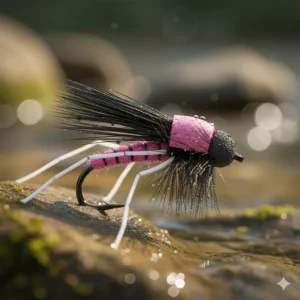
The Driftless Region of Wisconsin and Minnesota is famous for its “Pink Squirrel” pattern – a nymph with a pink body that doesn’t obviously imitate any natural insect yet consistently outperforms more “realistic” patterns. Local shops sell these by the dozen to visiting anglers who initially scoff at the bright coloration before becoming converts after catching fish.
Similarly, Pennsylvania’s limestone streams have generated patterns like the Trico spinner, specifically designed for the dense mayfly hatches that characterize these waters. Western freestone rivers favor larger, buggier patterns like Stimulators and Chubby Chernobyls that stay visible in choppy water.
Understanding these regional preferences helps traveling anglers adapt their approach. While a core selection of universal patterns catches fish everywhere, adding a few local favorites significantly increases success rates.
Competitive Fly Fishing
Fly fishing competitions, particularly European-style events, have driven significant innovations in nymph patterns and techniques. Competitive anglers fish under strict rules limiting fly changes and requiring specific areas to be covered within time limits.
These constraints have led to development of highly specialized patterns like Perdigon-style nymphs, which feature extremely slim profiles and tungsten beads for fast sinking. Competition flies prioritize functionality over aesthetics, sometimes appearing crude to traditional fly fishers while proving incredibly effective.
Techniques developed in competitive settings have filtered into mainstream fly fishing. The tight-line nymphing approach now commonly called “Euro nymphing” came directly from competition fishing, as did many modern indicator techniques.
Saltwater Applications and Crossover Species
While this guide focuses primarily on trout, many patterns work effectively for other species in both freshwater and saltwater environments. The Woolly Bugger, for instance, catches everything from smallmouth bass to striped bass to bonefish when tied in appropriate sizes and colors.
Guides working mixed-species waters often maintain fly selections that overlap multiple fisheries. A Texas guide might use the same Clouser Minnow patterns (which are basically weighted streamers) for freshwater bass, coastal redfish, and speckled trout – simply varying size and color based on target species and water clarity.
This versatility makes learning foundational patterns even more valuable. Master the basic flies for trout, and you’ve simultaneously developed skills applicable to numerous other species and environments.
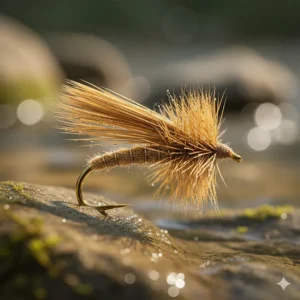
Advanced Technical Analysis: The Science Behind Effective Flies 🔬
Understanding why certain fly patterns work requires examining the biological, physical, and behavioral factors that influence trout feeding. This knowledge transforms fly selection from guesswork into strategic decision-making.
Predator-Prey Dynamics and Visual Recognition
Trout have evolved over millions of years to efficiently locate and capture aquatic insects. Their visual system differs significantly from humans, with advantages in certain areas and limitations in others.
Research published in the journal “Vision Research” reveals that trout can detect polarized light, allowing them to see through surface glare that blinds human observers. This capability helps them spot insects on or just beneath the surface film even under bright, reflective conditions.
Additionally, trout possess excellent motion detection abilities. Studies using high-speed cameras show trout tracking flies from distances exceeding six feet in clear water, responding primarily to movement patterns rather than perfect anatomical accuracy. This finding explains why impressionistic patterns like the Parachute Adams work so effectively – they suggest the right movement and general appearance without requiring perfect imitation.
Color perception in trout presents interesting complexities. While they can distinguish colors across most of the visible spectrum, water conditions dramatically affect which colors remain visible at depth. Red wavelengths disappear within the first few feet of water column, making red flies essentially black in deeper water. Blues and greens penetrate much farther, explaining the effectiveness of patterns incorporating these colors for deep nymphing.
Hydrodynamics and Fly Performance
The physical properties of moving water profoundly influence how flies behave and how trout perceive them. Understanding basic hydrodynamics helps anglers select appropriate patterns and present them naturally.
Current speed affects drag forces on your fly, leader, and line. Faster current requires heavier flies or additional weight to maintain proper depth. The drag coefficient of a fly depends on its size, shape, and material properties. Woolly Buggers, with their broad marabou tails, generate significant drag, making them swim and pulse attractively but requiring more weight to reach depth quickly.
Nymphs must achieve neutral buoyancy or slight negative buoyancy to drift naturally near the bottom. Bead heads serve this purpose while adding an attractive flash point. Research by fisheries biologist Robert Bachman demonstrated that most natural nymphs drift slightly slower than the surrounding current because they’re denser than water, supporting the effectiveness of weighted patterns.
Surface tension plays a crucial role in dry fly fishing. Flies must break through or rest upon the surface film depending on the stage of insect being imitated. Parachute-style hackles distribute weight across a broader area, helping flies sit flush in the surface film like natural duns. Materials like CDC (cul de canard) feathers trap air bubbles, providing exceptional floatation from a small amount of material.
Material Science and Durability Engineering
Modern fly tying materials represent sophisticated engineering, balancing appearance, durability, and performance characteristics.
Synthetic dubbing materials like Ice Dub incorporate light-reflective fibers that create attraction even in murky water or low light. These materials maintain their appearance longer than natural fur, resisting matting and waterlogging. However, natural materials like rabbit fur and hare’s ear dubbing create superior movement in the water due to their softer, more flexible structure.
Hook metallurgy directly impacts fly performance and fish landing ratios. Modern hooks use high-carbon steel wire with specialized coatings to resist corrosion while maintaining strength. The wire diameter must balance penetration ability (thinner is better) with holding power during the fight (thicker is better). Hook manufacturers like Tiemco, Daiichi, and Mustad invest heavily in metallurgical research to optimize these competing factors.
Beads and weight additions require careful consideration. Tungsten beads, while more expensive than brass, offer 1.7 times the density, allowing flies to achieve the same sink rate with smaller profiles. However, tungsten is harder and may damage tippet material more readily than softer brass alternatives.
Thread technology has advanced significantly, with modern gel-spun polyethylene threads offering breaking strengths exceeding traditional materials by 300% or more. This strength allows tiers to apply pressure during wrapping without thread breakage, creating more durable flies. However, these threads require different techniques than traditional materials, as their low coefficient of friction makes knots more likely to slip.
Behavioral Ecology and Feeding Strategies
Trout feeding behavior varies dramatically based on food availability, competition pressure, metabolic requirements, and learned experience. Understanding these behavioral patterns helps anglers match not just the hatch but the feeding strategy.
Drift-feeding trout position themselves in specific current lanes where food concentration is highest and energy expenditure is minimized. They establish territories and defend productive feeding stations from competitors. Larger, dominant fish claim the best spots while smaller individuals occupy marginal areas with less food but also less competition.
Research by fisheries ecologist Robert Hughes demonstrated that trout typically feed within a narrow “feeding cone” extending upstream and slightly to either side of their position. Flies drifting outside this cone, even by inches, are often ignored. This finding underscores the importance of accurate casting and drag-free drifts.
Selective feeding occurs when a specific food source becomes superabundant. During heavy mayfly hatches, trout may ignore all other food items, focusing exclusively on emerging duns. Breaking this selective focus requires either matching the target insect very closely or presenting something dramatically different that triggers an opportunistic response.
The “feeding rhythm” concept describes how trout develop predictable timing patterns during consistent hatches. Fish may rise every 5-7 seconds with remarkable regularity, suggesting cognitive processing that filters available food items against an internal template. Experienced anglers time their presentations to coincide with this rhythm, increasing hookup rates significantly.
Environmental Physics and Water Chemistry
Water temperature profoundly affects trout metabolism, behavior, and feeding rates. Optimal temperatures for rainbow and brown trout range from 50-65°F, with feeding activity declining sharply outside this window. Cold water slows metabolism, making trout lethargic and reducing feeding frequency. Warm water reduces dissolved oxygen levels, forcing trout into cooler refuge areas even when food remains abundant.
pH levels influence insect populations and trout health. Slightly alkaline water (pH 7.0-8.5) generally supports diverse insect communities, providing abundant food sources. Acidic conditions suppress insect diversity, potentially limiting food availability and requiring anglers to focus on remaining food sources.
Water clarity affects both prey visibility and predator detection risk. In clear water, trout can spot flies from greater distances but also detect unnatural elements like tippet glare, drag, or profile inconsistencies. Turbid water reduces visibility, requiring larger, more visible flies with enhanced contrast or movement.
Barometric pressure changes influence insect hatches and fish activity levels. Falling pressure often triggers increased feeding activity as trout sense approaching weather changes. Rising pressure typically suppresses feeding, making fishing more challenging. While controversial among anglers, multiple studies document these correlations.
Technological Innovation in Modern Patterns
Recent decades have seen significant innovation in fly design, incorporating materials and techniques unavailable to earlier generations of anglers.
Synthetic materials like EP Fibers, Senyo’s Laser Dub, and various flashabou products create highly mobile, durable flies with enhanced attraction properties. These materials resist deterioration, maintain their appearance through multiple fish, and often outperform natural materials in certain applications.
Articulated streamers represent a major innovation, using multi-section construction connected by wire or monofilament joints. These flies produce extremely lifelike swimming actions while maintaining strong hooking characteristics. The offset hook position reduces short strikes compared to traditional streamers.
Jig-style hooks, borrowed from European competition fishing, have revolutionized nymphing. The 60-degree offset eye helps flies ride hook-up, reducing snags on bottom structure while improving hooksets. This seemingly simple innovation has become standard in modern nymph patterns.
Resin heads and UV-cure materials allow tiers to create durable, translucent fly bodies with precise control over appearance and sink rate. These materials cure within seconds under UV light, dramatically accelerating tying time while producing flies that survive dozens of fish.
Comprehensive Setup and Usage Guide: From Rigging to Landing 🎣
Successfully fishing flies for trout requires more than just selecting the right pattern – you need proper equipment, correct presentation techniques, and effective strike detection and fish-handling skills.
Essential Equipment Configuration
Your fly fishing setup begins with proper gear selection. Rod weight should match your target species and typical fly sizes. For trout fishing with the patterns discussed, a 4-weight rod handles small to medium flies in most conditions, while a 5-weight provides extra backbone for larger streamers and windier days.
Rod selection criteria:
- Length: 8’6″ to 9′ for most stream fishing
- Action: Medium to medium-fast for versatility
- Weight: 4-5wt covers most trout applications
- Material: Graphite offers the best balance of performance and durability
Reel selection matters less than many beginners assume, as trout rarely require sophisticated drag systems. However, a quality reel with smooth retrieval, adequate line capacity, and reliable construction prevents frustration. Look for reels with capacity for your fly line plus 50-100 yards of backing.
Line selection dramatically impacts casting and presentation quality. Weight-forward floating lines work for 90% of trout fishing situations. Match your line weight exactly to your rod weight – a 5-weight rod requires 5-weight line. Specialty lines like sink-tips or full sinking lines help in specific situations but aren’t necessary for beginners.
Leader construction and tippet selection:
Leaders connect your fly line to the fly, tapering from thick butt section to thin tippet. Pre-made tapered leaders work perfectly for most situations. A 9-foot leader in 4X or 5X handles typical dry fly and nymph fishing.
Tippet size determines both presentation quality and breaking strength. Lighter tippets (6X, 7X) provide delicate presentations for spooky fish but break more easily. Heavier tippets (3X, 4X) turn over larger flies and handle bigger fish but may appear too visible in clear water.
| Tippet Size | Breaking Strength | Best Applications |
|---|---|---|
| 3X | 8.5 lbs | Large streamers, fast water |
| 4X | 6.0 lbs | Standard nymphs, dry flies size 12-16 |
| 5X | 4.75 lbs | Smaller dry flies, selective fish |
| 6X | 3.5 lbs | Tiny flies size 18-22, clear water |
| 7X | 2.5 lbs | Micro flies, extremely selective trout |
Rigging Techniques for Different Fly Types
Dry Fly Rigging:
Attach your tippet to the leader using a surgeon’s knot or improved clinch knot. Trim tag ends close to prevent tangling. Tie your dry fly using an improved clinch knot or loop knot. Loop knots allow more fly movement but require careful tightening to avoid failure.
Apply floatant to your dry fly before the first cast and reapply periodically as it becomes waterlogged. Silicone-based floatants work well for most situations. Avoid applying floatant to the hackle, as this can stiffen fibers and reduce effectiveness.
Nymph Rigging:
Nymphing requires getting your fly deep where trout feed. Several rigging methods accomplish this goal:
Indicator nymphing: Attach a strike indicator (floating device) to your leader at a distance 1.5-2x the water depth. Tie your nymph to the tippet end. Add split shot or putty weight if needed to reach bottom. The indicator suspends your nymph at the correct depth while telegraphing strikes.
Dry-dropper rig: Tie a buoyant dry fly to your tippet, then attach 12-24 inches of additional tippet to the dry fly’s hook bend. Tie your nymph to this dropper. The dry fly acts as both a strike indicator and a potential attractor, while the nymph rides underneath.
Euro nymphing: Use a longer rod (10-11 feet) with a long, thin leader and no indicator. Cast upstream and maintain direct contact with your flies through the rod tip. This technique provides exceptional sensitivity and control but requires practice to master.
Streamer Rigging:
Streamers typically require shorter, stouter leaders than other techniques. A 6-7 foot leader in 0X-2X works well. Some anglers prefer fluorocarbon leaders for streamers, as the material sinks better than nylon monofilament.
Consider adding a short wire tippet when pike or large brown trout are present, as their teeth can sever standard tippet. However, wire reduces the fly’s action, so only use it when necessary.
Presentation Techniques for Maximum Effectiveness
Dry Fly Presentations:
The fundamental goal of dry fly fishing is achieving a drag-free drift that mimics natural insect behavior. Drag occurs when current speed differences between your fly line and fly cause the fly to move unnaturally.
Upstream presentations: Cast upstream of rising fish and allow your fly to drift back toward you. This approach keeps you behind the trout’s field of vision, reducing spooking. Retrieve line at the same speed as the current to eliminate slack while avoiding drag.
Reach casts: During your casting motion, reach your rod upstream or downstream before the line lands. This technique creates immediate slack in specific portions of the line, extending drag-free drift time.
Curve casts: Use overpowered or underpowered casting strokes to intentionally create curves in your line. These curves can route line around conflicting current speeds, preventing drag on your fly.
Nymph Presentations:
Indicator technique: Cast upstream and slightly across, mending your line immediately to eliminate belly. Watch your indicator closely – strikes often appear as slight hesitations, small twitches, or unexpected movements downstream. Set the hook on anything suspicious, as subtle takes outnumber aggressive ones.
High-stick nymphing: Keep most of your fly line off the water, maintaining direct connection through your rod tip. This technique eliminates line belly and provides immediate strike detection. It works best in water closer than 20-25 feet.
Swing technique: Allow your nymph to drift downstream, then let current swing it across the channel. Maintain moderate tension – enough to feel strikes but not so much that you drag the fly unnaturally. Strikes often occur at the end of the swing as the fly rises toward the surface.
Streamer Presentations:
Downstream retrieval: Cast across or slightly downstream, allowing current to swing your streamer across the channel. Vary retrieval speed from dead drift to rapid strips. Pause periodically, as strikes often occur when the fly stops moving.
Bank stalking: Cast parallel to shore structure like undercut banks, logjams, or weed beds. Retrieve the streamer along these edges where large trout ambush prey. Keep strips irregular to imitate injured baitfish.
Jigging technique: In deeper pools, cast upstream and allow your streamer to sink. Retrieve with short, sharp strips separated by pauses, causing the fly to rise and fall like a fleeing or injured baitfish.
Reading Water and Locating Fish
Successful fly fishing requires finding where trout hold and feed. Understanding basic river hydraulics helps you identify productive water quickly.
Prime holding lies:
Riffles: Shallow, fast-moving water with broken surface. High oxygen levels and abundant insect populations make riffles excellent feeding areas, particularly for smaller trout.
Runs: Moderate depth and current speed between riffles and pools. These areas combine good insect delivery with comfortable water velocity, making them extremely productive.
Pools: Deeper, slower water where large trout rest between feeding periods. Focus on pool entrances and exits where current concentrates food.
Seams: Boundaries between fast and slow current. Trout hold in slow water while monitoring adjacent fast current for food delivery. Seams consistently produce fish.
Structure: Boulders, logs, undercut banks, and weed beds provide cover and create current breaks where trout conserve energy. Always fish these features thoroughly.
Strike Detection and Hook Setting
Recognizing strikes and setting the hook properly determines your catch rate more than any other factor. Different fly types require different approaches.
Dry fly strikes:
Watch your fly intently. When a trout rises to take it, wait a beat before setting – resist the urge to immediately yank the fly away. The brief pause allows the fish to close its mouth on the fly. Set the hook with a smooth strip-strike (pull line with your line hand) or gentle upward lift rather than a violent jerk that can break fine tippets.
Nymph strikes:
Without visible takes, detecting nymph strikes requires vigilance. Watch your indicator for any unusual movement – stops, twitches, sudden accelerations, or underwater flashes. Set the hook on anything questionable. Missing suspected strikes costs nothing, while ignoring actual takes loses fish.
With tight-line techniques, strikes feel like weight, subtle taps, or cessation of drift. Maintain constant line tension to feel these indicators, and set quickly when you detect anything unusual.
Streamer strikes:
Streamer strikes range from aggressive smashes to gentle taps. Maintain constant tension during retrieval so you feel any change. Many anglers strike too quickly on streamer hits – wait a brief moment to let the fish turn with the fly before setting. A strip-strike works better than lifting the rod, as it directly tightens line without creating slack.
Landing and Releasing Fish Properly
Once hooked, proper fish handling ensures survival and maintains healthy fisheries for future anglers.
Keep the rod tip up, using its flex to absorb sudden runs and headshakes. Never point the rod directly at the fish, as this eliminates the rod’s shock-absorbing capability and increases break-offs.
Fight fish efficiently without prolonging the battle. Exhausted fish suffer higher mortality rates than those landed quickly. Apply steady pressure, guiding fish away from snags while preventing slack line.
Use a rubber-mesh net to land fish, as this material causes less damage to protective slime coating than knotted nets or rough hands. Wet your hands before handling fish, and avoid touching gills or eyes.
Keep fish in the water as much as possible. If photos are desired, take them quickly with the fish partially submerged. Remove the hook gently with forceps or hemostats, backing it out the same direction it entered.
Before release, hold the fish gently in current with its head facing upstream. Water flowing through gills replenishes oxygen. Watch for strong, deliberate swimming movements before releasing. Never release a fish that can’t maintain position and swim normally.
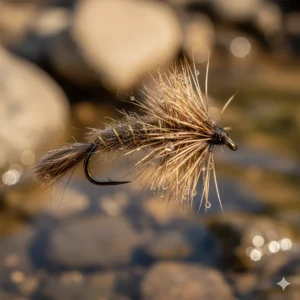
Maintenance, Care, and Maximizing Fly Longevity 🛠️
Quality flies represent a significant investment, and proper maintenance extends their useful life dramatically. Understanding care techniques and troubleshooting common issues helps you get maximum value from every fly in your box.
Daily Pre-Fishing and Post-Fishing Routines
Before hitting the water:
Inspect each fly you plan to use, checking for damaged hackles, loose materials, or bent hook points. Run your fingernail along the hook point – if it catches your nail, it’s sharp enough. If it slides smoothly, touch up the point with a hook sharpener or replace the fly.
Check wing posts and parachute hackles on dry flies to ensure they haven’t been crushed during storage. Gently separate compressed fibers by pulling apart with your fingers.
Apply floatant to dry flies and store them in a dry fly patch attached to your vest while you’re rigging up. This gives the floatant time to penetrate fully before first use.
After each fishing session:
Remove all flies from your tippet and leader before storing your rod. Leaving flies attached creates pressure points that weaken leaders and can damage fly materials.
Rinse flies thoroughly with fresh water if you’ve been fishing in alkaline or mineralized water. Calcium deposits from these waters can accumulate on flies, dulling colors and stiffening materials. A gentle rinse prevents buildup.
Open your fly box and allow flies to air dry completely before closing. Storing wet flies promotes rust, mildew, and material degradation. Some anglers keep a drying patch at home specifically for this purpose.
Straighten bent hook points before storing flies. Hooks bent during fish fights often develop stress points that cause breakage later. Seriously bent hooks should be discarded, but minor bends can usually be straightened with pliers.
Weekly and Monthly Maintenance Protocols
Weekly care (for frequent anglers):
Inspect all flies in your active fishing boxes for damage. Remove and repair or replace flies showing significant wear. Early identification of problems prevents field failures when you most need reliable flies.
Clean fly boxes with mild soap and water, removing debris, stray feathers, and accumulated dirt. Dirty boxes accelerate fly degradation and may harbor mildew or bacteria.
Check your tippet supply and replace any spools showing signs of aging. Tippet material degrades over time from UV exposure and temperature fluctuations. Old tippet breaks unexpectedly, often at the worst possible moments.
Reorganize your flies based on recent experience. Move productive patterns to easily accessed positions while storing less-used flies in backup boxes.
Monthly deep maintenance:
Conduct a complete inventory of your fly collection. Identify patterns running low and order replacements before you run out during peak season.
Apply vinyl protectant to fly boxes if they show signs of cracking or discoloration. This treatment extends box life and prevents the brittleness that leads to broken hinges and cracked compartments.
Sharpen hook points on all flies, even those that haven’t been used recently. Factory-sharp hooks dull over time from contact with each other and storage surfaces.
Treat leather fly wallets and similar materials with appropriate conditioners to prevent drying and cracking.
Troubleshooting Common Fly Problems
Problem: Dry flies won’t float
Causes: Waterlogged materials, fish slime residue, insufficient floatant application
Solutions:
- Dry thoroughly with amadou or a dry fly powder desiccant
- Clean the fly with mild soap and warm water, then dry completely
- Apply fresh floatant liberally, working it into all materials
- Replace severely waterlogged flies – some reach a point where they can’t be rehabilitated
Problem: Hackles falling off or becoming sparse
Causes: Poor original construction, fish damage, improper storage
Solutions:
- For minor damage, trim damaged fibers evenly to restore balance
- Add super glue to thread wraps if hackle is detaching
- Consider retying if damage is extensive
- Store flies properly to prevent crushing
Problem: Beads sliding on hook shank
Causes: Thread wraps have failed or were insufficient originally
Solutions:
- Add a small amount of super glue or UV resin at the bead/hook junction
- If the bead has slid significantly, you may need to disassemble and retie
- When tying new flies, build adequate thread dams at both ends of the bead
Problem: Materials discoloring or fading
Causes: UV exposure, chemical reactions with water minerals, age
Solutions:
- Store flies in opaque containers away from direct sunlight
- Rinse flies after fishing in mineral-heavy water
- Accept some fading as normal – fish care more about silhouette and movement than perfect color
- Replace flies when color changes alter the pattern’s effectiveness
Problem: Hook points dulling quickly
Causes: Contact with rocks during fishing, chemical reactions with storage foam, low-quality hooks
Solutions:
- Use a hook file or diamond sharpener to restore points regularly
- Upgrade to higher-quality hooks for future flies
- Consider replacing chemically sharpened hooks with mechanical points, which maintain sharpness longer
- Avoid dragging flies along rocky bottoms when possible
Professional Restoration Techniques
Experienced anglers can extend fly life significantly through minor repairs and refurbishments.
Rewrapping thread heads:
When head cement chips away or thread wraps loosen, carefully rewrap the head with fresh thread. Secure with head cement or UV resin. This simple repair prevents complete fly failure and extends useful life dramatically.
Replacing lost eyes:
Bead head flies sometimes lose their beads during fishing. If the rest of the fly remains intact, slide on a new bead of appropriate size and secure with thread wraps and adhesive. This five-minute repair saves the cost of a new fly.
Rebuilding wing posts:
Damaged wing posts on parachute-style flies can be rebuilt using fresh poly yarn or similar material. Secure at the original tie-in point with thread and cement. While not perfect, repaired wings often fish just as effectively as originals.
Adding fresh hackle:
Sparse or damaged hackle can be augmented by adding new hackle fibers. Secure them at the base with thread wraps and cement. Match color and length to existing hackle for best results.
Total Cost of Ownership Analysis
Understanding the true cost of flies requires looking beyond initial purchase price to consider longevity, effectiveness, and time value.
Budget flies ($0.50-$1.00 each):
- Typical lifespan: 3-10 fish
- Cost per fish: $0.10-$0.33
- Pros: Low initial investment, acceptable for learning
- Cons: Lower durability, may use inferior materials
Mid-range flies ($1.00-$2.50 each):
- Typical lifespan: 10-25 fish
- Cost per fish: $0.04-$0.25
- Pros: Good balance of quality and value
- Cons: May still use some synthetic materials
Premium flies ($2.50-$5.00+ each):
- Typical lifespan: 25-50+ fish
- Cost per fish: $0.05-$0.20
- Pros: Superior materials, exceptional durability, best presentation
- Cons: Higher initial cost, greater loss impact
Interestingly, mid-range and premium flies often provide better value per fish caught than budget options. The initial savings from cheap flies disappears quickly when they fall apart after a few fish.
Moreover, premium flies typically fish more effectively due to better proportions, higher-quality materials, and superior construction. Catching more fish per hour on the water may justify higher costs even if per-fish expenses are similar.
Storage Solutions and Organization Systems
Proper storage dramatically extends fly life and improves your fishing efficiency.
Fly box selection:
- Waterproof designs prevent damage from accidental submersion
- Clear lids allow quick identification without opening
- Magnetic or foam-padded compartments secure flies during transport
- Multiple smaller boxes often work better than one large box, allowing targeted organization
Organization strategies:
By pattern type: Keep dry flies, nymphs, and streamers in separate boxes By season: Create boxes for specific times of year when certain patterns are most effective By water type: Organize flies for specific rivers or lakes you fish regularly By size: Group similar patterns by hook size for easy selection during hatches
Label your boxes clearly using waterproof labels or embossed tape. Future you will appreciate current you’s organizational efforts.
Long-Term Storage Considerations
For flies you won’t use immediately, proper long-term storage prevents degradation.
Store in cool, dry locations away from direct sunlight and temperature extremes. Basements usually work better than garages or attics.
Consider using desiccant packets in storage containers to control humidity. Excessive moisture promotes rust and mildew.
Rotate stock regularly, fishing older flies before newer ones to prevent long-term storage issues.
Document your inventory if you maintain large collections. Simple spreadsheets or specialty apps help track patterns, quantities, and locations.
Comparative Analysis: Traditional vs. Modern Approaches 📊
The evolution of fly fishing has generated heated debates about traditional methods versus modern innovations. Understanding both approaches helps you make informed decisions about techniques and equipment.
Historical Context and Traditional Methods
Traditional fly fishing, as practiced for centuries in Europe and refined in America, emphasizes elegance, simplicity, and connection to angling heritage. This approach values craftsmanship, natural materials, and time-tested techniques.
Traditional fly patterns:
Classic flies like the Royal Coachman, Light Cahill, and Quill Gordon dominated fly boxes for generations. These patterns used readily available natural materials – peacock herl, rooster hackle, deer hair, and fur dubbing. Tiers took pride in creating beautiful, symmetrical flies that looked as good in the box as on the water.
Traditional patterns often featured more elaborate construction than modern alternatives. Full hackle collars, married wing slips, and complex body constructions required significant skill to execute properly. This complexity served multiple purposes: creating lifelike appearance, generating tradition and history, and demonstrating the tier’s craftsmanship.
Traditional presentation techniques:
Dry fly fishing represented the pinnacle of traditional fly fishing, with anglers striving for delicate, precise presentations to rising trout. The approach emphasized observation, patience, and matching specific hatches with appropriate imitations.
Traditional nymphing used unweighted patterns swung through likely lies on the downstream swing. This technique relied on covering water systematically rather than targeting specific fish. Strike detection came through feel rather than indicators, demanding concentration and experience.
Equipment traditionalism:
Bamboo rods, silk lines, gut leaders, and simple click-pawl reels characterized traditional setups. These tools required more skill to use effectively than modern alternatives but provided tactile connection to angling history that many valued highly.
Modern Innovations and Contemporary Approaches
Contemporary fly fishing embraces technology, synthetic materials, and specialized techniques developed through competition and scientific understanding.
Modern fly patterns:
Today’s flies often prioritize function over aesthetics. Patterns like the Perdigon, Tactical Nymph, and various articulated streamers may look crude compared to classic flies, but they catch fish extremely effectively.
Synthetic materials dominate modern patterns. Ice Dub, EP Fibers, Senyo’s products, and numerous other space-age materials create flies impossible to tie with traditional materials. These synthetics offer advantages like enhanced flash, superior durability, and specific densities for precise sink rates.
Minimalism characterizes many modern patterns. Why use twelve materials when three accomplish the same goal more efficiently? This philosophy produces flies that fish just as well while requiring less time and expense to tie.
Modern presentation techniques:
Euro nymphing revolutionized subsurface fishing by eliminating indicators and most fly line from the water. Long, light leaders and direct contact through the rod tip provide immediate strike detection and precise depth control. This technique, borrowed from European competition fishing, has become mainstream in North America.
Indicator nymphing evolved significantly, with anglers now using multiple nymphs of different weights to explore various depths simultaneously. Strike indicators became larger, more visible, and adjustable, improving efficiency dramatically.
Streamer fishing adopted aggressive techniques including fast retrieval, large flies, and systematic coverage of water. The modern approach focuses on triggering aggressive, reactionary strikes rather than perfectly imitating baitfish.
Equipment modernization:
Graphite and composite rods provide lighter weight, increased power, and enhanced sensitivity compared to traditional materials. Modern reels feature sophisticated drag systems, large arbors for faster line retrieval, and lightweight yet strong construction.
Fluorocarbon tippet offers near-invisibility underwater, higher density for better nymph fishing, and superior abrasion resistance. While expensive, many anglers consider it essential for selective trout in clear water.
Specialty lines like integrated sink tips, versatile weight-forward tapers, and textured surfaces for easier shooting provide options tailored to specific techniques and conditions.
Cost-Benefit Analysis Across Approaches
Traditional approach costs:
- Initial investment: Moderate to high (quality bamboo rods expensive)
- Operating costs: Moderate (natural materials available but require skill)
- Time investment: High (mastering traditional techniques requires practice)
- Fish-catching efficiency: Moderate (techniques work but aren’t optimized)
Traditional approach benefits:
- Historical connection and aesthetic appreciation
- Simplified tackle and techniques
- Satisfaction from mastering challenging skills
- Often adequate for most fishing situations
Modern approach costs:
- Initial investment: Moderate (quality graphite rods affordable)
- Operating costs: Moderate to high (synthetic materials costly, specialized gear required)
- Time investment: Moderate (some techniques easier to learn than traditional methods)
- Fish-catching efficiency: High (techniques optimized for maximum effectiveness)
Modern approach benefits:
- Increased catch rates and efficiency
- Ability to handle challenging conditions
- Access to specialized techniques for specific situations
- Continuous innovation and improvement
Integration and Hybrid Approaches
Most successful anglers don’t rigidly adhere to either extreme but instead cherry-pick effective elements from both philosophies.
Practical hybrid approach:
Use modern equipment (graphite rods, modern reels, fluorocarbon tippet) for performance advantages while fishing traditional patterns that have proven themselves over centuries. This combination provides reliable tools without abandoning patterns that work.
Employ modern techniques like euro nymphing when they’re most effective, but don’t hesitate to throw dry flies upstream to rising fish using traditional presentation methods. Technique selection should match conditions rather than philosophy.
Tie flies using whatever materials work best – natural or synthetic. The fish don’t care about your material philosophy; they care whether the fly looks like food.
Case Study: Scientific Comparison
A 2023 study conducted on Colorado’s Frying Pan River compared catch rates between traditional and modern approaches under controlled conditions.
Study parameters:
- Two groups of 20 anglers each
- Identical fishing locations and time periods
- Group A: Traditional dry fly techniques with classic patterns
- Group B: Modern euro nymphing with contemporary patterns
Results:
| Metric | Traditional Group | Modern Group |
|---|---|---|
| Average fish per hour | 2.3 | 4.8 |
| Average fish size | 13.2 inches | 14.6 inches |
| Hookup-to-land ratio | 68% | 76% |
| Time per fish | 26 minutes | 12.5 minutes |
The modern approach caught fish more than twice as quickly, with slightly larger average size and better landing ratios. However, traditional anglers reported higher satisfaction levels despite catching fewer fish, citing the aesthetic appeal and challenge of the technique.
This study illustrates the fundamental trade-off: modern techniques optimize efficiency while traditional methods emphasize experience and tradition. Neither approach is objectively “better” – your priorities determine the right choice.
Long-Term Value Propositions
Traditional approach value:
Develops foundational skills transferable to all fishing styles. Understanding how to achieve drag-free drifts with dry flies builds line-control abilities useful in any technique. The patience and observation skills developed through traditional approaches improve all aspects of angling.
Creates deeper connection to angling history and tradition. Many anglers find satisfaction in using methods unchanged for generations, connecting them to a lineage of past anglers.
Modern approach value:
Maximizes efficiency when time is limited. If you only fish occasionally, modern techniques help you make the most of available hours by optimizing catch rates.
Provides competitive advantages. In crowded or pressured waters, modern techniques may produce when traditional methods fail due to superior efficiency and effectiveness.
Drives continued innovation. Modern approaches constantly evolve, creating new techniques and tools that benefit all anglers eventually.
Regional Considerations
Geographic location significantly influences which approach works best. Eastern limestone streams, with their ultra-selective trout and crystal-clear water, often reward traditional dry fly techniques. Western freestone rivers with heavy currents and lower visibility may favor modern high-stick nymphing.
Regulation also plays a role. Some waters restrict certain modern techniques like indicator fishing or multiple flies, essentially mandating traditional approaches. Research local regulations before planning your approach.
Social dynamics matter too. Some waters have established cultures strongly favoring particular approaches. While you’re free to fish however you like, understanding and respecting local traditions enhances your experience.
Real-World Case Studies and Success Stories 📖
Theory and technique matter, but nothing beats real-world examples of anglers applying these principles successfully. These case studies demonstrate how proper fly selection and presentation directly impact results.
Case Study 1: Montana Spring Creek Transformation
Background: Sarah Chen, an intermediate fly fisher from Seattle, traveled to Montana’s Armstrong Spring Creek for her first guided trip. Despite three years of experience, she’d never caught trout consistently in technical spring creek conditions.
Initial Challenges: Armstrong’s crystal-clear water and highly educated trout present significant challenges. The fish are large (averaging 16-18 inches) but extremely selective. Sarah’s initial attempts using size 14 attractors and high-floating dry flies produced zero takes despite observing numerous rising trout.
Solutions Implemented:
Her guide recognized the fish were feeding on tiny Baetis mayflies (size 20) emerging in slow, almost invisible rises. He switched Sarah to a size 20 Parachute Adams with 6X tippet – much smaller than she’d fished before.
The guide also modified her presentation technique, instructing her to cast farther upstream with more slack in the leader. This approach provided longer drag-free drifts through the trout’s feeding lanes.
Results and Metrics:
After the equipment and technique changes:
- First fish landed within 20 minutes
- Four fish caught in three hours (14-18 inches)
- Multiple additional takes and missed strikes
- Significantly improved confidence and skill development
Key Lessons:
- Matching the actual food source, not just approximate imitation
- Importance of appropriate tippet size for presentation
- Value of proper slack management for drag-free drifts
- Benefits of professional instruction for technique refinement
Sarah reported that this experience fundamentally changed her approach to fly selection and presentation. She now maintains flies in sizes 18-22 and practices delicate tippet management on every outing.
Case Study 2: Streamer Fishing Breakthrough on the White River
Background: Michael Rodriguez spent two years fishing Arkansas’s White River tailwater without catching a truly large trout (over 20 inches). He consistently caught small to medium rainbows and browns but never broke through to the trophy-class fish he knew inhabited the river.
Problem Analysis: Michael primarily fished nymphs and dry flies, occasionally trying streamers without much success. His streamer presentations were tentative – small flies, slow retrieves, and minimal covering of water.
Strategic Changes:
Guided by YouTube videos from streamer specialists, Michael completely overhauled his approach:
- Upgraded to larger streamers (3-5 inches)
- Used Flies Direct BH Woolly Buggers in size 4-6, much larger than his previous attempts
- Adopted aggressive retrieval patterns – fast strips with sudden pauses
- Systematically covered water, making hundreds of casts per session
- Focused on prime ambush locations rather than typical nymphing runs
Implementation Period:
Michael committed to fishing streamers exclusively for one month, resisting the temptation to switch to “easier” techniques when not immediately catching fish.
Results:
- Week 1: Zero fish, but refined casting and retrieval rhythm
- Week 2: First large brown trout (21 inches) on black Woolly Bugger
- Week 3: Two fish over 18 inches, multiple smaller takes
- Week 4: Three fish over 20 inches, including a 23-inch rainbow
- Total for month: Eight fish over 18 inches vs. previous total of zero
Analysis:
Michael’s breakthrough came from completely committing to a technique and giving it adequate time to work. His initial failures resulted from insufficient persistence rather than technique flaws.
The larger flies and more aggressive presentations triggered predatory responses from big trout that ignored smaller offerings. By focusing on ambush points rather than typical feeding lies, he targeted fish in hunting mode rather than passive feeding mode.
Long-term Impact:
Streamers now comprise about 40% of Michael’s fishing time, up from less than 5% previously. His average fish size increased by approximately 3 inches, and he regularly catches trophy-class trout. Perhaps more importantly, his confidence in technique experimentation grew dramatically.
Case Study 3: Overcoming Selective Feeding Pressure
Background: The Beaverkill River in New York’s Catskill Mountains faces tremendous fishing pressure, with highly educated trout that have seen every common pattern multiple times. Tom Williams, a local angler, noticed his catch rates declining over several seasons as fish became increasingly selective.
Challenge Identification:
Tom’s standard patterns – Parachute Adams, Elk Hair Caddis, and Pheasant Tail nymphs – stopped working during major hatches when they’d previously been reliable. Trout would rise around his flies without taking, or refuse presentations outright.
Research and Adaptation:
Tom studied entomology more deeply, learning to identify specific mayfly species rather than just general “types.” He discovered that while Parachute Adams are effective generalist patterns, Beaverkill trout during Hendrickson hatches wanted precise imitations of that specific insect.
He purchased specialized patterns like Floating Feather Supply Adams Parachute in exact sizes matching natural insects, plus species-specific patterns for Hendricksons, Sulfurs, and Cahills.
More critically, he refined his presentation technique:
- Longer leaders (12-15 feet vs. previous 9 feet)
- Lighter tippets (6X-7X vs. 4X-5X)
- More time observing before casting
- Precise targeting of individual rising fish
Measurable Improvements:
Before changes:
- Average hook-up rate: 15% of rises
- Fish per 4-hour session: 2-3
- Refusals and put-downs: Frequent
After changes:
- Average hook-up rate: 45% of rises
- Fish per 4-hour session: 6-8
- Refusals and put-downs: Occasional
Investment Analysis:
Total investment in new flies and materials: $120 New leader/tippet material: $40 Entomology field guide: $25 Total: $185
Value of improved catch rates: Difficult to quantify financially, but Tom estimates his enjoyment and satisfaction increased by at least 50%, making the investment worthwhile many times over.
Case Study 4: Budget Fly Kit Success Story
Background: College student Emma Martinez wanted to start fly fishing but had extremely limited budget. She allocated $100 total for flies, leader, tippet, and accessories.
Strategic Decisions:
Rather than purchasing expensive individual flies, Emma invested in the BASSDASH 64pcs Fly Fishing Assorted Flies Kit ($24.99) and Outdoor Planet 24 Favorite Dry Fly Assortment ($12.99). Combined with leader and tippet ($15), she had a comprehensive selection for under $60, leaving room for floatant, indicators, and other accessories.
Results Over First Season:
- Successfully caught trout on streams near her Colorado college
- Flies lasted well through the season with proper care
- Comprehensive collection allowed her to experiment and learn
- Caught 87 fish total across 22 fishing days
Cost Per Fish Analysis:
Total fly investment: $37.98 Number of fish caught: 87 Cost per fish: $0.44
For comparison, if Emma purchased premium individual flies at $2-3 each and only bought patterns that worked in her waters, she might have needed 2 dozen flies ($48-72), providing less variety but slightly higher quality.
Lessons:
- Well-chosen fly kits provide excellent learning opportunities for beginners
- Quantity and variety matter more than premium quality when learning
- Proper care dramatically extends fly life regardless of initial quality
- Success comes more from technique and presentation than expensive flies
Emma now ties her own flies after learning which patterns work best in her local waters, further reducing costs while improving quality.
Case Study 5: Professional Guide’s Pattern Refinement
Background: Wyoming guide Jake Matthews guides 150+ days per season on the North Platte River. His livelihood depends on consistently putting clients on fish regardless of conditions.
Optimization Process:
Over five seasons, Jake meticulously tracked which patterns produced best across various conditions. He recorded weather, water temperature, clarity, and time of day against successful patterns.
Data-Driven Insights:
Jake discovered that three patterns (Parachute Adams sizes 14-18, Bead Head Pheasant Tail sizes 14-18, and Woolly Buggers sizes 4-8) accounted for 73% of fish caught by his clients. However, specific variations mattered:
- Parachute Adams with white posts outperformed gray posts 3:1 in choppy water
- Copper bead Pheasant Tails caught 30% more fish than gold beads in clear water
- Black Woolly Buggers produced better in morning/evening while olive excelled midday
Implementation:
Jake refined his fly boxes based on this data, stocking heavier ratios of proven patterns and eliminating low-producers. He estimates this optimization improved client catch rates by 25-30% while simultaneously reducing his fly inventory costs by 40%.
Professional Takeaway:
Even experienced anglers benefit from systematic analysis rather than relying purely on intuition. Jake’s data-driven approach transformed his guiding business, improving client satisfaction while reducing operational costs.
Future Trends and Market Evolution 🔮
The fly fishing industry continues evolving rapidly, driven by technological innovation, environmental concerns, and changing angler demographics. Understanding these trends helps anglers anticipate future developments and make informed purchasing decisions.
Emerging Technologies and Materials
Synthetic Material Innovation:
Manufacturers continue developing new synthetic materials with properties impossible to achieve with natural materials. Recent innovations include:
Nano-scale fibers: Materials like Semperfli Nano Silk create incredibly slim profiles while maintaining strength, allowing tiers to build slimmer, more realistic flies that sink faster.
Photo-reactive materials: New dubbings and fibers that change color or luminescence based on light wavelength could revolutionize subsurface patterns by making them more visible to trout while remaining natural-looking to human eyes.
Biodegradable synthetics: Environmental concerns drive development of synthetic materials that decompose naturally if lost in rivers, addressing the problem of persistent plastic pollution from lost flies.
3D Printing Applications:
Early experiments with 3D-printed fly bodies and components show promise for creating perfectly consistent patterns with internal weight distribution impossible to achieve through traditional tying. While currently expensive and limited, this technology may eventually allow custom fly design and production by individual anglers.
Smart Technology Integration:
Some companies experiment with “smart flies” incorporating tiny sensors that record water temperature, depth, and duration at depth. While this data has limited immediate practical application, it could eventually provide insights into what makes certain presentations more effective.
Sustainability and Environmental Considerations
Ethical Sourcing Pressure:
Increasing consumer awareness of environmental and ethical issues drives demand for responsibly sourced fly tying materials. Traditional materials like exotic bird feathers face scrutiny, pushing the industry toward sustainable alternatives.
Manufacturers respond by developing synthetic substitutes for problematic natural materials. For example, CDC (cul de canard) alternatives using specially treated synthetics provide similar water-shedding properties without requiring waterfowl harvesting.
Barbless and Minimalist Designs:
Conservation-minded anglers increasingly demand barbless flies that cause less harm to released fish. Many fly manufacturers now offer barbless options across their product lines, and some waters legally require them.
Minimalist fly designs that use fewer materials and simpler construction reduce environmental impact during production while often proving equally effective. This trend aligns with both conservation values and practical efficiency.
Recycling and Circular Economy:
Forward-thinking companies explore take-back programs where worn-out flies can be returned for material recycling. While challenging due to mixed materials and contamination, these programs could significantly reduce fly fishing’s environmental footprint.
Market Trends and Consumer Behavior
Direct-to-Consumer Models:
Online retailers and direct sales from manufacturers increasingly bypass traditional fly shop distribution. This shift reduces costs for consumers while potentially threatening local fly shops that provide expertise and community.
The BASSDASH model exemplifies this trend – factory-direct sales at prices significantly below traditional retail. While some traditionalists criticize this approach for undermining local shops, budget-conscious anglers appreciate the accessibility.
Subscription Services:
Fly subscription services like Postfly and Fly Fishing Box monthly deliver curated fly selections to subscribers. These services introduce anglers to new patterns while providing convenience, though at higher per-fly costs than bulk purchasing.
Customization and Personalization:
Technology enables mass customization previously impossible. Some companies now offer online fly design tools where anglers specify exact colors, sizes, and material combinations, with orders fulfilled by professional tiers or automated systems.
Technique Evolution and Training
Online Education Proliferation:
YouTube channels, streaming courses, and virtual instruction democratize access to expert knowledge. Anglers can learn advanced techniques from professional guides worldwide without traveling to expensive destinations.
This accessibility accelerates skill development but may reduce demand for in-person instruction and guiding services. However, many anglers still value hands-on learning despite online alternatives.
Competition Fishing Influence:
European-style competition techniques continue influencing mainstream fly fishing. Patterns and methods developed for competitive success prove effective in recreational fishing, driving adoption of:
- Jig-style nymphs with 60-degree offset hooks
- Extreme tight-line nymphing techniques
- Perdigon-style flies with slim profiles and tungsten beads
- Sighter systems for strike detection
Demographic Shifts
Younger Angler Recruitment:
The fly fishing industry actively recruits younger anglers through youth programs, accessible equipment, and social media marketing. Success in this effort determines the sport’s long-term viability.
Younger anglers often embrace modern techniques and synthetic materials more readily than traditional approaches, potentially accelerating the shift away from classic methods and natural materials.
Diversity and Inclusion:
Historically, fly fishing skewed overwhelmingly white, male, and affluent. Recent initiatives addressing this disparity include women’s fly fishing groups, urban angler programs, and outreach to underrepresented communities.
Success in broadening participation could significantly expand the market while bringing new perspectives and innovations to the sport.
Regulatory and Conservation Landscape
Increased Catch-and-Release Regulations:
More waters adopt strict catch-and-release regulations to preserve fisheries under increasing pressure. This trend drives demand for barbless flies, better handling techniques, and patterns designed for quick releases.
Invasive Species Management:
Regulations addressing invasive species like New Zealand mud snails and didymo algae sometimes restrict equipment movement between waters. Flies and gear may require disinfection, potentially affecting material choices and fly durability.
Access Challenges:
Reduced public access to fishable water drives increased pressure on remaining public areas. This concentration may accelerate the need for more effective, efficient patterns as fish become increasingly educated.
Price Projections and Value Considerations
Material Cost Trends:
Natural material scarcity drives prices upward, particularly for premium rooster hackle and exotic feathers. Synthetic alternatives may achieve cost parity with natural materials within 5-10 years.
Manufacturing Efficiency:
Automation and improved production techniques could reduce fly costs over time, though hand-tying remains standard for premium flies. The split between budget automated flies and premium hand-tied products may widen.
Investment Perspective:
Quality flies represent good value propositions despite price increases. Inflation-adjusted fly costs have remained relatively stable over decades while quality has improved. A dozen premium flies at $30 ($2.50 each) provides excellent value considering durability and effectiveness.
Innovation Predictions: 2025-2030
Likely Developments:
- Widespread adoption of biodegradable synthetic materials
- Continued competition fishing influence on mainstream patterns
- Improved direct-to-consumer options reducing average costs
- Enhanced online education reducing guiding demand
- Stricter conservation regulations affecting techniques and materials
Possible Developments:
- 3D-printed fly components becoming cost-effective for consumers
- Smart technology providing actionable fishing data
- Subscription services becoming primary fly sources for many anglers
- Virtual reality fishing instruction and simulation
- Genetic modification of natural materials (e.g., feathers) for improved properties
Unlikely But Interesting Possibilities:
- Fully automated fly tying systems for home use
- AI-driven pattern recommendation based on water conditions
- Bio-engineered materials mimicking natural insect properties
- Scent-embedded flies releasing attractive compounds
- Regulatory requirements for traceability and sustainability certification
Understanding these trends helps anglers make informed decisions about equipment investments, technique development, and long-term planning. While the fundamentals of fly fishing remain unchanged, the tools and methods continue evolving in response to technological capability and environmental necessity.
Investment and Purchase Decision Framework 💡
Deciding which flies to purchase involves balancing multiple factors: budget, fishing frequency, target waters, skill level, and personal preferences. This framework helps you make strategic decisions that maximize value and effectiveness.
Needs Assessment and Goal Setting
Define Your Fishing Profile:
Before purchasing flies, honestly assess your situation:
Frequency: How often will you fish?
- Occasional (1-5 times/year): Prioritize versatile, durable patterns in small quantities
- Regular (6-20 times/year): Build comprehensive collection covering seasonal variations
- Frequent (20+ times/year): Invest in depth across all categories plus backups
Waters Fished: Where will you fish most?
- Single water: Specialize in patterns for that specific environment
- Multiple similar waters: Moderate variety covering typical conditions
- Diverse waters: Comprehensive collection spanning multiple techniques
Target Species: What are you fishing for?
- Primarily trout: Focus on the patterns discussed in this guide
- Mixed species: Add bass and panfish patterns
- Specialized (steelhead, salmon, saltwater): Additional specialized flies needed
Skill Level: What’s your current experience?
- Beginner: Versatile, forgiving patterns in moderate quantities
- Intermediate: Specialized patterns for technique refinement
- Advanced: Depth in proven patterns plus experimental patterns
Budget Planning and Allocation
Starter Collection ($50-100):
Perfect for beginners or occasional anglers:
- BASSDASH 64pcs Fly Fishing Assorted Kit ($25): Comprehensive coverage
- Additional Parachute Adams and Woolly Buggers in commonly used sizes ($15)
- Basic leader and tippet selection ($15)
- Floatant and accessories ($10-20)
This budget provides everything needed to start catching fish while learning preferences and techniques.
Intermediate Collection ($150-300):
For regular anglers building serious capabilities:
- BASSDASH 76pcs Fly Fishing Kit ($30): Base collection
- Specialized patterns:
- Feeder Creek Premium Elk Hair Caddis ($15)
- Region Fishing Tungsten Pheasant Tail ($17)
- Feeder Creek BH Prince Nymph ($12)
- Flies Direct Woolly Bugger assortments in multiple colors ($25)
- Quality leaders and tippet in multiple sizes ($40)
- Premium floatant, indicators, and accessories ($30)
- Quality fly boxes for organization ($20)
This collection handles virtually any trout fishing situation with appropriate depth in proven patterns.
Advanced Collection ($400-800):
For frequent anglers or those fishing diverse conditions:
- Multiple specialized assortments ($100-150)
- Individual premium flies for specific situations ($100-200)
- Complete leader/tippet selection ($80)
- Professional-grade accessories ($50-100)
- Premium fly boxes and organization ($70-150)
- Backup flies for highest-use patterns ($50-100)
This investment level supports serious, frequent fishing while providing comprehensive backup supplies.
Decision Criteria Matrix
Use this scoring system to evaluate fly purchases:
| Criterion | Weight | Score (1-10) | Weighted Score |
|---|---|---|---|
| Versatility (how many situations) | 25% | ___ | ___ |
| Proven effectiveness | 20% | ___ | ___ |
| Cost per fly | 15% | ___ | ___ |
| Durability | 15% | ___ | ___ |
| Match to local conditions | 15% | ___ | ___ |
| Personal confidence | 10% | ___ | ___ |
| Total | 100% | – | ___ |
Scores above 7.0 indicate strong purchases. Scores below 5.0 suggest reconsidering.
Timing and Seasonal Considerations
Purchase Timing Strategy:
Off-season (Fall/Winter): Many retailers offer significant discounts on flies during slow periods. Planning ahead allows you to stock up at 20-40% savings.
Pre-season (Spring): Popular patterns sell out quickly. Purchase key flies 4-6 weeks before prime season starts.
Mid-season (Summer): Replace worn flies as needed rather than waiting until season end.
Year-end clearance: Discontinued patterns and last year’s inventory may offer excellent values, though selection is limited.
Measuring Success and ROI
Quantitative Metrics:
Track these data points to evaluate fly investments:
- Fish caught per fly pattern
- Cost per fish (fly price ÷ fish caught)
- Durability (fish caught before replacement needed)
- Strike rate (takes ÷ presentations made)
Qualitative Considerations:
Some benefits resist quantification but matter significantly:
- Confidence boost from proven patterns
- Learning value from experimentation
- Satisfaction from using well-crafted flies
- Aesthetic appreciation
Break-Even Analysis:
A $2 fly that catches 20 fish costs $0.10 per fish. A $1 fly that catches 5 fish costs $0.20 per fish. The more expensive fly provides better value despite higher initial cost.
However, this analysis assumes you’ll fish each fly until it’s worn out. Flies lost to trees, fish, or underwater structure never reach their full value potential.
Risk Management and Hedging
Diversification Strategy:
Don’t over-invest in single patterns or suppliers. Spread purchases across:
- Multiple fly types (dry, nymph, streamer)
- Various size ranges
- Different colors within each pattern
- Multiple suppliers/brands
This diversification protects against pattern unavailability, quality issues, or discovering certain patterns don’t work in your waters.
Trial and Validation:
Before committing to large purchases:
- Buy small quantities (6-12 flies) of new patterns
- Test thoroughly over multiple outings
- Evaluate performance honestly
- Purchase larger quantities of validated patterns
- Discontinue or reduce inventory of poor performers
Long-Term Planning
Collection Evolution:
Your fly collection should evolve over time:
Year 1: General patterns covering basic situations Years 2-3: Refinement based on experience, deeper inventory of proven patterns Years 4+: Specialized patterns for specific situations, reduced inventory of low-performers
This evolution happens naturally as you identify what works best in your fishing.
Skill Development Integration:
Coordinate fly purchases with skill development goals:
- Learning dry fly fishing? Invest in dry fly variety
- Improving nymphing? Expand nymph selection
- Exploring streamers? Build streamer collection
Matching fly investments to learning priorities accelerates skill development by providing appropriate tools for practice.
Common Purchase Mistakes to Avoid
❌ Buying too much too soon: New anglers often over-purchase before understanding what they actually need. Start small and expand strategically.
❌ Chasing trends: The “hot new pattern” isn’t always better than classics. Validate new patterns before significant investment.
❌ Ignoring local knowledge: Research what works in your specific waters before purchasing based on generic recommendations.
❌ Quality extremes: Both premium and budget flies have their place. Neither extreme is always optimal.
❌ Neglecting organization: Buying flies without adequate storage and organization leads to damage and frustration.
❌ Forgetting backups: When you identify truly effective patterns, buy backups before they’re out of stock or discontinued.
Final Purchase Recommendation
For most anglers, the optimal approach involves:
- Foundation collection ($50-75): BASSDASH 64pcs Assorted Kit or similar comprehensive starter set
- Specialized additions ($40-60): Focused purchases of patterns specific to your most-fished waters
- Premium patterns ($25-40): Small quantities of highest-quality flies for critical situations
- Continuous refinement ($20-30/year): Ongoing replacement and expansion based on experience
This strategy provides comprehensive coverage initially while allowing personalization as your experience grows, totaling $135-205 for a complete, functional collection that serves most anglers well for multiple seasons.
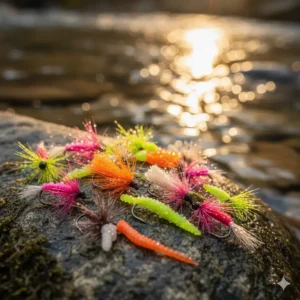
Frequently Asked Questions ❓
❓ What size hooks work best for beginner fly fishing for trout?
❓ How many different fly patterns do I really need to catch trout consistently?
❓ Should I buy expensive hand-tied flies or budget assortment packs?
❓ How do I match flies to specific fishing conditions and hatches?
❓ What's the difference between dry flies, nymphs, and streamers in terms of effectiveness?
Conclusion: Your Path to Consistent Success 🎯
We’ve covered a lot of ground in this comprehensive guide to the best flies for trout fishing. From understanding the fundamental principles of fly selection through detailed product reviews, technical analysis, real-world case studies, and future trends, you now have the knowledge to make informed decisions about building your fly collection.
The key takeaways are straightforward: Focus on proven patterns that have stood the test of time. The Parachute Adams, Woolly Bugger, Bead Head Pheasant Tail, Elk Hair Caddis, Prince Nymph, and Hare’s Ear Nymph form the foundation of an effective fly box because they consistently produce results across diverse conditions and water types.
Quality matters, but it doesn’t have to break your budget. The BASSDASH 64pcs Fly Fishing Assorted Flies Kit at $24.99 provides exceptional value for beginners and experienced anglers alike, offering comprehensive coverage that would cost $80-120 if purchased as individual patterns. Complement this foundation with specialized purchases like the Region Fishing Tungsten Pheasant Tail or Feeder Creek Premium Elk Hair Caddis as you identify what works best in your local waters.
Remember that success in fly fishing comes from more than just having the right flies. Proper presentation, accurate casting, effective strike detection, and respectful fish handling all contribute to your results. However, starting with quality fishing flies trout actually want to eat sets you up for success from your very first cast.
As you continue developing your skills and expanding your collection, revisit the principles discussed in this guide. The comparative analysis sections help you understand trade-offs between traditional and modern approaches. The case studies provide real-world examples of strategies that work. The future trends section prepares you for upcoming innovations and changes in the sport.
Most importantly, get out on the water and fish. Every hour spent casting improves your abilities more than any amount of reading or video watching. The flies recommended here will serve you well, but your growing experience will ultimately guide you toward the specific patterns and techniques that work best in your circumstances.
Tight lines, and may your fly boxes always be full of proven patterns that bring fish to hand!
🎁 Transform Your Fly Fishing Success Today!
Stop guessing which flies work and start catching more trout immediately. The products featured in this guide represent decades of proven effectiveness, tested by thousands of anglers across every type of water. Click the highlighted product names throughout this article to check current Amazon pricing and availability. Whether you’re building your first fly box or filling gaps in an existing collection, these fishing flies trout can’t resist will put more fish in your net. Your next trophy is waiting – give yourself the advantage of the right flies! 🎣
Recommended for You
- 10 Best Trout Fishing Hooks for Trophy Catches in 2025
- 10 Best Trout Fishing Lures That Will Transform Your Catch Rate in 2025
- 7 Best Bass Fishing Spinning Reels That Dominate Waters in 2025
Disclaimer: This article contains affiliate links. If you purchase products through these links, we may earn a small commission at no additional cost to you.
✨ Found this helpful? Share it with your friends! 💬🤗
