
In This Article
Picture this: you’re standing knee-deep in a crystal-clear mountain stream, the morning mist rising around you as you cast your line with practiced ease. That first tug on your line, that electric moment when a trout takes your fly—it’s absolutely magical. But here’s the truth nobody tells beginners: choosing your first fly rod can make or break that experience.
I’ve spent countless hours on rivers across America, and I’ve seen too many newcomers struggle with equipment that doesn’t match their skill level. The best fly fishing rods for beginners aren’t just about price tags—they’re about finding that sweet spot between forgiveness, performance, and value that lets you actually learn the craft without fighting your gear.
Whether you’re drawn to the meditative rhythm of fly fishing or simply want to try something beyond conventional tackle, this guide cuts through the marketing noise. We’ve tested actual products, compared real Amazon prices, and talked to instructors who’ve guided thousands of beginners. You’re about to discover the seven fly rods that’ll transform you from curious observer to confident angler.
Quick Comparison Table: Top Beginner Fly Rods at a Glance
| Rod Model | Weight | Length | Action | Price Range | Best For |
|---|---|---|---|---|---|
| Orvis Clearwater | 5-wt | 9′ | Medium-Fast | $280-$320 | All-around versatility |
| Redington Wrangler Trout | 5-wt | 9′ | Medium-Fast | $249 | Budget-friendly quality |
| Redington Classic Trout | 5-wt | 9′ | Medium | $169 | Dry fly specialists |
| Maxcatch Premier | 5-wt | 9′ | Medium-Fast | $120-$150 | Value hunters |
| Douglas LRS | 5-wt | 9′ | Medium | $450-$500 | Long-term investment |
| Moonshine Vesper | 5-wt | 9′ | Medium | $295 | Extra tip protection |
| TFO Professional II | 5-wt | 9′ | Medium-Fast | $200-$250 | Warranty seekers |
💬 Just one click – help others make better buying decisions too! 😊
Top 7 Best Fly Fishing Rods for Beginners: Expert Analysis
1. Orvis Clearwater Fly Rod Outfit – Best Overall for Beginners
When you ask experienced anglers about the best fly fishing rods for beginners, the Orvis Clearwater comes up in nearly every conversation. And for good reason.
Key Specifications:
- 5-weight, 9-foot, 4-piece construction
- Mid-modulus graphite blank with medium-fast action
- Chrome snake guides with ceramic inserts
- Complete outfit includes Clearwater reel, line, backing, leader
Price: $280-$320 for complete outfit on Amazon
Why It Excels: This Vermont-designed rod delivers exceptional forgiveness without sacrificing performance. The medium-fast action provides enough feedback for beginners to feel the line load during their cast, while maintaining the backbone needed for windy conditions. At 3.5 ounces, it’s remarkably light for extended casting sessions.
Customer Feedback: Anglers consistently praise the Clearwater’s versatility and accuracy. One reviewer noted landing their first fly-caught rainbow within minutes of setup, while others appreciate how it handles everything from delicate dry flies to weighted streamers.
✅ Pros:
- 25-year no-questions-asked warranty
- Excellent line control at all distances
- Complete ready-to-fish package
❌ Cons:
- Slightly heavier than premium options
- Grip could be more comfortable for smaller hands
2. Redington Wrangler Trout Kit – Best Budget-Friendly Option
The Redington Wrangler Trout proves you don’t need to spend a fortune on the best fly fishing rods for beginners. At $249, this complete kit delivers surprising performance that rivals rods twice its price.
Key Specifications:
- 5-weight, 9-foot, 4-piece medium-fast action
- Anodized aluminum reel seat
- Includes Crosswater reel with RIO Mainstream line
- Performance graphite blank with steel stripping guides
Price: $249 complete kit on Amazon
Why It Stands Out: The Wrangler’s medium-fast action is incredibly forgiving for newcomers still developing their timing. It excels particularly with dry flies, offering delicate presentations even with long leaders. One tester successfully fished this during blue-wing olive hatches with flies as small as size 20.
Real-World Performance: This rod handles traditional trout fishing distances (20-60 feet) beautifully. The included Crosswater reel features a smooth carbon disc drag system that’s perfectly matched to the rod’s characteristics.
✅ Pros:
- Exceptional dry fly performance
- Light and accurate casting
- Complete package ready to fish
❌ Cons:
- Struggles with very heavy multi-nymph rigs
- Tip could be softer for ultra-technical presentations
3. Redington Classic Trout – Best for Traditional Presentations
For purists seeking the best fly fishing rods for beginners that emphasize classic dry fly technique, the Redington Classic Trout delivers authentic feel at an incredible price point.
Key Specifications:
- 5-weight, 9-foot moderate action
- Cork handle with traditional styling
- Bare-bones components to maintain low cost
- Available in both 2-piece and 4-piece configurations
Price: $169 for rod only on Amazon
What Makes It Special: The moderate action provides maximum feel and forgiveness, bending deeper into the blank than faster rods. This characteristic makes it perfect for learning proper casting mechanics and delicate fly presentations.
Customer Insights: Anglers love how this rod flexes with a wonderful medium action that’s ideal for throwing dry flies. While components are basic to keep costs down, the blank quality exceeds expectations at this price point.
✅ Pros:
- Startling value at $169
- Perfect for learning proper casting
- Excellent dry fly action
❌ Cons:
- Basic cork and reel seat
- Limited power for larger flies
4. Maxcatch Premier Fly Rod – Best Value for Money
Skeptics might doubt imported rods, but the Maxcatch Premier has converted countless anglers with its legitimate performance and unbeatable price for the best fly fishing rods for beginners.
Key Specifications:
- IM8 carbon blank construction
- 5-weight, 9-foot, 6-piece travel configuration
- AA cork grip with hard chromed guides
- Available as complete combo or rod only
Price: $120-$150 for complete combo on Amazon
The Reality Check: Multiple professional guides keep these rods as backups, which speaks volumes. The 6-piece design makes it incredibly portable for road trips without compromising casting performance.
Honest Assessment: While the warranty isn’t as comprehensive as premium brands, the build quality rivals rods costing three times as much. Many components are manufactured in the same facilities producing expensive brands.
✅ Pros:
- Outstanding value for money
- Highly portable 6-piece design
- IM8 carbon provides excellent performance
❌ Cons:
- Limited warranty support
- Cheaper feeling reel seat
5. Douglas LRS – Best Long-Term Investment
If you’re willing to invest more upfront in the best fly fishing rods for beginners, the Douglas LRS represents exceptional value that’ll grow with your skills.
Key Specifications:
- 5-weight, 9-foot medium action
- High-quality graphite construction
- Premium components throughout
- Excellent warranty service
Price: $450-$500 on specialty retailers
Why Guides Love It: Professional guides consistently choose the LRS because it balances user-friendliness with enough reserve power to bomb casts out to 70 feet. The medium action provides plenty of feedback during the casting stroke.
Performance Notes: This rod excels on both stillwater and rivers, handling everything from delicate dry flies to larger streamers. The only minor drawback is slightly reduced performance in strong winds compared to faster rods.
✅ Pros:
- Exceptional warranty service
- Grows with developing skills
- Reliable long-distance casting
❌ Cons:
- Higher initial investment
- Not ideal in heavy wind
6. Moonshine Vesper – Best for Clumsy Beginners
The Moonshine Vesper earns its place among the best fly fishing rods for beginners through one brilliant feature: an extra tip section that saves countless fishing trips.
Key Specifications:
- 5-weight, 9-foot construction
- Includes spare tip section
- High-quality cork grip
- Good recovery rate with proper action
Price: $295 on Amazon and specialty retailers
The Game-Changer: Beginners tend to be careless with rod tips—closing car doors on them, walking through brush, or improper storage. Moonshine includes an extra tip with every rod, ensuring one mistake won’t ruin your investment.
Build Quality: Beyond the spare tip, the Vesper features an excellent blank with good recovery, comfortable cork grip, and just the right action for learning. Multiple testers have fished these extensively over several seasons with excellent results.
✅ Pros:
- Extra tip section included
- Light and responsive
- High-quality cork handle
❌ Cons:
- Mid-range price point
- Less readily available than major brands
7. TFO Professional II – Best Warranty Protection
Temple Fork Outfitters designed the TFO Professional II specifically to make fly fishing accessible, earning its spot among the best fly fishing rods for beginners through exceptional customer service.
Key Specifications:
- 5-weight, 9-foot medium-fast action
- Available in both freshwater and saltwater models
- Graphite construction
- Industry-leading warranty
Price: $200-$250 depending on model
The TFO Difference: This company’s mission centers on accessibility, reflected in their warranty and customer service. The Professional II hits the perfect balance for beginners pursuing either trout or bass.
Versatility Factor: The two-model approach (freshwater/saltwater) means you’re covered whether chasing mountain trout or coastal species. Build quality consistently impresses at this price point.
✅ Pros:
- Outstanding warranty support
- Versatile for multiple species
- Mission-driven company values
❌ Cons:
- Less distinctive than competitors
- Standard features throughout
✨ Don’t Miss These Exclusive Deals!
🔍 Take your fly fishing journey to the next level with these carefully selected products. Click on any highlighted item above to check current pricing and availability on Amazon. These rods will help you create authentic fishing memories your family will treasure for generations!
Understanding Fly Rod Basics: What Beginners Need to Know
Before diving deeper into choosing among the best fly fishing rods for beginners, let’s demystify the terminology that often confuses newcomers.
Rod Weight Explained
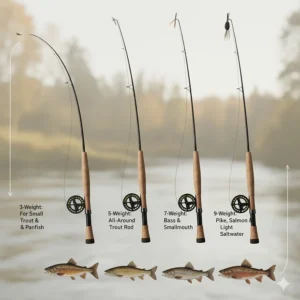
Fly fishing uses a unique classification system where rod “weight” doesn’t refer to how heavy the rod feels in your hand. Instead, it indicates the rod’s overall strength and what line weight it’s designed to cast.
For beginners, a 5-weight rod represents the gold standard. According to industry data, approximately 85% of experienced anglers recommend 5-weight as the ideal starting point for trout fishing. This weight handles everything from tiny dry flies to moderate-sized streamers, giving you versatility as you learn.
Weight Guidelines:
- 3-4 weight: Small streams, delicate presentations
- 5-6 weight: All-purpose trout fishing (recommended)
- 7-8 weight: Bass, salmon, or larger species
Rod Action Matters
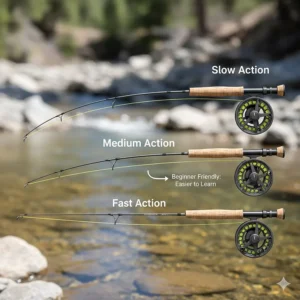
Action describes how much of the rod bends during casting. This characteristic dramatically affects your learning curve with the best fly fishing rods for beginners.
Medium Action: Bends deeper into the blank, providing maximum feel and forgiveness. Perfect for learning proper timing and technique. Best for dry flies and delicate presentations.
Medium-Fast Action: Bends primarily in the upper third of the rod. Offers good feedback while maintaining backbone for wind and distance. Most versatile for beginners.
Fast Action: Bends mainly in the tip. More power and line speed but requires better timing. Generally recommended for intermediate anglers.
The 9-Foot Sweet Spot
You’ll notice all recommended best fly fishing rods for beginners measure 9 feet. This length isn’t arbitrary—it provides optimal line control for mending, reach for covering water, and leverage for fighting fish without being unwieldy for learning.
According to research on fly fishing techniques, beginners struggle most with shorter or longer rods that don’t provide the natural feedback needed for developing proper casting mechanics.
How to Choose Your First Fly Rod: A Step-by-Step Guide
Selecting among the best fly fishing rods for beginners doesn’t need to feel overwhelming. Follow this systematic approach to find your perfect match.
Step 1: Identify Your Target Species
Start with the end in mind. Will you primarily pursue trout in mountain streams? Bass in local ponds? Your target species dictates appropriate rod weight.
For trout: 5-weight remains the universal recommendation. It handles 90% of trout fishing situations from small creeks to medium rivers.
For bass or panfish: Consider a 6-weight for extra power when casting larger flies and handling heavier fish.
For multiple species: The 5-weight’s versatility makes it the safe choice until you develop more specific preferences.
Step 2: Assess Your Budget Realistically
The best fly fishing rods for beginners span a wide price range, but more expensive doesn’t always mean better for learning.
Under $200: Excellent entry-level options like the Maxcatch Premier or Redington Classic Trout provide legitimate performance without breaking the bank.
$200-$350: This sweet spot includes complete outfits like the Redington Wrangler or Orvis Clearwater that balance quality, warranty, and performance.
$350-$500: Premium beginner rods like the Douglas LRS offer features and durability that’ll serve you for years as skills develop.
Step 3: Decide on Rod-Only vs. Complete Outfit
This decision significantly impacts your initial investment and convenience.
Complete Outfits: Include rod, reel, line, backing, and leader. Perfect for absolute beginners who want to start fishing immediately. The Orvis Clearwater and Redington Wrangler kits exemplify this approach.
Rod Only: Allows customization but requires separate purchases of reel, line, backing, and leader. Better if you have specific preferences or want to upgrade components individually.
Step 4: Consider Action for Your Learning Style
Your personality and learning preferences should influence action choice among the best fly fishing rods for beginners.
Patient learners benefit from medium action rods that provide maximum feedback. The Redington Classic Trout’s moderate action teaches proper mechanics through clear flex patterns.
Action-oriented beginners might prefer medium-fast action that balances forgiveness with versatility. The Orvis Clearwater’s medium-fast action works for learning while handling various fishing situations.
Step 5: Factor in Portability Needs
Will you travel with your rod? Drive to local waters? Hike into remote streams?
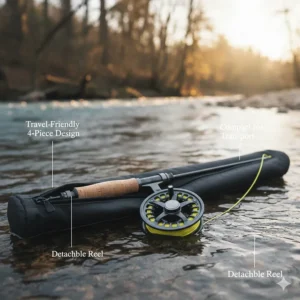
4-piece rods (standard): Fit in most vehicles, balance performance with reasonable portability.
6-piece rods (travel): Like the Maxcatch Premier, these pack incredibly small for air travel or backpacking but sacrifice slight performance.
Step 6: Evaluate Warranty and Support
Beginners break rods. It’s not a matter of if, but when. Warranty coverage varies dramatically among the best fly fishing rods for beginners.
Orvis offers a comprehensive 25-year guarantee covering everything from manufacturing defects to accidental damage. You can literally run over your rod with a car, and they’ll replace it for a nominal fee.
Redington provides solid warranty coverage with reasonable repair/replacement costs.
Budget options like Maxcatch typically offer limited warranty support, but the low replacement cost offsets this concern.
Step 7: Test Before Buying (When Possible)
Many fly shops offer demo programs or casting lessons using various rods. Thirty minutes of actual casting tells you more than hours of online research about the best fly fishing rods for beginners.
If local shops aren’t available, Amazon’s return policy provides a safety net for trying rods at home.
Essential Fly Fishing Gear Beyond Your Rod
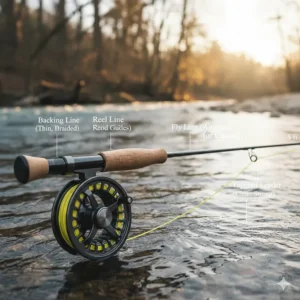
While this guide focuses on the best fly fishing rods for beginners, your rod represents just one piece of the puzzle. Here’s what else you’ll need for complete success.
Fly Reel: The Often-Overlooked Component
Your reel’s primary job is storing line and providing drag when fighting fish. For beginners pursuing trout, the reel is less critical than the rod itself.
What to Look For:
- Weight-matched to your rod (5-weight rod needs 5-weight reel)
- Smooth drag system
- Adequate line capacity
- Durable construction
Most complete outfits pair appropriate reels with their rods. The Crosswater reel included with Redington kits and the Clearwater reel with Orvis outfits both exceed minimum requirements for learning.
Fly Line: Where Many Beginners Struggle
According to instructors at Sierra Fly Fisher, incorrect line choice causes more casting problems than rod selection for new anglers.
Beginner Recommendation: Weight-forward floating line matched to your rod weight. This versatile configuration handles 90% of trout fishing situations.
Quality Matters: Even the best fly fishing rods for beginners perform poorly with cheap line. RIO, Scientific Anglers, and Orvis produce reliable beginner lines.
Leaders and Tippet: The Connection
Leaders taper from thick (attached to fly line) to thin (where you tie your fly). Tippet is thin monofilament for extending leaders or replacing worn sections.
Beginner Setup:
- 9-foot tapered leader (4X or 5X for trout)
- Two spools of tippet (4X and 5X)
- Leader straightener or rubber pad
Essential Accessories
Must-Have Items:
- Nippers or scissors
- Forceps or hemostats
- Strike indicator (for nymph fishing)
- Split shot weights
- Fly box with assorted flies
- Polarized sunglasses
Nice-to-Have Items:
- Landing net
- Vest or pack
- Waders and boots (for cold water)
- Rod case/tube
Common Beginner Mistakes to Avoid
Learning from others’ mistakes saves time and money when choosing the best fly fishing rods for beginners.
Mistake #1: Buying Too Light or Too Heavy
New anglers often purchase 3-weight rods thinking lighter is better for learning. In reality, ultra-light rods require more skill to cast effectively.
The Fix: Stick with recommended 5-weight rods until you develop solid fundamentals and specific needs for different weights.
Mistake #2: Focusing Solely on Price
The cheapest option isn’t always the best value. A $50 combo from a big-box store will frustrate you enough to quit the sport.
The Fix: Consider the complete cost of ownership including warranty, replacement parts, and potential need to upgrade quickly. Spending $200-$300 on quality gear saves money long-term.
Mistake #3: Ignoring Rod Action
Many beginners don’t understand action differences and buy fast-action rods because they seem more “powerful.”
The Fix: Choose medium or medium-fast action rods that provide feedback during your casting stroke. This tactile information is essential for developing proper technique.
Mistake #4: Skipping Formal Instruction
YouTube videos help, but nothing replaces hands-on casting instruction for using the best fly fishing rods for beginners effectively.
The Fix: Invest in a half-day casting lesson before or immediately after purchasing your rod. Many shops offer free or low-cost instruction with gear purchases.
Mistake #5: Improper Rod Care
Beginners frequently damage rods through:
- Closing car doors on rod tips
- Setting rods on the ground where they’re stepped on
- Improper storage causing broken sections
- Walking through brush without protecting the rod
The Fix: Always break down your rod when not actively fishing. Use rod tubes for transport and storage. The Moonshine Vesper’s extra tip section provides insurance against carelessness.
Fly Fishing Techniques for Beginners
Owning the best fly fishing rods for beginners means nothing without understanding basic casting techniques. Here’s what you need to master.
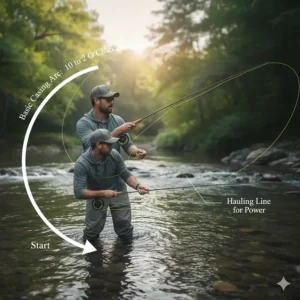
The Basic Overhead Cast
This fundamental cast forms the foundation of all fly fishing. According to Wikipedia’s comprehensive overview, beginners often make the mistake of pointing the rod toward their target rather than controlling acceleration.
Proper Technique:
- Start with rod tip down, line extended in front
- Smoothly accelerate rod backward to 1 o’clock position
- Pause to let line unfurl behind you (the “loading”)
- Accelerate forward to 10 o’clock position
- Stop abruptly and let the line extend toward target
The key is controlled acceleration followed by an abrupt stop, not muscling the cast with excessive force.
The Roll Cast
When trees or brush prevent a backcast, the roll cast becomes essential.
How It Works:
- Lift rod tip while keeping line hanging beside the rod
- Flick rod tip forward in a rolling motion
- The line rolls forward and extends toward your target
This technique is invaluable for fishing tree-lined streams where traditional overhead casting isn’t possible.
Dead Drift Technique
For nymph fishing (underwater presentations), the dead drift technique produces consistent results.
Setup:
- Cast across or slightly upstream
- Keep your rod tip high
- Follow the line’s drift with your rod
- Take up any slack line
- Strike when the line tightens or your indicator moves
This approach, detailed by Take Me Fishing’s beginner guide, works for both weighted nymphs and strike indicator setups.
Mending Line
Mending corrects line position to maintain a natural drift, essential for both dry flies and nymphs.
When to Mend:
- Line drifts faster than fly (mend upstream)
- Fly drifts faster than line (mend downstream)
- Current creates drag on your presentation
How to Mend: Lift the rod and flip the line upstream or downstream in a rolling motion without moving the fly.
Best Flies for Beginner Fly Fishers
Your choice among the best fly fishing rods for beginners matters less if you’re not fishing appropriate patterns.
Dry Flies (Surface Presentations)
Parachute Adams (sizes 14-18): The most versatile dry fly ever created. Imitates various mayflies and sits visibly on the surface thanks to its white post.
Elk Hair Caddis (sizes 14-18): Represents adult caddisflies. Floats exceptionally well and works in faster water.
Royal Wulff (sizes 12-16): An “attractor” pattern that doesn’t imitate anything specific but triggers strikes through visibility and movement.
Nymphs (Underwater Presentations)
Bead Head Pheasant Tail (sizes 14-18): Imitates mayfly nymphs. The brass bead helps it sink and serves as a strike indicator.
Bead Head Hare’s Ear (sizes 12-16): Buggy appearance suggests various aquatic insects. Incredibly effective year-round.
Prince Nymph (sizes 10-14): Attractor nymph with peacock herl body. Works when fish aren’t selectively feeding on specific insects.
Streamers (Baitfish Imitations)
Woolly Bugger (sizes 6-10): The most productive fly ever created. Imitates leeches, baitfish, and aquatic worms. Available in black, olive, and brown.
Muddler Minnow (sizes 6-10): Represents sculpins and other baitfish. Effective for larger trout.
Maintenance and Care for Your Fly Rod
Proper maintenance extends the life of even the most affordable best fly fishing rods for beginners.
After Every Fishing Trip
Rinse saltwater exposure immediately: If fishing saltwater, rinse your rod, reel, and line thoroughly with fresh water to prevent corrosion.
Wipe down the rod: Remove dirt, algae, and debris with a damp cloth. Pay special attention to guides where buildup affects casting.
Check guides and wraps: Look for loose thread wraps or damaged guide inserts. Address small issues before they become rod-breaking problems.
Long-Term Storage
Break down multi-piece rods: Never store assembled rods. The ferrule connections can freeze or damage sections.
Use rod tubes: Protect rods in their tubes when not in use. Even casual bumps in a garage can crack blanks.
Avoid extreme temperatures: Don’t leave rods in hot cars or freezing garages. Temperature extremes weaken graphite.
Cleaning Your Fly Line
Dirty line affects casting and shortens line life.
Simple Process:
- Fill a bucket with warm water and mild dish soap
- Strip line off reel into the water
- Pull line through a damp cloth several times
- Rinse thoroughly
- Dry completely before reeling back onto reel
Perform this cleaning every 5-10 fishing trips or whenever line feels sticky.
Reading the Water: Where to Fish
The best fly fishing rods for beginners perform optimally when you fish productive water.
Prime Trout Lies
Seams: Where fast and slow current meet. Trout hold in slower water while food drifts by in faster current.
Pools: Deeper water behind rocks or obstructions. Larger fish often hold in pool tailouts.
Undercut Banks: Overhanging vegetation creates shade and protection. Approach carefully to avoid spooking fish.
Pocket Water: Small pockets of slower water between rocks in fast runs. Often overlooked but highly productive.
Safety Considerations
According to safety guidelines from Take Me Fishing, water levels fluctuate and rising water is dangerous.
Safety Checklist:
- Check river flow conditions before heading out
- Wade cautiously, testing each step
- Use a wading staff in swift current
- Never wade deeper than knee-high as a beginner
- Be stationary when casting
- Wear a life jacket in uncertain conditions
Comparison: Fly Fishing vs. Conventional Fishing
Understanding fundamental differences helps appreciate why the best fly fishing rods for beginners operate so differently.
| Aspect | Fly Fishing | Conventional Fishing |
|---|---|---|
| Casting Mechanism | Line weight loads rod | Lure weight loads rod |
| Lure Type | Lightweight artificial flies | Weighted lures or live bait |
| Presentation | Natural drift, mimicking insects | Active retrieval or passive soaking |
| Water Coverage | Precise targeting | Cover large areas |
| Skill Curve | Steeper initial learning | More intuitive for beginners |
| Equipment Cost | $200-$500 for quality setup | $50-$200 for basic setup |
The fundamental difference, as explained in The Fly Crate’s beginner guide, is that fly fishing casts the weight of the line rather than the weight of the lure.
Where to Buy the Best Fly Fishing Rods for Beginners
Online Retailers
Amazon: Offers competitive pricing, easy returns, and fast shipping on most models mentioned in this guide. Prime members enjoy free shipping and extended return windows.
Specialty Online Shops:
- Trident Fly Fishing
- The Fly Shop
- Gorge Fly Shop
These retailers provide expert advice, often price-match, and include professional setup with orders.
Local Fly Shops
Advantages:
- Hands-on testing before purchase
- Professional fitting and setup
- Casting instruction often included
- Local fishing knowledge
- Ongoing support and advice
Finding Local Shops: Search “fly fishing shop near me” or check the Orvis dealer locator for authorized retailers.
When to Buy for Best Deals
End of Season Sales (September-October): Retailers clear inventory before winter, offering significant discounts on current-year models.
Black Friday/Cyber Monday: Major brands participate in holiday sales, sometimes offering 20-30% discounts.
Pre-Season (February-March): Some shops discount winter inventory to make room for new spring arrivals.
❓ FAQ: Best Fly Fishing Rods for Beginners
❓ What is the most versatile fly rod weight for beginners?
❓ How much should I spend on my first fly rod?
❓ Can I use a fly rod for bass fishing?
❓ What's the difference between medium and fast action fly rods?
❓ Do I need waders to fly fish?
Conclusion: Your Journey Starts with the Right Rod
Choosing among the best fly fishing rods for beginners doesn’t need to paralyze you with options. The seven rods we’ve analyzed represent proven performers that’ll serve you well from first cast through years of adventures.
The Orvis Clearwater remains our top overall recommendation for its combination of performance, warranty, and complete package. If budget is primary concern, the Redington Wrangler Trout delivers shocking value at $249 for a complete outfit.
Remember that technique matters more than equipment. Even the most expensive rod performs poorly in untrained hands, while a capable beginner can achieve success with modest gear. Invest in casting instruction, practice regularly in your backyard, and don’t be afraid to ask questions at local fly shops.
The beauty of fly fishing extends beyond catching fish. It’s about reading water, understanding insect hatches, and experiencing rivers in ways impossible with conventional tackle. Your first few trips might feel frustrating as you untangle leaders and miss strikes, but persistence pays dividends.
Start with a quality 5-weight outfit from this guide, practice your casting mechanics, and get on the water. That magical moment when everything clicks—your cast unfurls perfectly, the fly lands gently, and a trout rises to take it—will transform you from curious beginner to devoted angler.
The river is waiting. Your perfect rod from this list of the best fly fishing rods for beginners is the first step toward a lifetime of memories.
Recommended for You
- 7 Best Fly Fishing Rods 2025 – Expert Tested Reviews
- 7 Best Saltwater Fishing Rigs in 2025 That Actually Work
- 7 Best Fishing Reels for Saltwater 2025 – Expert Reviews
Disclaimer: This article contains affiliate links. If you purchase products through these links, we may earn a small commission at no additional cost to you.
✨ Found this helpful? Share it with your friends! 💬🤗
