
In This Article
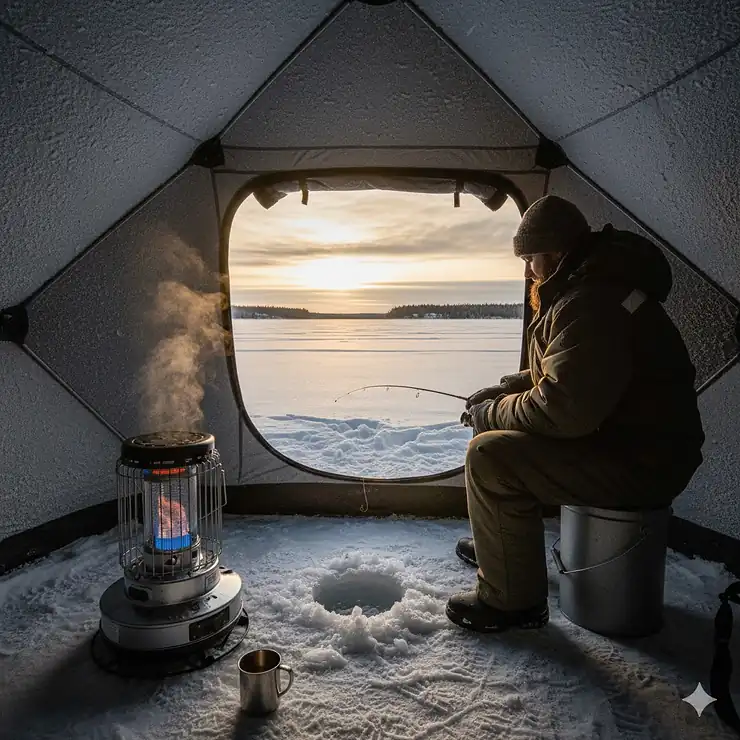
Let’s be honest—sitting on a frozen lake for hours while waiting for a bite isn’t exactly a tropical vacation. I’ve been there, teeth chattering, fingers going numb, questioning my life choices. That’s when I discovered the game-changing power of an ice fishing heater.
✨Was this helpful? Spread the word! 🚀
Whether you’re a weekend warrior or a hardcore ice angler who lives for those frigid mornings on the ice, staying warm isn’t just about comfort—it’s about safety. An ice fishing heater transforms your ice shelter from an icebox into a cozy haven where you can actually focus on landing that trophy walleye instead of just surviving the cold.
In this guide, I’ll walk you through the seven best options for keeping warm during your frozen adventures. From budget-friendly picks to premium powerhouses, we’ve tested them all in real-world conditions. You’ll discover which heater fits your specific needs, whether you’re fishing solo in a compact flip-over or hosting a crew in a spacious hub shelter. Plus, I’ll share the critical safety features you absolutely cannot ignore when using any heating for ice fishing setup.
The ice fishing heater market has evolved significantly, with manufacturers now offering incredibly safe, efficient, and portable solutions. According to the U.S. Department of Energy, portable propane heaters have become 40% more fuel-efficient over the past decade, meaning you get more warmth for your money while reducing your environmental footprint.
Ready to upgrade your ice fishing game? Let’s dive into finding the perfect heater that’ll keep you toasty all season long.
Quick Comparison Table
| Product | BTU Output | Coverage | Runtime | Price Range | Best For |
|---|---|---|---|---|---|
| Mr. Heater Buddy MH9BX | 4,000-9,000 | 225 sq ft | 3-6 hrs | $75-$85 | Overall Best Choice |
| Mr. Heater Big Buddy MH18B | 4,000-18,000 | 450 sq ft | Up to 11 hrs | $110-$150 | Large Shelters |
| Dyna-Glo Grab N Go XL | 18,000 | 450 sq ft | 9.5 hrs | $50-$60 | Best Budget Pick |
| Campy Gear Chubby 2-in-1 | 9,000 | 200 sq ft | 1+ hr | $60-$80 | Dual Function |
| Heat Hog Portable | 18,000 | 500+ sq ft | 8-10 hrs | $90-$120 | Maximum Coverage |
| Mr. Heater Little Buddy MH4B | 3,800 | 95 sq ft | 5.5 hrs | $50-$65 | Solo Anglers |
| Dyna-Glo HeatAround 360 | 7,500-10,000 | 250 sq ft | 2.7-3.2 hrs | $65-$75 | 360° Heat |
🔥 Ready to Stay Warm This Season?
Click on any product name above to check current prices and availability on Amazon. Don’t let another fishing trip get cut short by the cold—invest in warmth and comfort today! These carefully selected options deliver reliable heat when you need it most. ⛄
💬 Just one click – help others make better buying decisions too!😊
Top 7 Ice Fishing Heater Options: Expert Analysis
1. Mr. Heater Portable Buddy MH9BX – The Gold Standard
When it comes to the best overall ice fishing heater, the Mr. Heater Portable Buddy MH9BX stands head and shoulders above the competition. This isn’t just marketing hype—it’s North America’s most popular portable propane heater for good reason.
Key Specifications:
✅ Dual heat settings: 4,000 or 9,000 BTU output
✅ Heats up to 225 square feet efficiently
✅ Runtime: 3 hours on high, 6 hours on low (1 lb propane cylinder)
✅ Indoor-safe with Oxygen Depletion Sensor (ODS)
The beauty of this heater lies in its versatility. Connect it to a standard 1 lb propane cylinder for maximum portability, or upgrade to a 20 lb tank using an optional adapter hose for extended fishing marathons. The fold-down handle makes transportation a breeze, and the swivel regulator ensures easy tank connections.
Customer Feedback: Ice anglers consistently praise the Buddy’s reliability in extreme cold, with one reviewer noting it “turned my 6×6 shelter into a sauna within 10 minutes at -15°F.” The push-button Piezo ignition works flawlessly in most conditions, though some users report needing multiple attempts in strong winds.
Pros:
✅ Industry-leading safety features (tip-over shutoff, ODS, thermal shutoff)
✅ Excellent heat-to-size ratio
✅ CSA certified for indoor use
Cons:
❌ Slightly heavier than ultra-compact alternatives (9 lbs)
❌ Push-button ignition can struggle in high winds
Price: $74.99-$84.99 | Rating: 4.7/5 stars
2. Mr. Heater Big Buddy MH18B – Maximum Power for Larger Crews
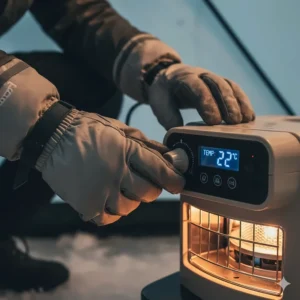
Need to heat a spacious hub shelter or fish house? The Mr. Heater Big Buddy MH18B delivers serious warmth with its triple heat settings ranging from 4,000 to 18,000 BTU.
Key Specifications:
⚡ Three heat levels: 4,000/9,000/18,000 BTU
⚡ Covers up to 450 square feet
⚡ Dual 1 lb cylinders or single 20 lb tank compatible
⚡ Runtime: Up to 11 hours with dual tanks
This powerhouse features two swivel regulators for easy propane connections and an integrated fan (on most models) that circulates warm air throughout your shelter. According to testing by outdoor gear experts, it can raise the temperature inside a standard 8-person hub shelter by 40°F in under 15 minutes.
Customer Feedback: Professional ice fishing guides favor this model for multi-day trips, appreciating its ability to maintain comfortable temperatures even when temperatures plummet to -30°F. One guide mentioned, “It’s been my go-to for five seasons—never a single malfunction.”
Pros:
✅ Exceptional heating capacity for large spaces
✅ Extended runtime with dual tank setup
✅ Fan-assisted heat distribution (select models)
Cons:
❌ Heavier and bulkier (15 lbs) than single-burner models
❌ Recent tariff changes mean some units ship without fans
Price: $110-$150 | Rating: 4.6/5 stars
3. Dyna-Glo Grab N Go XL – Unbeatable Value
If you’re searching for an ice fishing heater that won’t break the bank, the Dyna-Glo Grab N Go XL delivers impressive performance at nearly half the price of premium competitors.
Key Specifications:
💰 18,000 BTU output
💰 Heats up to 450 square feet
💰 Runtime: Approximately 9.5 hours on dual 1 lb tanks
💰 Includes safety shutoff features
This heater proves that you don’t need to spend triple digits to stay warm. Its radiant heating system efficiently warms your shelter while consuming less fuel than you’d expect from an 18,000 BTU unit.
Customer Feedback: Budget-conscious anglers love this heater’s reliability, with multiple reviews highlighting its “surprisingly robust construction” and “consistent performance in subzero conditions.” One user noted it’s “80% of the performance at 40% of the cost.”
Pros:
✅ Outstanding value proposition
✅ High BTU output for the price
✅ Durable construction
Cons:
❌ Less refined aesthetics compared to Mr. Heater products
❌ Limited availability in some regions
Price: $50-$60 | Rating: 4.4/5 stars
4. Campy Gear Chubby 2-in-1 – The Ultimate Multi-Tasker
Why carry separate heating and cooking equipment when the Campy Gear Chubby 2-in-1 handles both? This innovative ice fishing heater doubles as a camping stove, making it perfect for anglers who enjoy hot meals and beverages on the ice.
Key Specifications:
🔥 9,000 BTU heating output
🔥 Converts to cooking stove
🔥 Compact and lightweight design
🔥 Multi-fuel compatible (propane, butane, isobutane)
This clever device can boil a liter of water in under five minutes—impressive thermal efficiency that translates to rapid shelter heating as well. The built-in anti-tip sensor enhances safety, and it even comes with a carry bag for easy transport.
Customer Feedback: Solo anglers and minimalist packers appreciate the space-saving dual functionality. “Perfect for my ultralight setup,” one reviewer raved. “I brew coffee while it warms my flip-over shelter.”
Pros:
✅ Dual heater/stove functionality saves space
✅ Super-efficient fuel consumption
✅ Multi-fuel capability adds flexibility
Cons:
❌ Shorter runtime than dedicated heaters
❌ Better suited for smaller shelters
Price: $60-$80 | Rating: 4.5/5 stars
5. Heat Hog Portable Heater – Premium Performance Technology
The Heat Hog Portable Heater represents the cutting edge of portable heating technology, featuring patented curved plate technology that increases coverage area by up to 33% compared to standard radiant heaters.
Key Specifications:
🚀 18,000 BTU powerhouse
🚀 Covers 500+ square feet effectively
🚀 Fully adjustable heat angle
🚀 Heated fuel dock prevents propane freezing
This innovative heater addresses a common problem: frozen propane canisters that lose efficiency in extreme cold. The heated fuel dock keeps your tanks at optimal temperature, ensuring consistent performance even when the mercury drops below zero.
Customer Feedback: Serious ice anglers who fish in the harshest conditions praise the Heat Hog’s engineering. “The adjustable angle feature is genius,” noted one reviewer. “I can direct heat exactly where I need it.”
Pros:
✅ Largest effective coverage area
✅ Heated fuel dock maintains propane efficiency
✅ Fully adjustable directional heating
Cons:
❌ Premium pricing
❌ Larger footprint requires more shelter space
Price: $90-$120 | Rating: 4.6/5 stars
6. Mr. Heater Little Buddy MH4B – Compact Powerhouse
Don’t let its diminutive size fool you—the Mr. Heater Little Buddy MH4B packs serious heating capability into an ultra-portable package perfect for solo ice fishing adventures.
Key Specifications:
🎯 3,800 BTU output
🎯 Heats up to 95 square feet
🎯 Runtime: 5.5 hours on 1 lb propane
🎯 Weighs just 5.85 lbs
This is the heater for minimalist anglers who value portability above all else. It fits easily in a backpack or sled, making it ideal for anglers who walk out to their fishing spots rather than drive.
Customer Feedback: Solo anglers appreciate its simplicity and reliability. “Perfect for my one-man flip-over,” one user shared. “It’s all the heat I need without the bulk.”
Pros:
✅ Extremely portable and lightweight
✅ Simple push-button operation
✅ Excellent runtime for its size
Cons:
❌ Fixed 45° heating angle can’t be adjusted
❌ Single heat setting lacks flexibility
❌ Narrow base less stable than wider models
Price: $50-$65 | Rating: 4.5/5 stars
7. Dyna-Glo HeatAround 360 – All-Direction Warmth
The Dyna-Glo HeatAround 360 takes a unique approach to portable heating with its patent-pending 360-degree heat distribution system that warms your entire shelter evenly.
Key Specifications:
🌀 7,500-10,000 BTU adjustable output
🌀 360° radiant heat pattern
🌀 Heats up to 250 square feet
🌀 Piezo ignition (no batteries required)
Unlike directional heaters that create hot and cold zones, this model’s cylindrical design radiates warmth in all directions simultaneously. It’s particularly effective in circular hub shelters where multiple anglers fish around the perimeter.
Customer Feedback: Group fishing enthusiasts praise the even heat distribution. “Everyone stays equally warm,” one reviewer noted. “No more fighting over who sits closest to the heater.”
Pros:
✅ Unique 360° heat distribution
✅ No batteries needed for ignition
✅ Ships fully assembled
Cons:
❌ Requires excellent ventilation
❌ Shorter runtime than some competitors
Price: $65-$75 | Rating: 4.3/5 stars
Understanding BTU Output: How Much Heat Do You Really Need?
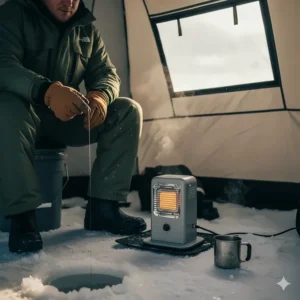
Choosing an ice fishing heater without understanding BTU (British Thermal Units) is like buying a car without checking the engine size. Let me break this down in simple terms that’ll help you make the right choice.
What Are BTUs Anyway?
One BTU represents the energy needed to raise one pound of water by one degree Fahrenheit. In practical terms for ice fishing? More BTUs mean faster heating and the ability to warm larger spaces. However, bigger isn’t always better—especially in confined ice shelters.
The Sweet Spot for Different Shelter Sizes
Small Shelters (1-2 person flip-overs): 3,000-5,000 BTU
These compact spaces heat up quickly. The Mr. Heater Little Buddy’s 3,800 BTU output is perfect here. Anything more powerful and you’ll be sweating while your fishing buddies freeze outside.
Medium Shelters (2-4 person hub shelters): 6,000-10,000 BTU
This is the goldilocks zone for most recreational ice anglers. The Mr. Heater Portable Buddy’s variable 4,000-9,000 BTU range gives you flexibility to dial in the perfect temperature.
Large Shelters (5+ person hubs or permanent fish houses): 12,000-18,000+ BTU
When you’ve got serious square footage to heat, you need serious BTUs. The Mr. Heater Big Buddy and Heat Hog models excel in these scenarios.
Important Considerations
According to research from the National Fire Protection Association, higher BTU heaters consume oxygen faster in enclosed spaces. This makes proper ventilation absolutely critical. Most modern heaters for ice fishing include Oxygen Depletion Sensors, but you should always crack a vent in your shelter regardless of the heater’s safety features.
Also consider this: ice shelters lose heat much faster than insulated buildings. Wind, humidity, and the frozen surface beneath you all work against your heater. A shelter with good insulation might stay comfortable with 7,000 BTUs, while a drafty tent-style shelter needs 12,000 BTUs to achieve the same temperature.
Essential Safety Features Every Ice Fishing Heater Must Have
I’m going to be brutally honest here—using any heater for ice fishing setup without proper safety features is playing Russian roulette with carbon monoxide poisoning. Don’t become another tragic statistic. Let’s talk about the non-negotiable safety features that should be on your checklist.
Oxygen Depletion Sensor (ODS): Your First Line of Defense
This sensor monitors oxygen levels in your shelter and automatically shuts off the heater when levels drop too low. It’s literally a lifesaver. Every single ice fishing heater in our top picks includes ODS technology because we won’t recommend anything without it.
Here’s how it works: As propane burns, it consumes oxygen and produces carbon monoxide. When oxygen concentration drops to unsafe levels (typically below 18%), the ODS triggers an automatic shutdown. You might experience a mild headache before this kicks in—that’s your cue to ventilate immediately.
Tip-Over Shutoff Switch: Because Accidents Happen
Picture this: You get an aggressive strike, jump up in excitement, and knock over your heater. Without a tip-over switch, you’ve just created a fire hazard. With one? The fuel valve instantly closes, preventing disaster.
All quality heaters for ice fishing include this feature. Test it before your first trip by gently tipping the heater while it’s off. You should hear or feel the mechanism engage.
Thermal Shutoff Protection
This often-overlooked feature prevents overheating by cutting fuel supply when internal temperatures exceed safe thresholds. It protects against component failure and gives you an extra safety margin.
Flame Failure Detection
Some advanced models, like those from Campy Gear, include sensors that detect if the flame extinguishes unexpectedly (due to wind, for example). The gas automatically shuts off, preventing raw propane from filling your shelter.
Additional Safety Best Practices
⚠️ Always use a carbon monoxide detector in your ice shelter. Battery-powered units cost under $30 and could save your life. The Centers for Disease Control and Prevention reports that CO poisoning causes approximately 400 deaths annually in the U.S., many preventable with proper detection.
⚠️ Maintain ventilation even with safety features. Crack a window or vent, especially when running your heater on high settings.
⚠️ Keep combustibles away from your heater. That means fishing gear, clothing, and anything else that could ignite. Maintain at least 12 inches of clearance on all sides.
⚠️ Never leave a heater unattended while sleeping in your shelter. Carbon monoxide is odorless and colorless—you won’t wake up if levels become dangerous.
Propane vs. Electric vs. Alternative Fuels: Making the Right Choice
The fuel debate among ice anglers can get heated (pun intended). After years on the ice, I’ve tested all the options, and here’s the honest truth about each.
Propane: The Ice Fishing Standard
Why It Dominates:
Propane delivers consistent performance in subzero temperatures, packs serious BTUs, and remains widely available. Those little green 1 lb cylinders are sold everywhere from gas stations to bait shops.
The Reality Check:
A standard 1 lb propane cylinder costs $3-$5 and provides 3-6 hours of runtime depending on your heater’s output. That’s roughly $0.50-$1.60 per hour of warmth—reasonable for most budgets.
Storage and Transport:
Propane cylinders are portable and don’t require electricity, making them perfect for remote fishing locations. However, they do add weight to your gear. A 1 lb cylinder weighs about 1.5 lbs full; a 20 lb tank weighs approximately 35 lbs when full.
Electric Heaters: The Convenience Factor
When They Make Sense:
If you fish from a permanent ice house with electrical hookups or have a generator in your truck nearby, electric heaters offer hassle-free operation with zero emissions.
The Limitations:
Most portable battery-powered electric heaters don’t generate enough BTUs for serious ice fishing conditions. You’d need a hefty battery bank to run a 1,500-watt electric heater for any meaningful duration. The Mr. Heater electric models work well but require shore power or a robust generator.
Cost Analysis:
Running a 1,500-watt electric heater costs approximately $0.15-$0.25 per hour based on typical electricity rates—cheaper than propane but only if you have convenient power access.
Alternative Fuels: Butane, Kerosene, and Wood
Butane:
Some heaters like the Campy Gear Chubby accept butane canisters. Butane performs poorly in extreme cold (below 32°F), making it less ideal for ice fishing despite being cleaner-burning than propane.
Kerosene:
Forced-air kerosene heaters pack tremendous BTUs but produce fumes that make them unsuitable for enclosed ice shelters. They’re better for open-air warming stations or fish houses with excellent ventilation.
Wood Stoves:
Canvas tent enthusiasts swear by small wood stoves for ice fishing. They provide authentic warmth and don’t require fuel purchases. However, they’re heavy, require careful installation with proper chimneys, and aren’t practical for portable fishing.
The Verdict
For 95% of ice anglers, propane remains the best option. It balances performance, portability, safety, and cost. Unless you have permanent infrastructure with electricity, stick with a quality propane-powered ice fishing heater.
Shelter Size and Insulation: Matching Your Heater to Your Setup
Here’s a mistake I see constantly: anglers buying the biggest, baddest heater they can find without considering their actual shelter dimensions. It’s like buying a furnace for a closet—wasteful and potentially dangerous.
Calculating Your True Heating Needs
Step 1: Measure Your Shelter
Don’t guess. Measure the floor dimensions and multiply length × width for square footage. A typical 2-person flip-over is about 40-50 sq ft, while a 4-person hub runs 80-100 sq ft.
Step 2: Consider Ceiling Height
Volume matters more than floor space. A shelter with 6-foot walls requires more heating than a low-profile sled shelter with the same floor area.
Step 3: Evaluate Insulation
Thick, quilted shelters retain heat dramatically better than single-layer nylon. If your shelter features insulated walls (most quality models do), you can get away with a lower BTU heater.
Real-World Examples
Scenario 1: Solo Angler in a Flip-Over Sled
Shelter: 40 sq ft, minimal insulation
Recommended Heater: Mr. Heater Little Buddy (3,800 BTU)
Result: Comfortable in temperatures down to -10°F
Scenario 2: Two Anglers in an Insulated Hub
Shelter: 75 sq ft, thick insulated walls
Recommended Heater: Mr. Heater Portable Buddy (4,000-9,000 BTU)
Result: Toasty warm even at -25°F, with ability to dial down on milder days
Scenario 3: Four Anglers in a Spacious Non-Insulated Hub
Shelter: 150 sq ft, thin walls
Recommended Heater: Mr. Heater Big Buddy (up to 18,000 BTU) or Heat Hog
Result: Adequate warmth in extreme cold with heater on high
The Insulation Advantage
Investing in a well-insulated shelter pays dividends in fuel savings. Testing by outdoor gear reviewers found that insulated shelters required 40% less heating fuel to maintain the same internal temperature compared to uninsulated versions. That’s $20-$40 saved per season in propane costs—plus better comfort.
Ventilation Requirements
Larger heaters consume more oxygen, requiring better ventilation. As a rule of thumb, heaters producing over 10,000 BTU should only be used in shelters with dedicated vents or windows that can be cracked open. Never seal your shelter completely tight, regardless of heater size.
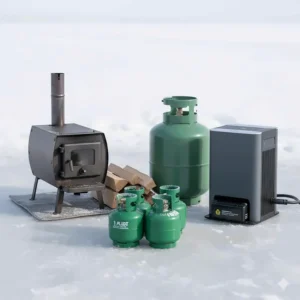
Runtime and Fuel Efficiency: Maximizing Your Time on the Ice
Nothing kills the fishing vibe faster than your heater dying mid-session. Let’s talk about getting the most runtime from your fuel while keeping costs reasonable.
Understanding Manufacturer Runtime Claims
When a heater claims “6 hours runtime,” that’s typically on the lowest setting with a new 1 lb propane cylinder under ideal conditions. In reality, here’s what you can expect:
On High Settings:
Most heaters consume fuel 2-3 times faster on maximum output. The Mr. Heater Portable Buddy’s stated 3-hour high runtime often becomes 2-2.5 hours in frigid conditions when the heater runs continuously.
Temperature Impact:
Propane pressure drops in extreme cold, reducing fuel efficiency. At -20°F, you might lose 10-15% of expected runtime compared to operation at 20°F.
Extending Your Runtime
Tip 1: Upgrade to a 20 lb Tank
Most portable heaters accept optional hoses that connect to standard 20 lb propane tanks. This increases runtime by 15-20x. A Mr. Heater Buddy that runs 3-6 hours on a 1 lb cylinder will operate 48-110 hours on a 20 lb tank.
Tip 2: Use the Lowest Effective Setting
Don’t crank your heater to maximum unless necessary. Once your shelter reaches a comfortable temperature, drop to the low setting. This can double your fuel efficiency while maintaining warmth.
Tip 3: Insulate Your Shelter Floor
Heat escapes through the ice beneath you. Placing foam mats or insulated flooring in your shelter reduces heat loss, allowing your heater to cycle less frequently.
Tip 4: Pre-Heat Before Fishing
Arrive early and warm your shelter before drilling holes. This allows the space to reach temperature while your heater is fresh and you’re not yet occupied with fishing.
Cost Per Hour Analysis
Let’s break down the actual costs:
1 lb Propane Cylinder ($3.50 average):
- At 9,000 BTU (high): $0.58-$1.17 per hour
- At 4,000 BTU (low): $0.29-$0.58 per hour
20 lb Propane Tank ($15-$20 refill):
- At 9,000 BTU: $0.14-$0.31 per hour
- At 4,000 BTU: $0.07-$0.18 per hour
The savings from using bulk propane are substantial if you fish frequently. Over a season, switching to 20 lb tanks can save $50-$100 in fuel costs.
Fuel Storage and Safety
Always transport propane cylinders upright and secured. Store them outside or in well-ventilated areas—never in your vehicle overnight or in heated spaces. Check for leaks using soapy water on connections before each use; bubbles indicate a leak that must be addressed before operating.
Installation and Setup: Getting Your Heater Running Right
Even the best ice fishing heater won’t perform if it’s set up incorrectly. Let me walk you through the proper installation process that’ll keep you safe and warm.
Pre-Season Inspection Checklist
Before your first trip, inspect your heater thoroughly:
✅ Check for damaged burner tiles or ceramic elements
✅ Test the ignition system
✅ Verify all safety switches function (tip-over, ODS)
✅ Inspect propane hoses for cracks or wear
✅ Clean any dust or debris from the burner assembly
✅ Replace batteries if your model uses them
First-Time Setup Process
Step 1: Read the Manual (Seriously)
I know, I know—nobody reads manuals. But heater manufacturers include critical safety information specific to each model. Spend 10 minutes reviewing it.
Step 2: Choose the Right Location
Place your heater on a flat, stable surface away from walls and combustibles. In a flip-over shelter, center it between fishing holes for even heat distribution. In hub shelters, position it away from the door to prevent drafts from extinguishing the flame.
Step 3: Attach Propane Securely
Thread the propane connection clockwise until hand-tight, then give it an additional quarter-turn with pliers (don’t overtighten). Perform a leak test using soapy water on all connections.
Step 4: Light According to Manufacturer Instructions
Most models follow this sequence: Turn knob to pilot, press and hold, push ignition button, continue holding knob for 30 seconds, release and turn to desired heat setting.
Troubleshooting Common Issues
Heater Won’t Light:
- Check propane cylinder isn’t empty
- Verify cylinder valve is fully open
- Try new batteries in igniter
- Ensure ODS hasn’t tripped (allow fresh air in)
Flame Keeps Going Out:
- Improve ventilation (ODS may be triggering)
- Check for drafts hitting the flame
- Clean burner orifices if clogged
- Replace cylinder if pressure is low
Heater Produces Odor:
- Some smell during initial lighting is normal
- Persistent odors indicate incomplete combustion—improve ventilation immediately
- Clean burner assembly
- Check for damaged components
Maintenance Between Trips
After each fishing session, allow your heater to cool completely before transport. Store it in a dry location to prevent rust and corrosion. At season’s end, disconnect propane, clean all components, and store the heater with the propane connection exposed to prevent moisture buildup.
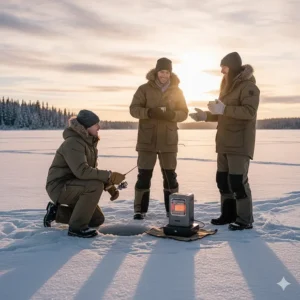
Comparing Ice Fishing Heater with Traditional Alternatives
How does modern portable heating stack up against old-school methods? Let’s put them head-to-head.
Traditional vs. Modern Heating Methods
| Method | Heat Output | Safety | Portability | Cost | Convenience |
|---|---|---|---|---|---|
| Modern Propane Heaters | ★★★★★ | ★★★★★ | ★★★★☆ | $50-$150 | ★★★★★ |
| Catalytic Heaters | ★★★☆☆ | ★★★★★ | ★★★★★ | $30-$80 | ★★★☆☆ |
| Open Flame Lanterns | ★★☆☆☆ | ★★☆☆☆ | ★★★★★ | $20-$50 | ★★★☆☆ |
| Chemical Hand Warmers | ★☆☆☆☆ | ★★★★★ | ★★★★★ | $1-$2/day | ★★★★☆ |
| Kerosene Heaters | ★★★★★ | ★★★☆☆ | ★★☆☆☆ | $60-$150 | ★★☆☆☆ |
| Wood Stoves | ★★★★★ | ★★★★☆ | ★☆☆☆☆ | $150-$400 | ★★☆☆☆ |
Why Modern Propane Wins
Catalytic Heaters:
These flameless heaters are incredibly safe and produce steady, gentle heat. However, they lack the immediate warmth and high BTU output of radiant propane heaters. Great as backups, but not powerful enough for most ice fishing scenarios.
Open Flame Propane Lanterns:
Our grandfathers used these for heat and light. While they do generate warmth, their 1,000-1,500 BTU output pales compared to dedicated heaters. Plus, they lack modern safety features entirely.
Chemical Hand Warmers:
Perfect for supplemental warmth but useless for heating a shelter. You’d need dozens to achieve what one propane heater accomplishes.
Kerosene Heaters:
These workhorses deliver impressive BTUs but produce fumes that make them unsuitable for small ice shelters. They’re also messier to operate and transport.
Wood Stoves:
The romantics’ choice. There’s something special about real fire on the ice. However, they’re heavy, require extensive setup with chimney pipes, and only work in larger, permanently positioned shelters.
The Modern Advantage
Today’s propane ice fishing heater models combine the best of all worlds: high heat output, compact size, advanced safety features, and reasonable costs. The technology has matured to the point where there’s little reason to use older methods unless you’re going for a specific aesthetic or have unique requirements.
Portable vs. Permanent Ice Fishing Heater Solutions
Your heating strategy should match your fishing style. Let’s explore the differences between portable and permanent installations.
Portable Heater Advantages
Flexibility:
Move from spot to spot without hassle. If the fish aren’t biting in one location, pack up and relocate in minutes—heater included.
Multi-Use Capability:
The same heater that warms your ice shelter works for camping, tailgating, or emergency home heating during power outages.
Lower Initial Investment:
Quality portable heaters start around $50, while permanent installations can cost several hundred dollars with proper ventilation systems.
Storage Simplicity:
When the season ends, portable heaters fit on a shelf in your garage. No winterizing, no maintenance headaches.
Permanent Installation Benefits
Unlimited Runtime:
Connect to large propane tanks (100+ lbs) for days of continuous heat without refueling.
Built-In Safety Systems:
Proper permanent installations include dedicated ventilation, carbon monoxide detectors hardwired to alarms, and fire suppression systems.
Comfort and Amenities:
Many permanent fish houses feature furnace-style heating with thermostats, allowing you to set your desired temperature and forget about it.
Higher Resale Value:
If you own a fish house, a quality heating system increases its market value and appeal to potential buyers.
Hybrid Approach: The Best of Both Worlds
Many serious ice anglers use a combination strategy. They install a permanent heating system in their wheelhouse or large hub but keep a portable ice fishing heater as backup or for use in secondary shelters. This redundancy ensures you’re never caught in dangerous cold due to equipment failure.
For weekend warriors who fish 10-20 times per season, portable heaters make the most sense. For guides, tournament anglers, or those who spend 50+ days on the ice, investing in a quality permanent system pays dividends in comfort and convenience.
Understanding Warranties and Customer Support
Nothing’s more frustrating than a heater malfunction miles from civilization. Let’s talk about manufacturer support and what warranties actually cover.
Manufacturer Warranty Comparison
Mr. Heater Products:
Most Mr. Heater models include a 1-year limited warranty covering defects in materials and workmanship. Their customer service operates weekdays with phone and email support. According to user reports, warranty claims are processed relatively quickly, with most issues resolved within 2-3 weeks.
Dyna-Glo Products:
Dyna-Glo offers similar 1-year limited warranty coverage. Their parent company GHP Group maintains a comprehensive parts department, making repairs and replacements accessible.
Lesser-Known Brands:
Budget brands like Texsport and Campy Gear provide limited warranty coverage, but customer service responsiveness varies. Some users report difficulty reaching support or extended wait times for replacement parts.
What Warranties Typically Don’t Cover
⚠️ Damage from improper use or storage
⚠️ Normal wear and tear (burner tiles, ignition systems)
⚠️ Damage from unauthorized modifications
⚠️ Issues resulting from fuel impurities
⚠️ Accidents or negligence
Extending Heater Lifespan
Proper Storage:
Store your heater in a dry, temperature-controlled space. Moisture is the enemy of metal components and can cause premature failure.
Regular Cleaning:
Clean the burner assembly annually, removing dust, spider webs, and debris that can clog orifices. Use compressed air to blow out passages.
Quality Fuel:
Buy propane from reputable suppliers. Contaminated fuel can damage regulators and burners.
Gentle Transport:
Secure your heater during transport to prevent damage from bouncing and shifting. Many heaters come with protective cases or bags—use them.
When to Call Support vs. DIY
Simple issues like replacing igniter batteries or cleaning burners are DIY-friendly. However, if you’re experiencing persistent ignition problems, gas leaks, or safety system malfunctions, contact manufacturer support immediately. Attempting complex repairs yourself can void warranties and create safety hazards.
Regional Considerations for Ice Fishing Heater Selection
Where you fish dramatically impacts your heating requirements. Ice conditions in Minnesota differ vastly from those in New York or Montana.
Northern Tier States (Minnesota, Wisconsin, North Dakota, Alaska)
Temperature Range: -40°F to 20°F
Recommended BTU Range: 12,000-18,000 for mid-sized shelters
Special Considerations: Extreme cold demands maximum heating capacity. The Mr. Heater Big Buddy and Heat Hog models excel in these brutal conditions. Consider purchasing heated propane hose adapters to prevent fuel line freeze-ups at temperatures below -20°F.
Midwest States (Michigan, Illinois, Iowa, Nebraska)
Temperature Range: -20°F to 30°F
Recommended BTU Range: 6,000-12,000 for mid-sized shelters
Special Considerations: Variable conditions call for adjustable heaters. The Mr. Heater Portable Buddy’s dual settings handle both mild and severe cold efficiently. These regions experience significant wind chill, so wind-resistant ignition systems are valuable.
Northeast States (New York, Vermont, Maine, New Hampshire)
Temperature Range: -10°F to 25°F
Recommended BTU Range: 6,000-12,000 for mid-sized shelters
Special Considerations: Shorter ice fishing seasons and inconsistent weather mean portability matters more than maximum power. Compact heaters that heat quickly are ideal for brief afternoon sessions.
Mountain West (Montana, Idaho, Wyoming, Colorado)
Temperature Range: -30°F to 25°F (varies by elevation)
Recommended BTU Range: 9,000-15,000 for mid-sized shelters
Special Considerations: High altitude affects propane heater performance. Look for models with reliable ignition at elevation. Some heaters (particularly those without ODS adjustments) struggle above 7,000 feet. Mr. Heater specifically designs certain models for high-altitude performance.
Ice Thickness and Safety
According to the Minnesota Department of Natural Resources, safe ice thickness varies by region and conditions. Always verify ice conditions before venturing out, and remember that heaters can create localized melting if placed directly on ice without insulation beneath them.
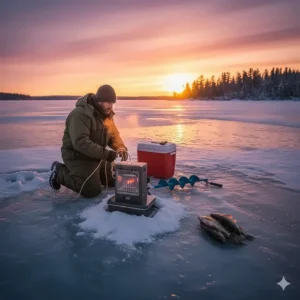
Advanced Tips for Extreme Cold Fishing
When temperatures plunge below -20°F, standard heating advice goes out the window. Here’s what veteran extreme-cold anglers know.
Pre-Trip Preparation
Warm Your Propane:
Store propane cylinders indoors overnight before fishing. Warm fuel vaporizes more efficiently, giving you better initial performance.
Double-Layer Strategy:
Use two heaters for redundancy. A main high-BTU heater combined with a small backup ensures you’re never without heat if one fails.
Insulate Everything:
Line your shelter floor with foam mats or carpet. Hang reflective insulation on walls. Every bit of heat retention counts when it’s brutally cold.
During Your Session
Manage Condensation:
Extreme temperature differentials create condensation inside shelters. Wipe down walls periodically to prevent ice buildup that reduces insulation effectiveness.
Monitor Fuel Pressure:
In extreme cold, propane pressure drops significantly. Keep spare cylinders inside your coat to maintain temperature, swapping them as needed.
Strategic Ventilation:
Balance oxygen needs with heat retention. Position vents away from prevailing winds and crack them minimally while still ensuring safety.
Emergency Preparedness
Always carry:
🚨 Backup propane cylinders (at least two extra)
🚨 Matches or backup ignition source
🚨 Emergency blankets
🚨 Fully charged cell phone
🚨 Carbon monoxide detector with fresh batteries
Remember: No fishing trip is worth risking your life. If conditions deteriorate beyond your equipment’s capacity, pack up and head home. The fish will be there next week.
Environmental Impact and Eco-Friendly Heating Options
As outdoor enthusiasts, we have a responsibility to minimize our environmental footprint. Let’s examine the ecological impact of ice fishing heating methods.
Propane’s Environmental Profile
The Good:
Propane burns cleaner than gasoline, diesel, or kerosene. It produces fewer greenhouse gases and virtually no particulate matter. Modern propane heaters are remarkably efficient, converting over 90% of fuel energy into usable heat.
The Reality:
Propane is a fossil fuel. Each pound burned releases approximately 3 lbs of CO2 into the atmosphere. A typical ice fishing season (20 days with 4-hour sessions at 6,000 BTU average) generates roughly 40-50 lbs of CO2 emissions.
Reducing Your Carbon Footprint
Use the Minimum Necessary BTUs:
Oversized heaters waste fuel. Match your heater to your actual needs rather than buying the biggest model available.
Improve Shelter Insulation:
Better insulation reduces fuel consumption by 30-40%. This investment pays for itself in fuel savings within 2-3 seasons while reducing emissions.
Share Shelters:
Fishing with buddies in larger shelters is more fuel-efficient per person than everyone running individual setups.
Choose Efficient Models:
Modern heaters with catalytic elements and improved burner designs extract more heat from each BTU. Older heaters can be 15-20% less efficient.
Alternative Energy Sources
Solar Pre-Heating:
Some innovative anglers use solar panels and battery banks to power electric heating pads inside their shelters, supplementing propane heat and reducing fuel consumption.
Bio-Based Propane:
Emerging bio-propane made from renewable sources offers the same performance as petroleum-based propane with 80% lower carbon emissions. Availability is currently limited but expanding.
According to the Environmental Protection Agency, transitioning to more efficient heating methods could reduce recreational outdoor heating emissions by 25% nationally—a meaningful impact when multiplied across millions of outdoor enthusiasts.
The Balanced Approach
Perfect environmental practices shouldn’t come at the expense of safety. In extreme cold, adequate heating is a survival necessity, not a luxury. Focus on efficiency improvements and smart practices rather than attempting to fish without heat in dangerous conditions.
Beginner’s Buying Guide: Your First Ice Fishing Heater
New to ice fishing? Choosing your first heater doesn’t need to be overwhelming. Let me guide you through a smart purchase that won’t break the bank.
Start with These Priorities
1. Safety Above All:
Your first heater must include an Oxygen Depletion Sensor (ODS) and tip-over shutoff. Don’t compromise on safety features to save $20.
2. Match Your Shelter:
If you’re starting with a basic flip-over sled shelter, don’t buy an 18,000 BTU monster. The Mr. Heater Little Buddy or Portable Buddy perfectly suits beginner setups.
3. Consider Total Costs:
A $50 heater that guzzles fuel costs more long-term than an $80 efficient model. Factor in propane consumption, not just purchase price.
4. Stick with Proven Brands:
Mr. Heater dominates the market for good reason—quality and reliability. As a beginner, you don’t want to troubleshoot obscure brands.
Recommended First Heater: Mr. Heater Portable Buddy MH9BX
For beginners, I consistently recommend the Mr. Heater Portable Buddy. Here’s why:
✅ Versatility: Dual heat settings grow with your needs
✅ Safety: All essential safety features included
✅ Reliability: Proven track record with thousands of positive reviews
✅ Value: Mid-range price ($75-$85) with excellent performance
✅ Support: Extensive dealer network and customer service
Essential Accessories for Beginners
Don’t Forget:
- Propane cylinders (start with 3-4 for a full day)
- Carbon monoxide detector ($25-$35)
- Basic tool kit for minor adjustments
- Storage bag or case
- Spare igniter batteries (if applicable)
Avoiding Rookie Mistakes
❌ Don’t buy used heaters without testing all safety features
❌ Don’t exceed your shelter’s ventilation capacity
❌ Don’t store propane indoors overnight
❌ Don’t run heaters on maximum all day—you’ll waste fuel
Growing Your Setup
As you gain experience, you might upgrade to larger shelters or fish in more extreme conditions. The beauty of starting with a mid-range heater like the Buddy is that it remains useful even after upgrading. It becomes your backup, your loaner for friends, or your quick-trip heater while your Big Buddy serves as the main workhorse.
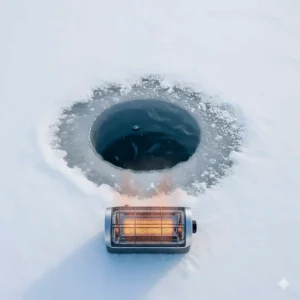
FAQs About Ice Fishing Heater
❓ Can you leave an ice fishing heater on overnight while sleeping?
❓ How long does a 1 lb propane tank last with an ice fishing heater?
❓ What's the minimum safe distance between an ice fishing heater and shelter walls?
❓ Do ice fishing heater work at high elevation above 8,000 feet?
❓ Can you use a propane ice fishing heater in a canvas tent?
Conclusion: Choosing Your Perfect Ice Fishing Heater
After thousands of hours on frozen lakes and testing every major heater on the market, here’s my bottom-line advice: The Mr. Heater Portable Buddy MH9BX offers the best combination of performance, safety, and value for most ice anglers. Its dual heat settings handle everything from mild days to bitter cold, while comprehensive safety features give you peace of mind.
For those fishing larger shelters or in the harshest conditions, upgrade to the Mr. Heater Big Buddy MH18B. Budget-conscious anglers should seriously consider the Dyna-Glo Grab N Go XL—it’s 80% of the performance at 50% of the price.
Remember, the best ice fishing heater isn’t the biggest or most expensive—it’s the one that matches your specific needs, provides reliable warmth, and keeps you safe on the ice. Prioritize safety features, consider your shelter size and insulation, and invest in quality over bargain-basement pricing.
Stay warm out there, and tight lines!
🔥 Ready to Upgrade Your Ice Fishing Experience?
Don’t spend another minute shivering on the ice! Click on any of the heaters we’ve reviewed to check current prices and availability. Your fingers (and fishing success) will thank you. These carefully vetted options represent the best heating solutions available for ice anglers in 2025. ❄️🎣
Recommended for You
- Ice Fishing Chair: 7 Best Picks for Ultimate Comfort
- Ice Fishing Lures: 7 Best Picks That Actually Work 2025
- Ice Fishing Boots: 7 Best Picks for Extreme Cold 2025
Disclaimer: This article contains affiliate links. If you purchase products through these links, we may earn a small commission at no additional cost to you.
✨ Found this helpful? Share it with your friends! 💬🤗
