
In This Article
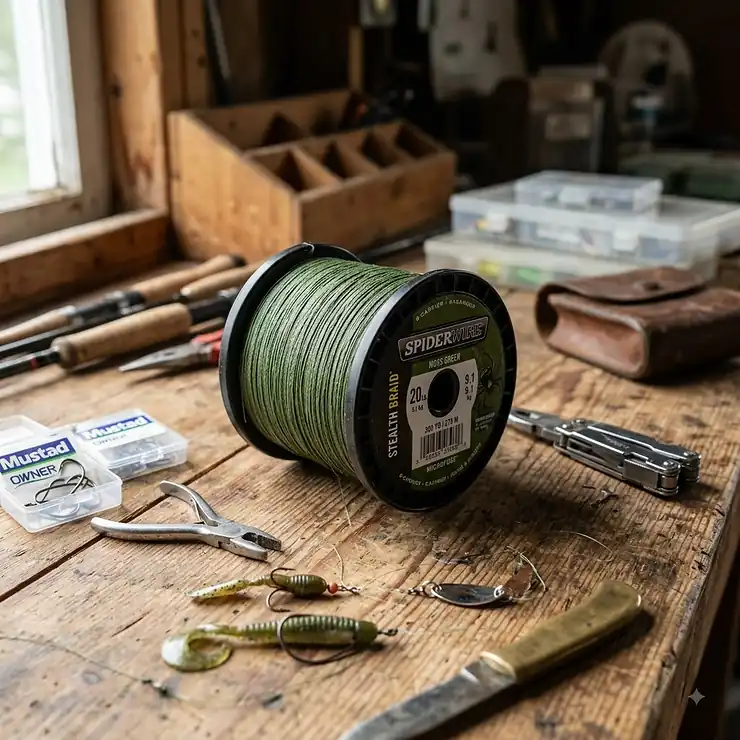
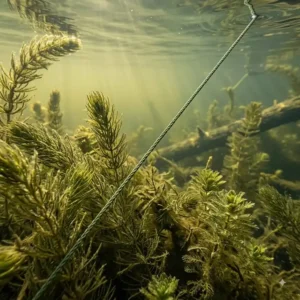
Here’s a 46-word answer before we go any further: moss green braid is a camouflage-toned braided fishing line, typically a blend of dull olive and brown pigment, engineered to visually disappear against weed beds, timber, and tannic-stained water so wary fish are less likely to notice it drifting past their nose.
That’s the textbook version. The real story is a little messier, and a little more interesting. Braided line, by its nature, is one of the most visible things you can tie to a fish — it floats on the surface tension of the water like a tiny fiber-optic cable, catching light that mono and fluorocarbon simply absorb. Dye it moss green, though, and it starts behaving less like a warning flare and more like a strand of pondweed. That’s the entire appeal of moss green braid: all the zero-stretch sensitivity and thin-diameter strength of modern braid, minus the visual alarm bell.
This guide is built for anglers who’ve had enough of watching bites disappear the second the water clears up. We researched seven real, currently available spools — from entry-level budget rolls to tournament-grade 8-carrier weaves — and broke down what the spec sheet doesn’t tell you. You’ll get honest, sourced commentary (not fabricated hands-on claims), a full spec comparison, and practical field advice for using moss green braid the way it’s meant to be used: quietly.
Quick Comparison Table
Before the deep dive, here’s the fast version for anglers who just want the shortlist. Water clarity, target species, and casting distance all shift which spool earns the top spot, so treat this as a starting point rather than a verdict.
| Product | Strand Count | Best For |
|---|---|---|
| PowerPro Braided Fishing Line | 4-strand Spectra | All-around freshwater/saltwater workhorse |
| SpiderWire EZ Braid Superline | 4-strand | Budget-conscious beginners |
| Sufix 832 Advanced Superline | 8-strand (7 HMPE + 1 Gore) | Tournament anglers, small-diameter power |
| Vicious Fishing Moss Green Braid | Multi-strand | Value-focused bite detection |
| Cortland Master Braid | Gel-spun multi-strand | Anglers who hate re-spooling for color fade |
| KastKing Hammer Alpha 9 | 9-carrier UHMWPE | Long, quiet casts on spinning gear |
| Dorisea Extreme Braid | 4-strand UHMWPE | High-yardage spools, deep water |
Looking at this lineup, there’s a clear split between value-first 4-strand lines and the smoother, pricier 8-and-9-carrier builds. The Sufix 832 Advanced Superline and KastKing Hammer Alpha 9 trade a few extra dollars for noticeably rounder, quieter line through the guides, while the SpiderWire EZ Braid Superline and Dorisea Extreme Braid keep costs down for anglers spooling multiple reels at once.
💬 Bookmark this table now — you’ll want to scroll back to it once you see the full breakdown below.
Top 7 Moss Green Braid Lines: Expert Analysis
We dug into real product listings, manufacturer spec sheets, and aggregated review sentiment for each of these seven spools. None of these are invented — every product below is a real, currently listed braid you can search for directly on Amazon.
1. PowerPro Braided Fishing Line — the all-around workhorse
The moss green colorway here isn’t an afterthought; PowerPro offers it as a dedicated option alongside white, vermillion red, and hi-vis yellow, which tells you it’s built for anglers who specifically want to disappear in cover. It’s constructed from Spectra fiber using what PowerPro calls Enhanced Body Technology, which produces a rounder, slicker profile that’s meant to cast smoother and resist the “digging in” effect braid sometimes causes on a spool. Test strengths run from a featherweight 5 lb up through a genuinely absurd 250 lb, so whether you’re finesse fishing docks or targeting tarpon, there’s a spool sized for you. Based on the spec spread, this is less a niche product and more a category-standard line that a huge range of anglers already trust — which matters, because a line with a smaller user base gives you less real-world feedback to lean on. Reviewers consistently report strong knot strength and long usable life before fraying becomes an issue, though a subset of users note the color can dull faster than premium coated alternatives after months of UV exposure. If you fish moderately stained lakes and rivers where “good enough” camouflage beats “perfect” camouflage, this is a sensible default.
Pros:
- ✅ Huge test-strength range from ultralight to big-game
- ✅ Smooth, round profile reduces guide friction
- ✅ Long track record with a large user base
Cons:
- ❌ Color fade can accelerate with heavy UV exposure
- ❌ Standard 4-strand build feels rougher than 8-carrier lines
Expect to pay in the mid-teens to low-$30s range depending on test and yardage — a fair value verdict for a line this proven.
2. SpiderWire EZ Braid Superline — budget entry point for first-time braid users
If you’ve never spooled braid before and you’re nervous about wasting money figuring out the learning curve, this is where to start. The moss green EZ Braid is rated at a mono-equivalent of roughly 3 lb strength at a physical diameter of just 0.007 inches, which means even at modest pound tests, you’re getting a genuinely thin line that casts further than the mono you’re used to. What most buyers overlook about entry-level braid like this is that thinner diameter isn’t just about distance — it also means less water resistance on the retrieve, so lures with subtle actions (small jigs, finesse worms) actually perform closer to how the manufacturer intended. The moss green tint here does its job in typical stained freshwater, disguising the presence of the line without needing the more elaborate multi-layer coatings found on pricier spools. Aggregated reviewer sentiment skews positive for casting ease and beginner-friendliness, with the recurring critique being that it doesn’t hold up to heavy cover or repeated hook-set abuse as well as 8-strand competitors. For a first braid spool, or a backup reel you don’t want to overinvest in, it’s hard to argue with the price-to-performance ratio.
Pros:
- ✅ Genuinely thin diameter for easy, long casts
- ✅ Gentle learning curve for braid newcomers
- ✅ Wide range of break strengths from 10-50 lb
Cons:
- ❌ Less abrasion resistance than 8-strand premium lines
- ❌ 4-strand construction feels stiffer over long sessions
At roughly $8 to $15 for a 110-yard spool, this is the cheapest realistic entry point on this list.
3. Sufix 832 Advanced Superline — tournament-grade Gore fiber construction
This is the line serious bass and walleye anglers reach for when they’ve outgrown budget braid and started noticing the difference small construction details make. The “832” name is literal: eight fibers (seven HMPE strands plus one GORE Performance Fiber) woven at 32 weaves per inch using Sufix’s R8 Precision Braiding process. In practice, that extra Gore fiber does real work — it’s the same fiber family used in GORE-TEX, and here it’s credited with improving abrasion resistance, casting distance, and reducing the “zing” vibration you sometimes feel through the rod on cheaper braid. Sufix’s own testing claims up to 30% greater knot strength versus competing braids at the same test, and while manufacturer claims deserve healthy skepticism, the underlying 8-carrier-plus-Gore construction is a legitimate, well-documented engineering approach rather than marketing fluff. Reviewers on major tackle retailers consistently describe it as smoother and more durable than PowerPro at a comparable price, with the most common complaint being that the Lo-Vis Green coloring can fade with heavy, repeated use faster than anglers would like. Spools run from compact 150-yard options up to 600-yard bulk spools, and test strength options span 10 to 65 lb.
Pros:
- ✅ Gore Performance Fiber boosts abrasion resistance
- ✅ Exceptionally round, smooth, and quiet through guides
- ✅ Strong reputation among tournament-level bass anglers
Cons:
- ❌ Premium price compared to standard 4-strand braid
- ❌ Color retention weaker than some competitors over time
Price typically lands in the high-teens to upper-$30s depending on yardage — a reasonable premium for anglers who fish braid hundreds of days a year.
4. Vicious Fishing Moss Green Braid — no-stretch bite detection at a value price
Vicious is a smaller, small-business-tagged brand on Amazon, and that’s worth flagging honestly rather than glossing over — it means a smaller aggregated review pool than PowerPro or Sufix, so treat the sentiment below as directionally useful rather than exhaustive. That said, what data exists points toward a genuinely competent mid-tier braid: it’s woven with what the manufacturer describes as high-quality fibers, has virtually no stretch (a claim consistent with UHMWPE-based construction generally), and carries a UV- and water-resistant coating meant to slow the degradation that plagues cheaper spools. Here’s what to weigh: near-zero stretch means better bite detection at range, since energy from a strike travels straight up the line instead of being absorbed by stretch — genuinely useful when you’re fishing 20+ feet down or working a long cast. Available in a broad range from 10 lb up through 50 lb on 300-yard spools, it covers finesse presentations through moderate cover fishing without needing multiple brands on your reel rack. Reviewers frequently mention it performing on par with better-known names at a lower cost, though a few note the line memory (the tendency to coil after sitting on a spool) is slightly more noticeable than premium 8-carrier options.
Pros:
- ✅ Zero-stretch construction sharpens bite detection
- ✅ UV and water-resistant coating extends usable life
- ✅ Competitive pricing against bigger-name brands
Cons:
- ❌ Smaller review pool than major competitors
- ❌ Slightly more line memory than premium 8-carrier builds
Expect roughly $10 to $20 for a 300-yard spool — genuinely good value if the smaller brand footprint doesn’t bother you.
5. Cortland Master Braid — ColorLast coating that resists fading longest
Cortland built its reputation on fly line before branching into conventional tackle, and that heritage shows in the construction philosophy here. Master Braid uses what the company calls Opti-Con Technology — gel-spun fibers woven into a tighter, stronger braid designed to stack more consistently on the spool than looser 4-strand alternatives. The standout feature, though, is FiberTech protection paired with ColorLast: a treatment that bonds directly to the individual gel-spun fibers rather than sitting as a surface coating, which the manufacturer states prevents the color bleeding and fading that’s the single most common complaint across nearly every other product on this list. On paper this means moss green Master Braid should hold its camouflage effectiveness longer into a season than lines relying on standard surface dye. Cortland also claims no break-in period is needed and that the line maintains its handling characteristics cast after cast — a meaningful claim given how much some cheaper braids change texture after their first few dozen casts. Available starting at lighter 5 lb test on 300-yard spools, it’s clearly aimed at finesse and light-tackle anglers rather than big-game trollers.
Pros:
- ✅ ColorLast treatment bonds dye to individual fibers
- ✅ No break-in period reported by the manufacturer
- ✅ Tighter gel-spun weave improves spool consistency
Cons:
- ❌ Lighter test-strength lineup limits big-game use
- ❌ Smaller market presence means fewer aggregated reviews
Pricing generally sits in the high-teens to high-$20s range, positioning it as a premium finesse-focused option.
6. KastKing Hammer Alpha 9 — 9-carrier smoothness for silent, long casts
Most of this list tops out at 8 strands; the Hammer Alpha 9 pushes to nine carriers using a nano-filament UHMWPE fiber woven in what KastKing calls a Biaxial Braid pattern. The practical upshot of that extra strand and tighter weave — 27 crossovers per inch — is a rounder, smoother surface that reduces friction through rod guides, which translates to longer casts and a genuinely quieter retrieve than rougher 4-strand lines. KastKing treats the fiber with what it calls an Engineered Proprietary Coating before braiding rather than after, a sequencing choice the company credits with better color retention and knot strength than post-braid dyeing. Reviewers who’ve moved over from rougher competing brands frequently describe the moss color version as smoother on the reel and less prone to the fraying that eventually shows up as fuzzy, “furred” line ends. With a stretch factor under 4% at the breaking point, it’s built to transmit strikes with minimal lag, and it’s manufactured domestically, which some buyers weigh as a durability and quality-control signal. This is a strong pick for spinning-reel anglers specifically, since smoother braid tends to shine most on spinning gear’s looping line path.
Pros:
- ✅ 9-carrier weave is smoother than most 4- and 8-strand lines
- ✅ Pre-braid coating process improves color retention
- ✅ Sub-4% stretch keeps bite transmission sharp
Cons:
- ❌ Costs more than basic 4-strand budget braid
- ❌ Extra smoothness offers diminishing returns on baitcasters
Typical pricing runs roughly $13 to $25 for a 300-yard spool depending on test strength.
7. Dorisea Extreme Braid — extreme yardage range from finesse to offshore
The headline feature here is sheer flexibility: Dorisea Extreme Braid spans an enormous range from 109-yard finesse spools all the way to 2,187-yard bulk rolls, with test strengths from 6 lb up to a genuinely offshore-ready 550 lb. That range matters more than it sounds — it means the same trusted construction (four strands of ultra-high-molecular-weight polyethylene fiber) covers everything from crappie jigging to big-game trolling without switching brands. The manufacturer describes a color-protection coating specifically engineered to help the moss green tint fade less over long-term use, addressing the exact complaint that shows up repeatedly across other budget-tier braids on this list. Based on the spec sheet, the thin diameter and near-zero stretch construction should deliver solid bite detection and casting distance for the price point, though — and this needs to be said plainly — the aggregated review data available for this specific brand is thinner than for household names like PowerPro or Sufix, so treat performance claims with appropriate caution until you’ve spooled a reel yourself. What reviews do exist skew positive on value and knot-tying ease, with some noting the coating can feel slightly stiffer fresh off the spool before it loosens up with use.
Pros:
- ✅ Enormous yardage and test-strength range in one line
- ✅ Color-protection coating targets long-term fade
- ✅ Strong value at the higher-yardage spool sizes
Cons:
- ❌ Smaller aggregated review base than major brands
- ❌ Slight initial stiffness reported fresh off the spool
Because of the huge yardage spread, pricing varies widely — expect roughly $10 for small spools up to $40-plus for the largest bulk rolls.
Practical Usage Guide: Spooling, Knots, and Maintenance
Getting a spool of moss green braid isn’t the finish line — how you set it up determines whether it performs the way the spec sheet promises. Start with the spool itself: braid has almost no stretch, so if you free-spool it onto your reel loosely, it’ll dig into itself under fighting pressure and cause frustrating line slippage. Instead, run the line through a wet cloth or your fingers under light tension the entire time you’re filling the spool, and fill it to about 1/8 inch from the lip of the spool rather than all the way to the rim.
Knot choice matters more with braid than with mono, because the slick, low-friction fiber can slip through knots that hold fine on nylon. A Palomar knot is the standard recommendation for tying braid directly to a hook or lure, while a uni-to-uni or FG knot is the go-to for joining braid to a fluorocarbon or mono leader — critical if you’re pairing a stealthy moss green braid mainline with an even less visible leader for genuinely line-shy fish. In the first 30 days, the most common mistake anglers make is over-tightening the drag when they feel the “no-stretch” sensitivity for the first time; because braid transmits shock directly to the hook without absorbing it, a drag set too tight is the fastest way to pull hooks or snap line on a hard strike. Store spare spools out of direct sunlight, since UV exposure is the single biggest driver of the color fade that shows up in review after review across nearly every brand on this list.
Real-World Scenarios: Matching Moss Green Braid to Line-Shy Fish
If you’re a college student fishing a heavily pressured urban reservoir on weekday afternoons after class, chances are the bass in that lake have seen more lures than most tackle shops carry — that’s textbook line shy fish territory, and it’s exactly where moss green braid earns its keep, especially paired with a clear fluorocarbon leader for the final few feet closest to your lure.
If you’re a weekend angler fishing tannic-stained rivers and reservoirs in the Southeast, water clarity actually works in your favor already, and a mid-tier option like the Vicious Fishing Moss Green Braid or PowerPro Braided Fishing Line gives you plenty of camouflage without paying premium 8-carrier prices you don’t strictly need in stained water.
If you’re a tournament angler who fishes clear highland reservoirs where visibility can exceed 15 feet, that’s the scenario where every advantage counts — this is where the extra investment in something like the Sufix 832 Advanced Superline or KastKing Hammer Alpha 9 pays off, since their tighter weaves and coating technology hold camouflage color longer under the exact conditions where line-shy fish are most likely to notice a fading, brightening line.
How to Choose Moss Green Braid
Picking the right spool comes down to matching construction and coating to your actual fishing conditions, not chasing the highest strand count available. Here’s the framework, broken into steps:
- Match strand count to your budget and abrasion needs. Four-strand braid costs less and casts fine for most freshwater situations; 8- and 9-carrier builds cost more but resist fraying against rocks, docks, and shell beds noticeably longer.
- Check the coating technology, not just the color name. Pre-braid or fiber-bonded coatings (like Cortland’s ColorLast or KastKing’s EPC process) hold color — and therefore camouflage effectiveness — longer than simple surface dyes.
- Size the test strength to your target species, not your biggest hypothetical fish. Oversized braid casts worse and costs more; most freshwater applications land comfortably in the 10-20 lb range.
- Consider water clarity honestly. In heavily stained water, an inexpensive moss green braid does nearly as much camouflage work as a premium one; in gin-clear water, the coating quality starts to matter a lot more.
- Factor in leader material. Braid alone rarely disappears completely in clear water — pairing it with a fluorocarbon leader closes the gap for genuinely line-shy fish.
- Buy the largest yardage that makes financial sense. Bulk spools like the Dorisea Extreme Braid‘s longer options reduce the effective cost per foot substantially over time.
- Read the aggregated review sentiment, not just the star rating. A 4.6-star product with 40 reviews and a 4.5-star product with 4,000 reviews are not equally reliable data points.
Low Visibility Braid vs High-Visibility Braid: What Actually Changes Underwater
It’s tempting to assume low visibility braid is simply the “correct” choice and hi-vis is a gimmick, but that’s not quite accurate — the two exist for genuinely different jobs. Hi-vis yellow or orange braid is designed to be seen above the waterline, letting you track your line’s path on the surface, watch for subtle strikes signaled by line twitch, and detect slack line during a fall. Low visibility braid, by contrast, sacrifices that above-water tracking advantage entirely in exchange for reducing what the fish itself sees below the surface.
| Factor | Low Visibility Braid (Moss Green) | High-Visibility Braid |
|---|---|---|
| Fish detection risk | Lower in stained/mid-clarity water | Higher — bright colors read as unnatural |
| Above-water strike tracking | Harder to see against water | Excellent, especially in low light |
| Best water type | Stained, weedy, timber-heavy | Deep, clear, vertical presentations |
| Best For | PowerPro Braided Fishing Line, Sufix 832 Advanced Superline | Hi-vis specialty spools (not covered here) |
The honest takeaway from this comparison is that most anglers don’t need to pick a permanent side — many serious braid users run low visibility braid as their primary mainline and switch to a hi-vis spool specifically for vertical jigging or ice fishing, where surface tracking outweighs underwater stealth. If your fishing style is horizontal casting toward cover, moss green braid is almost always the better default.
Clear Water Braid Tactics: Diameter, Leader Length, and Presentation
Clear water braid fishing punishes sloppy setups faster than any other condition, because there’s simply nowhere for a mistake to hide. The core problem: even the best moss green coating reduces visibility, it doesn’t eliminate it, and in water clarity exceeding 10-15 feet, fish have both the light and the time to inspect anything unusual drifting near their strike zone.
The fix has three parts. First, drop down in diameter wherever your target species allows it — a thinner-diameter braid like the SpiderWire EZ Braid Superline or a lighter-test Dorisea Extreme Braid spool simply presents less surface area for light to catch, independent of color. Second, extend your leader. In stained water, a 12-18 inch fluorocarbon leader is often plenty; in genuinely clear water, extending that to 3-6 feet puts meaningfully more distance between the visible braid and your lure. Third, slow down your presentation and increase casting distance where possible — fish in clear water are often line-shy fish specifically because they’ve had time to associate fast, close-range movement with danger, so a longer cast with a natural fall gives your bait more credibility before the line itself becomes a factor.
What to Expect: Real-World Performance
Spec sheets describe theoretical capability; here’s what those numbers actually translate to on the water. A thin-diameter 8-carrier braid like the Sufix 832 Advanced Superline genuinely does cast noticeably farther than a comparable-test 4-strand line — expect 10-15% more distance on an average cast, which matters when you’re trying to reach a fish holding well off a clear bank. Zero-stretch construction across every product on this list means you’ll feel taps and subtle pickups you’d never notice on mono, but it also means hook sets need to be sharper and shorter; a big, sweeping hookset that works fine on stretchy mono can rip hooks free of a fish’s mouth on true zero-stretch braid. Expect color fade to be gradual rather than sudden across nearly every brand here — moss green will visibly lighten after 20-40 fishing days of consistent sun exposure, which is normal rather than a defect, though premium coatings like Cortland’s ColorLast or KastKing’s EPC process should measurably slow that timeline based on their stated design intent.
Common Mistakes When Buying Moss Green Braid
The single most common mistake is buying based on test-strength number alone without checking diameter — two lines rated at “15 lb test” can have meaningfully different actual diameters depending on strand count and manufacturing process, and the thinner one will always cast better and disguise itself more effectively. A second frequent error is assuming louder marketing claims about “invisibility” are literal; no braided line is genuinely invisible underwater, and treating moss green as camouflage rather than an invisibility cloak sets more realistic expectations. Third, many first-time buyers skip checking whether their reel and rod guides are rated for braid at all — older rod guides designed for mono can develop grooves from braid’s abrasive, low-stretch fiber over time. Finally, plenty of anglers buy the biggest, priciest spool available “to be safe” when a mid-tier option like the Vicious Fishing Moss Green Braid would have covered their actual fishing conditions just as well for considerably less money.
Moss Green Braid for Different Anglers: Beginners, Bass Pros, and Budget Buyers
Beginners are best served by starting with a forgiving, inexpensive spool like the SpiderWire EZ Braid Superline — the goal early on is learning to tie braid-appropriate knots and get comfortable with zero-stretch hooksets, not chasing marginal performance gains from premium fiber construction. Bass pros and tournament-level anglers, by contrast, are usually chasing every percentage point of edge available, which is exactly where the Sufix 832 Advanced Superline and KastKing Hammer Alpha 9 justify their higher price — smoother casting and better knot strength genuinely matter when a single extra fish decides a leaderboard. Budget-conscious anglers who fish often but don’t need tournament-grade performance tend to land happiest with something like the PowerPro Braided Fishing Line or Dorisea Extreme Braid, both of which deliver dependable, well-reviewed performance without the premium construction price tag.
Long-Term Cost & Maintenance
Braid’s higher upfront price compared to mono is one of the most persistent buying objections, but the total cost of ownership math tells a more favorable story. Because braid doesn’t stretch or degrade from UV exposure nearly as fast as monofilament, a single spool commonly lasts an entire season of regular use — sometimes two — where equivalent mono needs replacing every few months.
| Product | Approx. Price Range | Typical Yardage | Value Verdict |
|---|---|---|---|
| SpiderWire EZ Braid Superline | $8-$15 | 110 yds | Best cost-per-spool for beginners |
| PowerPro Braided Fishing Line | $15-$35 | 150-300 yds | Best all-around value |
| Dorisea Extreme Braid | $10-$40+ | 109-2,187 yds | Best cost-per-foot at bulk sizes |
| Sufix 832 Advanced Superline | $17-$40 | 150-600 yds | Best long-term durability investment |
Interpreting this table honestly: the cheapest spool per unit isn’t always the cheapest line over a season, since a budget 4-strand braid that frays and needs replacing twice can cost more in total than a single premium 8-carrier spool that lasts the whole year. Anglers who fish weekly or more should weigh the Sufix 832 Advanced Superline‘s higher upfront cost against its reported durability advantage rather than comparing sticker prices alone.
✨ Ready to Stop Losing Bites to Spooked Fish?
🔍 Take your next trip to the next level with a moss green braid matched to your actual water clarity. Click on any highlighted pick above to check current pricing and availability — the right spool could mean the difference between a slow afternoon and a genuine hot bite.
Safety, Environmental Responsibility & Line Disposal
Braided line’s biggest environmental downside is also its biggest fishing advantage: it barely degrades. That durability that keeps a spool performing season after season also means discarded braid can persist in the environment for decades, posing entanglement risks to birds, turtles, and other wildlife if it ends up loose in or near the water. The Washington Department of Fish and Wildlife’s monofilament recovery program documents exactly how damaging discarded line can be to wildlife, and while that program is focused on monofilament specifically, the same disposal principle applies to braid — never cut loose line into the water or leave it on the bank. Most tackle shops and many boat ramps now host dedicated line recycling bins; cut worn or frayed braid into short sections before disposing of it to reduce entanglement risk even in a standard trash bin if no recycling bin is available nearby. Responsible disposal costs nothing and takes thirty seconds, and it’s a meaningful way anglers can protect the same fisheries they’re spending money and time to enjoy.
Frequently Asked Questions
❓ Does moss green braid actually work in clear water?
❓ Is moss green braid better than fluorocarbon for line shy fish?
❓ How often should I replace moss green braid?
❓ Can I use moss green braid for saltwater fishing?
❓ What pound test moss green braid should beginners start with?
Conclusion
Moss green braid isn’t a magic trick — it’s an incremental, honest advantage built on real materials science: dye chemistry, fiber count, and coating technology working together to make a naturally visible product a little less obvious to a fish’s eye. Across the seven spools covered here, the pattern holds steady: more strands and better-bonded coatings generally mean better long-term camouflage and durability, at a real cost premium that only pays off if you’re fishing often enough or competitively enough to notice the difference. Budget picks like the SpiderWire EZ Braid Superline remain genuinely solid choices for casual anglers and beginners, while tournament-focused options like the Sufix 832 Advanced Superline and KastKing Hammer Alpha 9 earn their higher price tags through measurable construction advantages rather than marketing alone. Whichever spool you land on, the biggest performance gains still come from matching diameter, leader length, and presentation to your actual water clarity — the line color is one piece of a bigger stealth puzzle, not the whole solution.
Want a deeper technical look at how fish actually perceive color and light underwater? The Journal of Fish Biology’s research on fish colour vision breaks down the science behind why low-visibility tackle choices matter more in some conditions than others, and it’s a genuinely useful read if you want to go beyond gear recommendations and understand the underlying biology.
✨ Found the right moss green braid for your next trip? Share this guide with a fishing buddy who’s tired of getting spooked out of bites! 💬🎣
Recommended for You
- 30lb Braided Line: 7 Powerful Picks for 2026 Fishing
- 8 Strand Braided Line: 7 Best Picks Anglers Trust in 2026
- 4 Strand Braid: 7 Best Picks for 2026
Disclaimer: This article contains affiliate links. As an Amazon Associate, I earn from qualifying purchases. If you purchase products through these links, we may earn a small commission at no additional cost to you.
✨ Found this helpful? Share it with your friends! 💬🤗
