
In This Article
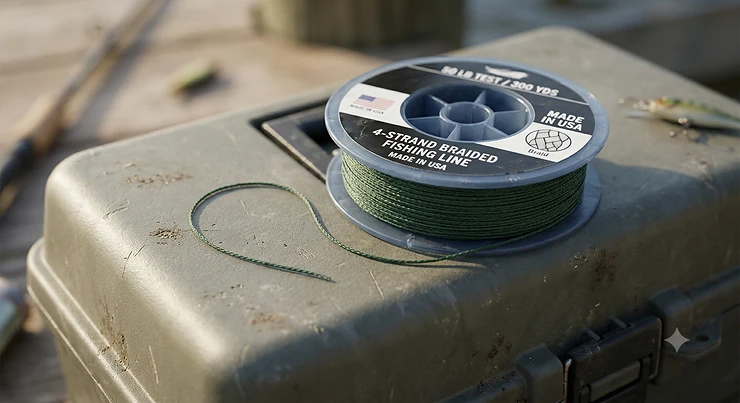
A 4 strand braid is a braided fishing line woven from four strands of PE (polyethylene) fiber — usually Dyneema or Spectra — instead of eight, twelve, or sixteen. Fewer strands means a rougher, flatter profile, but also more raw abrasion resistance and a lower price tag than the smoother, rounder braids stacked with more carriers. If you’ve ever stood in the fishing aisle staring at a wall of spools, all promising “zero stretch” and “incredible strength,” you know how easy it is to just grab whatever’s cheapest and hope for the best.
That’s a mistake worth avoiding, and not because any of these lines are bad. It’s because a 4 strand braid behaves differently on the water than an 8 or 12 strand braid, and picking the wrong one for your setup means wasted casts, frayed line around the dock pilings, or a knot that slips at exactly the wrong moment. This guide walks through seven real, currently available options — from budget spools that cost less than a fast-food lunch to mid-range performers built for anglers who fish structure hard. Along the way, we’ll dig into how four-strand construction actually differs from eight-strand, why “roundness” matters more than most marketing copy admits, and where a four carrier braid earns its keep against fancier alternatives.
We researched real product specs, aggregated review sentiment, and manufacturer data to build honest, use-case-driven recommendations — not a rewritten product listing. Every price mentioned below is a range, since exact Amazon pricing shifts constantly; always check current pricing before buying.
Quick Comparison Table
Before diving into the deep-dive reviews, here’s a snapshot of how these seven lines stack up on the traits that matter most: strand count, price tier, and where each one shines.
| Braided Line | Strands | Price Range | Best For |
|---|---|---|---|
| PowerPro Original Spectra | 4 (lower tests) | $15–$30 | All-around freshwater/saltwater |
| Daiwa J-Braid X4 | 4 | $10–$25 | Structure fishing, thin diameter |
| KastKing SuperPower 4X | 4 | $10–$20 | First-time braid buyers |
| HERCULES Cost-Effective 4 Strand | 4 | Under $15 | Maximum yardage per dollar |
| Calamus Bastion | 4 | Under $15 | Budget entry point |
| Piscifun Onyx | 4/8 hybrid line | $10–$20 | Heavy cover and vegetation |
| Ashconfish | 4 | Under $12 | Depth tracking with color options |
Looking at the table, the price spread here is narrower than you’d expect — a four strand braid rarely breaks $30 even at longer spool lengths, which is part of why so many anglers use it as their entry point into braided line. What separates these seven isn’t really price; it’s coating quality, weave tightness, and how each brand treats the line to fight fraying. The Daiwa J-Braid X4 and PowerPro Original Spectra lean toward proven, established performance, while HERCULES and Calamus Bastion compete almost entirely on value per yard.
💬 Already have a favorite in mind? Jump down to the full breakdown and see how it stacks up against the competition!
Top 7 4 Strand Braid Options: Expert Analysis
Coverage below spans budget, mid-range, and structure-focused picks, plus a few lesser-known alternatives worth a look if the big names are sold out or overpriced at your local shop.
1. PowerPro Original Spectra — the industry benchmark four carrier braid
PowerPro’s original braid is the line most other four strand braid products get measured against, and there’s a reason it’s been on tackle shop shelves since the late 1990s. The lower-pound tests (10lb to 50lb) use a 4 carrier construction, while heavier tests step up to 6 and 8 strands for added smoothness. What sets this apart from cheaper competitors is Enhanced Body Technology, a resin treatment that runs through the entire woven line rather than sitting as a surface coating, giving it a noticeably rounder feel through the guides than most other 4 strand braid options at this price. In practice, that means less friction noise on the cast and a line that doesn’t bury itself in the spool under load — a real issue with looser, untreated braids. This is a solid pick for anglers who want one dependable line across both freshwater bass trips and light inshore saltwater work, rather than swapping spools by species. Aggregated reviewer sentiment is largely positive on castability and knot strength, though a noticeable minority of recent buyers on retailer sites report inconsistent color retention and faster-than-expected fraying compared to older production runs — worth flagging rather than ignoring.
Pros:
- ✅ Enhanced Body Technology gives a rounder, smoother feel
- ✅ Long track record across freshwater and saltwater
- ✅ Strong, reliable knot strength for its price tier
Cons:
- ❌ Some recent buyers report quality inconsistency
- ❌ Pricier than newer budget four strand braid competitors
Price runs in the $15–$30 range depending on spool length and test, which puts it at the upper end of budget braid — a fair trade if consistency matters more to you than shaving a few dollars.
2. Daiwa J-Braid X4 — thinnest diameter for deep structure work
Daiwa took its well-regarded J-Braid X8 and stripped it down to a four carrier braid built specifically for anglers who fish around cover. Cutting the carrier count from eight to four does three things worth understanding: it stiffens the line slightly (which cuts down on wind knots while casting plugs), it boosts abrasion resistance for working docks and rock piles, and it shrinks the surface diameter compared to the 8-strand version at the same rated strength. Reviewers consistently point to that thinner profile as the reason to choose X4 over X8 when reel capacity or deep-dropping is a priority — you simply fit more line on the spool. Based on the spec comparison with other budget braids here, J-Braid X4 punches above its price class thanks to Daiwa’s Japan-made Dyneema fiber, which tends to hold up better than lower-tier PE blends. Aggregated review sentiment is largely favorable on value, though several users note it frays faster than expected if nicked hard against structure during aggressive techniques like flipping heavy cover.
Pros:
- ✅ Thinner diameter than most 4 strand braid rivals
- ✅ Stiffer weave reduces wind knots while casting
- ✅ Made with premium Japanese Dyneema fiber
Cons:
- ❌ Frays quickly if nicked against sharp structure
- ❌ Less smooth-casting than 8-strand alternatives
Expect a price in the $10–$25 range across most spool lengths, making it one of the better value-per-yard picks among four carrier braid options built by a major manufacturer.
3. KastKing SuperPower 4X — best affordable braided line overall
If you’re testing the waters with braid for the first time, this is where a lot of anglers land. KastKing’s SuperPower line uses four strands for its lower tensile tests (roughly 6lb–50lb) before switching to eight strands at heavier ratings, and the brand’s proprietary line treatment skips the waxy coating found on some competing spools — a small detail that translates to smoother travel through rod guides over time. What most buyers overlook about this line is that its selling point isn’t ultimate strength, it’s consistency at a price that makes switching spools a low-stakes decision. Color options like Moss Green and Low-Vis Grey give anglers practical choices for clear versus stained water without paying a premium. Reviewer sentiment is genuinely split here: some describe it as noticeably rougher-textured than pricier braid, while others report it holding up fine across seasons of general-purpose fishing — a pattern common with 4 strand braid at this price point, where fiber quality control varies batch to batch.
Pros:
- ✅ Affordable braided line ideal for first-time buyers
- ✅ No waxy coating, smoother travel through guides
- ✅ Wide color selection for different water clarity
Cons:
- ❌ Texture feels rougher than premium competitors
- ❌ Reported quality varies somewhat by batch
Pricing typically falls in the $10–$20 range for standard spool lengths, squarely positioning it as one of the more affordable braided line choices from a major brand.
4. HERCULES Cost-Effective 4 Strand — most value per yard on the market
HERCULES built this line around a simple premise: strip out the marketing extras and deliver a functional 4 strand braid at the lowest reasonable price point. It’s available across a genuinely wide range of tests (6lb to 100lb) and spool lengths (100m to 1000m), which makes it a favorite for anglers who want to fill several reels — or a couple of surf setups — without a big outlay. The practical upshot of that huge length range is flexibility: a single large spool can respool multiple rods, dropping your effective cost per yard well below most name-brand competitors. Based on the spec sheet, diameters run from 0.08mm up to 0.55mm depending on test strength, tracking closely with other value braided line options in this roundup. This isn’t a line built for finesse tournament anglers chasing the smoothest possible cast; it’s built for anglers who fish often, lose line to snags regularly, and don’t want that to sting financially. Aggregated buyer sentiment skews positive on raw value, with the most common praise centered on how much usable line you get for the money, though a coating that wears faster than premium brands is a recurring theme.
Pros:
- ✅ Exceptional yardage-to-price ratio among value braided line
- ✅ Available across a huge range of test strengths
- ✅ Practical for respooling multiple reels affordably
Cons:
- ❌ Coating wears faster than premium competitors
- ❌ Less refined feel than name-brand alternatives
Typical pricing stays under $15 for most standard lengths, making this one of the cheapest legitimate entries into four strand braid on this list.
5. Calamus Bastion — best budget entry point into braid
Calamus positions Bastion as an on-ramp for anglers moving off monofilament for the first time, and the spec sheet backs that framing up. It uses a 4-carrier MultiTuf fiber construction with an aggressive diamond weave pattern that trades some smoothness for genuine toughness — testing in heavy cover reportedly delivered close to 90% of the abrasion resistance of braid costing twice as much. Here’s what to weigh: that diamond weave creates a slightly rougher texture than rounder eight-strand competitors, so casting distance takes a modest hit, but durability around rocks, dock pilings, and submerged wood holds up better than the price suggests. A specialized surface coating helps limit water absorption early on, though it’s worth noting that coating tends to break down with extended use — reviewers commonly report visible color fading emerging after roughly 20 fishing trips, somewhat faster than pricier coated lines but reasonable given the cost. For anglers unsure whether they’ll stick with braid long-term, this is a low-risk way to find out.
Pros:
- ✅ Strong abrasion resistance for a budget braided line
- ✅ MultiTuf fiber holds up well in heavy cover
- ✅ Genuinely affordable entry point into braid
Cons:
- ❌ Rougher texture reduces casting distance somewhat
- ❌ Coating and color fade faster than premium lines
Price stays consistently under $15 across most spool sizes, making Bastion one of the most accessible value braided line picks for anglers still deciding if braid fits their style.
6. Piscifun Onyx — toughest abrasion resistance for heavy cover
Piscifun’s Onyx line is built around a straightforward pitch: abrasion resistance first, everything else second. Offered in both 4 and 8 strand configurations depending on test strength, it’s constructed from PE fiber engineered to cut through water resistance quickly while resisting the kind of fraying that ends a day of fishing around laydowns and grass mats. The zero-stretch feel common to all quality braid is present here, paired with low memory that keeps the line from coiling stubbornly off the spool — a detail that matters more than it sounds when you’re re-rigging quickly during an active bite. What most buyers overlook about abrasion-focused braid like this is that the extra toughness usually comes at the cost of ultimate sensitivity; Onyx leans into that trade-off deliberately, which is exactly right for anglers punching heavy vegetation rather than finesse-fishing open water. Reviewer sentiment consistently praises its durability-to-price ratio for cover fishing, with the more common complaints centered on color consistency across different production batches rather than core performance.
Pros:
- ✅ Strong abrasion resistance for cover and vegetation
- ✅ Low memory keeps line manageable off the spool
- ✅ Genuinely zero-stretch feel for solid hooksets
Cons:
- ❌ Less sensitive than finesse-focused competitors
- ❌ Color consistency varies between production batches
Expect pricing in the $10–$20 range, positioning it as a strong mid-budget pick specifically for anglers who fish heavy cover more often than open water.
7. Ashconfish — widest color selection for depth tracking
Ashconfish carved out a niche by leaning into something most budget braid brands treat as an afterthought: color options. Built as a tight-weave 4 strand braid for a rounder profile and improved casting relative to looser competitors, it’s offered in an unusually large range of solid and multi-color spools — a genuine advantage for anglers who use line color to judge depth while trolling or jigging, since a color change every set interval acts as a built-in depth marker without extra gear. Made from standard PE fiber, it delivers the low-stretch sensitivity you’d expect from any properly constructed braid, just at a noticeably lower price than name-brand competitors. Based on the spec comparison, this isn’t the toughest or smoothest four strand braid here, but for anglers who prioritize practical, visual depth tracking on a tight budget, the color range genuinely earns its keep. Aggregated review sentiment is positive on the depth-tracking use case specifically, while general comments describe it as a solid, inexpensive line that performs its job without expecting it to hold its finish over a long season.
Pros:
- ✅ Widest color and multi-color spool selection here
- ✅ Tighter weave improves casting over looser budget lines
- ✅ Very competitive price for a 4 strand braid
Cons:
- ❌ Finish and color fade faster than premium lines
- ❌ Less brand track record than established competitors
Pricing typically stays under $12, making Ashconfish one of the cheapest genuinely functional options in this roundup — especially attractive if depth tracking by color matters to your technique.
Practical Usage Guide: Spooling and Maintaining Four Strand Braid
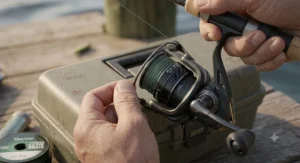
Getting the most from any 4 strand braid starts before you ever make a cast. Use a mono or fluorocarbon backing of 20–30 yards on spinning reels with shallow spool arbors — braid can slip on bare plastic under heavy drag pressure, and backing solves that cheaply. When spooling, keep firm, even tension using a pencil through the spool or a dedicated line-spooling tool; braid has no memory to “settle” the way monofilament does, so loose winding now means tangles later.
In the first 30 days, the most common mistake is overfilling the spool. Braid’s thin diameter tricks anglers into loading too much line, which then backlashes or digs in under pressure — fill to roughly 1/8 inch from the spool lip, not flush to the top. Rinse reels with fresh water after saltwater trips, since salt crystals accelerate wear on the coating four strand braid relies on for smooth casting. Re-tie your leader knot every few trips rather than waiting for visible fraying; a nicked four carrier braid loses strength well before it looks damaged. Finally, store spare spools out of direct sunlight — UV exposure is one of the fastest ways to degrade PE fiber over a season of storage.
✨ Don’t Miss These Exclusive Deals!
🔍 Take your braided line setup to the next level with these carefully selected picks. Click on any highlighted product above to check current pricing and availability, and spool up with confidence before your next trip on the water.
Real-World Scenarios: Who Should Choose Four Strand Braid
The weekend bass angler fishing heavy cover. If you’re punching jigs through matted vegetation every Saturday on a tight tackle budget, a rougher, tougher 4 strand braid like Piscifun Onyx or Calamus Bastion makes more sense than a smoother, pricier 8-strand line that frays faster around wood and rock.
The surf or pier angler who loses line to structure often. Anglers casting from jetties or piers lose line to snags regularly, so cost per yard matters more than ultimate smoothness. HERCULES Cost-Effective 4 Strand, with its long spool options, keeps respooling affordable across a season.
The angler running one line for everything. If you don’t want separate spools for every technique, PowerPro Original Spectra or Daiwa J-Braid X4 offer the most balanced, proven performance across freshwater bass trips, light inshore saltwater, and general-purpose casting — a reasonable one-line-fits-most compromise.
Common Four Strand Braid Frustrations, Solved
Problem: Wind knots while casting light lures. A stiffer four carrier braid like Daiwa J-Braid X4 resists this better than looser competitors; slowing your cast slightly and using a shock leader also helps.
Problem: Line digging into the spool under drag pressure. This usually traces back to overfilling or uneven spooling tension — respool leaving that 1/8-inch gap at the lip mentioned earlier, and keep consistent pressure throughout.
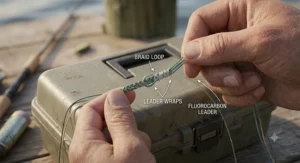
Problem: Frayed line after fishing around rocks or docks. Even abrasion-resistant 4 strand braid isn’t cutproof. Run a short fluorocarbon leader when fishing hard structure, and re-tie after any session with heavy contact.
Problem: Color fading faster than expected. This is common across budget value braided line and isn’t usually a functional issue — rinse with fresh water after use and store away from direct sunlight to slow it down.
Problem: Braid feels “rough” compared to friends’ setups. That roughness is often simply the nature of a lower-carrier weave rather than a defect; it’s the trade-off for the abrasion resistance and affordable braided line pricing you’re getting in return.
How to Choose Four Strand Braid: 7 Criteria That Matter
- Match strand count to your fishing style. Four strand braid favors abrasion resistance around cover; higher-strand lines favor smoothness and casting distance in open water.
- Check the pound test against your reel and target species. Oversized line reduces casting distance and reel capacity without meaningful benefit for smaller fish.
- Consider diameter, not just strength. A thinner braid construction at the same rated strength means more line capacity and better lure action.
- Prioritize coating quality over marketing claims. A treatment that resists water absorption and fading matters more day-to-day than headline strength numbers.
- Pick color based on water clarity and technique. High-vis colors help detect subtle bites; low-vis or multi-color options suit clear water or depth tracking.
- Factor in total spool length versus price. Longer spools of a value braided line often beat short spools of premium braid on real cost per cast.
- Read aggregated review themes, not star ratings alone. Recurring complaints about fraying or color fade tell you more than an average rating number ever will.
Braid Construction and Line Roundness Explained
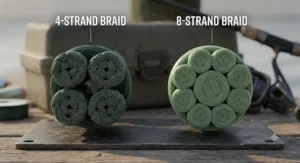
Braid construction refers to how individual PE fibers are woven together, and it’s the single biggest factor separating a rough four strand braid from a silky-smooth 12-strand line. Four strands means fewer, thicker fibers interlocked in a simpler pattern — that’s what gives four carrier braid its characteristic grippy, slightly flat texture, and it’s also why it resists cutting against rocks and shell beds better than more tightly woven alternatives.
Line roundness is the direct byproduct of strand count and weave tightness. More strands, woven tighter, produce a rounder cross-section that slides through rod guides with less friction and casts noticeably farther — testing across multiple braid types has shown 8-strand lines casting meaningfully farther than comparable 4-strand options in controlled conditions. What most buyers overlook is that roundness isn’t purely cosmetic; a rounder profile also seats more evenly in knots, which can translate to marginally better knot strength retention. The trade-off is durability: that same tight, round weave has less raw material per strand to resist abrasion, which is precisely where four strand braid earns its keep instead. Neither construction style is objectively superior — they’re built for different jobs, and understanding the ultra-high-molecular-weight polyethylene fiber both are made from helps explain why even “worse” four strand options remain far stronger than monofilament of the same diameter.
Four Carrier Braid for Different Fishing Styles
A four carrier braid isn’t a one-size-fits-all product, and different fishing styles pull very different value out of the same weave. Flipping and pitching anglers working heavy mats benefit most directly — the coarser texture and thicker individual strands resist nicks from wood and shell better than smoother, higher-carrier lines, which matters more than casting distance when your longest cast of the day might be fifteen feet. Surf and pier anglers get a different benefit entirely: four carrier braid’s lower price per yard means respooling after a season of sand and structure contact doesn’t sting the wallet the way replacing premium 8-strand line does.
Ice anglers and finesse trout fishermen, on the other hand, generally get less out of a four strand braid — the rougher texture transmits less subtle sensitivity and can create more noise through guides on light spinning setups, which is exactly where 8-strand or fused lines earn their higher price tag. Deep-water anglers sit in the middle: the thinner diameter of options like Daiwa J-Braid X4 helps cut through current and reach depth faster than bulkier lines, even though roundness and casting smoothness take a back seat to that practical advantage.
Affordable and Value Braided Line: Getting the Most for Your Money
Not every angler needs — or should pay for — premium 8-strand braid, and this is where affordable braided line genuinely competes on merit rather than just price. Here’s what to weigh: a value braided line built around simpler four-strand construction typically costs 30–50% less than comparable premium options while sacrificing mostly casting smoothness, a trait that matters far more for finesse fishing than for flipping jigs into cover. For anglers who lose line regularly to snags, structure, or aggressive species, that lower cost per yard compounds meaningfully across a season.
The smartest way to shop affordable braided line is by cost per yard rather than sticker price — a long spool of a value braided line like HERCULES often works out cheaper per cast than a short spool of a premium name brand, even before factoring in respooling frequency. Reviewers consistently note that budget four strand braid rarely fails outright; it simply shows its age through color fade and minor roughness sooner than premium coated lines. For most recreational anglers, that trade is a reasonable one.
4 Strand Braid vs 8 Strand Braid
The core difference comes down to strand count and what that does to texture, diameter, and cost. A 4 strand braid uses fewer, thicker fibers woven in a simpler pattern, producing a coarser, slightly flatter line that resists abrasion well but casts with more friction noise through the guides. An 8 strand braid weaves twice as many, thinner fibers into a rounder, smoother profile — testing has consistently shown 8-strand lines casting 15–20% farther than comparable 4-strand options, with meaningfully better sensitivity for detecting light bites.
Where four strand braid wins outright is around heavy cover: rocks, dock pilings, oyster beds, and submerged wood chew through smoother 8-strand line faster than the coarser weave of a well-built 4-strand option. It also tends to cost noticeably less, since simpler construction requires less material and manufacturing complexity. Where 8-strand wins is everywhere casting distance, line noise, and sensitivity matter more than raw toughness — open-water finesse fishing, light jigging, and situations where every extra foot of cast counts. Choosing between them isn’t about which is “better” in the abstract; it’s about matching construction to the specific demands of how and where you fish, a distinction the International Game Fish Association’s angling rules implicitly recognize by allowing multifilament lines of any legitimate construction across all record-eligible line classes.
Features That Actually Matter (And Those That Don’t)
Actually matters: coating quality and treatment process. A line that resists water absorption and fading holds performance longer than one relying purely on raw fiber strength.
Actually matters: diameter-to-strength ratio. Two lines rated at the same pound test can have meaningfully different real-world diameters, affecting both casting distance and reel capacity.
Doesn’t matter much: marketing terms like “advanced superline” or “pro-grade.” These are branding, not measurable specs — always check actual strand count, material, and diameter instead.
Doesn’t matter much: color variety beyond your actual technique needs. Multi-color spools genuinely help with depth tracking; beyond that use case, extra color options are mostly aesthetic.
Actually matters: aggregated review themes around fraying and knot slippage. These recurring complaints reveal more about real-world durability than any single spec sheet number.
Common Mistakes When Buying Four Strand Braid
The most frequent mistake is chasing the lowest possible price without checking strand count against intended use — a rock-bottom four strand braid meant for light finesse work will underperform badly if you’re flipping heavy cover with it, regardless of how cheap it was. Close behind is ignoring diameter in favor of pound test alone; two spools rated identically can differ enough in actual diameter to change how much line fits your reel. Buying based on a single retailer review without checking aggregated sentiment across multiple sources is another common trap, since individual reviews skew toward extreme experiences in either direction.
Anglers also frequently overlook color-to-water-clarity matching, grabbing whatever color looks best on the packaging rather than what actually helps detect bites in their typical water conditions. Finally, plenty of buyers skip checking spool length against their reel capacity entirely, ending up with either wasted line or a spool that runs short mid-season — a five-minute capacity check before purchase avoids both problems.
Long-Term Cost and Maintenance
Total cost of ownership for a 4 strand braid extends well beyond the sticker price. Because braid doesn’t degrade from stretch fatigue the way monofilament does, a well-maintained spool can last multiple seasons of moderate use — rinsed after saltwater trips, stored out of direct sunlight, and re-tied periodically at the leader connection. That longevity is precisely why cost-per-yard, not cost-per-spool, is the right way to evaluate value braided line against pricier alternatives.
Maintenance costs stay low but aren’t zero: expect to replace working line sections after heavy abrasion exposure even if the bulk of the spool remains sound, and budget for periodic full respooling roughly once or twice per season for anglers fishing weekly. Compared to monofilament, which typically needs full replacement every few months due to UV degradation and memory buildup, four strand braid’s higher upfront cost per yard is frequently offset by a meaningfully longer usable lifespan — a genuine long-term value argument, not just marketing language.
Safety, Regulations, and Line Disposal Guide
Braided line poses a specific environmental concern that monofilament doesn’t share as acutely: because PE fiber resists degradation so effectively, discarded four strand braid persists in the environment for a very long time and can entangle wildlife or foul boat propellers if left loose on docks or in the water. Never cut loose line into open water, even short scraps from re-tying knots.
Instead, use dedicated monofilament and braid recycling bins where available — a nationwide network exists specifically for this purpose, with thousands of recycling bins installed at fishing access points through partnerships between conservation groups and federal marine debris programs. If no bin is nearby, coil used line tightly, secure it, and dispose of it in regular household trash rather than leaving it at the water’s edge. This matters regardless of price point — even the most affordable braided line contributes to the same disposal problem as premium options once it’s worn out.
Frequently Asked Questions
❓ Is 4 strand braid stronger than 8 strand braid at the same pound test?
❓ Can I use 4 strand braid on a spinning reel?
❓ How long does a four carrier braid actually last?
❓ Why is 4 strand braid cheaper than 8 strand braid?
❓ Does color fade affect performance on value braided line?
Conclusion
Choosing the right 4 strand braid comes down to matching construction to how you actually fish, not chasing the lowest price or the flashiest marketing claim. For heavy cover and structure, the rougher, tougher weave of options like Piscifun Onyx or Calamus Bastion earns its keep. For anglers wanting one dependable line across multiple situations, PowerPro Original Spectra and Daiwa J-Braid X4 offer the most balanced, proven track records. And if stretching your tackle budget matters most, HERCULES Cost-Effective 4 Strand and Ashconfish deliver genuine value without pretending to be something they’re not.
Whichever you choose, remember that a four carrier braid isn’t inherently inferior to smoother, pricier alternatives — it’s a different tool built for a different job, and understanding that difference is what separates an informed purchase from a guess. Spool up thoughtfully, maintain your line, and dispose of old spools responsibly, and any of these seven options will serve you well through a full season on the water.
✨ Ready to Upgrade Your Line?
🎣 Browse the full lineup above and find the 4 strand braid that fits your next trip. Check current pricing and availability before you head out, and spool up with a line built for exactly how you fish!
Recommended for You
- Spey Rod Salmon: 7 Best Picks for 2026, Ranked and Reviewed
- Switch Rod Fly Fishing: 7 Best Two-Handers to Buy in 2026
- 3 Weight Fly Rod: 7 Best Picks for Small Streams in 2026
Disclaimer: This article contains affiliate links. As an Amazon Associate, I earn from qualifying purchases. If you purchase products through these links, we may earn a small commission at no additional cost to you.
✨ Found this helpful? Share it with your friends! 💬🤗
