
In This Article
The Ultimate Guide to 200 Gallon Fish Tanks: Creating Your Dream Aquatic Paradise
✨Was this helpful? Spread the word! 🚀
Are you dreaming of creating a stunning underwater world in your home? A 200 gallon fish tank offers the perfect canvas for aquatic enthusiasts looking to make a bold statement with their aquarium hobby. These magnificent aquariums provide ample space for diverse fish communities, elaborate aquascaping, and create a mesmerizing focal point in any room.
As someone who has spent over a decade setting up and maintaining large aquariums, I can tell you that moving up to a 200 gallon fish tank is truly a game-changing experience. The sheer volume allows for stable water parameters, more swimming space for your fish, and incredible design possibilities that simply aren’t achievable with smaller tanks.
In this comprehensive guide, we’ll explore everything you need to know about 200 gallon fish tanks – from choosing the right model and proper setup to maintenance considerations and stunning stocking options. I’ll also share insights on similar-sized options like 150 gallon fish tanks and 180 gallon aquariums to help you find the perfect fit for your space and goals.
Understanding the Scale: What Makes a 200 Gallon Fish Tank Special
Before diving into specific recommendations and setup advice, let’s understand why a 200 gallon fish tank deserves consideration for serious aquarists.
A standard 200 gallon fish tank typically measures around 72″ × 24″ × 30″ (length × width × height), though dimensions can vary by manufacturer. This substantial footprint requires dedicated space and proper structural support – these aren’t tanks you can place on standard furniture or move easily once filled.
The impressive water volume of a 200 gal fish tank creates several advantages over smaller aquariums:
✅ Greater stability in water parameters (temperature, pH, ammonia, etc.)
✅ Reduced stress for fish due to more swimming space
✅ Ability to keep larger species or more numerous communities
✅ Enhanced visual impact and presence in your living space
✅ More room for elaborate aquascaping and natural territories
When compared to moderately large tanks like a 150 gallon fish tank, those extra 50 gallons make a significant difference. The jump from a fish tank 150 gallon to a 200-gallon system isn’t just about volume – it’s about possibilities. That additional space can accommodate fish species that might otherwise outgrow smaller aquariums, allowing for more authentic natural behaviors.
Similarly, 180 gallon fish tank setups fall between these two sizes, offering a middle ground that might better fit certain spaces or budgets while still providing ample volume for impressive aquatic displays.
Key Considerations When Choosing Your 200 Gallon Aquarium
Shopping for a tank this size requires careful consideration beyond just looks. Here are the essential factors to evaluate:
Construction Quality and Materials
When investing in a 200 gallon fish tank, quality construction becomes non-negotiable. The primary materials you’ll encounter include:
- Glass tanks: Traditional, scratch-resistant, heavier, and typically less expensive
- Acrylic tanks: Lighter, better insulation, seamless viewing, but more prone to scratching
For a tank this size, the thickness of material becomes crucial. Quality glass tanks should use glass at least 1/2″ to 3/4″ thick, while acrylic should be minimum 3/4″ thick to handle the enormous water pressure.
One standout option in the glass category is the Aqueon 210 Gallon Aquarium. This American-made tank features precision-crafted tempered glass that balances strength with clarity, making it an excellent choice for those seeking durability without sacrificing viewing quality.
Tank Dimensions and Space Requirements
The standard dimensions of a 200 gallon fish tank can vary, but most follow these approximate measurements:
| Tank Size | Typical Dimensions (L×W×H) | Empty Weight | Filled Weight |
|---|---|---|---|
| 200 Gallon | 72″ × 24″ × 30″ | 225-300 lbs | ~1,900 lbs |
| 180 Gallon | 72″ × 24″ × 24″ | 200-250 lbs | ~1,700 lbs |
| 150 Gallon | 72″ × 18″ × 28″ | 150-200 lbs | ~1,400 lbs |
💬 Just one click – help others make better buying decisions too!😊
When planning your space, remember to account for:
✅ Floor strength (can it support nearly a ton of weight?)
✅ Access for maintenance (can you reach all areas of the tank?)
✅ Room for equipment (filters, sumps, etc.)
✅ Viewing distance (large tanks need more viewing space)
For those with space constraints, a 150 gallon fish tank might be more practical while still offering impressive capacity. The standard fish tank 150 gallon size typically has a smaller width (18″ vs 24″), making it more manageable in narrower rooms while maintaining the same impressive length.
Stand and Support Requirements
The stand for your 200 gallon fish tank isn’t just furniture – it’s a critical safety component. A tank this size filled with water, substrate, decorations, and equipment can easily weigh over 2,000 pounds.
Commercial stands specifically designed for tanks this size are available, though they’re often quite expensive. The Aqueon Majesty Stand for 210/220 Gallon Aquarium is a rock-solid option with reinforced corners and center bracing designed specifically to support these massive tanks safely.
Some aquarists opt for DIY stands built from 2×4 lumber or even welded steel frames. If going this route, I strongly recommend following established plans from experienced large-tank owners and overbuilding rather than cutting corners.
Filtration Systems for Large Aquariums
Adequate filtration becomes exponentially more important as tank size increases. For a 200 gallon fish tank, you’ll want to consider:
- Canister filters: Multiple large canisters may be needed
- Sump systems: Often the ideal solution for tanks this size
- Wet/dry filters: Excellent biological filtration for large bioloads
- Moving bed filters: Efficient nitrogen processing for heavily stocked tanks
For optimal water quality, aim for systems that turn over the entire tank volume at least 4-5 times per hour. This means your filtration should process 800-1000 gallons per hour for a 200 gal fish tank.
The Fluval FX6 High Performance Aquarium Filter is a powerhouse option that can move up to 563 gallons per hour. For a 200 gallon system, pairing two of these creates excellent mechanical and biological filtration. Their self-priming design and adjustable flow rate make them particularly user-friendly despite their industrial capacity.
Heating Requirements
Maintaining stable temperatures in such a large water volume requires significant heating capacity. As a general rule, you’ll need approximately 5 watts per gallon in most home environments:
- 200 gallon tank: 800-1000 watts total heating capacity
- 180 gallon tank: 720-900 watts total heating capacity
- 150 gallon tank: 600-750 watts total heating capacity
Rather than using a single massive heater, I recommend distributing the heating load across multiple units. This provides redundancy if one fails and ensures more even heat distribution.
The Fluval E300 Advanced Electronic Heater offers digital precision with dual temperature sensors and failsafe protection. Installing 3-4 of these around your 200 gallon aquarium creates an excellent distributed heating system with backup capacity if one unit fails.
Lighting Systems
Lighting a 200 gallon fish tank effectively requires powerful fixtures with good spread. Your needs will vary dramatically based on your intended use:
- Fish-only tanks: Moderate lighting primarily for viewing
- Live plants: High-output lights with appropriate spectrum
- Reef tanks: Intense, specialized lighting for coral growth
For freshwater planted 200 gallon aquariums, the Fluval Plant 3.0 LED Light provides excellent spectrum coverage and customizable intensity. Multiple units can be linked and controlled via smartphone app, allowing for precise lighting schedules and gradual transitions that mimic natural sunlight patterns.
Setting Up Your 200 Gallon Fish Tank: A Step-by-Step Guide
Setting up an aquarium of this magnitude requires careful planning and execution. Here’s how to approach this major project:
1. Location and Preparation
Before purchasing your tank, ensure your intended location meets these requirements:
✅ Floor strong enough to support 2,000+ pounds (consult a structural engineer if unsure)
✅ Away from direct sunlight to prevent algae issues
✅ Accessible for maintenance from all sides if possible
✅ Near electrical outlets for equipment (but protected from water)
✅ Not blocking walkways or exits
For apartments or upper floors, consult with a structural engineer before proceeding. The concentrated weight of a 200 gallon fish tank exceeds what many residential floors are designed to support.
2. Equipment Assembly
Once your tank arrives:
- Set up the stand first, ensuring it’s perfectly level using shims if necessary
- Place foam or rubber matting on the stand to distribute pressure evenly
- With adequate help (at least 4-6 strong adults), place the empty tank on the stand
- Install background materials (if using) before adding anything else
- Set up plumbing for filtration systems
- Install and test all equipment before adding water
3. Aquascaping Considerations
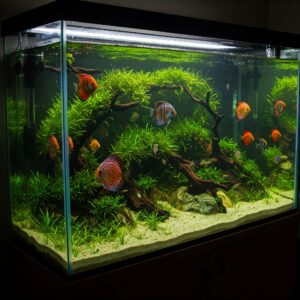
A 200 gallon fish tank provides a magnificent canvas for creative aquascaping. Consider these approaches:
- Nature aquarium: Iwagumi or Dutch-style planted layouts scaled up for dramatic effect
- Biotope: Recreating specific natural habitats like Amazon River or African Rift Lake
- Underwater landscape: Creating the illusion of underwater mountains, valleys, or forests
When placing hardscape elements (rocks, driftwood), always place them directly on the tank bottom before adding substrate to prevent collapse.
The SevenSeaSupply 25lbs of Natural Aquarium Driftwood package provides excellent value for larger tanks where multiple substantial pieces are needed to create visual impact proportional to the tank size.
4. Cycling Your New Tank
The nitrogen cycle is particularly important in large tanks due to the potential waste volume. For a 200 gallon fish tank:
- Fill with dechlorinated water
- Install and run all equipment
- Add beneficial bacteria starter
- Introduce an ammonia source (fish food, pure ammonia, or biological media from established tank)
- Test water parameters every 2-3 days
- Wait for ammonia and nitrite to spike and then fall to zero (typically 4-6 weeks)
A helpful tool during this process is the API Freshwater Master Test Kit. This comprehensive testing solution includes all the essential tests needed to monitor the nitrogen cycle properly as your massive ecosystem establishes itself.
5. Stocking Considerations
The beauty of a 200 gallon fish tank lies in the stocking possibilities. You can create:
- Community tanks with larger schools: Imagine 50+ neon tetras creating a living river of color
- Predator tanks: Home for impressive species like peacock bass or large cichlids
- Species-specific displays: Perfect for showcasing the natural behaviors of a single type of fish
- Mixed community: Carefully selected compatible species from similar habitats
Whatever your vision, introduce fish gradually over weeks or months rather than all at once, even in a tank this size.
Fish Species That Thrive in 200 Gallon Fish Tanks
One of the greatest advantages of a 200 gallon fish tank is the ability to keep species that require substantial swimming space or grow too large for conventional aquariums. Here are some excellent candidates:
Large Freshwater Species
These impressive fish need the space a 200 gallon aquarium provides:
- Oscar Fish (Astronotus ocellatus): These intelligent cichlids can grow to 12″ and develop distinct personalities
- Silver Arowana (Osteoglossum bicirrhosum): Prehistoric-looking surface swimmers that can reach 3 feet in length
- Clown Knife Fish (Chitala ornata): Nocturnal predators with unique body shape growing to 30+ inches
- Peacock Bass (Cichla sp.): Aggressive, colorful predators from South America
- Fire Eel (Mastacembelus erythrotaenia): Fascinating bottom-dwellers reaching up to 3 feet
Community Fish in Large Schools
A 200 gal fish tank allows for keeping impressive schools that showcase natural behaviors:
- Silver Dollars (Metynnis sp.): Keep 15-20 for a dazzling silver display
- Rainbowfish (Melanotaenia sp.): Groups of 20+ show amazing color in a large tank
- Congo Tetras (Phenacogrammus interruptus): Schools of 30+ create shimmering rivers of color
- Roseline Sharks (Sahyadria denisonii): 15-20 of these striped beauties create dramatic movement
- Discus (Symphysodon sp.): Groups of 8-12 of these majestic cichlids become the ultimate centerpiece
200 Gallon Marine Fish Tank Options
For saltwater enthusiasts, a 200 gallon fish tank opens the door to:
- Reef systems: Vast landscapes of live coral and reef-safe fish
- FOWLR (Fish Only With Live Rock): Showcase larger marine species with natural rockwork
- Predator tanks: Home for impressive hunters like lionfish or groupers
- Species-specific biotypes: Caribbean, Indo-Pacific, or Red Sea themed collections
Finding the Middle Ground: 180 Gallon Fish Tank and 150 Gallon Fish Tank Options
If a full 200 gallon setup seems overwhelming or won’t fit your space, consider these alternatives:
A 180 gallon fish tank maintains the same footprint as most 200 gallon models but with reduced height (typically 24″ vs. 30″). This makes maintenance easier while still providing substantial volume.
The Aqueon 180 Gallon Rectangle Aquarium Ensemble includes both the tank and stand, offering a turnkey solution with properly matched components for safety and aesthetics.
For narrower spaces, a fish tank 150 gallon size typically reduces the width to 18″ while maintaining length. This significant space-saving dimension often makes the difference between “won’t fit” and “perfect” in many home environments.
Maintenance Routines for 200 Gallon Aquariums
📢 Never Skip These Essential Maintenance Tasks! 🐠
Large tanks may be more stable, but they still require regular maintenance. Create a schedule for these essential tasks:
| Task | Frequency | Notes |
|---|---|---|
| Water testing | Weekly | pH, ammonia, nitrite, nitrate |
| Water changes | 20-30% every 2-4 weeks | Use Python or similar water-changing system |
| Filter cleaning | Monthly (rotating schedule) | Never clean all media at once |
| Substrate vacuum | Monthly | Focus on visible debris |
| Equipment checks | Quarterly | Inspect for wear, leaks, or inefficiencies |
| Glass/acrylic cleaning | As needed | Use appropriate tools for your tank material |
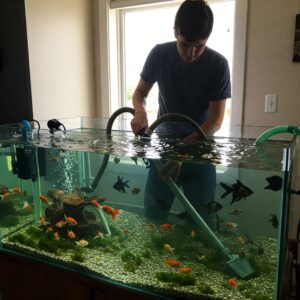
The Python No Spill Clean and Fill Aquarium Maintenance System is practically essential for tanks this size. This ingenious device connects to a sink faucet, using water pressure to both remove old water and refill the tank without buckets. For 200 gallon water changes, this tool saves tremendous time and physical strain.
Cost Considerations: Budgeting for a 200 Gallon Fish Tank
Large aquariums represent a significant investment. Here’s what to expect:
Initial Setup Costs
| Component | Approximate Cost Range |
|---|---|
| 200 Gallon Tank | $800-$2,500 |
| Stand | $500-$1,500 |
| Filtration System | $300-$1,000 |
| Lighting | $200-$800 |
| Heating | $100-$300 |
| Substrate | $100-$400 |
| Decorations/Hardscape | $200-$500 |
| Initial Fish Stock | $200-$1,000+ |
| Total Initial Investment | $2,400-$8,000+ |
Ongoing Expenses
Monthly operating costs typically include:
- Electricity: $30-$70/month (filtration, heating, lighting)
- Water treatments: $10-$30/month
- Food: $20-$50/month
- Replacement parts/media: ~$20/month (averaged)
A 150 gallon fish tank or 180 gallon fish tank may reduce these costs somewhat, but the difference is less significant than you might expect. Most of the expense comes from quality components and proper setup rather than the precise volume.
Common Challenges and Solutions for Large Aquariums
Challenge 1: Water Quality Management
Problem: Maintaining consistent parameters in large volumes
Solution: Invest in a reliable monitoring system like the Seneye Home Aquarium Monitor. This device provides continuous readings of critical parameters and can send alerts to your phone when values drift outside safe ranges.
Challenge 2: Algae Control
Problem: Large glass surfaces prone to algae growth
Solution: Combine preventative measures (appropriate lighting duration, nutrient control) with efficient cleaning tools. The Flipper Max 2-in-1 Aquarium Algae Magnet features a wide cleaning surface ideal for large tanks, reducing the time needed to keep glass pristine.
Challenge 3: Equipment Failure
Problem: System crashes can be catastrophic in large setups Solution: Implement redundancy in critical systems (multiple heaters, backup power, etc.). The APC BE850M2 UPS Battery Backup & Surge Protector provides crucial protection during power outages, keeping essential equipment running long enough to prevent disaster.
Challenge 4: Access for Maintenance
Problem: Reaching all areas of a deep/tall tank Solution: Use appropriate tools designed for deep tanks. The Fluval Edge Gravel Cleaner with Dual Hose Flow features extended reach specifically designed for deeper aquariums.
Expert Tips for 200 Gallon Fish Tank Success
After years of managing large aquariums, here are my top recommendations:
- Always overfilter: For a 200 gallon fish tank, aim for filtration rated for 300+ gallons
- Distribute equipment: Position heaters, powerheads, and filter intakes/outputs at multiple points
- Create maintenance zones: Design your aquascape with access channels for cleaning
- Invest in quality testing equipment: With large water volumes, precision becomes critical
- Establish a quarantine protocol: Never introduce new fish directly to your main system
- Document everything: Keep logs of parameters, maintenance, and observations
- Plan for emergencies: Have backup equipment and procedures ready for power outages or system failures
Showcasing Your 200 Gallon Fish Tank: Design and Display Ideas
A tank this size becomes more than a hobby—it’s a living piece of art. Consider these display enhancement ideas:
Custom Backgrounds
Three-dimensional backgrounds can transform a 200 gallon fish tank into a slice of underwater landscape. Products like the Universal Rocks Rocky Background create stunning natural scenes that enhance depth perception and provide additional surface area for beneficial bacteria.
Specialized Lighting
Programmable LED systems can create dynamic lighting effects that mimic natural conditions:
- Dawn/dusk transitions
- Moonlight phases
- Storm simulations
- Seasonal variations
The Current USA Orbit Marine IC PRO LED system offers these features with wireless control, allowing you to showcase your 200 gallon aquarium with professional-quality lighting effects.
Integrated Cabinetry
For the ultimate display, consider custom cabinetry that integrates your tank into your home architecture. Built-in designs can:
- Conceal equipment
- Provide storage for supplies
- Create a seamless look with your existing décor
- Include specialized viewing areas
Comparing Different 200 Gallon Fish Tank Options
When shopping for tanks this size, several manufacturers offer quality options:
| Brand | Notable Features | Price Range | Best For |
|---|---|---|---|
| Aqueon | American-made, tempered glass, lifetime warranty | $$$ | Overall quality and reliability |
| SeaClear | Acrylic construction, lightweight, excellent clarity | $$$$ | Modern aesthetics, custom options |
| Marineland | Deep dimension options, matched components | $$$ | Complete system packages |
| Custom Aquariums | Made-to-order sizes, specialized configurations | $$$$$ | Unique installations |
The SeaClear 210 Gallon Acrylic Aquarium Combo Set deserves special mention for those preferring acrylic. This combo includes a light fixture and reflector, providing exceptional clarity that makes the tank appear nearly invisible from certain angles.
180 Gallon Fish Tank and 150 Gallon Fish Tank Alternatives
If you’re still deciding between sizes, consider these key differences:
A 180 gallon fish tank provides 90% of the volume of a 200 gallon system but with reduced height, making maintenance significantly easier. This size still accommodates nearly all the same species and creates impressive displays.
The 150 gallon fish tank size reduces both height and width, making it suitable for narrower rooms while still providing substantial capacity. A fish tank 150 gallon setup can fit in spaces where larger tanks simply won’t work.
For tight spaces, the Aqueon 150 Gallon Aquarium offers an excellent balance of capacity and footprint, with the same 72″ length but narrower width that can make all the difference in room placement.
📢 Find Your Perfect Tank Size Today! 🐟🦑🐢
Choosing between a 200 gallon fish tank, 180 gallon fish tank, or 150 gallon fish tank ultimately comes down to your specific space, budget, and stocking goals. Each size offers impressive capacity that will elevate your aquarium hobby to a professional level.
Conclusion: Is a 200 Gallon Fish Tank Right for You?
A 200 gallon fish tank represents a serious commitment to the aquarium hobby. It offers unparalleled opportunities for creating stunning aquatic displays, keeping species that simply won’t thrive in smaller tanks, and developing a truly immersive underwater world.
However, it also demands significant space, investment, and ongoing attention. For many enthusiasts, the 180 gallon fish tank or even the fish tank 150 gallon size may represent a more practical sweet spot between impact and manageability.
Whichever size you choose, proper research and preparation are essential. These large systems are less forgiving of hasty decisions or corner-cutting. Take your time planning, invest in quality components, and create a maintenance routine you can realistically sustain.
The reward for this diligence is an aquatic masterpiece that will become the centerpiece of your home, a conversation starter for guests, and a source of endless fascination as you observe the complex ecosystem you’ve created.
📢 Ready to Transform Your Space with an Impressive Aquatic Display? 🏆
Take the plunge into large-scale aquarium keeping with confidence. Use the guidelines in this article to make informed decisions about equipment, setup, and maintenance. Your dream 200 gallon fish tank awaits!
More FAQ:
❓ How much does a 200 gallon fish tank weigh when filled?
❓ What's the best filter system for a 200 gallon fish tank?
❓ How much does a complete 200 gallon aquarium setup cost?
❓ Is a 180 gallon fish tank better than a 200 gallon for home use?
❓ How often should I change water in my 200 gallon fish tank?
Recommended for You:
- 120 Gallon Fish Tank: 10 Incredible Benefits of Going Big with Your Aquarium
- The Ultimate Guide to Caring for Exotic Fish Species
- How to Build a DIY Aquarium Stand for Heavy Tanks
Disclaimer: This article contains affiliate links. If you purchase products through these links, we may earn a small commission at no additional cost to you.
✨ Found this helpful? Share it with your friends! 💬🤗
