
In This Article
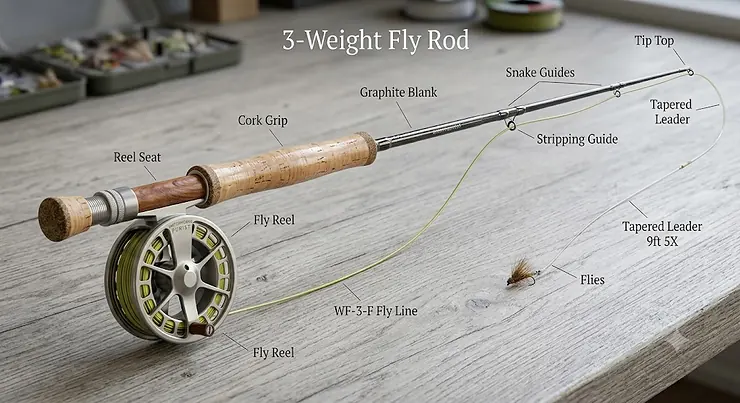
There’s a particular kind of quiet that settles over a mountain creek in the first hour of light — no drift boats, no elbow room disputes, just moving water and whatever trout decided to rise first. A 3 weight fly rod is the tool built for exactly that scene. It’s not the rod you grab for windy reservoirs or streamer fishing on big rivers; it’s the rod that turns an eight-foot-wide brook trout stream into the most fun you’ll have all season. Somewhere between a whisper-light 1-weight and an all-purpose 5-weight sits this smaller, more specialized class of rod, and it rewards the angler willing to slow down and fish with precision instead of power.
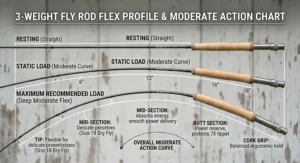
What is a 3 weight fly rod? It’s a lightweight fly rod matched to a 3-weight fly line, typically 6’6″ to 8’6″ long, built to cast small dry flies and light nymphs with a soft, forgiving action. The lighter line mass and shorter rod length make it ideal for tight casting lanes, delicate presentations, and small, technical trout streams where a heavier rod would feel like bringing a sledgehammer to a jewelry repair. According to Wikipedia’s overview of fly fishing, the sport’s line-weight system was standardized specifically so anglers could match rod, line, and fly size to the water and species in front of them — and for small, skittish trout, that match tends to land squarely on a 3-weight.
This guide walks through seven real 3-weight rods currently sold on Amazon, spanning budget, mid-range, and premium builds, along with the small-water tactics, casting adjustments, and common buying mistakes that actually matter once you’re standing streamside. This article contains affiliate links, and as an Amazon Associate, we may earn from qualifying purchases.
Quick Comparison Table
| Rod | Length / Pieces | Action | Price Range | Best For |
|---|---|---|---|---|
| Redington Classic Trout | 7’6″, 4pc | Medium | Around $190-$220 | Budget beginners |
| Orvis Clearwater 3-Weight | 8’6″, 4pc | Medium | $200-$260 range | All-around value |
| Fenwick Aetos 703 | 7′, 4pc | Medium-Fast | $170-$240 range | Lightest swing weight |
| TFO Pro III 3-Weight | 7’6″, 4pc | Moderate-Fast | $190-$260 range | Durable backup rod |
| Scott Centric 783-4 | 7’8″, 4pc | Fast | Mid-$800s to low-$900s | Windy pocket water |
| Sage Dart 376-3 | 7’6″, 3pc | Fast (short-range) | Around $700 | Tight-cover accuracy |
| Orvis Superfine Carbon | 7’6″, 4pc | Full-Flex | $550-$650 range | Ultra-delicate dries |
Looking at the spread above, the gap between the Redington Classic Trout and the Scott Centric 783-4 isn’t just price — it’s a difference in how much feedback and refinement you’re paying for at longer casting distances. Budget rods in this table cluster around a forgiving, medium action that’s genuinely fine for anglers still building their stroke, while the premium end trades some forgiveness for lighter swing weight and more nuanced feel. For most small-stream anglers, the mid-range tier (Fenwick Aetos, TFO Pro III) hits the best ratio of casting performance to dollars spent, since 3-weight fishing rarely demands the extra distance the premium rods are built to deliver.
💬 Just one click — help others make better buying decisions too!😊
Top 7 3 Weight Fly Rods: Expert Analysis
1. Redington Classic Trout — best lifetime-warranty budget pick
The standout here is simple: a full lifetime warranty on a rod that costs less than a nice dinner out. Redington built the Classic Trout around a soft, forgiving medium action at 7’6″ and four pieces, which loads easily at the 15-25 foot ranges where most small-stream trout are actually caught. That soft tip matters practically — it protects light tippet from snapping on a hookset, which is precisely the failure point most beginners hit first.
Honestly, this rod is for the angler who wants to learn on real gear without gambling real money, and for the veteran who wants a beater rod for brushy water where a $700 blank might meet an unfriendly branch. Yellowstone Angler’s 2025 small-stream shootout singled out the Classic Trout as the best value pick in the field, citing its medium action as well-suited to roll casts and short-range delivery — exactly the casts small streams demand. Aggregated reviewer sentiment consistently frames it as punching well above its price point for casting feel, even if the cosmetic finish doesn’t try to compete with rods four times the cost.
Pros:
- ✅ Backed by a genuine lifetime warranty at a budget price
- ✅ Soft medium action protects light tippet on the strike
- ✅ Loads easily at short range for roll casts in tight cover
Cons:
- ❌ Cork and componentry are basic compared to mid-tier rods
- ❌ Loses composure once you push casts past 40 feet
At around $190-$220, the Redington Classic Trout is hard to argue with as a first 3-weight or a dedicated small-stream backup — the value case is about as clean as this category gets.
2. Orvis Clearwater 3-Weight — best all-around beginner value
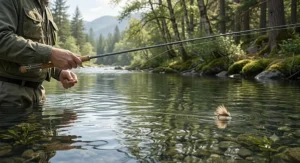
What most buyers overlook about the Clearwater line is that it isn’t a cosmetic refresh of an old budget rod — Orvis rebuilt the entire series from the ground up with Vermont-designed, purpose-built profiles for each line weight, meaning the 3-weight isn’t just a shorter version of the 5-weight, it’s tapered specifically for small-stream medium action. The blank uses the same design language as Orvis’s higher-end Helios rods, just without the premium materials, and it comes wrapped with chrome snake guides and a black nickel reel seat that look genuinely upscale for the price.
This is the rod for someone who wants one trout rod that won’t embarrass itself on either a backcountry creek or a slightly larger river later in the season. Hatch Magazine’s review of the Clearwater series noted the tip is softer than expected and does an admirable job protecting tippet, while still allowing delicate presentations to wary fish — a rare combination at this price tier. Reviewers on retail sites repeatedly describe landing solid trout on this rod and having their tippet, not the rod, be the limiting factor in a fight.
Pros:
- ✅ Purpose-built small-stream taper, not a generic downsized blank
- ✅ Soft tip protects tippet while still presenting dries delicately
- ✅ Backed by Orvis’s 25-year rod guarantee
Cons:
- ❌ Built overseas, so fit and finish trail US-made premium rods
- ❌ Reel seat and cork are good, not great, up close
Priced in the $200-$260 range, the Orvis Clearwater 3-Weight is arguably the safest all-around pick on this list for a first serious small-stream rod.
3. Fenwick Aetos 703 — lightest swing weight under $250
The 7-foot Aetos 703 is built around Fenwick’s Nano Composite blank technology, which the company markets as lighter and stronger than standard carbon fiber layups — and in practice, that translates into a rod that simply feels less tiring to false-cast all afternoon on a tight brush-lined creek. The shorter 7-foot length is a deliberate choice for confined casting lanes, where a longer rod tip would constantly clip overhanging branches.
Based on the spec comparison against its closest budget rivals, the Aetos trades a slightly stiffer medium-fast action for a genuinely lighter swing weight, which matters more on a 3-weight than raw casting distance ever will, since you’re rarely casting more than 30 feet on the water this rod is designed for. Aggregated reviewer sentiment on Fenwick’s own product pages repeatedly praises the brand’s warranty responsiveness — multiple reviewers mention broken tips replaced with a full new rod at no cost — alongside comments calling the Aetos a reliable backup to significantly pricier Sage and Loomis rods already in their quiver.
Pros:
- ✅ Nano Composite blank keeps swing weight noticeably low
- ✅ Medium-fast action handles both dries and small streamers
- ✅ Reviewers consistently praise Fenwick’s warranty service
Cons:
- ❌ Five-year warranty is shorter than Redington’s lifetime coverage
- ❌ AAA-grade cork is functional rather than premium
At roughly $170-$240 depending on retailer, the Fenwick Aetos 703 is the pick for anglers who prioritize all-day casting comfort in tight quarters over raw refinement.
4. TFO Pro III 3-Weight — best durable backup rod for growing anglers
The Pro III carries forward a design lineage that started with the legendary Lefty Kreh-designed Pro II, and the standout feature is how that pedigree shows up in the taper: a moderate-fast action with enough backbone to handle wind and fighting fish without sacrificing the softness that protects fine tippet. The blue composite checkerboard reel-seat insert and half-wells cork grip give it a distinct look that doesn’t scream “entry-level,” even though the price still sits in beginner territory.
What the spec sheet won’t tell you, but reviewers note, is that this rod tends to outperform its price class specifically because TFO tunes the taper for a narrower timing window than most budget rods — meaning intermediate casters get more feedback and control than they’d expect from a sub-$250 stick, though brand-new beginners may find the timing slightly less forgiving than the Redington or Orvis options above. Trident Fly Fishing’s review of the Pro III line describes it as solid, durable, and fully functional, with cork that punches above its price point.
Pros:
- ✅ Moderate-fast taper gives more feedback than typical budget rods
- ✅ TFO’s lifetime warranty program is straightforward to use
- ✅ Distinctive checkerboard reel seat and half-wells grip
Cons:
- ❌ Slightly less forgiving timing window for total beginners
- ❌ A touch heavier in the hand than premium graphite rivals
Expect to pay somewhere in the $190-$260 range for the TFO Pro III 3-Weight, making it a strong step-up pick once a beginner outgrows the most forgiving entry-level actions.
5. Scott Centric 783-4 — fastest recovery for wind-prone pocket water
Scott built the Centric series as the successor to the well-regarded Radian, and the 783-4 brings that fast-recovery, high-line-speed design down into a genuine 3-weight small-stream package. The standout is the fully milled reel seat and titanium stripping guides with zirconia inserts — componentry more commonly seen on 8- and 9-weight saltwater rods, here scaled down to a rod light enough for size 18 dry flies.
Here’s what to weigh with a rod like this: the Centric’s multi-modulus graphite layup and ARC reinforcement genuinely do produce flatter, more stable loops in gusty canyon wind than any budget rod on this list can manage, but that speed comes at the cost of some of the built-in forgiveness beginners lean on. Trident Fly Fishing’s testing of the broader Centric lineup found it delivers more feel and castability than the Radian it replaced while still holding the fast-action DNA the series is known for, and it’s a rod aimed squarely at anglers who already know their casting stroke. One buying guide specifically flagged the 783-4 as excelling on small water where accuracy under pressure matters more than sheer distance.
Pros:
- ✅ Titanium and zirconia guide components rarely seen on light rods
- ✅ Exceptional stability and loop control in wind
- ✅ Hand-built in the USA with premium fit and finish
Cons:
- ❌ Fast action punishes an inconsistent casting stroke
- ❌ Price puts it out of reach for casual or first-time buyers
Pricing typically lands in the mid-$800s to low-$900s, which makes the Scott Centric 783-4 a rod for the angler who has already decided small-stream fishing is a lifelong pursuit, not a passing interest.
6. Sage Dart 376-3 — most accurate short-range specialist
Sage designed the Dart as a genuinely different animal from a standard trout rod: a short-range fast-action blank built using KonneticHD graphite specifically to drive tight, accurate loops under overhanging willow branches. The standout feature is how little fly line it needs outside the tip to fully load — most 3-weights need 20-25 feet of line out before they feel alive, while the Dart loads with barely more line than your leader.
The honest analytical takeaway here is that this rod isn’t trying to be versatile; it’s trying to be the single best tool for one specific job — bow-and-arrow casts, dapping, and pinpoint delivery inside 35 feet — and by most independent accounts, it succeeds at that job better than anything else in this list. Sage’s own product listing aggregates a 5-out-of-5 rating across 16 customer reviews, and independent coverage from Hatch Magazine specifically flags the DART as ideal for anglers who spend most of their time on small water where accuracy and presentation are what actually catch fish, while cautioning that the $700 price tag isn’t for the casual creek angler.
Pros:
- ✅ Loads with minimal line out for genuinely close-quarters accuracy
- ✅ KonneticHD graphite keeps the blank remarkably light in hand
- ✅ Reviewers report it becomes their most-used rod after one trip
Cons:
- ❌ Short-range design trades away medium and long-distance performance
- ❌ Premium price for what is a highly specialized tool
At around $700, the Sage Dart 376-3 rewards a narrow use case extremely well, but it’s a second or third rod purchase, not a first one.
7. Orvis Superfine Carbon — best for ultra-delicate dry fly presentations
The Superfine Carbon’s standout trait is its full-flex action, a deliberately softer, deeper-bending taper that most modern fast-action rods have moved away from — and on a technical spring creek, that flex is exactly what turns a spooky refusal into an eaten fly. The graphite blank keeps the rod light despite that deep flex, so it doesn’t feel sluggish; it just protects gossamer-fine tippet and lands flies like they’re settling rather than landing.
What most buyers overlook about full-flex rods is that they demand a slower, more deliberate casting stroke than the fast-action rods dominating today’s market — this isn’t a rod that rewards rushing your timing. One buyer’s guide specifically singled out the Superfine Carbon as a masterpiece for anglers who value precision and finesse over raw power, describing its slim profile as ideal for threading narrow, brush-choked casting lanes. Yellowstone Angler’s mid-priced 3-weight shootout placed a 7’6″ Superfine model as a top mid-tier performer against far pricier competition.
Pros:
- ✅ Full-flex action protects the lightest tippet on the market
- ✅ Slim, lightweight profile ideal for tight, brushy casting lanes
- ✅ Praised by independent reviewers for precision dry fly work
Cons:
- ❌ Slower action requires deliberate timing, punishing to rush
- ❌ Not the rod for distance work or windy afternoons
In the $550-$650 range, the Orvis Superfine Carbon earns its keep specifically as a delicate presentation fly rod for anglers chasing selective trout in gin-clear pools.
Practical Usage Guide: Setting Up and Casting Your 3wt
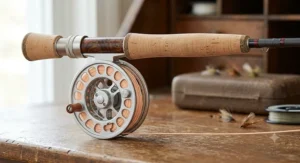
Getting a new 3-weight rigged correctly matters more than most first-time buyers expect, because the whole point of this rod class is delicacy, and a mismatched line or leader erases that advantage instantly. Start with a true-to-standard weight-forward 3-weight line — ideally a short, aggressive “creek taper” head that loads the rod within 15 feet, since many modern lines run heavier than the old AFTMA grain standard and can make a labeled 3-weight cast like a 4 or 5-weight on your new rod.
Developing a Gentle Casting Stroke
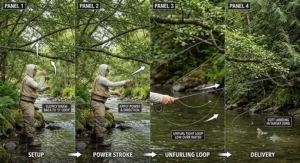
A gentle casting stroke is the single biggest adjustment coming from a 5-weight or 6-weight rod. Slow your casting arc down, shorten your stroke length, and let the rod’s tip do the work rather than muscling the line forward — 3-weights load and unload quickly at short range, and an aggressive stroke will only produce tailing loops and spooked fish. For most 7’6″ to 8’6″ rods, pair a 7.5-foot leader; on rods under 7 feet, a 6-foot leader keeps things manageable in tight quarters.
In your first thirty days, expect the most common mistakes to be overpowering the backcast on tight streams and using tippet that’s lighter than the water actually demands. Reach for 5X or 6X fluorocarbon for typical spring conditions rather than jumping straight to 7X out of habit — most drift problems blamed on tippet diameter are actually caused by leader and line mismatches, not the tippet itself. A quick monthly check of your guides for nicks and your ferrules for looseness will keep a budget or mid-range rod performing like new for years.
Real-World Scenarios: Who Should Fish a 3wt
The weekend beginner: If you’re new to fly fishing and want to learn on a local park creek before committing to bigger water, a rod like the Redington Classic Trout or Orvis Clearwater 3-Weight gives you forgiving action and a strong warranty safety net while you build casting fundamentals.
The backcountry hiker-angler: If your fishing trips start with a two-mile trail hike into brook trout water, weight and durability matter as much as casting feel. The Fenwick Aetos 703 and TFO Pro III pack down small, survive the occasional bump against a rock, and won’t feel like a $700 loss if something goes wrong.
The technical spring-creek specialist: If you already own a do-everything 5-weight and you’re chasing genuinely selective, heavily pressured trout on flat, clear water, the Orvis Superfine Carbon or Sage Dart 376-3 solve a problem your all-around rod can’t: presenting a size 20 dry fly without a hint of drag or splash.
How to Choose a 3 Weight Fly Rod
- Match the rod length to your water. Rods under 7 feet excel in tunnel-like brush; 7’6″ to 8’6″ rods handle slightly more open small rivers while still staying nimble.
- Pick an action that matches your casting experience. Medium and moderate-fast actions forgive timing mistakes; fast actions like the Centric or Dart demand a more developed stroke.
- Decide if you need distance or accuracy. Most small-stream casts land inside 30 feet, so prioritize accuracy and delicate turnover over long-range power.
- Weigh warranty against price. A lifetime warranty on a budget rod can outweigh the marginal casting gains of a mid-tier rod for anglers fishing brushy, rod-breaking terrain.
- Match your line to the rod’s intended taper. A true-to-standard WF3 creek taper line will make almost any rod on this list cast noticeably better than an overweighted generic line.
- Consider pieces and packability. Four-piece rods travel and hike better than two-piece rods without meaningfully sacrificing performance at this line weight.
- Buy the rod for the trout you actually catch, not the trophy fish you imagine — most 3-weight water holds modest-sized, wild or native fish, and the rod should make that everyday experience more fun, not less.
3wt Fly Rod vs 4 Weight and 5 Weight Rods
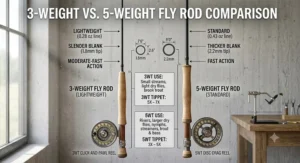
The honest comparison here isn’t about which line weight is “better” — it’s about matching the tool to the water. A 3-weight excels specifically where a 4 or 5-weight starts to feel like overkill: tight, technical streams with small fish and light tippet, where a heavier line lands with a noticeably harder splash and spooks fish before you get a drift. On paper, this means a 3-weight sacrifices wind-fighting power and the ability to turn over larger streamers, both of which a 5-weight handles far more comfortably.
What most anglers actually run into is that a 4-weight sits in an awkward middle ground — not quite as delicate as a 3-weight on the smallest water, not quite as versatile as a 5-weight everywhere else — which is why serious small-stream anglers tend to own either a dedicated 3-weight or skip straight to a 5-weight generalist, rather than splitting the difference. If your fishing genuinely alternates between six-inch brook trout creeks and larger rivers in the same season, a 3-weight paired with a separate 5-weight will outperform any single compromise rod trying to do both jobs.
Delicate Presentations and Light Tippet: What a 3wt Is Actually Built For
Every design decision on a genuine 3-weight rod — the softer tip, the lighter overall mass, the shorter length options — exists to serve one goal: landing a fly on the water without alerting the fish underneath it. That’s the entire definition of a delicate presentation fly rod, and it’s why rods like the Orvis Superfine Carbon and Sage Dart 376-3 intentionally trade distance and wind-fighting power for a softer, slower-loading blank.
Pairing that rod design with the right tippet matters just as much as the rod itself. A light tippet rod needs a soft enough tip to absorb the shock of a strike without snapping 6X or 7X fluorocarbon, which typically runs under 3.5 pounds of breaking strength. Reviewers across nearly every rod in this guide independently note the same thing about tip softness: it’s the single spec that separates a rod that protects fine tippet from one that simply breaks it off on the first solid take.
Small Water Fly Fishing: Reading Tight Streams
Small water fly fishing rewards a completely different reading of the river than big-water trout fishing does. On a 3wt fly rod small streams setup, pocket water becomes the primary target — small pools of slower water tucked behind boulders, logjams, and current seams, rather than the long, even runs that define larger rivers. <a href=”https://midcurrent.com/techniques/ask-midcurrent-understanding-the-fly-rod-and-line-weight-system/”>MidCurrent’s explainer on the fly line weight system</a> is worth reading here, since understanding how line weight is actually measured helps explain why a “true-to-standard” 3-weight line behaves so differently from an overweighted one on the same rod.
Overhanging banks and undercut structure hold fish that a bigger river rarely offers so close to the surface, and a bow-and-arrow cast or a simple dap often out-fishes a full overhead stroke in these tight lanes. According to Trout Unlimited’s own small-stream fishing guidance, cooler water temperatures on shaded small streams make them a productive destination even when larger rivers are running warm and sluggish in summer — see <a href=”https://www.tu.org/magazine/fishing/tip-small-stream-fishing/”>Trout Unlimited’s small stream fishing tips</a> for a deeper breakdown of where to look and how to approach these waters.
✨ Don’t Miss These Exclusive Deals!
🔍 Take your small-stream fishing to the next level with these carefully selected rods. Click on any highlighted rod above to check current pricing and availability. The right 3-weight will help you create the kind of quiet, technical days on the water that keep anglers coming back season after season!
Common Mistakes When Buying a 3 Weight Fly Rod
The most frequent mistake is buying based on brand prestige rather than the actual water being fished — a $900 fast-action rod like the Centric will outcast a budget rod at distance, but on a stream where every cast is under 25 feet, that advantage rarely shows up. A second common error is pairing a new rod with an old, overweighted fly line left over from a different rod, which erases the delicate loading a genuine 3-weight blank is designed to produce.
Buyers also frequently underestimate how much action mismatches their skill level; a beginner buying a fast-action rod like the Dart or Centric because “it’s the best one” often ends up fighting tailing loops instead of enjoying delicate presentations. Finally, skipping the warranty registration on rods like the TFO Pro III or Fenwick Aetos is a small but real mistake — most of these programs are free but require the owner to register the serial number shortly after purchase.
Features That Actually Matter (And Those That Don’t)
Tip softness and action genuinely matter — they determine whether your rod protects light tippet and presents flies delicately, which is the entire reason to own a 3-weight in the first place. Rod length matters practically, not aesthetically: shorter rods win in brush, longer rods win on slightly more open small rivers. Warranty terms matter more than most buyers initially weigh them, since small-stream fishing involves branches, rocks, and car doors at a much higher rate than open-water fishing.
What matters far less than marketing suggests is exotic guide material on a rod this light — titanium stripping guides look impressive on the Centric, but they’re not solving a problem a $200 rod’s stainless guides actually have at 3-weight line speeds. Reel seat cosmetics, similarly, add very little to actual casting performance, even though they’re often the first thing highlighted in marketing copy. Buyers should spend their attention budget on action and taper, not on component bling that photographs well but rarely changes how a fish is fooled or landed.
Long-Term Cost & Maintenance
A 3-weight rod’s long-term value proposition depends heavily on where and how often it’s fished. A Redington Classic Trout or Fenwick Aetos, backed by a lifetime or five-year warranty respectively, effectively caps your worst-case cost at a small handling fee even if a tip snaps on a hidden branch — which, on brushy small streams, is a matter of when, not if. Premium rods like the Scott Centric or Sage Dart carry no meaningfully better durability against that kind of accidental breakage; you’re paying for casting refinement, not damage insurance.
Ongoing maintenance costs stay modest across this entire category: occasional replacement of the cork grip after years of sweat and dirt exposure, periodic reel service, and fly line replacement every one to three seasons depending on use. Total cost of ownership over a five-year span tends to favor the budget and mid-tier rods on this list unless the premium rod’s casting performance is actually being used to its full potential on demanding water.
Safety, Regulations, and Stream Etiquette
Small streams often hold wild or native trout populations that are more vulnerable to handling stress than larger, more heavily stocked rivers, which makes proper catch-and-release technique especially important on 3-weight water. The National Park Service’s guidance on catch and release fishing recommends keeping fish in the water as much as possible and letting them fully recover before release, holding the fish upright and facing into the current until it’s ventilating steadily on its own — see the National Park Service’s catch and release fishing guidance for the full set of recommended practices.
Beyond fish handling, always check state-specific regulations before fishing an unfamiliar small stream — many states impose catch-and-release-only seasons, barbless hook requirements, or special protections on native trout populations in headwater creeks. A quick check of the relevant state wildlife agency’s regulations page before your trip takes a few minutes and avoids both a fine and unnecessary harm to genuinely fragile fish populations.
Frequently Asked Questions
❓ What size fish can you catch on a 3 weight fly rod?
❓ Is a 3 weight fly rod good for beginners?
❓ What line should I put on a 3wt fly rod?
❓ How long should a 3 weight fly rod be?
❓ Can you fish nymphs on a 3 weight fly rod?
Conclusion
A 3 weight fly rod isn’t trying to be your only rod — it’s a specialist built for a specific kind of joy that bigger rods simply can’t deliver: reading a tiny, brush-choked creek, dropping a size 18 dry fly into a six-inch feeding lane, and feeling a wild trout eat it three feet from your boots. Whether you land on the budget-friendly, warranty-backed Redington Classic Trout, the refined mid-tier feel of the Fenwick Aetos 703 or TFO Pro III, or the specialist precision of the Sage Dart 376-3 and Orvis Superfine Carbon, the right choice comes down to matching the rod’s action and length to the actual water you fish most.
None of these seven rods are wrong choices — they’re built for slightly different anglers and slightly different streams. Start with an honest read of your own casting experience and the kind of water waiting for you this season, and the right 3-weight will make itself obvious.
Recommended for You
- 8 Weight Fly Rod Saltwater: 7 Best Picks for 2026
- 9 Foot 5 Weight Fly Rod: 7 Best Picks Tested for 2026
- 7 Best Surf Rod Under $150 Picks That Actually Hold Up (2026)
Disclaimer: This article contains affiliate links. As an Amazon Associate, I earn from qualifying purchases. If you purchase products through these links, we may earn a small commission at no additional cost to you.
✨ Found this helpful? Share it with your friends!
