
In This Article
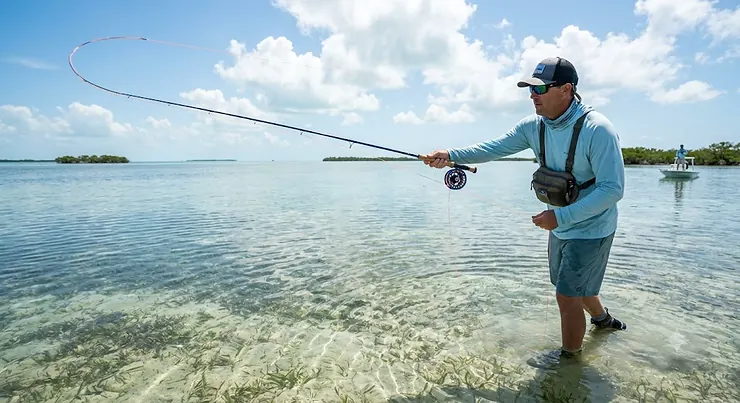
Somewhere between “I’ll never need saltwater gear” and standing knee-deep on a flat watching a tailing redfish push a wake toward your fly, most anglers realize their trout rod just isn’t going to cut it. That’s the gap an 8 weight fly rod saltwater setup is built to close. It’s not the biggest rod in the lineup, and it’s not the daintiest either — it’s the one rod that gets handed to first-timers on a bonefish skiff and the one veteran guides keep rigged for redfish because it simply works, cast after cast, day after day.
This guide breaks down seven real, currently available 8wt saltwater rods spanning roughly $200 to $1,200, explains what actually separates a $300 rod from a $1,150 one (spoiler: it’s not always what you’d expect), and walks through the practical side — rigging, common mistakes, species-specific advice — that a spec sheet never tells you. Whether you’re chasing your first bonefish rod, outfitting a redfish fly rod for the marsh, or just want one dependable coastal fly fishing stick that does it all, you’ll leave with a shortlist instead of a headache.
What Is an 8 Weight Fly Rod for Saltwater?
An 8 weight fly rod saltwater setup is a 9-foot, corrosion-resistant fly rod matched to an 8-weight line, built to handle wind, larger flies, and hard-fighting inshore species like bonefish, redfish, and small tarpon. It sits in the sweet spot between finesse and brute strength — light enough for delicate presentations, strong enough to turn a fish before it spools your reel. Anglers, and the guides who work these fisheries daily, generally treat it as the default starting point for flats and inshore work.
Quick Comparison Table
| Rod | Price Range | Action | Best For |
|---|---|---|---|
| TFO BVK | Under $300 | Fast | Best value for new saltwater anglers |
| Redington Predator | $250–$350 range | Fast/Powerful | Punching big flies into wind |
| G. Loomis NRX+ Saltwater | $900–$1,000 range | Fast, refined | Feel and finesse in tough light |
| Orvis Helios D | $1,100–$1,200 range | Fast, distance | Maximum accuracy and distance |
A quick glance tells the real story: price climbs steadily with refinement, not raw casting ability. Even the budget-tier TFO BVK can hit real distance on the lawn, but the jump to rods like the Orvis Helios D buys you consistency in gusty, high-pressure moments when a single missed cast means a spooked fish. The “Best For” column matters more than the price tag alone — a $300 rod matched to your actual fishing beats a $1,100 rod that’s overkill for calm-morning marsh redfish.
💬 Already have a favorite on this list? Skip ahead — the full breakdown of all seven rods is just below.
Top 7 8 Weight Saltwater Fly Rods: Expert Analysis
1. TFO BVK — best value for anglers stepping into salt
The TFO BVK has quietly become the rod that budget-conscious anglers graduate to salt with, and it earns that reputation honestly. Built around a fast-action, translucent olive blank paired with a braided carbon fiber reel seat, the 9-foot 8wt weighs in around 3.2 ounces — genuinely competitive with rods costing three times as much. That lighter swing weight matters on a full day of blind-casting from a bow platform, where fatigue, not raw power, is usually what beats you first.
What most buyers overlook about this model is how well the taper loads at short range; it’s not just a distance rod, it’s an accurate one inside 40 feet, which is where most bonefish and redfish shots actually happen. Reviewers consistently note the rod holds tight loops out to 85–100 feet on the lawn, and anglers who’ve fished it for years report it standing up to real abuse on skiffs. The recurring complaint in user reviews centers on the reel seat, which some owners say isn’t built for constant saltwater dunking and can loosen over time — a fixable annoyance, not a dealbreaker.
Pros:
- ✅ Exceptional casting performance for the price point
- ✅ Lightweight blank reduces fatigue on long days
- ✅ Backed by TFO’s full lifetime warranty
Cons:
- ❌ Reel seat needs occasional attention in saltwater use
- ❌ No rod tube included at this price tier
At around $280–$300, the TFO BVK is the rod to buy if you want to find out whether saltwater fly fishing is for you before committing four figures to the sport.
2. Orvis Clearwater — most affordable complete outfit
Not everyone wants to assemble a rod, reel, and line separately, and that’s exactly the gap the Orvis Clearwater combo fills. For under $200, the package bundles the 9-foot 8wt rod with a matched reel, weight-forward floating line, and a rod tube — everything needed to walk onto a flat on day one. The rod itself carries a moderate action, which sounds like a downside until you realize what it actually does: it gives beginner casters more time to feel the rod load, which translates into fewer tailing loops and less frustration during the learning curve.
Here’s what the spec sheet won’t tell you: a moderate-action rod is genuinely forgiving of an imperfect stroke, which matters enormously when you’re also trying to spot fish, judge wind, and manage slack line for the first time. The tradeoff is honest — the bundled reel isn’t a dedicated saltwater-grade tool, so treat it as a starter piece you’ll likely upgrade before your second season chasing bonefish rod distances in the tropics.
Pros:
- ✅ Complete outfit removes all the guesswork
- ✅ Forgiving action ideal for first-time saltwater casters
- ✅ Genuinely functional as a lightweight travel backup
Cons:
- ❌ Included reel isn’t built for hardcore saltwater duty
- ❌ Moderate action trades some distance for forgiveness
Around $200 for the full kit, this is the pick for someone testing the waters — literally — before investing further.
3. Redington Predator — best for punching big flies into wind
The Redington Predator was designed with one job in mind: moving heavy, wind-resistant flies with authority, and it does that job well. Available from 5wt up to 12wt, the 8wt sits in the range built for stripers, small GTs, and aggressive inshore predators that don’t give you a second chance at a cast. The blank carries noticeably more backbone through the mid-section than typical bonefish-oriented rods, which on paper means less finesse for delicate 40-foot presentations but more raw lifting power when a fish decides to run for structure.
Based on the spec comparison with lighter-tapered 8wts on this list, the Predator trades a bit of tip sensitivity for punch — exactly the right call for anglers who spend more time blind-casting mangrove edges for snook than sight-casting glass-calm flats. What most buyers overlook is that this rod doubles as a legitimate freshwater tool for pike and musky, so it’s not a one-trick purchase if your fishing calendar spans both fresh and salt.
Pros:
- ✅ Excellent backbone for big, wind-resistant flies
- ✅ Doubles effectively for freshwater predator species
- ✅ Strong value in the sub-$350 price range
Cons:
- ❌ Less delicate than finesse-tapered rods for spooky fish
- ❌ Not the first choice for technical, close-range bonefish work
At a typical $250–$350 range, the Predator earns its keep whenever the fly is bigger than the situation calls for finesse.
4. Echo Boost Salt — the sleeper pick most anglers skip
The Echo Boost Salt doesn’t get the same shelf space as the bigger legacy brands, and that’s precisely why it belongs on this list — it’s a well-built, purpose-designed saltwater rod that regularly flies under the radar. Echo built the Boost Salt line around a genuinely broad species list, from striped bass to redfish to mangrove jack, backed by the brand’s lifetime warranty, which tells you something about how the company expects the blank to hold up to years of salt exposure.
What stands out on paper is the value proposition: you’re getting saltwater-specific engineering — corrosion-resistant hardware, a taper built for wind — without paying the brand premium that Sage, Orvis, or G. Loomis command for comparable performance tiers. Anglers upgrading from a starter combo often land here next, since it closes most of the performance gap to premium rods at a fraction of the cost, even if the fit and finish is a half-step behind the flagship names.
Pros:
- ✅ Purpose-built saltwater taper at a mid-range price
- ✅ Broad species versatility across fresh and saltwater
- ✅ Backed by Echo’s lifetime warranty
Cons:
- ❌ Less brand recognition means fewer independent long-term reviews
- ❌ Fit and finish trails the true premium tier
Typically found in the $300–$400 range, the Boost Salt is the rod to check out before assuming premium performance requires a premium name.
5. G. Loomis NRX+ Saltwater — the lightest-feeling premium blank
Step into premium territory and the G. Loomis NRX+ Saltwater is where casting stroke fatigue starts disappearing entirely. Built on Loomis’s Mega Modulus+ graphite matrix — 15% lighter than the original NRX — combined with a GL8 resin system, this rod is engineered specifically to dampen quickly and recover fast, which in plain terms means tighter loops with less physical effort from you. The double-uplocking reel seat and AAA-grade full wells cork grip signal a rod meant for guides and serious travelers, not weekend dabblers.
Here’s what most spec sheets bury: line speed alone doesn’t win fish on tough days — feel does. Reviewers and guides who’ve fished the NRX+ consistently point to its “feel and finesse for short shots when clouds turn the light down,” meaning it doesn’t abandon accuracy the moment conditions get technical. That’s a meaningful edge over stiffer, more one-dimensional distance rods when a bonefish rod needs to drop a fly gently at 30 feet, not just bomb one at 90.
Pros:
- ✅ Exceptional power-to-weight ratio reduces casting fatigue
- ✅ Retains touch and accuracy at short range, not just distance
- ✅ Comes with an aluminum travel tube and Loomis’s limited lifetime warranty
Cons:
- ❌ Premium price puts it out of reach for casual anglers
- ❌ Aggressive taper rewards refined technique more than beginner casts
Generally priced in the $900–$1,000 range, this is the rod serious flats anglers reach for when the trip only comes around once a year and nothing can go wrong.
6. Sage Salt R8 — most powerful all-around flats caster
Sage built the Salt R8 specifically around bonefish, redfish, and flats striper work, and the fast-action R8 technology blank shows it the moment you load a cast. This is a rod engineered for exactly the scenario described earlier: fewer shots, higher stakes, seconds that matter. A rod that loads quickly and predictably isn’t a luxury in that context — it’s the difference between a fish eating the fly and a fish spooking off a sloppy third false cast.
What the spec sheet won’t tell you is how that predictability translates on windy afternoons, which is when most saltwater trips actually happen. Reviewers and guides who fish the Gulf Coast and Northeast striper flats alike report that the R8’s fast recovery cuts through 15–20 mph wind noticeably better than older-generation Sage saltwater blanks, without turning into a plank that can’t present a fly softly when the wind finally lays down.
Pros:
- ✅ Purpose-built taper for bonefish, redfish, and flats striper
- ✅ Excellent wind-cutting performance in real coastal conditions
- ✅ R8 graphite technology delivers fast recovery and tight loops
Cons:
- ❌ Among the pricier options on this list
- ❌ Fast action can feel demanding for less experienced casters
At a regular price around $1,150, the Salt R8 is built for anglers who fish enough days per year to justify buying the tool once.
7. Orvis Helios D — most accurate distance rod
Orvis calls the Helios line “the most accurate fly rods in the world,” and while every manufacturer claims some version of that, the engineering behind the Orvis Helios D backs it up more than most. The “D” stands for Distance action, and the rod is specifically tuned to reduce tip displacement during the cast — Orvis’s way of saying it fights the little wobbles and micro-corrections that turn a good caster’s loop into an inconsistent one under pressure.
Based on the spec comparison with its predecessor, the Helios 3D, current testing and independent reviews describe the newer Helios D as delivering the same “rifle in a world of muskets” precision, with real-world testers reporting confident casts to 80-plus feet even in gusty conditions. What most buyers overlook, per hands-on reviewers, is a small but real omission: the series still lacks a dedicated hook keeper, a minor annoyance on an otherwise near-flawless build. On paper this means you’re paying premium dollars for a rod obsessed with one specific job — putting the fly exactly where you’re looking — and it does that job better than almost anything else on the market.
Pros:
- ✅ Industry-leading accuracy and distance in windy conditions
- ✅ Reduced tip displacement technology improves cast-to-cast consistency
- ✅ Available in a wide range of saltwater and freshwater weights
Cons:
- ❌ Among the most expensive rods in this category
- ❌ No integrated hook keeper, a small but noted omission
Priced in the $1,100–$1,200 range, the Helios D is the rod for anglers who’ve already outgrown “good enough” and want the sharpest tool available.
Top 7 Rods: Full Spec Comparison
| Rod | Length | Price Range | Weight Class | Best For |
|---|---|---|---|---|
| TFO BVK | 9′ | Under $300 | Ultralight | Beginners entering saltwater |
| Orvis Clearwater | 9′ | Under $200 (combo) | Light | Complete starter outfit |
| Redington Predator | 9′ | $250–$350 | Mid | Big flies, aggressive predators |
| Echo Boost Salt | 9′ | $300–$400 | Mid | Value-focused upgrade |
| G. Loomis NRX+ Saltwater | 9′ | $900–$1,000 | Ultralight-premium | Feel and finesse casting |
| Sage Salt R8 | 9′ | Around $1,150 | Premium | All-around flats power |
| Orvis Helios D | 9′ (8’5″ option) | $1,100–$1,200 | Premium | Maximum accuracy and distance |
Laid out side by side, the pattern is clear: every rod on this list shares the same 9-foot platform, because that length has become the industry consensus for 8wt saltwater versatility. The real differentiator is weight class and taper refinement — budget rods use slightly heavier, less exotic graphite blends to hit their price point, while premium rods shave ounces and refine recovery speed, which shows up as reduced arm fatigue after 200-plus casts in a day. If you fish fewer than ten days a year, that difference is nice-to-have; if you guide or fish weekly, it becomes the whole reason to spend more.
🔍 Ready to Gear Up for Your Next Flats Trip?
Take your saltwater game to the next level with a rod matched to how you actually fish. Click on any highlighted pick above to check current pricing and availability — the right 8wt could be the difference between a fish story and a fish photo.
How to Choose an 8 Weight Fly Rod for Saltwater
Picking the right rod comes down to seven criteria, roughly in order of importance:
- Match the rod to your primary species. A dedicated redfish fly rod setup prioritizes wind-punching power for marsh conditions, while a bonefish rod leans toward delicate presentation for spooky, shallow-water fish.
- Consider your casting experience honestly. Fast-action blanks reward a tight, disciplined stroke; moderate-action rods forgive timing errors, which matters enormously for anglers still building their double haul.
- Check corrosion resistance. Anodized reel seats, sealed guide feet, and marine-grade hardware aren’t marketing fluff in saltwater — they’re the difference between a rod that lasts a decade and one that seizes up after one season.
- Weigh the blank in hand if possible. A half-ounce difference doesn’t sound like much until you’ve made 300 casts blind-fishing from a bow platform.
- Factor in travel needs. Four-piece rods pack into standard luggage; some travel-focused models go to five or six pieces for airline carry-on compliance.
- Verify line class compatibility. Standardized tackle and line class conventions matter if you’re chasing records or fishing tournaments, and matching your rod’s rated line weight to the actual line you’ll cast keeps the whole system balanced.
- Set a realistic budget and stick to it. The gap in landed fish between a $300 rod and a $1,100 rod is smaller than most anglers assume — technique and fly presentation matter more than blank price.
Working through this list in order — species first, budget last — consistently produces better outcomes than shopping by price point alone, since a rod that’s technically “better” but mismatched to your fishing style will sit in the closet more than it gets fished.
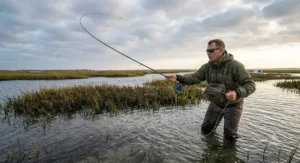
Setting Up Your Inshore Fly Fishing Rod: First 30 Days
Buying the rod is the easy part. Setting it up correctly for inshore fly fishing rod use is where most first-timers stumble, and small mistakes compound quickly in saltwater.
Start with backing capacity: fill your reel with at least 150 yards of Dacron backing before adding your fly line — bonefish and redfish runs eat backing fast, and running out mid-fight ends the encounter instantly. Next, match your leader to conditions; a 9-foot, 12-16 lb tapered leader handles most redfish and bonefish scenarios, dropping to fluorocarbon in gin-clear water where fish get leader-shy. In your first month, rinse the entire outfit — rod, reel, and line — with fresh water after every single trip, paying particular attention to the reel seat threads and guide feet, since that’s where salt crystals do the most quiet damage.
The most common rookie mistake isn’t casting-related at all: it’s storing a rod fully rigged and wet in a rod tube after a trip, which traps moisture against the blank and hardware. Break the rod down, rinse it, and let it air dry before it goes back in the tube. Do that consistently, and a $300 rod will genuinely outlast a $1,000 rod that gets neglected.
Real-World Scenarios: Which 8wt Rod Fits Your Coastal Fly Fishing Style
The weekend marsh angler. If you’re fishing tailing redfish in skinny water two or three times a month, wading grass flats near your home coastline, the TFO BVK or Redington Predator covers everything you need without overcommitting financially to a sport you’re still exploring.
The annual tropical traveler. If your saltwater fly fishing happens once or twice a year on a bonefish trip to the Bahamas or Belize, a rod like the G. Loomis NRX+ Saltwater earns its price by performing reliably in unfamiliar wind and light conditions where you can’t afford an off day — and it packs down for air travel without complaint.
The dedicated coastal fly fishing regular. For anglers fishing 20-plus days a season across redfish marshes, striper flats, and the occasional baby tarpon push, a premium workhorse like the Sage Salt R8 or Orvis Helios D pays for itself in casting stamina and consistency over hundreds of fishing hours a year — the kind of use case where marginal performance gains actually compound.
Common Saltwater Fly Rod Problems (And How to Fix Them)
Problem: your reel seat feels gritty or won’t tighten smoothly. This is almost always dried salt crystals in the threads. Soak the seat in warm fresh water for ten minutes, work it loose, and dry thoroughly before reassembly.
Problem: you’re consistently missing distance you had on the lawn. Wind and line management, not rod power, is usually the culprit. Shorten your leader slightly and focus on a tighter, faster stroke rather than reaching for a heavier rod.
Problem: guides are showing rust or pitting after one season. Cheaper rods sometimes use standard stainless hardware instead of marine-grade anodized components — a rinse-every-trip habit slows this dramatically regardless of rod tier.
Problem: you keep tailing loops on windy days. This is a casting-stroke issue that a moderate-action rod like the Orvis Clearwater will mask better than a demanding fast-action blank — consider whether your current rod matches your actual stroke discipline.
Problem: your rod feels “dead” or overly stiff for close shots. You may be over-rodded for the fishing you’re actually doing; a finesse-oriented blank like the G. Loomis NRX+ Saltwater retains feel at short range that pure distance rods sacrifice.
Redfish Fly Rod vs Bonefish Rod: Matching Your 8wt to the Species
Redfish Fly Rod Considerations
Redfish fishing typically happens in stained, shallow marsh water, often around structure like oyster bars and grass edges, and frequently in wind. A redfish fly rod benefits from a faster action with real backbone in the butt section — you’re punching weighted crab and shrimp patterns into breeze more often than making delicate 60-foot presentations. Rods like the Redington Predator and Sage Salt R8 both lean into this scenario well. It’s also worth knowing your local regulations before you fish: Florida, for example, enforces an 18-to-27-inch slot limit on red drum with region-specific bag limits, so check current rules before deciding whether to keep or release.
Bonefish Rod Considerations
Bonefish fishing flips the priority list. You’re sight-casting to spooky fish in ultra-clear, shallow water, often at close range, where a delicate presentation matters more than raw power. A dedicated bonefish rod benefits from a taper that loads smoothly at 30-50 feet without a heavy, clunky feel — the G. Loomis NRX+ Saltwater and TFO BVK both handle this well at very different price points. Accuracy trumps distance here; a rod that drops a fly two feet short but perfectly quiet beats one that overshoots and spooks the fish.
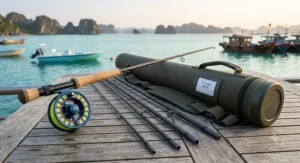
8wt vs 9wt: Which Weight Fits Your Saltwater Game
The 8wt occupies the most versatile middle ground in saltwater fly fishing, but it’s not automatically the right choice for everyone. An 8wt handles unweighted shrimp flies up through moderately weighted crab patterns, and it covers bonefish, redfish, snook, and baby tarpon under roughly 30 pounds without complaint. Step up to a 9wt when wind becomes a constant rather than an occasional factor, when you’re fishing destinations known for consistently blustery conditions, or when you’re chasing larger, more powerful bonefish that demand extra lifting power to turn quickly.
The tradeoff is real: a 9wt casts noticeably heavier line and larger flies with more authority in wind, but it sacrifices some of the finesse an 8wt offers for close, delicate shots at easily spooked fish. Most anglers building a first saltwater quiver are better served starting with an 8wt and adding a 9wt later once they understand which conditions they fish most, rather than guessing wrong on the heavier rod first and finding it overkill for calm-morning flats work.
Common Mistakes When Buying an 8wt Saltwater Fly Rod
The single biggest mistake is buying rod and reel as an afterthought pairing instead of a balanced system — an unbalanced outfit casts poorly regardless of how good the rod is individually. A close second is chasing the most expensive rod on the shelf assuming price guarantees better fish-landing outcomes; as the comparison table above shows, a well-matched $300 rod outperforms a mismatched $1,100 one for a given angler’s skill level and target species.
Anglers also frequently underestimate how much a rod’s action should match their casting stroke rather than their aspirations — buying a demanding fast-action blank before you’ve built a consistent double haul just amplifies your casting flaws instead of correcting them. Finally, skipping fresh-water rinse discipline is the quiet budget-killer: a $300 rod that gets rinsed every trip will outlast a $1,000 rod that doesn’t, making maintenance habits arguably more important than the purchase decision itself.
What to Expect: Real-World Performance
On paper, spec sheets promise line speed, recovery rate, and modulus numbers that mean very little until you’re standing on a bow platform with 20 seconds to make a cast. In practice, what separates rods in real fishing conditions is how forgiving they are of the imperfect casts you’ll inevitably make — the slightly late release, the tailing loop from an unexpected gust, the rushed backcast when a guide shouts “two o’clock, sixty feet.”
Budget rods in the TFO BVK and Redington Predator tier deliver genuinely solid performance in calm-to-moderate conditions but show their limits when wind exceeds 15-20 mph, requiring more precise technique to maintain tight loops. Premium rods like the Sage Salt R8 and Orvis Helios D maintain that same tight-loop performance in noticeably worse conditions, which is less about “casting farther” and more about casting consistently when the fish only give you one real shot per drift.
Long-Term Cost & Maintenance
A saltwater fly rod’s real cost extends well beyond the sticker price. Budget rods in the $200-$350 range typically carry limited or conditional warranties, meaning a snapped tip section on a $280 rod might cost $40-$80 to replace out of pocket. Premium rods from Sage, Orvis, and G. Loomis carry genuine lifetime warranties with straightforward replacement processes, which meaningfully changes the total cost of ownership over a 10-year fishing horizon — a detail that rarely factors into the initial purchase decision but matters considerably by year three.
Routine maintenance costs are minimal across every tier: fresh water, occasional reel seat lubrication, and proper storage cost essentially nothing beyond time. The real variable is guide wrap and finish durability — cheaper rods sometimes show wear in guide wraps or finish within a few seasons of hard saltwater use, while premium blanks generally hold their cosmetic and structural integrity considerably longer, which matters if resale value factors into your long-term gear planning.
Safety, Regulations & Conservation for Saltwater Fly Anglers
Saltwater fly fishing regulations vary significantly by state and species, and they change more often than most anglers assume. Redfish alone are managed differently across Gulf Coast states, with slot limits, bag limits, and even fully catch-and-release zones depending on your exact location — always verify current rules with your state wildlife agency and, for federally managed waters, NOAA Fisheries before keeping any fish.
Beyond legal compliance, responsible handling matters enormously for catch-and-release survival rates. Wet your hands before touching any fish, minimize air exposure to under 10-15 seconds for photos, and use non-offset circle hooks where required, since they dramatically improve post-release survival by reducing gut-hooking. Flats fisheries in particular are fragile ecosystems — organizations working on bonefish and redfish habitat conservation consistently note that release-ready handling directly supports the long-term health of the same fisheries anglers depend on for future trips.
Frequently Asked Questions
❓ What size fly line goes with an 8 weight saltwater rod?
❓ Can an 8wt fly rod handle tarpon?
❓ How much does a good saltwater fly rod cost?
❓ Is a 9 foot 8 weight rod good for redfish?
❓ How often should I rinse my saltwater fly rod?
Conclusion
Choosing the right 8 weight fly rod saltwater setup isn’t really about finding the “best” rod in some universal sense — it’s about matching a rod’s action, weight, and price to the fishing you’ll actually do most often. A weekend marsh angler chasing redfish a few times a month gets more genuine value from the TFO BVK than from a Sage Salt R8 that spends most of the year in a closet. A dedicated flats traveler making one serious trip a year, where every cast counts in unfamiliar wind, has real reasons to justify the jump to a rod like the G. Loomis NRX+ Saltwater or Orvis Helios D.
What matters more than the rod itself, honestly, is the habits around it: rinsing after every trip, matching leader and line to conditions, and building casting technique that suits the rod’s action rather than fighting against it. Get those fundamentals right, and any rod on this list — from the $200 combo to the $1,150 flagship — will put you in position to hook, fight, and land the fish that got you interested in saltwater fly fishing in the first place.
✨ Ready to Find Your Perfect Match?
🚴♂️ Don’t let another season pass with the wrong rod in your hands. Click on any pick above to check current pricing and availability, and get on the water with gear that actually fits how you fish.
Recommended for You
- 9 Foot 5 Weight Fly Rod: 7 Best Picks Tested for 2026
- 7 Best Surf Rod Under $150 Picks That Actually Hold Up (2026)
- Conventional Surf Rod: 7 Tough Picks That Won’t Snap (2026)
Disclaimer: This article contains affiliate links. As an Amazon Associate, I earn from qualifying purchases. If you purchase products through these links, we may earn a small commission at no additional cost to you.
✨ Found this helpful? Share it with your friends! 💬🤗
