
In This Article
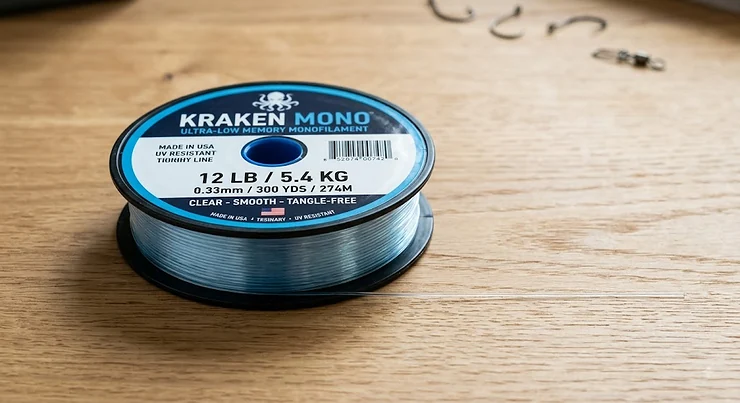
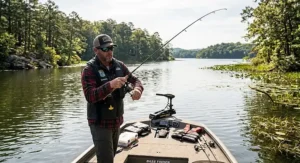
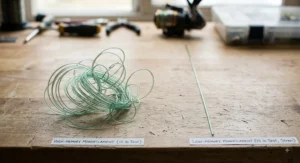
You know the feeling. You open a fresh spool, thread it onto your spinning reel, make your first cast of the day — and the line springs off in a stubborn coil, like it’s trying to tie itself back into the shape of the spool it just left. That’s memory, and it’s the single most annoying trait a fishing line can have. Low memory mono line solves this by resisting that coiled “muscle memory” so it lays flat, casts smoothly, and doesn’t fight you all day. In plain terms: low memory mono line is nylon monofilament engineered through extrusion and winding processes so it holds its shape less and flexes more, cutting down on coils, wind knots, and tangles compared to older, stiffer monofilament formulas. As the background on monofilament fishing line explains, most modern fishing lines are nylon precisely because the extrusion process is cheap to run and can be tuned to produce a huge range of diameters and strengths. That manufacturing flexibility is exactly why some brands nail low memory and others don’t. Below, we break down seven real monofilament lines worth spooling up this season, why their construction actually matters on the water, and how to pick the right one for your reel, your budget, and your target species
Quick Comparison Table
| Line | Best For | Price Range | Memory Rating |
|---|---|---|---|
| Berkley Trilene XL | All-around versatility | $5-$20 | Low |
| KastKing World’s Premium | Budget-conscious anglers | $6-$10 | Low |
| Sufix Elite | Near-zero memory on spinning reels | $9-$16 | Very Low |
| Sunline Super Natural | Long casting distance | $8-$14 | Low |
| Seaguar Senshi | Sensitivity and thin diameter | $8-$15 | Low |
At a glance, the differences come down to how each brand controls the coiling behavior baked into every spool at the factory. Sufix Elite‘s winding process puts it at the top for anglers who hate re-spooling headaches, while KastKing World’s Premium earns its spot by delivering similar tangle resistance for noticeably less money. If you fish finesse presentations where long, accurate casts matter more than raw strength, Sunline Super Natural and Seaguar Senshi are worth the few extra dollars per spool.
💬 Found a line that fits your setup? Give this guide a share — it helps other anglers skip the trial-and-error too!😊
Top 7 Low Memory Mono Line Options: Expert Analysis
1. Berkley Trilene XL — best all-rounder for everyday manageability
The reason Berkley Trilene XL shows up on so many rods isn’t marketing — it’s the balance it strikes between softness and strength. Berkley’s current formula claims a 20% increase in knot strength and more than 50% greater wet strength over earlier versions, plus roughly 20% more flexibility for smoother casting. In practice, that added flexibility is what keeps this line from “birdcaging” off a spinning reel spool after it’s been sitting in your tackle bag for a week. Based on the spec comparison with other budget nylon lines, the appeal here is versatility: it handles everything from panfish jigs to moderate bass tackle without needing a specialized formula for each. What most buyers overlook about this line is that its stretch, often treated as a downside, actually works in its favor for reaction-bait fishing, since it absorbs a hard strike instead of pulling the hook free. Aggregated reviewer sentiment across major retailers consistently highlights smooth casting and low memory as the standout traits, with the recurring complaint being that the line can dry out and stiffen if left in direct sun for long stretches.
Pros:
- ✅ Excellent all-around manageability for mixed fishing styles
- ✅ Strong knot strength relative to its price point
- ✅ Wide range of break strengths and spool sizes available
Cons:
- ❌ Can stiffen with prolonged UV exposure over time
- ❌ More stretch than some anglers prefer for hooksets
Price runs roughly in the $5-$20 range depending on spool length and test strength, making it one of the best value-for-manageability options on this list.
2. KastKing World’s Premium — most budget-friendly for tangle-free spooling
KastKing World’s Premium monofilament leans on what the brand calls Paralleled Roll Track technology, a winding method designed to keep the line from digging into itself on the factory spool. Here’s what to weigh: digging-in is one of the most common causes of sudden line memory, since line wound under uneven tension “remembers” that shape the moment it hits the water. By addressing that at the spooling stage rather than only through the nylon formula, KastKing World’s Premium manages to compete with pricier options on the tangle-resistance front. Reviewers commonly compare it directly to Trilene and note they switched over for the price without sacrificing much castability, though a handful mention the diameter runs slightly thicker than the stated test suggests, which is common among value-tier monofilaments. For anglers who fish often enough to burn through line but don’t want a premium price tag every time they respool, this is a sensible everyday choice.
Pros:
- ✅ Genuinely low memory thanks to spool-winding technology
- ✅ Noticeably lower price than premium competitors
- ✅ Solid abrasion resistance for the price tier
Cons:
- ❌ Diameter can run thicker than the labeled test strength
- ❌ Color fastness fades faster than premium lines over time
Expect to pay under $10 for most standard spool sizes, which makes it an easy line to keep several colors and tests of on hand.
3. Sufix Elite — best for near-zero memory on spinning reels
Sufix Elite earns its premium reputation from a specific engineering detail: G² Precision Winding, which lays the line onto the factory spool in concentric circles rather than a tight, tension-heavy wrap. Reaction Tackle and other budget brands talk about low memory in general terms, but Sufix’s approach targets the exact mechanical cause of coiling at the manufacturing stage, which is why it consistently draws comparisons to fluorocarbon-level manageability from anglers who fish it. On paper, the Micro Resin formulation (branded J7) also boosts tensile and knot strength without adding stiffness, a combination that’s genuinely hard to pull off in nylon monofilament. Aggregated review sentiment is remarkably consistent here — anglers repeatedly single out “near-zero memory” and smooth handling on spinning reels specifically, since spinning setups amplify memory problems more than baitcasters do. The recurring criticism is that Sufix’s stated diameters run larger than some competitors at the same test strength, so anglers chasing the absolute thinnest line may want to size down.
Pros:
- ✅ Virtually eliminates coiling straight off the spool
- ✅ High knot and tensile strength from Micro Resin construction
- ✅ Performs especially well on spinning reels
Cons:
- ❌ Diameter runs larger than some competing brands
- ❌ Premium pricing compared to basic monofilament
Price sits in the $9-$16 range for standard spools, putting it firmly in the mid-premium tier where the manageability upgrade genuinely shows up on the water.
4. P-Line CXX X-Tra Strong — best for abrasion resistance in heavy cover
P-Line CXX X-Tra Strong takes a different approach than the pure nylon lines on this list — it’s a copolymer blend, silicone-coated to reduce water absorption and cut roughly 30% of the stretch found in standard monofilament. What most buyers overlook about copolymer construction is that it changes two things at once: sensitivity goes up because there’s less stretch to dampen a strike, and abrasion resistance improves because the coating resists nicks from rock, shell, and dock pilings. Reviewers who fish heavy cover — flipping docks, punching through vegetation, working current around bridge pilings — consistently praise its toughness, and several note it holds up better against structure than comparably priced standard nylon. The trade-off worth flagging honestly: this line runs stronger than its stated test in real-world use according to repeated reviewer reports, which is a benefit for landing fish but means anglers matching line class to a specific target weight should size down rather than take the label at face value.
Pros:
- ✅ Excellent abrasion resistance for fishing around structure
- ✅ Thin diameter relative to its true breaking strength
- ✅ Reduced stretch improves strike sensitivity
Cons:
- ❌ Slightly stiffer than pure nylon low memory lines
- ❌ Stated test strength runs conservative versus actual strength
Standard spools typically run $10-$20, with bulk service spools priced higher for anglers who go through line quickly.
5. Sunline Super Natural — best for long casting distance and finesse work
Manufactured in Japan specifically for the U.S. market, Sunline Super Natural is built around a genuinely round cross-section, which sounds like a minor manufacturing detail until you realize it’s the reason this line resists kinking better than mono with an irregular extrusion profile. Here’s what to weigh: a truly round line moves through rod guides with less friction and less resistance during the cast, which is exactly why anglers repeatedly single this line out for casting distance with light lures. The moderate stretch profile also absorbs shock on reaction strikes without going limp on hooksets, a balance that’s harder to achieve than it sounds. Aggregated reviewer feedback is notably consistent across multiple retailers: extremely low memory, smooth knots, and a diameter that runs slightly smaller than the stated test compared to domestic competitors — which means anglers accustomed to another brand’s diameter-to-test ratio should size up slightly rather than assume a direct match.
Pros:
- ✅ Truly round cross-section reduces kinking and improves casting
- ✅ Consistent, smaller-than-average diameter for its test rating
- ✅ UV-resistant processing extends usable line life
Cons:
- ❌ Diameter mismatch versus other brands’ pound-test labeling
- ❌ Limited color selection compared to some domestic brands
Pricing generally falls in the $8-$14 range, putting premium Japanese-engineered performance within reach of most budgets.
6. Seaguar Senshi — best for sensitivity and thin-diameter finesse presentations
Seaguar Senshi, whose name translates to “warrior” in Japanese, was engineered specifically to compete with domestic mono in the categories where imported lines usually shine: flexibility, low stretch, and thin diameter relative to strength. On paper this means better feel for structure and light bites, since a thinner line under less stretch transmits more of what’s happening at the business end back to your rod tip. Reviewers who’ve fished this line side-by-side with Trilene XL consistently note it feels noticeably more supple straight off the spool, which tracks with Seaguar’s engineering focus on castability and flexibility rather than maximum strength-to-diameter like some copolymer lines. Because Seaguar built its reputation on fluorocarbon leader material, Seaguar Senshi carries some of that brand halo, and reviewer sentiment reflects genuine enthusiasm rather than the more mixed reactions you sometimes see on budget mono. The main limitation is availability — it comes in a narrower range of test strengths and spool sizes than the more mainstream options on this list.
Pros:
- ✅ Exceptionally soft and supple for a nylon monofilament
- ✅ Thin diameter improves sensitivity to light strikes
- ✅ Strong reputation carried over from Seaguar’s leader material expertise
Cons:
- ❌ Fewer test-strength and spool-size options than competitors
- ❌ Premium pricing relative to standard domestic monofilament
Expect to pay in the $8-$15 range, which is reasonable for a Japan-engineered line with this level of reviewer consistency.
7. Berkley Trilene Sensation — best for feel-focused anglers who still want low memory
Berkley Trilene Sensation is positioned as Berkley’s more sensitivity-forward mono, built on a multi-polymer nylon formula rather than the standard single-polymer approach used in Trilene XL. What most buyers overlook about multi-polymer construction is that it lets manufacturers dial in specific traits — in this case, thinner diameter and improved feel — without simply making the line stiffer, which is the shortcut some brands take to boost sensitivity. The listed diameter for the 6-pound test line comes in notably thin for its class, and Berkley markets this specifically as a low-memory line built to glide through guides smoothly on both the cast and the retrieve. Based on the spec sheet, this line is aimed at anglers doing light presentations — finesse worms, small jigs, live bait rigs — where detecting a subtle pickup matters more than horsing a fish through cover. Reviewer sentiment on this line skews toward newer adopters and is less extensively documented than the decades-old Trilene XL, so anglers should treat it as a promising, if less battle-tested, alternative.
Pros:
- ✅ Thin diameter-to-strength ratio improves bite detection
- ✅ Smooth, low-memory reeling on both cast and retrieve
- ✅ Multi-polymer formula built for freshwater sensitivity
Cons:
- ❌ Less extensive long-term review history than Trilene XL
- ❌ Narrower test-strength range than the flagship XL line
Pricing typically runs $6-$12 depending on test strength and spool length, keeping it accessible for anglers who want to try a sensitivity-focused mono without a big investment.
Practical Usage Guide: Spooling Low Memory Mono Line the Right Way
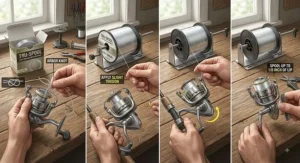
Even the best low memory mono line can develop coils if it’s spooled incorrectly, so the first thirty days matter more than most anglers realize. Start by filling your reel to roughly 1/8 inch from the spool lip — underfilling costs you casting distance, while overfilling causes the line to spill off in loops. When spooling from the factory reel onto a spinning reel, lay the line spool flat on the floor and let it rotate freely rather than pulling off the end; this matches the direction the line was originally wound and dramatically cuts down on twist. On baitcasters, keep light thumb pressure on the spool as you fill it to avoid loose wraps that later dig in and create memory of their own. A common first-month mistake is leaving a freshly spooled reel in a hot car or direct sun, which accelerates the stiffening that eventually shortens any monofilament’s usable life. For maintenance, a quick stretch-and-check every few outings — pulling off a few yards and running it through your fingers — reveals nicks or rough patches before they cost you a fish. Most low memory mono line holds up for one full season of regular use before UV exposure and wear justify a full respool.
Real-World Scenarios: Matching Low Memory Mono Line to Your Fishing Style
Picture three different anglers standing at the same dock. The first is a college student with a budget spinning combo who fishes twice a month for bluegill and the occasional bass — for that angler, KastKing World’s Premium or Berkley Trilene XL in 6-8 pound test delivers reliable manageable mono line performance without eating into gas money for the next trip. The second is a weekend bass angler flipping docks and laydowns three or four times a month, where structure means abrasion is the real enemy — P-Line CXX X-Tra Strong in 12-15 pound test is built for exactly that scenario, trading a touch of suppleness for toughness against cover. The third is a finesse-focused trout and panfish angler making long, accurate casts to spooky fish in clear water — here, Sunline Super Natural or Seaguar Senshi in 4-6 pound test rewards the investment with better castability and less spooking, since thinner, low memory line lands softer and drifts more naturally. None of these anglers are wrong; they’re just optimizing for different variables — cost, durability, or finesse — and the right low memory mono line looks different for each one.
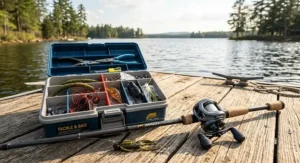
Problem to Solution: Fixing the Most Common Tangle-Free Line Complaints
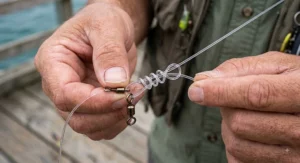
Even a genuinely tangle free line spool can develop issues if a few common mistakes creep in, so here’s how to head off the most frequent ones. First, wind knots on spinning reels usually trace back to overfilled spools or bail-closing habits — slow your hand speed when engaging the bail after a cast to eliminate the slack that causes the loop. Second, coils that appear after long-term storage typically mean the reel sat unused through a hot summer; respooling before a trip, rather than trusting six-month-old line, solves this outright. Third, backlash on baitcasters isn’t always a line problem, but pairing a stiffer copolymer like P-Line CXX X-Tra Strong with proper reel brake settings reduces it noticeably compared to running a naturally stiffer mono at factory brake settings. Fourth, line twist from repeated retrieves with certain lures — inline spinners especially — is best solved with a small barrel swivel a foot or two above the lure rather than blaming the line itself. Fifth, if a spool consistently produces coils straight out of the box regardless of brand, a short soak in warm water for a few minutes before spooling softens the nylon and measurably improves initial manageability.
What Is Low Memory Mono Line?
Low memory mono line is monofilament fishing line engineered — through polymer blend, extrusion process, or factory winding technique — to resist coiling into the shape of the spool it was stored on, resulting in smoother casts, fewer tangles, and easier handling straight off the reel compared to standard nylon monofilament.
How to Choose Low Memory Mono Line
- Match diameter to technique, not just pound test. Two lines rated the same test strength can differ noticeably in diameter, and a thinner diameter almost always improves manageability and casting distance.
- Consider your reel type first. Spinning reels amplify memory problems more than baitcasters, so if you fish spinning gear primarily, prioritize lines like Sufix Elite that specifically target spool-winding memory.
- Weigh stretch against sensitivity. More stretch absorbs strikes on reaction baits; less stretch improves feel for subtle bites — decide which matters more for your target species before buying.
- Factor in abrasion resistance for your environment. Anglers fishing rock, shell, or heavy cover benefit from tougher copolymer options like P-Line CXX X-Tra Strong over standard nylon.
- Check color against water clarity. Clear or low-vis green suits most freshwater situations, while high-vis options help detect subtle strikes in low light or stained water.
- Set a realistic respool schedule. Even the best low memory mono line degrades with UV exposure, so budget for at least one full respool per season of regular use.
- Don’t over-buy strength. Stepping down in pound test, especially with a line like P-Line CXX X-Tra Strong that tests stronger than labeled, often improves castability without sacrificing landing power.
| Feature | Standard Monofilament | Low Memory Mono Line | Fluorocarbon | Braided Line |
|---|---|---|---|---|
| Memory/Coiling | High | Low | Moderate | Very Low |
| Stretch | High | Moderate | Low | Minimal |
| Visibility | Moderate | Moderate | Very Low | High |
| Best For | Budget backup spools | Everyday casting reels | Leaders, clear water | Heavy cover, long casts |
The table makes the trade-offs clear: low memory mono line closes most of the manageability gap with braid while keeping the forgiving stretch and low visibility that make monofilament a better fit for reaction-bait fishing and beginner-friendly setups. Fluorocarbon still wins on outright invisibility and zero stretch, but it comes at a real cost premium and can feel stiffer straight off the spool, which is precisely the problem low memory mono line formulas are designed to avoid. For most freshwater anglers who aren’t specifically targeting ultra-clear water or need braid’s raw strength-to-diameter ratio, a well-engineered low memory mono line hits the best balance of manageable mono line handling and everyday cost.
Low Memory Mono Line vs Fluorocarbon and Braid
The honest answer to “which is best” is that it depends entirely on what you’re fishing for. Fluorocarbon sinks, resists UV degradation far longer than nylon, and disappears underwater thanks to a refractive index close to water’s own — advantages that matter enormously for line-shy fish in gin-clear water. But fluorocarbon is also stiffer by nature, which means even a well-engineered fluorocarbon line usually has more inherent memory than a comparable nylon mono, and it typically costs two to three times more per yard. Braid, meanwhile, essentially eliminates memory and stretch entirely, letting anglers feel everything and cast much farther for the diameter — but it floats, it’s highly visible in clear water, and it has zero forgiveness on a hard strike, which can pull hooks on treble-hook reaction baits. Low memory mono line splits the difference: it’s more forgiving than braid, cheaper than fluorocarbon, and modern winding and polymer technology has closed most of the manageability gap that used to make standard monofilament frustrating to fish all day. For crankbaits, topwaters, and any technique where you want a hookset to happen on the fish’s terms rather than yours, mono’s give is still hard to beat regardless of what’s trending in tackle shops.
What to Expect: Real-World Casting Distance and Performance
Specs on a package only tell part of the story, so here’s what actually happens when low memory mono line hits the water. On a spinning reel spooled correctly, expect noticeably longer casts with lighter lures compared to standard monofilament — the reduced coiling means less friction peeling off the spool and through the guides on the forward cast. Thinner-diameter options like Sunline Super Natural and Seaguar Senshi show this most clearly, since a smaller cross-section simply meets less air resistance and less guide friction than a thicker line at the same test strength. On baitcasters, the casting distance benefit is less dramatic but still real, showing up more as fewer backlashes and smoother thumb control during the cast. Retrieve speed and lure action also improve subtly — less line drag through the water column means crankbaits run truer and topwaters walk more predictably. The trade-off worth setting expectations around: even the lowest-memory mono still has more inherent stretch and coil tendency than braid, so anglers coming from braided line should expect a short adjustment period rather than assuming identical performance. Independent lab-style line testing from outdoor gear reviewers backs this up in broad strokes, consistently finding that clear monofilament options perform well on castability and control even when braided lines win on raw strength-to-diameter comparisons.
Manageable Mono Line for Different Types of Anglers
Not every angler needs the same thing from manageable mono line, and matching the line to the person casting it matters as much as matching it to the fish. Beginners benefit most from forgiving, limp monofilament with generous stretch — something like Berkley Trilene XL — because it tolerates imperfect hooksets and clumsy knot-tying better than stiffer alternatives while they’re still building fundamentals. Tournament and serious weekend anglers tend to gravitate toward the near-zero memory of Sufix Elite or the abrasion resistance of P-Line CXX X-Tra Strong, since consistency and durability under pressure matter more than forgiveness at that level. Finesse specialists targeting pressured or clear-water fish lean toward genuinely limp monofilament in thin diameters, where Seaguar Senshi and Sunline Super Natural shine because supple line lands softer and drifts more naturally with light rigs. Budget-conscious anglers fishing frequently but casually get the most value from KastKing World’s Premium, which delivers a meaningful chunk of the low-memory benefit without the premium price tag. The through-line across all four groups: manageable mono line isn’t a single product, it’s a category, and the “best” pick genuinely shifts based on who’s holding the rod.
Spinning Reel Line: Matching Low Memory Mono to Your Reel Setup
Spinning reels and baitcasters have fundamentally different relationships with line memory, and understanding why helps explain a lot of frustrated tackle-shop reviews. On a spinning reel, line is pulled off the spool in loops during the cast and re-wound in a figure-eight pattern by the bail, which means any inherent coiling in the line compounds with the reel’s own winding pattern — this is exactly why spinning reel line benefits disproportionately from genuinely low memory formulas like Sufix Elite‘s G² Precision Winding. Baitcasters, by contrast, spool line straight on and off a rotating spool, so memory shows up more as backlash risk than as loop-and-tangle problems, which is why slightly stiffer copolymer lines like P-Line CXX X-Tra Strong perform fine on baitcasting gear despite being less ideal for spinning setups. If your primary rod is a spinning combo, prioritize the softest, roundest-cross-section options on this list — Sunline Super Natural and Seaguar Senshi both fit that description well. If you’re primarily fishing baitcasters, you have more flexibility to prioritize abrasion resistance or knot strength over pure suppleness, since the reel mechanics themselves are more forgiving of a slightly stiffer line.
Long-Term Cost and Maintenance
Sticker price only tells part of the value story with monofilament, since respool frequency and line failure both factor into real cost per season. A $6 spool of Berkley Trilene XL that needs replacing every two months during heavy summer use may end up costing more over a season than a $14 spool of Sufix Elite that holds up for a full four-month stretch without degrading. Bulk spools change this math further — anglers who go through a lot of line, particularly tournament and guide-service anglers, generally find that 1,000- to 3,000-yard bulk spools of options like P-Line CXX X-Tra Strong or Sufix Elite bring the effective cost per reel-fill down dramatically compared to buying individual 110- to 330-yard spools repeatedly. Storage matters too: keeping spare spools out of direct sunlight and extreme heat extends usable life regardless of brand, which means two anglers using identical line can get very different mileage based on how they store their tackle. The practical takeaway is to think in cost-per-month-of-reliable-use rather than cost-per-spool, since the cheapest option upfront isn’t always the cheapest option by the end of a fishing season.
✨ Don’t Miss These Exclusive Deals!
🔍 Ready to stop fighting tangled line and start landing more fish? Click on any highlighted pick above to check current pricing and availability. The right low memory mono line makes every cast smoother and every fight a little more fun.
Safety, Regulations, and Responsible Disposal
Beyond performance, monofilament line carries an environmental responsibility that’s easy to overlook until you’ve seen the impact firsthand. Discarded fishing line is a serious hazard to wildlife, which is why the NOAA Marine Debris Program works with university and volunteer partners around the country to reduce monofilament and other line debris from reaching recreational fishing waters. Most tackle shops, marinas, and boat ramps in the U.S. now host dedicated monofilament recycling bins, and dropping a spent spool of old line — even a brand as reliable as Berkley Trilene XL or P-Line CXX X-Tra Strong — into a regular trash can risks it ending up in a waterway where it can entangle birds, turtles, and fish for years. Several states run their own dedicated recovery programs, including a long-running statewide effort in Florida with recycling bins at boat ramps, piers, and tackle shops across the state. Before heading out, it’s worth locating the nearest bin or, at minimum, cutting used line into short segments and bagging it separately from household trash to reduce entanglement risk during disposal. This costs almost nothing in time and meaningfully reduces the footprint of a hobby that depends on healthy waterways in the first place.
Features That Actually Matter (And Those That Don’t)
Marketing copy on fishing line packaging can make every spool sound revolutionary, so it’s worth separating what genuinely affects performance from what’s mostly noise. Winding technology — like Sufix’s G² Precision Winding or KastKing’s Paralleled Roll Track — actually matters, because it addresses memory at the mechanical source rather than just through the nylon formula itself. Diameter consistency matters too, since a line that varies in thickness along its length casts less predictably and ties less reliable knots, which is a real differentiator between premium and budget brands even at the same stated test strength. UV protection additives, like Sunline’s UV-R processing, genuinely extend usable line life and are worth paying slightly more for if you store reels in a boat or garage exposed to sunlight. On the “doesn’t matter much” side: color rarely affects a fish’s willingness to bite in stained or moving water, despite what some packaging implies, so choosing based on your own visibility preference is perfectly reasonable. Similarly, exaggerated claims about knot strength percentages are difficult to verify independently and vary enormously based on which knot you actually tie, so they’re best treated as a rough directional signal rather than a hard guarantee.
Frequently Asked Questions
❓ What causes low memory mono line to develop coils anyway?
❓ Is low memory mono line better than fluorocarbon for spinning reels?
❓ How often should I replace low memory mono line?
❓ Does a thinner diameter always mean better casting distance?
❓ Can I mix low memory mono line brands on the same reel?
Conclusion
Choosing the right low memory mono line ultimately comes down to matching a handful of real variables — reel type, fishing style, budget, and how often you’re willing to respool — rather than chasing whichever spool has the loudest marketing claims. Berkley Trilene XL remains the safest all-around starting point for most anglers, Sufix Elite and Sunline Super Natural justify their premium pricing for spinning-reel anglers who want the smoothest possible handling, and P-Line CXX X-Tra Strong earns its place for anyone fishing around punishing cover. Budget-focused anglers shouldn’t overlook KastKing World’s Premium, which delivers a meaningful share of the tangle-free experience without the premium price tag, while finesse anglers chasing pressured fish will get real value out of Seaguar Senshi‘s thin-diameter sensitivity or Berkley Trilene Sensation‘s feel-focused build. None of these seven lines is objectively “the best” in isolation — they’re each the best for a specific angler, technique, or budget, and the goal of this guide has been to help you recognize which one that is for you. Whatever you choose, proper spooling technique and seasonal replacement will do more for your casting experience than any single brand switch ever could.
Recommended for You
- Moss Green Braid: 7 Best Stealthy Picks for 2026 Anglers
- 30lb Braided Line: 7 Powerful Picks for 2026 Fishing
- 8 Strand Braided Line: 7 Best Picks Anglers Trust in 2026
Disclaimer: This article contains affiliate links. As an Amazon Associate, I earn from qualifying purchases. If you purchase products through these links, we may earn a small commission at no additional cost to you.
✨ Found this helpful? Share it with your friends! 💬🤗
