
In This Article
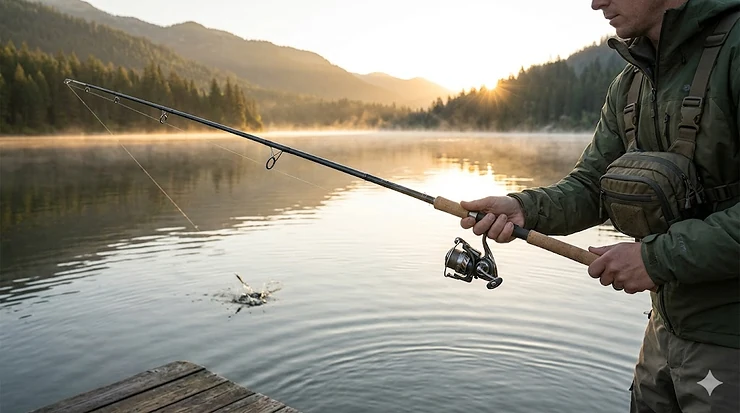
Here’s the thing most fishing guides won’t tell you upfront: the reel rarely loses you fish. The rod does. More specifically, the material of your rod determines whether you feel that cautious 6-inch crappie tapping your jig — or whether you feel absolutely nothing until it’s long gone.
That’s where a quality graphite spinning rod changes the game entirely. A graphite spinning rod is defined by its blank construction — graphite (also commonly labeled as carbon fiber in the industry) woven into hollow tubular blanks with an epoxy resin binder, creating a rod that is simultaneously lighter, stiffer, and far more sensitive than traditional fiberglass alternatives. The material’s extraordinary stiffness-to-weight ratio means vibrations travel up the blank to your hand almost instantaneously — you feel the bottom composition change, you feel weeds brushing the line, you feel the difference between a bass mouthing a worm and a bluegill tapping the tail.
But not all graphite is created equal. The modulus rating — think of it as a measure of stiffness per unit of weight — ranges from the workhorse IM6 found in budget rods all the way up to exotic 40-ton high-strain graphite used in tournament-level sticks. Higher modulus means lighter and more sensitive, but also potentially more brittle if you’re not careful. More on that in a moment.
In 2026, the graphite spinning rod market is more competitive — and frankly more exciting — than ever. You can now get legitimate 30-ton carbon blanks with Fuji hardware for under $80, a price point that simply didn’t exist five years ago. We’ve done the homework, tested the specs, dug into real customer feedback, and put together this expert guide to save you the guesswork. Whether you’re a weekend panfisher, a tournament bass angler, or a finesse-obsessed trail creek trout hunter, there’s a rod on this list for you. Let’s get into it.
Quick Comparison Table: 7 Best Graphite Spinning Rods at a Glance
| Rod | Graphite Grade | Key Feature | Best For | Price Range |
|---|---|---|---|---|
| Ugly Stik Carbon Spinning | 24-Ton | Legendary durability + 7-yr warranty | Beginners, rough-use anglers | $40–$70 |
| KastKing Royale Legend Pro | IM7 | Fuji FazLite guides + SlipLock handles | Bass finesse techniques | $50–$85 |
| Cadence CR5 | 30-Ton + SiC guides | Fuji reel seat, premium feel at low cost | Budget-conscious intermediate anglers | $55–$90 |
| Fenwick HMG | 30-Ton + 24-Ton blend | Titanium guides, titanium zirconia inserts | Finesse freshwater, all-day fishing | $100–$160 |
| St. Croix Panfish Series (PFS60ULF) | SCII + SCVI Graphite | Pac Bay Minima guides, ultra-sensitive | Panfish specialists, ultralight fans | $130–$185 |
| Okuma Celilo | Graphite Composite | Thru-blank handle, cork grips | Value-seeking beginners | $25–$55 |
| Berkley Lightning Rod Spinning | 24-Ton Graphite | Aluminum oxide guides, fast action | Trout, bass, versatile freshwater | $30–$60 |
Reading the table: The Cadence CR5 stands out as the clear sweet spot for most anglers — 30-ton graphite and Fuji hardware at a price that undercuts the competition by a wide margin. If you’re chasing panfish specifically, the St. Croix PFS60ULF is in its own league for sensitivity. Budget buyers should note that the Okuma Celilo and Berkley Lightning Rod both sacrifice some refinement but deliver solid performance for the price.
💬 Just one click — help others make better buying decisions too! 😊
Top 7 Graphite Spinning Rods in 2026: Expert Analysis
1. Ugly Stik Carbon Spinning Rod — The Indestructible Workhorse
If fishing gear were characters, the Ugly Stik Carbon would be the no-nonsense veteran who’s been dropped, left in the truck for a winter, submerged in a river, and just keeps showing up to work. Built on Ugly Tech 100% 24-ton graphite construction, this is technically the lightest Ugly Stik ever produced — which matters more than you’d think because the older GX2 felt like casting a pool cue by comparison.
The 24-ton graphite blank is the sweet spot between sensitivity and durability for general-use anglers. It won’t transmit vibrations quite as crisply as a 30-ton or higher-modulus blank, but it’s also far less likely to snap if you try to horse a largemouth out of a weed mat. The Ugly Tuff one-piece stainless steel guides eliminate the dreaded insert pop-out problem that plagues cheaper rods, and the Fuji reel seat with WINN/EVA grip stays comfortable through a full day of fishing. The solid graphite tip adds a touch of extra sensitivity right at the business end — a clever design trick borrowed from premium rods.
Customer feedback is overwhelmingly positive, with most anglers praising the weight reduction over older Ugly Stik models while maintaining that trademark toughness. Several reviewers noted pairing it with a Penn spinning reel for a sub-$150 combo that punches well above its weight.
This rod is ideal for: Anglers who fish regularly in varied conditions — brush, weeds, rocky bottoms — and don’t want to baby their gear. New anglers especially will appreciate the forgiving nature and the confidence of a 7-year warranty.
✅ Legendary durability — nearly impossible to break under normal fishing pressure
✅ 7-year manufacturer’s warranty, best in class
✅ Fuji reel seat adds a premium feel to a budget price point
❌ Hook keeper placement on some models can snag line on the cast
❌ Not as sensitive as 30-ton alternatives at the same price
Price range: around $40–$70 depending on length and power. Excellent value for what you get. Check current pricing and availability on Amazon.
2. KastKing Royale Legend Pro Spinning Rod — Tournament DNA at Everyday Prices
KastKing has become the brand that forces the big names to stay competitive on price, and the Royale Legend Pro is their flagship statement piece. Built on KastFlex IM7 graphite blanks — a proprietary high-modulus formulation — this rod delivers a noticeably crisper blank than the standard IM6 alternatives flooding the sub-$80 market. IM7 graphite sits comfortably above mid-range: stiffer per unit of weight, which translates to faster energy transfer on the cast and quicker bite detection on the retrieve.
What sets it apart from other blanks in the price class are the Fuji FazLite guides. FazLite frames weigh roughly 40% less than standard Fuji frames — and when you’re casting all day, those grams accumulate into real fatigue. The SlipLock technology handles lock your cork grip in place so you’re not inadvertently twisting it mid-fight, and the PTS Power Transition System distributes power more evenly along the blank during hooksets. These aren’t marketing buzzwords; you genuinely feel the difference on a hard hookset with a heavy jig.
Customer reviews consistently highlight sensitivity — multiple anglers report being able to feel the bottom substrate change from sand to gravel while dragging a drop-shot rig. That kind of feedback is typically reserved for rods costing twice as much.
This rod is ideal for: The finesse bass angler — drop shot, Ned rig, shaky head — who wants legitimate tournament-quality feel without taking out a second mortgage on their tackle budget.
✅ IM7 graphite blank delivers noticeably better sensitivity than IM6 alternatives
✅ Fuji FazLite guides reduce fatigue on long casting sessions
✅ SlipLock handle prevents grip rotation during powerful hooksets
❌ Lighter blanks require some care — avoid slamming in truck beds or car doors
❌ Fewer options in heavy power than some competitors
Price range: $50–$85 range depending on model. Outstanding ROI for serious bass anglers. Check current pricing on Amazon.
3. Cadence CR5 Spinning Rod — The Overachiever
The Cadence CR5 is the rod that makes experienced anglers do a double-take when you tell them what you paid for it. A 30-ton carbon matrix graphite blank with SiC (silicon carbide) guide inserts, a genuine Fuji reel seat, and carbon veil wrapping — these are premium components by any objective measure. The 30-ton rating means the blank transfers vibrations more efficiently than 24-ton alternatives, and the SiC inserts are meaningfully smoother than cheaper aluminum oxide alternatives when throwing braided line.
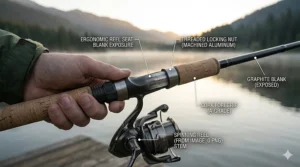
The Fuji reel seat deserves a special mention. Most budget rods throw in a generic graphite or plastic reel seat that introduces dead spots in the blank — dampening sensitivity right at the handle where you need it most. The Fuji seat on the CR5 keeps the blank more exposed and acoustically connected to your hand. You’ll feel strikes you’d miss with a rod costing twice as much from some legacy brands.
Anglers have caught everything from 10-pound fluke in the surf to bluegill in farm ponds on the CR5, with consistent praise for its versatility across species and techniques. One reviewer perfectly summed it up: they liked it so much they bought a second one.
This rod is ideal for: Intermediate anglers upgrading from entry-level gear, or budget-conscious buyers who refuse to compromise on performance. Also a smart pick if you fish multiple techniques — the CR5 handles finesse and moderate power presentations equally well.
✅ 30-ton graphite at a price point that embarrasses much of the competition
✅ Genuine Fuji reel seat — rare at this price
✅ SiC guide inserts are noticeably smoother for braided lines
❌ Ultralight models have a very slim handle — takes some getting used to
❌ Not always available in local tackle stores; online purchase required
Price range: $55–$90 range. Possibly the best dollar-for-dollar value on this list. Check current pricing on Amazon.
4. Fenwick HMG Spinning Rod — The One That Started It All
Few brands carry as much legitimate heritage as Fenwick. The HMG — which stands for High Modulus Graphite — was literally the world’s first all-graphite fishing rod, introduced in 1973. What Fenwick did then changed recreational fishing forever. The 2026 iteration builds on that history with a 30-ton and 24-ton high modulus graphite blend that delivers a beautifully balanced rod: sensitive enough for finesse but with the backbone to handle moderate power applications.
The real differentiators here are the titanium guide frames with zirconia inserts and the custom soft-touch reel seats. Titanium frames are lighter and more resistant to saltwater corrosion than stainless steel, meaning this rod performs equally well in brackish or coastal environments. The zirconia inserts cast noticeably smoother than aluminum oxide alternatives, particularly with light fluorocarbon. The proprietary Powerlux® 100 resin technology reportedly boosts blank strength by 13% while reducing weight by 8% compared to previous HMG generations — numbers you can actually feel in hand.
Buyers consistently note how comfortable this rod is during extended sessions. The contoured rod butt and multi-material split grip reduce hand fatigue dramatically compared to rods with a single-material handle. This is a rod you could fish all day and never feel the need to set down.
This rod is ideal for: Freshwater finesse specialists — trout, walleye, crappie, bass — who fish frequently and want a rod that will outlast multiple reels. The lifetime limited warranty sweetens an already compelling deal.
✅ Titanium guide frames — lighter and more corrosion-resistant than steel
✅ Lifetime limited warranty — build confidence and buy-it-for-life quality
✅ Balanced 30+24-ton blend provides the perfect sensitivity-durability trade-off
❌ Price jump over mid-range alternatives may not be justified for casual anglers
❌ Finesse-tuned actions may feel “soft” to anglers used to fast-action bass rods
Price range: $100–$160 depending on action. Worth every dollar if you fish more than 20 days a year. Check current pricing on Amazon.
5. St. Croix Panfish Series Spinning Rod (PFS60ULF) — The Specialist’s Choice
Ask any serious panfisher what rod they trust for crappie on a clear-water 4-pound leader and the St. Croix name comes up within seconds. The Panfish Series PFS60ULF is built with a combination of premium SCII graphite reinforced with high-modulus, high-strain SCVI graphite — a proprietary blend that St. Croix has refined over decades of rod building in Park Falls, Wisconsin. The SCVI component adds a higher strain rate to the blank, meaning it flexes more before the fibers themselves begin to stress. For ultralight fishing, this translates to a rod that loads beautifully on short casts and recovers lightning-fast for accurate presentations.
The Pac Bay Minima guides save 20-30% in weight compared to ceramic alternatives — and on a 6-foot ultralight rod, that weight savings shifts the balance point back toward the handle, reducing tip heaviness. Less tip heaviness equals less fatigue and more accuracy over the course of a long morning on the water. The premium-grade cork handle transmits vibrations better than EVA foam and feels warmer in cold early spring conditions.
Customer feedback borders on reverence. Anglers who fish crappie tournaments repeatedly cite the Panfish Series as the reason they detect subtle “breathing” bites that fiber-glass or composite rods would mask entirely.
This rod is ideal for: Dedicated panfish anglers, ultralight trout fishers, and anyone targeting species that require a feather-light presentation and maximum bite detection. This is a specialist tool, not an all-around stick.
✅ SCII + SCVI graphite blend — among the most sensitive blanks at any price point
✅ Pac Bay Minima guides — measurable weight savings that improve balancehttps://amzn.to/4ecNUyC
✅ Made in the USA — premium craftsmanship and quality control
❌Higher price point makes it hard to justify unless panfish are a primary focus
❌ Ultralight power limits versatility for heavier techniques
Price range: $130–$185 range. An investment, but one that pays dividends in fish caught. Check current pricing on Amazon.
6. Okuma Celilo Graphite Spinning Rod — The Budget All-Rounder
The Okuma Celilo has been quietly doing the lord’s work for budget-conscious anglers for years. Built on sensitive graphite composite blanks with a thru-blank handle design — meaning the blank actually runs through the handle itself rather than stopping at the reel seat — the Celilo transmits vibrations more completely than rods that terminate the blank above the grip. That’s a feature you typically find on rods in the $100+ range, not at the Celilo’s price point.
The aluminum oxide guide inserts provide smooth line flow for monofilament and light fluorocarbon. The fore and rear cork grips look and feel refined on a rod at this price. The stainless steel hooded reel seat holds reels securely without creaking, a common complaint on cheaper alternatives. Available in a wide range of lengths from 4’6″ ultralight to 9’6″ models, the Celilo lineup covers everything from tiny stream trout to salmon and steelhead bank fishing.
The tradeoff? Graphite composite — rather than pure high-modulus graphite — means sensitivity is good but not exceptional by modern standards. A soft bump from a cautious bass might register as a vague “something” rather than a distinct strike. Still, buyers consistently rate this rod 4.5/5 stars and many use it as a primary tool for years.
This rod is ideal for: New anglers building their first setup, families fishing together, or experienced anglers who need a solid backup rod they don’t mind leaving in a rental boat.
✅ Thru-blank handle design — unusual sensitivity advantage for the price
✅ Wide range of sizes covers almost any freshwater application
✅ Cork grips feel premium despite the budget price
❌ Graphite composite less sensitive than pure high-modulus blanks
❌ Aluminum oxide inserts are not ideal for heavy braid use
Price range: $25–$55 depending on size. Outstanding entry point for the sport. Check current pricing on Amazon.
7. Berkley Lightning Rod Spinning — The Reliable Everyman
Berkley is one of those brands that doesn’t get enough credit for quietly making solid, dependable gear that just… works. The Lightning Rod spinning series uses a 24-ton graphite blank with aluminum oxide guides and fast action — a combination that makes it genuinely versatile for freshwater fishing across the board. Fast action means the rod loads primarily in the top third, delivering quick hooksets without telegraphing every head shake back through the blank like a nervous Ned Rig angler would want.
The two-piece design packs conveniently for travel, and the blank is finished with a level of consistency that avoids the occasional manufacturing variance you sometimes encounter with ultra-budget rods. Line ratings of 6-14 lb make it ideal for medium presentations — carolina rigs, spinner baits, swim jigs, or live bait under a slip float. It also makes a very capable trout rod for anglers using 8-10 lb mono in moving water.
Customer reviewers frequently mention how much rod they’re getting for the price, with several noting it as a great starter setup for a child or a college student who wants something that doesn’t feel like a pool noodle.
This rod is ideal for: Value buyers who want reliable performance across multiple freshwater species without the decision fatigue of choosing between budget options. Also a great gift rod for a young angler.
✅ Fast action delivers quick, clean hooksets for a wide range of techniques
✅ Two-piece design — convenient storage and travel
✅ Berkley’s quality consistency reduces the lottery feel of budget rod buying
❌ Not as sensitive as 30-ton alternatives; subtle strikes require more attention
❌ Fewer power/length options than KastKing or Cadence lineups
Price range: $30–$60 depending on model. Reliable and honest value. Check current pricing on Amazon.
✨ Don’t Miss These Exclusive Deals!
🔍 Take your fishing to the next level with these carefully selected graphite spinning rods. Click any highlighted product name to check current pricing and availability on Amazon. These rods will help you fish smarter, feel every bite, and land more fish every single outing!
Choosing Your First Graphite Spinning Rod: A Practical Setup Guide
The single biggest mistake first-time graphite rod buyers make is buying the wrong power for their primary species. A 7-foot medium-heavy 30-ton graphite rod is an absolute dream for Texas-rigging bass in heavy cover — and a complete disaster for trout fishing a tiny mountain creek. Here’s a simple framework to cut through the noise.
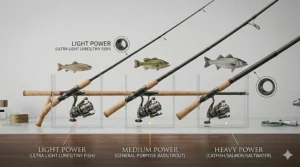
Step 1 — Identify your primary species. Panfish and trout: ultralight or light power, 5’6″–7′. Bass and walleye: medium or medium-heavy, 6’6″–7’6″. Inshore saltwater: medium-heavy or heavy, 7’–8′.
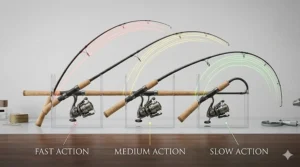
Step 2 — Choose your action. Fast action means the rod bends in the top third — better for single-hook techniques and quick hooksets. Moderate-fast bends into the top half — better for treble hook lures where you want a touch of give so the fish doesn’t throw the hooks on a headshake.
Step 3 — Match graphite grade to technique sensitivity requirements. If you’re drop-shotting or finesse fishing, 30-ton and above is worth the investment. If you’re throwing swimbaits or live bait, 24-ton is perfectly adequate and more durable.
Step 4 — Pair with an appropriate reel. A 1000–2500 size spinning reel matches ultralight to light rods. A 2500–3500 covers medium applications. Don’t put a 5000-series reel on a 6-foot ultralight; you’ll make an expensive, unbalanced pendulum.
Step 5 — Budget honestly. The NOAA Recreational Fisheries program estimates the average American angler fishes roughly 15–20 days per year. If you’re in that range, the $55–$90 Cadence CR5 tier is the smart move. If you’re on the water 50+ days annually, the Fenwick HMG or St. Croix investment makes complete financial sense spread over its lifetime.
Step 6 — Handle it before you commit if possible. Balance matters enormously. A rod that feels tip-heavy in the store will feel exhausting after 4 hours of casting.
Step 7 — Don’t over-buy on your first graphite rod. Start with a mid-range 30-ton blank, learn how it differs from fiberglass or composite, then make your next purchase from a position of real knowledge.
Real-World Scenarios: Matching the Right Rod to the Right Angler
Not everyone is shopping from the same dock. Here’s how the products on this list play out in practice for three very different types of anglers.
The Weekday Pond Hopper (budget ~$75–$100 total setup): This angler fishes after work, targets bass and panfish in small ponds, and doesn’t want to spend more on a rod than they spend on groceries. The Cadence CR5 medium-fast 6’6″ paired with a quality 2500 spinning reel is the move. The 30-ton blank will genuinely surprise you with its sensitivity, the SiC guides handle braid cleanly, and you’ll have money left over for lures that actually catch fish.
The Weekend Tournament Crappie Angler (budget ~$180–$250 total setup): This person fishes 30+ days per year, cares deeply about detecting subtle bites in cold water, and is willing to invest in a specialized tool. The St. Croix PFS60ULF is the obvious choice. Pair it with a light 1000-series reel loaded with 6 lb fluorocarbon and you have a setup that will catch fish other anglers in the field simply can’t feel. The SCII + SCVI graphite blend is the difference between a detected bite and a stolen jig.
The All-Around Family Angler (budget ~$50–$80 per rod): Multiple people, multiple species, varying skill levels — the priority is resilience, not refinement. The Ugly Stik Carbon is the answer here. Its legendary durability means it survives being propped against a tree, tossed in a car trunk, or briefly used as a walking stick during a long hike to a secluded lake. The 7-year warranty is effectively insurance against beginner mistakes. Buy two, fish confidently.
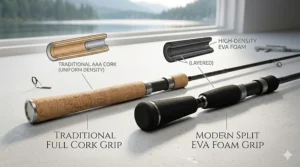
Graphite vs. Composite vs. Fiberglass: The Material Breakdown
Understanding fishing rod materials helps you make a smarter purchase decision rather than just chasing the highest modulus number.
| Material | Sensitivity | Weight | Durability | Best Use |
|---|---|---|---|---|
| High-Modulus Graphite (30T+) | Excellent | Very Light | Moderate | Finesse, ultralight techniques |
| Standard Graphite (24T) | Good | Light | Good | General freshwater, beginners |
| Composite (Graphite + Fiberglass) | Moderate | Medium | Very Good | All-around, beginners |
| Fiberglass | Low | Heavy | Excellent | Crankbaits, kids, durability priority |
The takeaway is nuanced: graphite wins on sensitivity and weight — but composite rods forgive beginner mistakes that would snap a high-modulus blank. If you’ve ever broken the tip off a rod by closing it in a car door, that was almost certainly graphite. The science matters: graphite’s stiffness is a double-edged sword. According to Mystery Tackle Box’s rod material guide, higher modulus graphite can concentrate stress at flexion points, making catastrophic failure more likely under sudden lateral impacts — not under normal fishing load. For beginners: start with 24-ton. For experienced anglers: 30-ton and above rewards the technique to take care of it.
Features That Actually Matter (And Those That Don’t)
Let’s save you from some marketing-induced confusion. Rod companies are expert storytellers.
MATTERS: Guide material. SiC inserts are meaningfully smoother than aluminum oxide, especially with braided line. Titanium frames are lighter and more corrosion-resistant than stainless. If you’re using heavy braid in saltwater, this difference is felt — not imagined.
MATTERS: Reel seat quality. A Fuji seat keeps the blank more acoustically “live.” A cheap graphite reel seat dampens the signal. The difference between detecting a light crappie bite and missing it can be entirely reel seat quality.
MATTERS: Blank modulus AND resin system. The spec sheet will only tell you the graphite grade. The resin matters equally — Fenwick’s Powerlux® 100 and St. Croix’s fortified resin systems meaningfully affect blank performance in ways the modulus number alone doesn’t capture.
DOESN’T MATTER AS MUCH AS YOU THINK: Number of guides. Guides affect casting distance at the margins. More guides are not automatically better. What matters is guide placement, size, and insert quality.
DOESN’T MATTER AS MUCH AS YOU THINK: Rod length. The difference between a 6’6″ and a 7′ rod is almost imperceptible in most fishing scenarios. Choose length based on the specific technique and environment, not because longer feels more impressive.
DOESN’T MATTER AT ALL: Brand heritage without current quality control. Some legendary brand names are trading on decade-old reputations with current products that don’t match the mystique. Always check recent (2024–2026) buyer reviews, not just brand prestige.
Common Mistakes When Buying a Graphite Spinning Rod
Mistake 1: Buying ultra-high modulus for durability-demanding applications. A 40-ton blank shines on a finesse bass drop shot in open water. It will shatter if you try to pull it free from a dock piling. Match the modulus to the environment.
Mistake 2: Ignoring the handle fit. Ergonomics are genuinely personal. A split-grip cork handle feels revelatory to some anglers and awkward to others. Read customer notes specifically about grip comfort — it matters over a full day.
Mistake 3: Assuming one rod can do everything. A medium-heavy 7’2″ bass rod is a terrible ultralight trout rod. Buy purpose-built when you can; buy versatile when you have budget constraints and fish multiple species.
Mistake 4: Chasing warranty length without reading what it covers. A 7-year warranty like Ugly Stik’s covers manufacturing defects — not a snap caused by horsing a fish into a boat. Read the fine print before assuming a rod is consequence-free.
Mistake 5: Overlooking blank-to-reel balance. This is the mistake that creates fatiguing rods. A heavy reel on a light blank shifts the balance point forward, creating a leverage arm that tires your wrist on long sessions. Weigh your reel before you buy the rod, or test the combination in a store.
Graphite Spinning Rods by Experience Level
Not every angler has the same needs, and the market — thankfully — reflects that.
For beginners: Start with the Okuma Celilo or Berkley Lightning Rod. Both deliver honest graphite performance without the fragility concerns of high-modulus blanks. The Ugly Stik Carbon is the premium upgrade if you can stretch the budget — the 7-year warranty makes it virtually risk-free as a first serious rod.
For intermediate anglers: The Cadence CR5 is the single best upgrade path from entry-level gear. The jump from 24-ton aluminum-oxide-guide budget rods to 30-ton SiC-equipped blanks is palpable and motivating. You’ll immediately fish with more confidence and detect strikes you were previously missing.
For advanced/specialist anglers: The Fenwick HMG and St. Croix Panfish Series operate at a level of refinement that only experienced anglers will fully appreciate. These rods reward technique and punish the angler who doesn’t take care of their equipment. Their respective warranty programs — Fenwick’s lifetime limited and St. Croix’s multi-year coverage — reflect genuine confidence in the product’s build quality.
| Experience Level | Recommended Rod | Why |
|---|---|---|
| Beginner | Okuma Celilo or Ugly Stik Carbon | Durability, ease of use, affordable |
| Intermediate | Cadence CR5 | 30-ton performance at mid-range price |
| Advanced – Bass/Walleye | KastKing Royale Legend Pro / Fenwick HMG | IM7/high-modulus blend, finesse sensitivity |
| Specialist – Panfish/Ultralight | St. Croix Panfish PFS60ULF | SCII+SCVI blend, unmatched sensitivity |
Long-Term Care and Maintenance for Graphite Spinning Rods
Graphite rods don’t wear out. They break — and almost exclusively from preventable causes. Here’s how to protect your investment.
Rinse after every saltwater session. Fresh water neutralizes salt crystallization that corrodes stainless guide frames over time. Even “rust-resistant” steel corrodes eventually under consistent salt exposure. A 30-second rinse extends guide life by years.
Never slam a car door on a rod. This sounds obvious until it happens to you at 5:30 AM before a tournament. High-modulus graphite doesn’t bend at a 90-degree angle gracefully. It snaps. Use a rod tube or rack.
Avoid laying rods horizontally across a rack under heavy horizontal stress. Gravity over long storage periods can introduce a very slight permanent bend in a graphite blank. Store vertically when possible.
Inspect guides before each session. Run a cotton ball lightly through each guide. If it catches or snags, there’s a nick in the insert that will eventually saw through your line at the worst possible moment. Replace the guide; don’t ignore it.
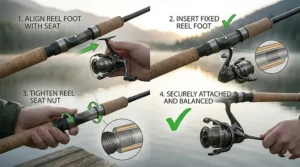
Clean the reel seat threads seasonally. A tiny amount of corrosion on the locking nut threads makes a reel seat difficult to tighten — and a loose reel is a distracted angler. A cotton swab and a drop of reel oil keeps threads clean.
✨ Don’t Miss These Exclusive Deals!
🔍 Ready to upgrade your tackle? Click any highlighted product link above to check current prices and availability on Amazon. Your next best fishing day starts with the right rod in your hand!
Frequently Asked Questions About Graphite Spinning Rods
❓ What is a graphite spinning rod and how is it different from fiberglass?
❓ Is a higher modulus graphite rod always better?
❓ What is the best graphite spinning rod for bass fishing under $100?
❓ Can graphite spinning rods be used in saltwater?
❓ How do I know what rod power and action to choose?
Conclusion: Your Next Best Day on the Water Starts With the Right Rod
Here’s the honest summary: a quality graphite spinning rod is the single highest-leverage upgrade most anglers can make to their freshwater tackle setup. The sensitivity advantage over fiberglass is not subtle — it’s the difference between reacting to a strike and guessing there might have been one.
For most anglers reading this in 2026, the Cadence CR5 in a medium-fast 6’6″ or 7′ configuration is the obvious starting point — 30-ton graphite, Fuji hardware, SiC guides, at a price point that leaves money for line and lures. Step up to the Fenwick HMG if you fish frequently and want a lifetime companion rod. Choose the St. Croix Panfish Series if crappie and bluegill are your religion. Trust the Ugly Stik Carbon if you fish hard and treat gear roughly.
Whatever you choose, remember: the rod connects you to the fish. Every tick, every tap, every nervous twitch at the end of 20 feet of fluorocarbon — the right graphite spinning rod makes you feel all of it. And feeling it is how you catch more fish.
✨ Found this guide helpful? Share it with a fellow angler!
💬 The right rod changes everything — pass it on. 🤗
Recommended for You
- 7 Best Two Piece Spinning Rods in 2026
- 7 Best Inshore Spinning Rods of 2026 — Expert Coastal Picks
- Best Fast Action Spinning Rod: 7 Expert Picks for 2026
These three articles give you the full picture — from the blank in your hand to the species at the end of your line.
Disclaimer: This article contains affiliate links. As an Amazon Associate, I earn from qualifying purchases. If you purchase products through these links, we may earn a small commission at no additional cost to you.
✨ Found this helpful? Share it with your friends! 💬🤗
