
In This Article
Picture this: you’re standing knee-deep in an icy river at dawn, your line dancing through emerald pools where monster salmon lurk beneath the surface. The question isn’t whether they’re there—it’s whether your lure will trigger that explosive strike that makes your heart race and your drag scream. After spending countless hours researching and analyzing feedback from thousands of anglers, I’ve discovered that choosing the right salmon fishing lures can mean the difference between an empty cooler and landing trophy-sized fish.
Salmon are aggressive predators with territorial instincts, but they’re also incredibly selective. During their spawning runs, these powerful fish respond to specific visual cues, vibrations, and movements that separate effective lures from tackle box clutter. Whether you’re targeting Chinook in Alaska’s pristine rivers, chasing Coho through Pacific Northwest streams, or trolling for Sockeye in the Great Lakes, having the right arsenal makes all the difference.
In this comprehensive guide, you’ll discover seven salmon fishing lures that consistently produce results across different water conditions, species, and fishing techniques. Each recommendation comes backed by real product specifications, customer feedback, and expert insights to help you make informed decisions. Let’s dive into what actually works when trophy salmon are on the line.
Quick Comparison Table
| Lure | Type | Best For | Price Range | Rating |
|---|---|---|---|---|
| Luhr Jensen Kwikfish K15 | Diving Plug | Rivers, Chinook | $13-$45 | ⭐⭐⭐⭐⭐ |
| Blue Fox Vibrax Classic | Inline Spinner | All Species | $4-$8 | ⭐⭐⭐⭐⭐ |
| Worden’s Rooster Tail | Spinner | Trout/Coho | $3-$7 | ⭐⭐⭐⭐½ |
| Rapala Original Floater | Floating Minnow | Versatile | $7-$15 | ⭐⭐⭐⭐⭐ |
| Panther Martin Classic | Spinner | Stream Fishing | $4-$6 | ⭐⭐⭐⭐⭐ |
| Yo-Zuri Crystal Minnow | Jerkbait | Trolling/Casting | $10-$18 | ⭐⭐⭐⭐½ |
| Yakima Bait FlatFish | Trolling Plug | Slow Current | $7-$8 | ⭐⭐⭐⭐⭐ |
💬 Just one click – help others make better buying decisions too!😊
Top 7 Salmon Fishing Lures: Expert Analysis
1. Luhr Jensen Kwikfish K15 Rattle
If there’s one lure that consistently puts guides onto trophy Chinook salmon, it’s the Kwikfish. This 5-inch diving plug has earned legendary status among Pacific Northwest anglers for its distinctive wide-wobbling action that salmon simply can’t ignore.
Key Specifications:
- Length: 5 inches (K15 model)
- Built-in rattle chambers for sonic attraction
- Dives 14-16 feet unassisted
- Multiple UV and natural color patterns
The Kwikfish works by producing an exaggerated wobble at slow trolling speeds, keeping the lure in the strike zone longer than traditional plugs. What separates this lure from competitors is its adjustable screw eye—you can fine-tune the action to track perfectly straight or add erratic movement depending on conditions. Anglers report that the larger K15 size excels when salmon first enter rivers, while the K14 (4.25 inches) performs better in clear water or when fish become pressured.
Customer feedback reveals this lure’s versatility: many successful anglers wrap the belly with sardine fillets or herring for added scent attraction during backtrolling sessions.
✅ Pros:
- Proven track record on Chinook and Coho
- Adjustable action via screw eye tuning
- Built-in rattles attract fish from distance
❌ Cons:
- Requires tuning for optimal performance
- Higher price point than basic lures
2. Blue Fox Classic Vibrax Spinner
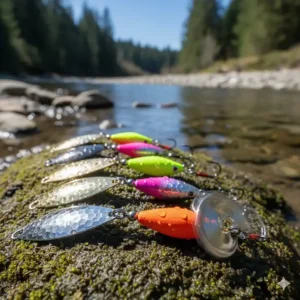
The Blue Fox Vibrax revolutionized inline spinners with its patented two-part body design that creates low-frequency vibrations while virtually eliminating line twist. Available in sizes from #0 (7/64 oz) to #6 (5/8 oz), this versatile lure targets everything from stream trout to massive king salmon.
Key Specifications:
- Sizes #5-6 ideal for salmon
- Machined brass body with silver or copper plating
- Convex/concave blade design
- VMC premium hooks
The genius of the Vibrax lies in its free-turning brass gear that rattles against the bell-shaped body, creating sonic vibrations that trigger feeding instincts. The blade spins easily at any retrieve speed, making it perfect for both fast-moving rapids and slow pools. Size #5 (7/16 oz) has become the go-to choice for Coho and smaller Chinook, while #6 handles bigger water and larger fish.
Steelhead and salmon guides particularly appreciate the Vibrax’s durability—these lures withstand season after season of hard use without losing their action. The painted finishes in chartreuse, fluorescent red, and metallic blue excel in stained water conditions.
✅ Pros:
- Eliminates line twist with patented design
- Works at any retrieve speed
- Exceptional durability season after season
❌ Cons:
- Treble hooks may require swapping for single hooks in selective fisheries
3. Yakima Bait Worden’s Original Rooster Tail
Since the 1950s, the Rooster Tail has earned its reputation as “The World’s Most Versatile Multi-Species Lure.” The pulsating hackle tail combined with the spinning blade creates an irresistible profile that salmon, especially Coho and Pinks, attack with savage strikes.
Key Specifications:
- Weights from 1/32 oz to 3/4 oz
- Pulsating hackle tail for lifelike action
- Custom blade with attractive spinning action
- Available in 50+ color combinations
What makes the Rooster Tail unique is that hackle tail that breathes and pulses with every turn of the blade. The spinning action creates flash and vibration, while the flowing tail mimics a fleeing baitfish. Tournament anglers favor sizes 1/4 oz to 1/2 oz for salmon, with chartreuse, pink, and silver patterns producing consistent results.
Customer reviews consistently praise this lure’s effectiveness in both still water and current. The Rooster Tail shines during salmon runs when fish are aggressively feeding before their spawning journey.
✅ Pros:
- Proven design since the 1950s
- Hackle tail creates unique pulsating action
- Excellent value for money
❌ Cons:
- Lighter weights may struggle in heavy current
4. Rapala Original Floater
The lure that started Rapala’s legendary reputation in 1936 remains a top choice for salmon anglers today. This hand-tuned balsa wood minnow delivers the wounded baitfish action that triggers aggressive strikes from predatory salmon.
Key Specifications:
- Balsa wood construction
- Sizes from 2 to 7 inches
- VMC black nickel premium hooks
- Hand-tuned and tank-tested
The Original Floater’s versatility is unmatched. You can twitch it on the surface, retrieve it as a shallow runner, weight it with split shot for medium depths, or bottom-walk it off a three-way swivel. The natural swimming action comes from Rapala’s meticulous hand-tuning process—each lure is tested to ensure that signature wobble straight from the box.
For salmon, the F11 (4 3/8 inch) and F13 (5 1/4 inch) sizes work exceptionally well. The floating characteristic allows the lure to rise enticingly when paused, often triggering strikes from following fish. Colors like silver, gold, and bleeding patterns mimic natural forage species.
✅ Pros:
- Hand-tuned for perfect action
- Versatile presentation options
- Premium balsa wood construction
❌ Cons:
- More expensive than plastic alternatives
- Balsa can be damaged by toothy fish
5. Panther Martin Classic Spinner
With over 125 million lures sold since its introduction, the Panther Martin has proven itself as one of the world’s greatest fish catchers. The unique shaft-through-blade design creates the easiest and fastest spinning action available, making it deadly on salmon in both rivers and lakes.
Key Specifications:
- Sizes 1/32 oz to 1/2 oz
- Shaft-through-blade design
- Convex/concave blade for sonic vibrations
- Super-sharp premium hooks
The Panther Martin’s convex/concave blade sends out sonic vibrations that fish feel through their lateral lines from considerable distances. Unlike other spinners where the blade rotates around a wire, this design puts the shaft directly through the blade, creating instant startup and unmatched spinning speed at slow retrieves.
For salmon fishing, the 1/4 oz and 1/2 oz sizes dominate. The holographic finishes add extra flash that stands out in deeper pools, while the classic gold and silver patterns work in clearer conditions. Many guides keep a selection of Panther Martins specifically for aggressive Coho that chase down fast-moving targets.
✅ Pros:
- Unique blade design creates superior spinning action
- Starts spinning immediately on retrieve
- Effective on all Pacific salmon species
❌ Cons:
- Not ideal for ultra-deep trolling applications
6. Yo-Zuri Crystal Minnow 3D
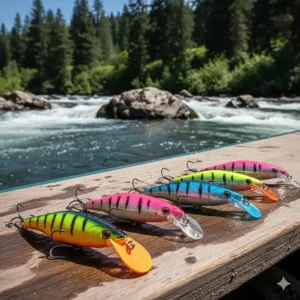
Japanese engineering meets proven fish-catching ability in the Yo-Zuri Crystal Minnow. This next-generation jerkbait features patented 3D Prism Finish and UV colors that create brilliant reflections even in murky water conditions.
Key Specifications:
- Sizes: 3.5″, 4.4″, 5.25″, 6″
- Patented 3D Prism Finish
- UV-enhanced color patterns
- Durable ABS resin body
The Crystal Minnow series includes floating, sinking, and deep-diving models to cover any water column. The flat sides create strong light reflection, while oversized holographic 3D eyes add realism. The responsive darting action mimics injured baitfish, triggering reaction strikes from salmon.
Trolling anglers love the deep-diving models that reach 15-20 feet without additional weight. The lures track true at speeds from 2-5 knots, making them perfect for covering water when searching for schools of salmon. The blue silver and bleeding patterns consistently outperform in both fresh and saltwater applications.
✅ Pros:
- Advanced 3D Prism and UV technology
- Multiple diving depths available
- Extremely durable ABS construction
❌ Cons:
- Premium pricing compared to basic minnows
7. Yakima Bait FlatFish
Charlie Helin designed the FlatFish in the early 1900s, and this shallow-diving plug remains the ultimate slow-trolling salmon lure over a century later. The distinctive wide wiggle at crawling speeds makes it irresistible to holding salmon.
Key Specifications:
- Sizes from 1″ to 6″ (F-7 and M-2 best for salmon)
- Slow-trolling specialist (1-4 mph)
- Two sticky-sharp treble hooks
- UV finishes for Pacific Northwest salmon
The FlatFish produces a frantic wiggling action and sonic thump that intensifies as trolling speed increases. What separates this lure is its effectiveness at slow speeds—you can present it right in a salmon’s face without spooking fish. The M-2 size (3.5 inches) has become the standard for moderate to large rivers, handling currents up to 4 mph.
Many anglers wrap FlatFish with bait around the belly for added scent attraction. The UV finishes in Cerise Chartreuse Tiger and Bleeding Frog patterns were specifically designed for Pacific salmon and produce exceptional results in the Great Lakes as well.
✅ Pros:
- Legendary slow-trolling performance
- Works with or without bait wrapping
- Over 100 years of proven results
❌ Cons:
- Less effective in very fast current
- Paint can chip with heavy use
✨ Don’t Miss These Exclusive Deals!
🔍 Take your salmon fishing to the next level with these carefully selected products. Click on any highlighted item to check current pricing and availability. These tools will help you create authentic catches your family will remember for years!
Understanding Salmon Behavior and Lure Selection
Salmon undergo dramatic physiological changes during their spawning migration that directly influence lure selection. When these fish enter freshwater from the ocean, they stop feeding in the traditional sense but retain aggressive instincts triggered by territorial behavior, irritation, and predatory reflexes.
Research shows that salmon respond to three primary stimuli: visual flash, vibration, and movement patterns. According to the Washington Department of Fish & Wildlife, successful salmon lures typically combine bright colors or reflective finishes with erratic action that mimics fleeing prey or encroaching competitors.
Species-Specific Lure Preferences
Chinook (King) Salmon: These massive fish prefer larger lures (4-6 inches) with substantial vibration. Deep-diving plugs like the Kwikfish and large spoons dominate Chinook tactics. Fish them in the deepest runs and holes where kings typically hold.
Coho (Silver) Salmon: More aggressive than Chinook, Coho readily strike spinners and smaller plugs. The Vibrax and Rooster Tail excel because Coho love chasing down fast-moving targets. They’ll even hit surface lures in tidewater.
Sockeye (Red) Salmon: The most challenging species to target with lures since they primarily feed on plankton. Bright spinners in sizes #3-4 and small spoons work best, often requiring a “flossing” presentation where the lure passes directly in front of the fish.
Pink Salmon: These smaller fish respond enthusiastically to compact spinners and spoons in the 1/2 to 1-inch range. Pink and white color combinations consistently outperform, matching their natural diet of small baitfish.
Chum (Dog) Salmon: Often overlooked but incredibly hard-fighting, Chum strike larger spinners and spoons aggressively. Green and purple patterns work exceptionally well in tidewater areas.
Water Conditions and Lure Adjustments
Understanding how water clarity, temperature, and flow affect lure choice separates novice anglers from consistent producers. As detailed in fishing techniques research on Wikipedia, matching lure characteristics to environmental conditions dramatically increases success rates.
Clear Water Strategies
In gin-clear rivers and lakes, salmon become spookier and more selective. Natural color patterns like silver, blue, and rainbow trout imitations work best. Downsize your presentations—a K14 Kwikfish instead of K15, or a size #4 Vibrax instead of #6. The increased visibility means fish scrutinize lures more carefully, so realistic action becomes critical.
Stained Water Tactics
When rivers run with color from rain or snowmelt, switch to high-visibility patterns. Chartreuse, hot pink, and fluorescent orange help salmon locate your lure through reduced visibility. The Blue Fox Vibrax in fluorescent red or the Panther Martin in chartreuse excel because their sonic vibrations supplement visual attraction.
UV-enhanced finishes like those on the Yakima FlatFish UV series become invaluable in stained conditions. Salmon can see UV light, and these finishes create a distinct signature that cuts through murky water.
Current Speed Considerations
Fast-moving rapids require heavier lures that stay in the strike zone. The 1/2 oz Rooster Tail or #6 Vibrax provide weight for casting distance and depth control. Slow current and slack water demand finesse presentations—the floating Rapala or slowly-trolled FlatFish allow precise control at reduced speeds.
Advanced Presentation Techniques
Simply having the right lures isn’t enough—presentation techniques determine whether salmon see your offering as prey or threat. Expert guides employ specific retrieval methods that maximize each lure’s effectiveness.
Plug Fishing in Current
When backtrolling or anchoring with plugs like the Kwikfish or FlatFish, position your boat upstream of holding fish. Let out 50-80 feet of line and allow the current to work the lure’s action. The key is keeping the plug at the same depth as salmon while maintaining that enticing wobble.
Tune your Kwikfish by adjusting the screw eye: if it pulls left, turn the eye slightly right; if it pulls right, turn it left. A properly tuned plug tracks straight and wobbles side-to-side without spinning.
Spinner Casting Tactics
Cast spinners quartering upstream and allow them to swing through the run. Start your retrieve before the lure hits bottom—Vibrax and Panther Martin spinners begin spinning immediately, but you want to avoid snagging. Vary your retrieve speed: sometimes salmon want a fast, aggressive presentation; other times, a slow, deliberate swing triggers strikes.
In lakes or slow rivers, count your spinner down to different depths before beginning your retrieve. This systematic approach helps you locate the depth zone where salmon are holding.
Trolling Fundamentals
Whether trolling with Rapala minnows or Yo-Zuri jerkbaits, maintain speeds between 2-3 mph for most salmon species. Use downriggers or leadcore line to reach depths of 15-40 feet where salmon typically cruise. S-patterns while trolling create speed variations that trigger following fish to strike.
Change your trolling depth every 15-20 minutes until you locate active fish. Mark productive depths with your GPS or fish finder, then concentrate your efforts in that zone.
Color Selection Science
While lure action and presentation matter most, color selection can make the difference between moderate and exceptional success. Salmon respond to colors based on water clarity, light conditions, and forage base.
Universal Producers
Silver/Chrome: Mimics baitfish in any condition. The Rapala Original Floater in silver and the Yo-Zuri Crystal Minnow in blue silver work everywhere salmon swim.
Chartreuse: The most visible color underwater, chartreuse excels in stained water and low-light conditions. The Kwikfish in chartreuse patterns and Blue Fox Vibrax with chartreuse bodies produce consistently.
Pink/Cerise: These colors suggest spawning salmon eggs and trigger both feeding and territorial responses. The FlatFish in Bleeding Frog and Rooster Tail in pink dominate during peak spawning seasons.
Matching the Forage
Research your target water’s primary baitfish. In herring-rich areas, blue and silver patterns dominate. Where smelt or candlefish are abundant, white and silver combinations work best. The Yo-Zuri Crystal Minnow series offers realistic baitfish patterns that match local forage perfectly.
Tackle Considerations for Salmon Lures
Your rod, reel, and line choices directly impact lure performance. Mismatched tackle compromises even the best lures.
Rod Selection
For spinner fishing: 7-9 foot medium-heavy spinning rods provide the backbone for fighting powerful salmon while offering enough tip sensitivity to detect subtle takes.
For plug fishing: 8.5-9 foot extra-heavy rods handle the pressure of backtrolling large plugs in heavy current. The additional length helps control line and maintain proper lure position.
For trolling: 8-10 foot medium-heavy trolling rods with roller guides distribute the strain of fighting big fish while maintaining constant tension during long runs.
Line Requirements
Monofilament (12-30 lb test): Provides stretch that cushions hooksets and forgives mistakes when fighting fish. Use lighter tests in clear water, heavier in snaggy conditions.
Braided line (30-65 lb test): Zero stretch improves sensitivity and hooksets but requires careful drag settings to prevent pulled hooks. Excellent for deep trolling where you need to feel lure action.
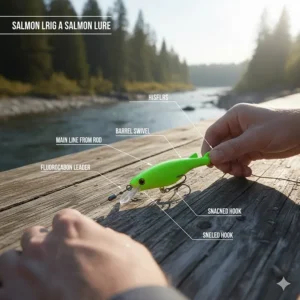
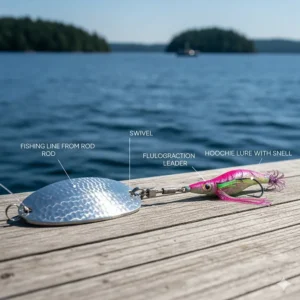
Fluorocarbon leaders (15-40 lb): Nearly invisible underwater, fluoro leaders improve presentation in clear water. Attach 3-6 feet of fluorocarbon to your main line when fish are selective.
Hook Upgrades
Many anglers replace factory treble hooks with premium options. VMC, Owner, and Gamakatsu trebles feature sharper points and stronger construction. In selective gear fisheries, switch to single barbless hooks while maintaining the lure’s action.
Seasonal Strategies for Maximum Success
Salmon runs follow predictable patterns that dictate lure selection throughout the year.
Spring (March-May)
Early-run Chinook enter rivers while Coho prepare for their ocean migration. Target Chinook with large plugs and spoons in deeper holes. Spring runoff often brings stained water—bright colors and sonic attraction become essential. The Kwikfish in chartreuse and Blue Fox Vibrax in fluorescent patterns excel.
Summer (June-August)
Lower, clearer water requires finesse presentations. Chinook hold in deep pools during daylight, becoming more active at dawn and dusk. Smaller spinners and natural color patterns produce better. The Panther Martin in silver and Rapala Original Floater in rainbow trout patterns dominate summer tactics.
Fall (September-November)
Peak salmon season! Coho, Pink, and Chum flood into rivers while Chinook reach spawning grounds. Aggressive presentations with spinners and plugs work exceptionally well. Fish are less selective, making this the perfect time to experiment with different lures and colors. The Rooster Tail and FlatFish become go-to choices as fish stage near spawning areas.
Winter (December-February)
Late-run Steelhead and a few remaining Chinook offer opportunities in Pacific systems. Cold water slows metabolism—downsize presentations and slow your retrieval. Small spoons and spinners fished methodically through deep runs produce winter fish.
Maintenance and Storage Tips
Protecting your investment ensures lures perform season after season.
After Each Trip:
- Rinse all lures with fresh water, especially after saltwater use
- Dry completely before storage to prevent corrosion
- Check hooks for sharpness and replace dulled points
- Inspect split rings and swivels for wear
Long-Term Storage:
- Separate spinner blades from bodies to prevent paint transfer
- Store lures in tackle boxes with divided compartments
- Apply light oil to hooks and metallic finishes
- Check treble hooks for rust and replace as needed
Spinner Maintenance:
- Verify blade spins freely on the shaft
- Clean any debris from the clevis
- Replace bent or damaged blades
- Lubricate the shaft occasionally with reel oil
Plug Care:
- Check for cracks in plastic or balsa bodies
- Touch up chipped paint with nail polish or model paint
- Verify diving lip hasn’t cracked or loosened
- Test lure action in water before fishing
✨ Ready to Land More Salmon?
🎣 These expert-tested lures have helped thousands of anglers connect with trophy salmon. Whether you’re backtrolling remote rivers or trolling urban waterways, having the right tools makes all the difference. Check current availability and pricing on the products above—your next personal best is waiting!
Frequently Asked Questions
❓ What size lure works best for Chinook salmon?
❓ Can you use salmon fishing lures in both rivers and lakes?
❓ What colors are most effective for salmon lures?
❓ How deep should I fish salmon lures?
❓ What's the difference between salmon spinners and spoons?
Conclusion
Success in salmon fishing comes down to matching the right lure to specific conditions, species, and techniques. The seven salmon fishing lures featured in this guide have proven themselves across thousands of fishing trips, various water types, and all Pacific salmon species.
The Luhr Jensen Kwikfish remains the gold standard for river Chinook, while the Blue Fox Vibrax delivers unmatched versatility across all conditions. The classic Worden’s Rooster Tail and Panther Martin continue catching fish decade after decade. Modern innovations like the Yo-Zuri Crystal Minnow bring cutting-edge technology to traditional tactics, and time-tested designs like the Rapala Original Floater and Yakima FlatFish prove that sometimes, the classics simply can’t be improved.
Remember that lure selection is just one piece of the puzzle. Understanding salmon behavior, reading water conditions, and mastering presentation techniques transform good gear into exceptional results. Start with these seven proven lures, experiment with colors and sizes based on your local conditions, and keep detailed notes on what works when.
The most important lesson? Confidence in your lure choice matters. Fish thoroughly with each lure before switching—salmon often require multiple casts to the same spot before striking. When you believe in your lure and fish it properly, success follows naturally.
Now get out there and put these tools to work. Your next trophy salmon is waiting somewhere in the depths, and with these proven lures in your tackle box, you’re equipped to trigger that crushing strike that makes salmon fishing so addictive. Tight lines and heavy nets!
Recommended for You
- 7 Best Salmon Fishing Rods 2025: Expert Guide & Reviews
- 7 Best Salmon Fishing Gear That Actually Catch Fish (2025)
- 7 Best Fly Fishing Reels in 2025 (Expert Tested & Ranked)
Disclaimer: This article contains affiliate links. If you purchase products through these links, we may earn a small commission at no additional cost to you.
✨ Found this helpful? Share it with your friends! 💬🤗
