
In This Article
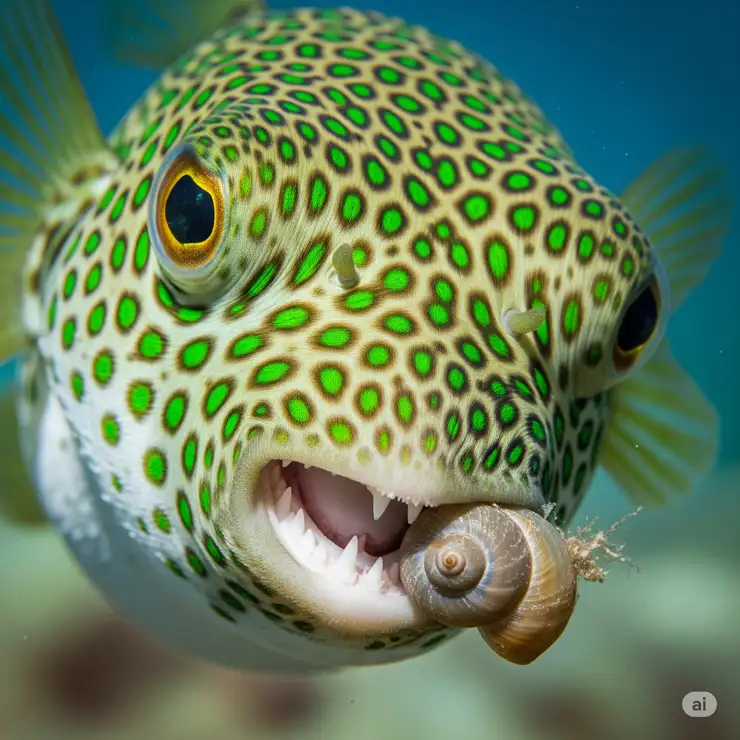
Here’s the thing nobody tells you at the pet store: a puffer isn’t really a fish that eats. It’s a fish that demolishes. The family name, Tetraodontidae, literally refers to four teeth fused into an upper and lower plate, built to crush the shells of crustaceans and mollusks. Now picture that hardware parked in a living room aquarium, staring at a pinch of flakes. Awkward.
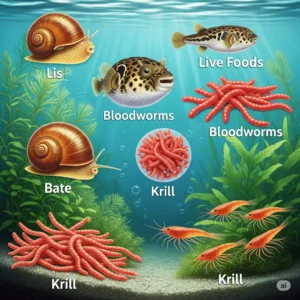
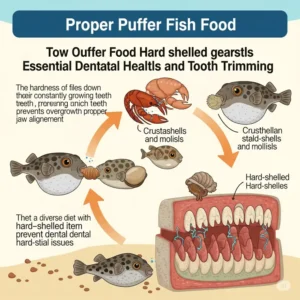
That mismatch is the whole story of puffer fish food. A puffer’s beak never stops growing. In the wild, crunchy prey grinds it down daily. In captivity, a soft diet lets it creep forward until the fish can’t bite properly, then can’t eat, then wastes away. So the best puffer fish food isn’t just about protein percentages or color enhancement. It’s about giving that beak a job.
This guide gives you seven real, widely available options, from frozen staples to crunchy freeze-dried treats. It also covers how to rotate them, what to do when a stubborn puffer refuses dinner, and where each product earns its spot. Everything here is built from product labels, published specs, and what keepers and aquariums report. Nothing is invented and nothing is dressed up as hands-on testing. If you’ve been Googling “food for puffer fish” at midnight, you’re in the right place. 🐡
Quick Comparison: Best Puffer Fish Food at a Glance
Before the deep dives, here’s the lay of the land. “Beak-wear help” is my analytical read of each food’s texture, not a lab measurement. Prices are ranges seen across retailers and will shift, so check current price before buying.
| Product | Form | Best For | Approx. Price Range | Beak-Wear Help |
|---|---|---|---|---|
| Hikari Bio-Pure Frozen Mysis Shrimp | Frozen cubes | Best for small-to-medium puffers needing a clean staple | Single digits (small pack) to low $20s (bulk) | Low–moderate |
| Hikari Bio-Pure Frozen Jumbo Blood Worms | Frozen cubes | Best for pea puffers and as a picky-eater lure | Under $10 (small pack) | Very low |
| Hikari Frozen Clam on a Half Shell | Frozen | Best for larger puffers that need real crunch | Varies; check current price | High |
| Omega One Freeze-Dried Krill | Freeze-dried | Best for a pantry-friendly crunchy backup | Roughly $8–$15 | Moderate |
| Ocean Nutrition Formula One Frozen Cubes | Frozen cubes | Best for marine puffers and variety rotation | Roughly $7–$13 | Low–moderate |
| Hikari Sinking Carnivore Pellets | Sinking pellets | Best for puffers already trained onto pellets | Around $10–$12 (small size) | Low |
| Fluval Bug Bites Tropical Granules | Slow-sinking granules | Best for dwarf puffers and budget supplements | Under $6 to roughly $10 | Very low |
Look at the last column and a pattern jumps out: the foods that are easiest to feed are the worst at wearing a beak down. The two best-priced convenience options, Hikari Sinking Carnivore Pellets and Fluval Bug Bites Tropical Granules, are supplements, not foundations. For a growing puffer, the Hikari Frozen Clam on a Half Shell carries the most dental value, while Hikari Bio-Pure Frozen Mysis Shrimp is the dependable everyday backbone. Budget buyers should note that the cheapest tub on the shelf is rarely the cheapest outcome if it leads to a vet visit.
💬 Just one click — help others make better buying decisions too!😊
Top 7 Puffer Fish Food Picks: Expert Analysis
1. Hikari Bio-Pure Frozen Mysis Shrimp — the clean, reliable everyday staple
Start with the workhorse. Mysis are tiny shrimp-like crustaceans, and Hikari’s version is sold as “no-touch” cubes, so portioning takes seconds. Per the retailer listings, the ingredient list is short: mysis shrimp, water, and a vitamin blend including B12 and stabilized vitamin C. The shell is described as less developed than that of larger crustaceans, which makes the food easy to chew and digest.
That softness cuts both ways. On paper, it’s a fantastic food for juveniles and picky eaters, because it triggers a feeding response without choking risk. But it won’t do much for beak maintenance on its own. Think of it as the dependable base layer of the diet, not the dental plan. Hikari’s own product copy even notes that live and frozen foods work best as a treat that mixes up nutrition, so treat that as an invitation to rotate rather than lean on one cube type.
One practical note from the label: handling frozen food derived from live animals can trigger allergic reactions in some people, so wash up afterward.
Aggregated review sentiment is hard to pin down. Mysis is widely praised across aquarium retail listings as an accepted-by-almost-everything food, but I couldn’t verify a clean, aggregated Amazon rating, so I won’t invent one.
Pros:
- ✅ Short ingredient list built around whole mysis
- ✅ Easy-to-chew, accepted by many fussy fish
- ✅ No-touch cubes make portioning simple
Cons:
- ❌ Too soft to wear down a growing beak
- ❌ Needs a freezer and careful thawing habits
Price range: small packs sit in single digits, bulk flat packs in the low $20s at some retailers, so check current price. Value verdict: excellent as a staple, incomplete as a sole diet.
2. Hikari Bio-Pure Frozen Jumbo Blood Worms — the picky-eater lure for smaller puffers
Bloodworms are the gateway drug of frozen foods. The jumbo version is described by one retailer as 2.5 times the size of standard bloodworms, which makes them better matched to larger freshwater carnivores. Hikari’s label lists bloodworms, water, and a vitamin and carotene blend, and sterilization is advertised as a three-step process meant to remove parasites, harmful bacteria, and odor.
Here’s the spec that matters: one retailer lists the 3.5 oz cube pack at just 3.5% minimum crude protein and 94.5% maximum moisture. In plain English, you’re feeding mostly water, wrapped around a flavorful protein bite. That’s perfect for tempting a newly acquired puffer to eat, and for pea puffers, which keepers commonly feed bloodworms, brine shrimp, daphnia, and small snails. But it’s a poor long-term foundation, and it does nothing for teeth.
Reviewer sentiment, where I could verify it, tends to describe bloodworm cubes as accepted by nearly anything. As with any soft food, the frequent keeper caution is not to overdo it, because puffers can become so enamored that they snub crunchier options.
Pros:
- ✅ Irresistible appetite trigger for stubborn fish
- ✅ Sterilized, low-odor frozen format
- ✅ Jumbo size suits larger carnivores
Cons:
- ❌ Mostly water, very low calorie density
- ❌ Zero beak-wearing benefit
Price range: usually under $10 for the small cube pack, so check current price. Value verdict: a smart tool, not a meal plan.
3. Hikari Frozen Clam on a Half Shell — the crunch your puffer’s beak actually craves
If the whole article had one hero, it would be this. When Hikari announced the product, Reef Builders described frozen clams on a half shell as a great starter food for finicky feeders and a tasty treat for larger tank busters, puffers included. The same article warned that sourcing and shelling clams yourself is hit or miss.
The logic is simple and it’s the point of the whole article. Puffer beaks evolved to crack shellfish, and aquarium sources consistently say hard-shelled foods like clams and shrimp are how captive puffers wear their teeth down. A half-shell clam makes your puffer work for dinner, which is exactly the point. Pair it with the knowledge that overgrown beaks are a leading preventable problem, and this becomes the most strategically valuable food on the list.
Two cautions. First, availability of this specific product varies over time, so check current availability and listings before you plan around it. Second, one care guide notes that clams and oysters are best left to adult puffers who can handle them efficiently. Juveniles may need smaller crunchy items such as snails.
I couldn’t verify a meaningful aggregated review base for this item, so I’m not going to pretend otherwise.
Pros:
- ✅ Real shell-crunching work for the beak
- ✅ Replaces hit-or-miss grocery-store shelling
- ✅ Great enrichment and feeding variety
Cons:
- ❌ Too tough for very small juveniles
- ❌ Availability can fluctuate
Price range: varies; check current price. Value verdict: the best dental-value food here, if you can find it.
4. Omega One Freeze-Dried Krill — the crunchy, shelf-stable backup plan
Freezer failures happen. Having a pantry-friendly crunchy option is a quiet superpower. Retailer listings show Omega One Freeze-Dried Krill has a single ingredient (krill) and a guaranteed analysis of 60% minimum crude protein, 10% minimum fat, 19% maximum fiber, and 5% maximum moisture. Fiber that high mostly reflects krill’s chitinous shell, which is exactly why it has more bite than a soft frozen cube.
Because krill is a whole crustacean, it gives a puffer something to crush, without the commitment of a full hard-shelled meal. A competing freeze-dried krill brand even lists puffers among recommended species, which supports the general fit. The standard advice on those labels is to presoak before feeding, and that’s wise, since dry, sharp edges are worth softening slightly.
The real review signal here is mixed. One reviewer on a retailer listing complained that sharp edges nearly choked their fish, while others reported their fish enjoyed it. Based on those spec-level and anecdotal signals, the sensible takeaway is to size the pieces to the fish. Break them up for small puffers.
Pros:
- ✅ Single-ingredient krill, very high protein
- ✅ Shelf-stable, no thawing needed
- ✅ Chitin gives mild crunch
Cons:
- ❌ Sharp edges can be hard on tiny mouths
- ❌ Not a substitute for true hard-shelled prey
Price range: roughly $8–$15 depending on size, so check current price. Value verdict: a smart pantry backup and crunchy accent.
5. Ocean Nutrition Formula One Frozen Cubes — the marine-friendly variety blend
This one leans toward saltwater keepers. Ocean Nutrition describes Formula One as a seafood-and-algae blend for carnivorous and omnivorous marine fish. A listing for the Rapid Delivery Formulation shows krill, plankton, shrimp, spinach, clams, and squid, with a gel binder holding the cube together. Guaranteed analysis on one cube version lists 13% minimum protein and 85% maximum moisture.
What does that mean in practice? The ingredient variety is the selling point. Puffers in the wild eat a mix of invertebrates, so a cube that blends shrimp, clam, krill, and squid brings a wider nutritional net than any single-ingredient food. The tradeoff is the gel binder. A retailer reviewer on a sister formula reported that gel-bound frozen cubes can cause protein skimmers to overflow, which is something saltwater keepers should note. The soft cube texture also means it adds nutrition rather than dental work.
Real-world sentiment I could verify is thin, so treat this as a spec-based pick. It’s a rotation food, not a standalone diet.
Pros:
- ✅ Multi-seafood blend including clam and squid
- ✅ Handy cubes for measured feeding
- ✅ Suits marine puffer setups
Cons:
- ❌ Gel binder can upset protein skimmers
- ❌ Soft texture, minimal beak wear
Price range: roughly $7–$13, depending on pack size, so check current price. Value verdict: a good variety rotation for saltwater tanks.
6. Hikari Sinking Carnivore Pellets — the trainable convenience option
Pellets are where puffer keepers split into camps. One camp says puffers are messy enough without them; another says a good sinking pellet is a useful backup. Hikari Sinking Carnivore Pellets list fish meal and krill meal as the first two ingredients, followed by yeast, starches, and a vitamin and carotenoid package. Retail copy says the pellets absorb water and soften while keeping their shape, and that they’re meant for smaller carnivores such as catfish, bichirs, and eels.
Here’s the honest take. These pellets are nutritionally respectable and convenient, but by design they soften. That’s the opposite of what a beak needs. Use them as an emergency ration or training tool, not a foundation. One forum keeper summarized the reality: getting a puffer onto pellets is hit or miss.
On review sentiment, one retailer listing displayed 62 reviews with roughly 94% five-star ratings, mostly from keepers of other carnivorous fish, which says the product is well-liked in general but not specifically for puffers. The ingredient list also includes an artificial color, so check the label if that matters to you.
Pros:
- ✅ Fish and krill meal lead the ingredients
- ✅ Sinks quickly, suits bottom feeders
- ✅ Long, convenient shelf life
Cons:
- ❌ Softens, so little beak-wearing value
- ❌ Many puffers simply refuse pellets
Price range: around $10–$12 for the small tub, so check current price. Value verdict: fair backup, weak standalone.
7. Fluval Bug Bites Tropical Granules — the budget insect-based supplement
This is the wild card. Retail listings say Fluval Bug Bites Tropical Granules list black soldier fly larvae first (up to 40%), followed by salmon and fish protein concentrate, in slow-sinking granules. Pea puffers naturally eat insects and larvae in the wild, so the concept fits dwarf species better than big marine puffers.
In practice, that’s a niche fit. Granules are small and soft, and many puffers ignore dry food altogether. I’d frame it as a low-cost supplement or a trial for dwarf species, never the main course. Retail listings do show strongly positive ratings for the product in general, but those reviews are largely from keepers of ordinary tropical fish. Nothing I found verifies how puffers specifically respond.
Pros:
- ✅ Insect-larvae protein suits insectivore instincts
- ✅ Slow-sinking granules for mid-water feeding
- ✅ Budget-friendly entry price
Cons:
- ❌ Puffers often reject dry granules
- ❌ Zero meaningful beak wear
Price range: under $6 for the small jar up to roughly $10 for a larger size, so check current price. Value verdict: cheap to test, never a foundation.
Weekly Feeding Plan: A Practical Puffer Fish Food Routine
Amazon listings give you product names. They don’t give you a rhythm. Here’s a framework you can adapt. It’s a reasoning template based on the label guidance and keeper reports above, not a veterinary prescription, so adjust it for your species and consult an aquatic vet if your fish looks thin.
Step 1: Pick your anchor. Choose one soft staple, such as Hikari Bio-Pure Frozen Mysis Shrimp, and one crunchy item. Most keepers aim for the crunchy category several times a week, since the fused beak needs regular wear.
Step 2: Schedule rotation. A simple pattern: soft frozen meal, crunchy meal, soft frozen meal, crunchy meal, a lighter snack day, repeat. Mixed-in Ocean Nutrition Formula One Frozen Cubes adds variety so no single food dominates.
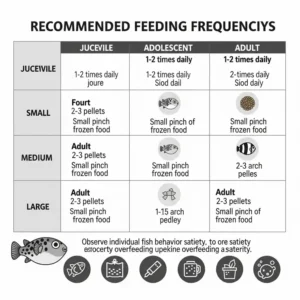
Step 3: Respect feeding windows. Product labels across this list suggest feeding only what the fish consumes in a short window, anywhere from about a minute to five minutes. Remove leftovers, because puffers are messy.
Step 4: Use treats deliberately. Hikari Bio-Pure Frozen Jumbo Blood Worms work best as a tempter on tough days, not a daily habit.
Step 5: Keep a backup crate. A jar of Omega One Freeze-Dried Krill takes minutes to presoak if the freezer dies.
Step 6: Watch the mouth. Healthy puffers show barely a hint of beak beyond the lips, while overgrown ones look bucktoothed, according to Chewy’s teeth-care guide. Catch the early signs and change the menu.
Real-World Scenarios: Matching Puffer Fish Food to Your Tank
Specs only matter when they meet a real situation. Here are three profiles built from common keeper circumstances.
The dorm-room pea puffer. Small tank, tight budget, a tiny carnivore with a big attitude. A pea puffer’s natural diet leans toward insects, larvae, and small invertebrates, and keepers commonly mention bloodworms, brine shrimp, daphnia, and small snails. Here, Hikari Bio-Pure Frozen Jumbo Blood Worms may be too large, so the standard bloodworm version is usually the better fit. A sprinkle of Fluval Bug Bites Tropical Granules is a low-cost experiment, with small snails providing the real tooth work.
The ambitious freshwater giant. Someone with a large tank and a big freshwater species. Georgia Aquarium notes that the giant puffer eats mollusks, insects, crustaceans, and small fish, and that hard-shelled prey helps prevent tooth overgrowth. A giant puffer profile is a useful reality check on how serious the dietary demands get. The Hikari Frozen Clam on a Half Shell becomes a recurring menu item, with Hikari Bio-Pure Frozen Mysis Shrimp filling gaps.
The saltwater hobbyist. A reef-style setup with a marine puffer. Marine puffers are widely described as harder to feed, and one care guide says they should be kept by experienced hobbyists who can source specialized foods. Ocean Nutrition Formula One Frozen Cubes works as a rotation food, but watch the skimmer if the gel binder foams.
Problem → Solution: When Your Puffer Won’t Eat
Every puffer keeper hits this wall eventually. Here are the most common problems and the sensible responses.
Problem 1: The new puffer ignores everything. Reports on forums suggest new puffers often need time and the right bait. A tempting live snail or soft frozen item like Hikari Bio-Pure Frozen Mysis Shrimp can break the stalemate. Offer small portions and be patient, rather than flooding the tank.
Problem 2: The fish nudges the food but can’t bite it. This is the classic overgrown-beak red flag. In one reported case, a porcupine pufferfish was losing weight because its long teeth blocked eating. A vet sedated it with a mild anesthetic solution and trimmed an inch off with a dental bur, as The Optimist Daily reported. If your puffer can’t close its mouth properly, don’t gamble. Seek an experienced aquatic or exotic vet.
Problem 3: The puffer only wants pellets or bloodworms. That’s the “spoiled fish” pattern. Gradually mix in crunchier items and reduce the favorite. Hikari itself warns that live and frozen treats can make formulated foods harder to feed, so don’t lean too hard on tempters.
Problem 4: The tank is cloudy and foul after feeding. You’re overfeeding. Puffers are messy eaters. Cut portions, remove leftovers, and avoid gel-heavy cubes if your filtration struggles.
What Is Puffer Fish Food?
Puffer fish food is any diet formulated or chosen for pufferfish that emphasizes meaty, shell-bearing, protein-rich items like snails, crustaceans, and mollusks. Because a puffer’s fused beak grows continuously, the best puffer fish food includes hard or crunchy components that wear it down, supplemented by frozen, freeze-dried, or prepared foods for balanced nutrition.
That definition hides a surprising amount of nuance. “Puffer” covers a huge family. Wikipedia counts well over a hundred species across dozens of genera. A tiny pea puffer and a 30-inch giant puffer don’t have the same dietary needs, and a marine Arothron isn’t a freshwater dwarf. What unites them is the beak and the carnivorous leaning. So the shopping question becomes: which foods suit your puffer’s size, habitat, and mouth?
How to Choose Puffer Fish Food
Use this seven-step checklist to cut through marketing noise.
- Identify your species first. Dwarf freshwater, brackish, large freshwater, and marine puffers differ. Food that works for one may be wrong for another.
- Prioritize hard-shelled items. Snails, clams, and shrimp wear down the beak. Everything else is nutrition, not dental care.
- Choose frozen over dry for the staple. Frozen foods like Hikari Bio-Pure Frozen Mysis Shrimp keep natural texture and are readily accepted, while dry foods are better as backups.
- Match size to mouth. Jumbo food for big puffers, smaller portions for juveniles. A crunchy item that’s too big becomes a choking hazard.
- Check the ingredient list. Look for whole animal ingredients first and avoid foods heavy on fillers. Some products list artificial colors, so read labels.
- Plan for variety. Rotating three or four foods is easier than finding one perfect product.
- Read feeding instructions. Labels from these manufacturers generally push portion control and prompt removal of leftovers.
Puffer Fish Food vs Typical Community Fish Flakes
Why can’t a puffer just eat ordinary flakes? The short answer is beak, behavior, and biology. Here’s how the two approaches compare.
| Feature | Puffer-Focused Feeding | Typical Flake-Based Feeding |
|---|---|---|
| Beak maintenance | Hard-shelled items wear the beak | No wear at all |
| Protein style | Whole invertebrates and mollusks | Processed meal and starches |
| Feeding behavior | Encourages natural hunting | Passive surface grazing |
| Best For | Hikari Frozen Clam on a Half Shell for crunch, Hikari Bio-Pure Frozen Mysis Shrimp for staples | Community tropicals, not puffers |
| Mess level | Higher, requires cleanup | Lower, but poor fit for puffers |
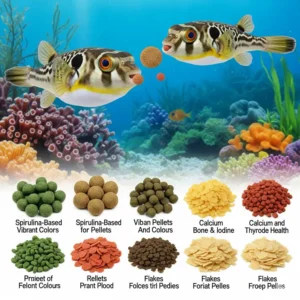
The table makes one thing painfully clear. Flakes solve the keeper’s problem (convenience) while ignoring the fish’s problem (a beak that keeps growing). A published puffer-feeding overview warns that prepared foods should be supplemental, never exclusive, since they won’t adequately wear the teeth down. In other words, flakes aren’t evil. They’re simply the wrong tool for this particular job. If you need pellets for convenience, Hikari Sinking Carnivore Pellets is the more sensible choice, but only as a side dish.
Features That Actually Matter (And Those That Don’t)
Marketing copy loves adjectives. Fish care loves details. Here’s the filter.
What matters:
- Texture and crunch. A food that never challenges the beak isn’t a complete answer, no matter how good its ingredient panel looks.
- Whole-prey ingredients. Krill, shrimp, and clams beat mystery fillers.
- Portion control. Cube formats like Ocean Nutrition Formula One Frozen Cubes and Hikari Bio-Pure Frozen Mysis Shrimp make it easy to feed exactly what’s needed.
- Safety processing. Hikari advertises sterilization steps for its frozen lines, which helps reduce the parasite worry that comes with raw freshwater fish.
What doesn’t matter much:
- Color-enhancing claims. Pretty, but secondary to dental health.
- “Complete diet” labels. Even manufacturers admit that live and frozen foods should be mixed up as treats. No single bag does everything.
- Fancy packaging. A jar of Omega One Freeze-Dried Krill works as well as any glossy tub.
Puffer Fish Food for Different Puffer Types
Dwarf and pea puffers. Tiny carnivores with big appetites. Small snails, bloodworms, brine shrimp, and daphnia are commonly recommended. Their tiny beaks still grow, so crunchy snails remain valuable.
South American and Asian bottle-type puffers. Chewy’s teeth-care guide flags Colomesus asellus and two Auriglobus species among the freshwater types most likely to develop overgrown teeth, regardless of how carefully the diet is managed. For these, crunchy items aren’t optional. Regular vet checks are also reasonable.
Large freshwater puffers. Giants need heavy-duty shells. Clams, whole shrimp, and snails dominate. Soft foods are supporting actors.
Marine puffers. Chewy also lists larger marine puffers such as Arothron hispidus and Arothron nigropunctatus as prone to overgrown teeth. Their feeding often requires more specialized sourcing, so Ocean Nutrition Formula One Frozen Cubes and clams become rotation anchors.
Long-Term Cost & Maintenance
Cheap puffer fish food can quietly become expensive puffer care. Think of it as total cost of ownership, not shelf price.
| Cost Factor | Lower-Cost Approach | Higher-Value Approach |
|---|---|---|
| Staple food | Fluval Bug Bites Tropical Granules as a cheap supplement | Hikari Bio-Pure Frozen Mysis Shrimp as a reliable base |
| Crunch source | Cultured snails at home | Hikari Frozen Clam on a Half Shell |
| Backup | Hikari Sinking Carnivore Pellets | Omega One Freeze-Dried Krill |
| Best For | Small budgets, dwarf species | Growing puffers and long-term health |
Notice the trap in the left column. Cheap soft foods are tempting, but if a puffer’s beak overgrows, you’re looking at a vet visit with sedation and specialized tools. That bill will crush any savings from the discount aisle. Spending slightly more on crunch-oriented foods and snail culture typically pays off. Freezer space, thawing time, and tank cleanup add hidden maintenance costs as well, so factor them in. A little planning each week beats an emergency every year.
✨ Don’t Miss These Exclusive Deals!
🔍 Take your puffer’s menu to the next level with these carefully selected foods. Click on any highlighted product name to check current pricing and availability. A little variety goes a long way toward a healthy beak and a happy fish!
Common Mistakes When Buying Puffer Fish Food
Mistake 1: Treating dry food as the main meal. Prepared foods are supplements. The beak needs hard prey.
Mistake 2: Feeding raw freshwater fish. One care guide warns against it due to parasite risk. Use sterilized frozen products or well-sourced marine seafood instead.
Mistake 3: Ignoring size. A jumbo bloodworm for a tiny puffer or a half-shell clam for a juvenile is a mismatch. Match food to mouth.
Mistake 4: Over-relying on tempters. The beloved bloodworm can become a crutch. Rotate.
Mistake 5: Buying one food and calling it done. Variety is the whole point. Even forum keepers who run mixed diets stress feeding everything: snails, shrimp, clams, krill.
Mistake 6: Skipping the vet. If your puffer can’t eat despite trying, overgrown teeth may be the cause. Don’t attempt amateur trimming on a fish you can’t safely restrain.
FAQ
❓ How often should I use puffer fish food for adults?
❓ Is frozen puffer fish food better than freeze-dried?
❓ What is the best puffer fish food for pea puffers?
❓ Can puffer fish eat only pellets?
❓ How do I know if my puffer's beak is overgrown?
Conclusion
Here’s the one-sentence version: the best puffer fish food is a rotation, not a product. Hikari Bio-Pure Frozen Mysis Shrimp gives you a clean, accepted staple. Hikari Frozen Clam on a Half Shell delivers the crunch that keeps a beak in check. Omega One Freeze-Dried Krill earns a spot as a pantry backup. Ocean Nutrition Formula One Frozen Cubes adds marine variety. Hikari Sinking Carnivore Pellets and Fluval Bug Bites Tropical Granules are convenient supplements for puffers that accept them. Hikari Bio-Pure Frozen Jumbo Blood Worms is the tempter you keep in your back pocket.
The deeper lesson is that puffers reward keepers who think like predators’ pantries. Every meal is a chance to give that fused beak something worth crushing. Spend a little time building a rotation, watch the mouth for early warning signs, and call an exotic or aquatic vet before a small problem becomes a feeding emergency. Do that, and your puffer gets what it wants most: a reason to bite down. 🐡
✨ Ready to build your puffer’s menu? Pick two crunchy options and one reliable staple, check current prices, and start rotating today! 💬🐟
Recommended for You
- 10 Best Kens Fish Food Options That Boost Fish Health in 2025
- 7 Amazing Blood Worms for Fish Benefits That Will Transform Your Aquarium in 2025
- 7 Critical Differences: Acrylic vs Glass Aquarium – Which Wins in 2025?
Disclaimer: This article contains affiliate links. As an Amazon Associate, I earn from qualifying purchases. If you purchase products through these links, we may earn a small commission at no additional cost to you.
✨ Found this helpful? Share it with your friends! 💬🤗
