
In This Article
✨Was this helpful? Spread the word! 🚀
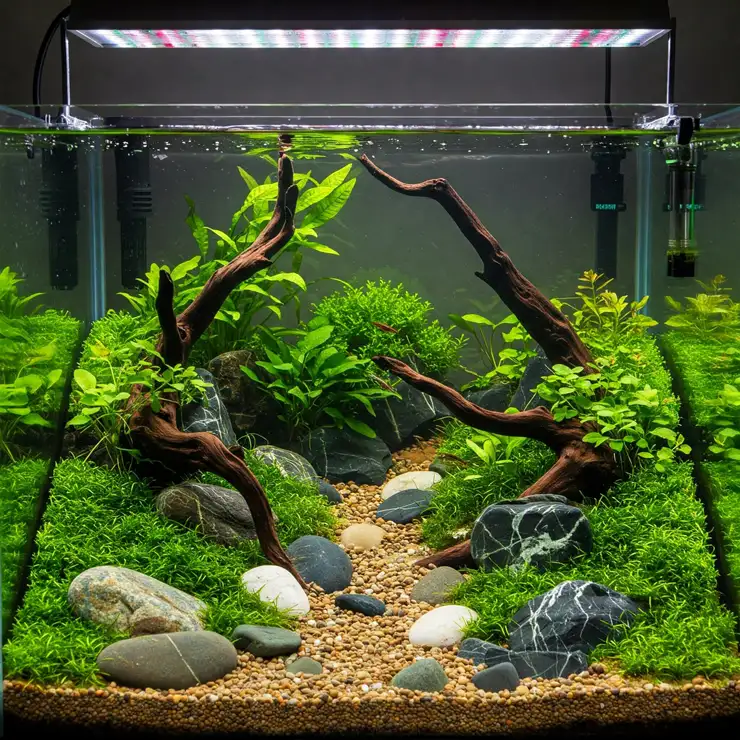
Are you looking to elevate your aquarium hobby with a setup that maximizes plant growth, improves oxygenation, and creates breathtaking aquatic landscapes? A shallow fish tank might be exactly what you need. These unique aquariums have gained tremendous popularity among aquascaping enthusiasts and fishkeepers alike, particularly when combined with the elegant aesthetic of rimless fish tanks.
In this comprehensive guide, we’ll explore everything you need to know about shallow fish tanks and why they’ve become the preferred choice for creating nature-inspired aquascapes. From the science behind their benefits to practical considerations for maintenance, this article covers all aspects of these specialized aquariums.
What Exactly Is a Shallow Fish Tank?
A shallow fish tank, as the name suggests, is an aquarium with less height and more length and width compared to standard aquariums. While conventional tanks often have equal or greater height than length, shallow tanks feature a distinctly horizontal orientation, typically with a height between 8 and 16 inches while extending much further in length and sometimes width.
The Ultum Nature Systems 60U Shallow Rimless Aquarium offers an excellent example of this design philosophy with its 23.6″ x 17.7″ x 9.8″ dimensions, providing the perfect shallow profile for elaborate aquascapes. This tank exemplifies how a properly designed shallow aquarium can transform your aquatic display.
When paired with a rimless design, these tanks create an unobstructed viewing experience that many aquarists find aesthetically superior. The rimless fish tank style eliminates the black plastic frame found on traditional aquariums, resulting in seamless glass-to-glass edges that offer an uninterrupted view of your aquatic world.
Benefits of Shallow Fish Tank Designs for Plant Growth and Aquascaping
1. Enhanced Light Penetration
One of the most significant advantages of shallow fish tanks is superior light penetration. In deeper tanks, light intensity diminishes exponentially with depth, creating challenges for growing light-demanding plants near the substrate. A shallow design ensures that light reaches all areas of your tank with relatively equal intensity.
According to research published in the Journal of Applied Phycology, light attenuation in water follows an exponential decay curve, with intensity decreasing by approximately 30-50% for every foot of water depth depending on water clarity and dissolved substances[^1]. This scientific principle explains why aquatic plants in shallow tanks display more vibrant colors and denser growth.
The Finnex Planted+ 24/7 LED Light Fixture pairs wonderfully with shallow tanks, as its programmable intensity can be optimized for the reduced water column, preventing the light burn that might occur in shallow setups with overly powerful lighting.
2. Improved Gas Exchange
Shallow fish tanks feature a larger surface-to-volume ratio, significantly enhancing gas exchange between water and air. This natural process is crucial for:
✅ Increasing oxygen levels in the water
✅ Facilitating CO2 release from fish respiration
✅ Creating more stable pH levels
Studies from the University of Florida’s Fisheries Department indicate that oxygen diffusion rates at the water surface can account for up to 90% of dissolved oxygen in non-aerated tanks[^2]. For planted tanks using CO2 injection, this improved gas exchange helps prevent dangerous CO2 buildup while ensuring adequate oxygen levels are maintained even during nighttime when plants consume rather than produce oxygen.
3. Expanded Horizontal Aquascaping Canvas
The wider footprint of shallow tanks provides aquascapers with an expanded horizontal canvas that more closely mimics natural underwater landscapes. This format allows for:
✅ Creating more realistic perspectives and sense of depth
✅ Developing intricate hardscapes with driftwood and stone
✅ Establishing distinct plant zones and transitional areas
“The horizontal format of shallow tanks allows aquascapers to create more naturalistic compositions that mimic riverbanks, lakeshores, and other transitional aquatic environments,” notes renowned aquascaper James Findley in his design philosophy3.
The ADA Cube Garden 60-P is a bold choice for aquascapers seeking this expanded horizontal canvas while maintaining the premium quality and clarity that ADA is known for in the rimless fish tank market.
4. Easier Maintenance Access
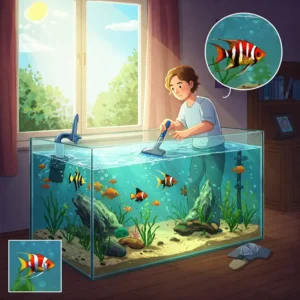
The reduced height of shallow tanks makes maintenance significantly more accessible:
✅ Easier to reach all areas of the substrate for cleaning
✅ Simpler plant trimming and arrangement
✅ More comfortable water changes and equipment adjustments
For many aquarists, particularly those with smaller stature or limited mobility, this accessibility factor can dramatically improve the enjoyment of the hobby and lead to better long-term maintenance habits.
Optimal Dimensions and Proportions for Shallow Fish Tanks
Finding the ideal dimensions for your shallow fish tank involves balancing aesthetic considerations with practical functionality. While personal preference plays a role, certain dimensional ratios have proven particularly effective for creating visually appealing aquascapes.
The Golden Ratio in Aquascaping
Many professional aquascapers apply the golden ratio (approximately 1:1.618) when determining tank proportions. For shallow tanks, this often translates to:
✅ Length that is 1.6 times the width
✅ Height that is 0.4-0.6 times the width
A practical example might be a tank with dimensions of 36″ × 22″ × 12″, which closely approximates these proportions while providing adequate volume for a stable ecosystem.
Volume Considerations for Stability
While shallow tanks offer numerous benefits, they typically hold less water than standard tanks of similar footprint. This reduced volume means:
✅ Temperature fluctuations occur more rapidly
✅ Water parameters can change more quickly
✅ Less dilution of waste products between water changes
To maintain stability, many experts recommend a minimum volume of 10 gallons for shallow tanks, with 20+ gallons being ideal for beginners. The Waterbox Clear 16 Rimless Aquarium provides this ideal balance at 16 gallons with dimensions that maximize the shallow tank benefits while maintaining sufficient volume for stability.
Depth-to-Length Ratio
The ratio between a tank’s height and length can dramatically impact its visual appeal and functionality. For shallow tanks, a height-to-length ratio between 1:3 and 1:5 generally works well, allowing for:
✅ Creating convincing perspective and sense of depth
✅ Accommodating taller midground plants without them reaching the surface
✅ Providing sufficient swimming space for appropriate fish species
For example, a tank that is 12″ tall and 48″ long (1:4 ratio) provides an excellent canvas for creating the illusion of distance through careful aquascaping techniques.
How Shallow Tanks Improve Gas Exchange and Water Oxygenation
The relationship between tank design and water chemistry represents one of the most significant benefits of shallow fish tanks. The increased surface-to-volume ratio fundamentally changes the dynamics of gas exchange in ways that benefit both plants and animals.
Surface Area Maximization
In aquarium science, the rate of gas exchange is directly proportional to the surface area exposed to the atmosphere. Shallow tanks typically provide 30-50% more surface area per gallon than standard tanks, resulting in:
✅ Higher baseline oxygen levels without additional equipment
✅ More efficient release of CO2 and other dissolved gases
✅ Reduced need for surface agitation in planted setups
Research from the American Fisheries Society demonstrates that dissolved oxygen concentrations can be up to 15% higher in tanks with enhanced surface-to-volume ratios, even without additional aeration4.
Reduced Pressure Gradient
The shallow water column creates a reduced pressure gradient from surface to substrate, which has several beneficial effects:
✅ More uniform gas distribution throughout the water column
✅ Easier CO2 diffusion for planted tanks
✅ Less stratification of temperature and dissolved gases
For planted tank enthusiasts, this means more efficient utilization of injected CO2 and potentially reduced CO2 requirements to achieve the same plant growth results compared to deeper tanks.
Enhanced Natural Circulation
The shape of shallow tanks promotes more effective natural water circulation patterns:
✅ Gentler convection currents distribute heat and nutrients
✅ Reduced “dead zones” where detritus can accumulate
✅ More even distribution of beneficial microorganisms
This improved circulation contributes to healthier biological filtration and more stable water parameters, particularly beneficial for sensitive species and planted environments.
The Connection Between Shallow Fish Tank Designs and Rimless Fish Tanks
While shallow tanks and rimless fish tanks represent two distinct aquarium characteristics, they frequently appear together for several compelling reasons that go beyond mere aesthetics.
Unobstructed Viewing Experience
The combination of a shallow design with rimless construction creates an optimal viewing experience:
✅ No plastic rim to interrupt sightlines into the aquatic environment
✅ Clear viewing of the water surface, where many interesting behaviors occur
✅ Enhanced perception of depth and dimension in aquascapes
The UNS 60S Ultra Clear Rimless Fish Tank brings these benefits together with its 23.6″ × 11.8″ × 11.8″ dimensions and crystal-clear low-iron glass, providing an exceptional viewing experience from all angles.
Maximized Light Penetration
Rimless designs complement shallow tanks’ light advantages:
✅ No rim shadow at tank edges
✅ Cleaner light entry at the water surface
✅ More even illumination across the entire tank footprint
For advanced planted tank enthusiasts, this combination can reduce the “edge effect” where plants near tank borders receive less light and consequently grow less vigorously.
Aesthetic Harmony
The visual simplicity of rimless fish tanks aligns perfectly with the nature-inspired aesthetic that shallow tanks facilitate:
✅ Clean, modern appearance complements contemporary home décor
✅ Minimalist design draws attention to the aquascape rather than the container
✅ Uninterrupted viewing from multiple angles
This harmonious combination has become the standard for aquascaping competitions and display tanks in prestigious aquarium galleries worldwide.
Material Considerations for Fish Tank Rimless Construction
The absence of a reinforcing rim places additional structural demands on rimless fish tanks, making material selection and construction quality particularly important for these designs.
Glass Thickness and Quality
For rimless tanks, glass thickness becomes a critical safety factor:
| Tank Length | Recommended Minimum Glass Thickness |
|---|---|
| Up to 24″ | 6mm (1/4″) |
| 24″ to 36″ | 8mm (5/16″) |
| 36″ to 48″ | 10mm (3/8″) |
| 48″+ | 12mm+ (1/2″+) |
💬 Just one click – help others make better buying decisions too!😊
Low-iron glass (also called starphire or ultra-clear) is often preferred for rimless designs due to its exceptional clarity and reduced green tint. This material allows for truer color representation of your aquatic inhabitants and plants.
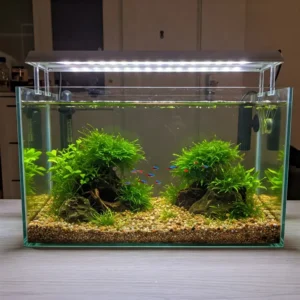
The Mr. Aqua 12 Gallon Long Rimless uses 5mm high-clarity glass that strikes an excellent balance between strength and visual clarity for its 35.4″ × 8.3″ × 9.4″ dimensions, making it a popular choice among shallow tank enthusiasts.
Precision Edge Work
The exposed edges of rimless tanks require meticulous finishing for both safety and aesthetics:
✅ Diamond-polished edges prevent micro-cracks that could lead to failure
✅ Precision seams ensure structural integrity under water pressure
✅ Quality silicone application maintains transparency while ensuring durability
Premium manufacturers often employ automated cutting and polishing equipment to achieve the precise tolerances necessary for safe rimless construction.
Support Systems
Without a reinforcing rim, proper support becomes even more crucial:
✅ Full-surface support mats distribute weight evenly
✅ Specialized rimless tank stands provide perfect leveling
✅ Corner protectors for transportation and setup
The JARDLI Aquarium Tank Mat provides ideal cushioning and support specifically designed for rimless fish tanks, helping to prevent stress points that could compromise glass integrity.
🔍 Find Your Perfect Shallow Rimless Tank Today! 🐠
Ready to transform your aquascaping experience with a shallow rimless tank? Click any of the highlighted products to check current pricing and availability. These carefully selected tanks and accessories will help you create the stunning aquatic display you’ve been dreaming of!
Best Lighting Options for Shallow Aquariums
Lighting represents one of the most critical components for successful shallow tank setups, with different considerations than standard aquariums due to the reduced water column height.
Intensity Management
The reduced distance between light source and substrate in shallow tanks means intensity must be carefully controlled:
✅ Dimmable fixtures provide necessary adjustment flexibility
✅ Multiple light modes accommodate different plant needs
✅ Adjustable height mounts allow for fine-tuning
The Fluval Plant 3.0 LED stands out as an excellent option for shallow tanks with its fully customizable spectrum and intensity settings that can be programmed via smartphone app, allowing precise control perfect for the reduced water column of shallow aquariums.
Light Spread Characteristics
For shallow tanks with greater length and width, light spread becomes a crucial factor:
✅ Multiple shorter fixtures often outperform single longer ones
✅ Wide-angle lenses help eliminate shadowed areas
✅ Linear fixtures better accommodate the rectangular footprint
According to research from the Aquatic Plant Central database, achieving 40-60 PAR (Photosynthetically Active Radiation) at substrate level represents the sweet spot for most aquatic plants, with higher levels needed only for the most demanding species5.
Heat Management
With lights positioned closer to the water surface, heat transfer becomes a consideration:
✅ LED fixtures minimize heat concerns compared to older technologies
✅ Cooling fans in light fixtures help prevent water temperature spikes
✅ Programmable fixtures with daylight cycles reduce continuous heat load
For tanks with heat-sensitive species, maintaining appropriate water temperature may require selecting fixtures with optimal heat dissipation characteristics or incorporating cooling solutions into the overall system design.
Plant Species That Thrive in Shallow Water Conditions
The unique conditions of shallow tanks create ideal environments for certain plant species while presenting challenges for others. Understanding which plants naturally thrive in these conditions will lead to more successful aquascapes.
Carpet Plants
The enhanced light penetration in shallow tanks makes them perfect for demanding carpet plants:
✅ Hemianthus callitrichoides (HC Cuba) – Forms a dense, bright green carpet
✅ Glossostigma elatinoides – Creates a delicate, fine-textured foreground
✅ Eleocharis acicularis ‘Mini’ (Dwarf Hairgrass) – Produces a grass-like carpet
These species benefit from the consistent light levels available throughout shallow tanks, developing more uniform growth patterns compared to deeper setups.
Epiphytic Plants
Plants that naturally grow attached to hardscape rather than in substrate excel in shallow environments:
✅ Bucephalandra varieties – Compact, slow-growing plants with jewel-like leaves
✅ Microsorum pteropus ‘Trident’ (Trident Java Fern) – Distinctive narrow leaf form
✅ Anubias nana ‘Petite’ – Ultra-compact form perfect for detailed aquascapes
These plants appreciate the improved water circulation and gas exchange characteristic of shallow tanks, which helps prevent algae growth on their slower-growing leaves.
Stem Plants for Scale
Carefully selected stem plants can create a sense of scale in shallow tanks:
✅ Rotala rotundifolia ‘H’ra’ – Compact growth with vibrant red coloration
✅ Bacopa caroliniana ‘Compact’ – Dense growth and small leaf size
✅ Pogostemon helferi (Downoi) – Unique rosette structure with crinkled leaves
The key is selecting varieties that maintain proportional scale with the tank dimensions rather than quickly outgrowing the limited height.
Fish Species That Prefer the Horizontal Swimming Space of Shallow Tanks
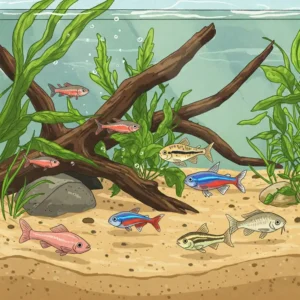
Just as certain plants thrive in shallow tanks, specific fish species naturally prefer and display their best behaviors in aquariums with extended horizontal swimming space.
Schooling Nano Fish
Small schooling species that naturally inhabit streams and shallow waterways:
✅ Boraras brigittae (Chili Rasbora) – Vibrant red coloration and tight schooling behavior
✅ Celestichthys margaritatus (Galaxy Rasbora) – Distinctive spotted pattern
✅ Trigonostigma espei (Lambchop Rasbora) – Active horizontal swimmers
These species display more natural schooling behaviors when given extended horizontal space rather than vertical swimming room, creating dynamic, constantly changing displays.
Bottom-Dwelling Species
Fish that naturally explore substrate and low-lying areas:
✅ Corydoras habrosus (Salt and Pepper Cory) – Miniature cory that thrives in shallow water
✅ Stiphodon species (Gobies) – Fascinating behavior and attractive coloration
✅ Otocinclus species – Efficient algae eaters that prefer horizontal surfaces
These species benefit from the expanded bottom area available in shallow tanks, allowing more territory for natural foraging behaviors.
Surface-Dwelling Species
Fish that naturally inhabit the top layer of the water column:
✅ Nannostomus eques (Pencilfish) – Elegant swimming at 45° angle near surface
✅ Pseudomugil species (Blue-eyes) – Active surface swimmers with fascinating fin displays
✅ Epiplatys annulatus (Clown Killifish) – Colorful pattern and surface-oriented behavior
The expanded surface area of shallow tanks provides these species with their preferred habitat zone while making their activities more visible to observers.
Maintenance Challenges Specific to Rimless Fish Tanks with Large Surface Areas
While shallow rimless tanks offer numerous advantages, they also present unique maintenance considerations that require specific approaches and solutions.
Evaporation Management
The increased surface area of shallow tanks accelerates water evaporation:
✅ Auto-top-off systems maintain consistent water levels
✅ Evaporation covers for nighttime use reduce water loss
✅ Regular monitoring prevents parameter concentration issues
According to measurements by the Aquatic Gardeners Association, shallow tanks can experience 2-3 times the evaporation rate of conventional tanks with similar volumes, potentially losing 1-2% of their total volume daily in dry environments6.
The AutoAqua Smart Auto Top-Off Micro provides an elegant solution for maintaining water levels in rimless fish tanks, with its compact sensor design that doesn’t detract from the aesthetic appeal of the rimless design.
Surface Film Control
The combination of large surface area and reduced water movement can lead to surface film development:
✅ Surface skimmers remove protein films before they accumulate
✅ Strategic placement of filter outputs creates gentle surface movement
✅ Floating plants can help mitigate film formation
Regular maintenance of these systems is particularly important in shallow tanks, as surface films can significantly reduce the gas exchange benefits these tanks naturally provide.
Algae Challenges
The abundant light and nutrition in shallow tanks can promote algae growth:
✅ Balanced plant stocking prevents excess nutrients
✅ Carefully timed lighting periods prevent photosynthetic imbalance
✅ Appropriate maintenance frequency prevents buildup of organic waste
Many successful shallow tank keepers incorporate a robust cleanup crew including Amano shrimp and nerite snails, which target different types of algae while adding interesting behavior to the system.
Creating Nature-Inspired Aquascapes in Shallow Rimless Setups
The combination of shallow depth and rimless construction creates the ideal canvas for nature-inspired aquascaping. Understanding key design principles helps maximize the potential of these specialized tanks.
The Rule of Thirds
Professional aquascapers frequently apply the photographic “rule of thirds” to create visually balanced compositions:
✅ Dividing the tank into a 3×3 grid for focal point placement
✅ Positioning key hardscape elements at intersection points
✅ Creating visual flow that guides the eye through the composition
This principle works particularly well in shallow tanks, where the expanded horizontal dimensions provide more opportunities for creating balanced, asymmetrical designs.
Creating Depth Perspective
The challenge of limited physical depth can be overcome through design techniques:
✅ Smaller hardscape elements and plants in the background
✅ Graduated substrate height from front to back
✅ Color gradients from bright foreground to darker background
The DOOA Terra Base substrate system was designed specifically for creating dramatic elevation changes in shallow aquascapes, allowing for the creation of miniature landscapes with convincing perspective despite limited physical depth.
Negative Space Utilization
Unlike deeper tanks that often emphasize vertical plant growth, shallow tanks benefit from strategic use of negative space:
✅ Open areas enhance perception of scale
✅ Sandy pathways create visual flow through the aquascape
✅ Balanced emptiness highlights carefully placed focal points
This approach draws from traditional Japanese gardening principles, where empty space (ma) is considered as important as the elements themselves.
Water Parameter Management in Tanks with High Surface-to-Volume Ratios
The unique properties of shallow tanks influence water chemistry and stability in ways that require specific management approaches for optimal results.
Temperature Stability Strategies
The reduced water volume makes temperature management more critical:
✅ Heaters with precise thermostatic control prevent fluctuations
✅ External heat sources (room temperature) have greater influence
✅ Temperature monitoring should be more frequent
Investing in a quality temperature controller like the Inkbird ITC-308 Digital Temperature Controller provides additional protection against equipment failure, automatically cutting power to heaters if temperatures exceed safe thresholds.
Nutrient Balancing
The improved growth conditions in shallow tanks can quickly deplete nutrients:
✅ Carefully calibrated fertilization schedules prevent deficiencies
✅ Regular water testing monitors consumption rates
✅ Substrate nutrition becomes even more important
According to the Ecological Research Journal, the combination of enhanced light penetration and improved gas exchange in shallow water systems can increase plant metabolic rates by up to 30%, necessitating corresponding adjustments to nutrient provision7.
pH Stability Considerations
The enhanced gas exchange in shallow tanks influences carbon chemistry:
✅ More stable CO2 levels throughout the photoperiod
✅ Reduced pH swing between day and night
✅ Different equilibrium points for dissolved gases
For precision management, the CO2Art Pro-Elite Series Regulator offers the fine control necessary for shallow tanks where the improved gas exchange characteristics require careful CO2 management to maintain optimal levels for plant growth without stressing livestock.
💎 Elevate Your Aquascape With Premium Equipment! 🌿
Take your shallow rimless tank setup to the next level with these carefully selected products. Click on any highlighted item to check current pricing and availability on Amazon. These tools and accessories will help you create and maintain a thriving aquatic ecosystem with minimal effort!
Setting Up Your First Shallow Rimless Fish Tank: A Step-by-Step Guide
For those new to shallow rimless aquariums, following a methodical setup process helps avoid common pitfalls while maximizing the benefits these specialized systems offer.
Planning and Preparation
Before purchasing any equipment:
✅ Determine ideal placement considering light exposure and room temperature
✅ Calculate final weight (approximately 10 lbs per gallon) to ensure surface support
✅ Select compatible equipment that maintains the clean aesthetic
The JARDLI Glass Outflow and Inflow Pipes offer the perfect filtration solution for rimless tanks, with their clear glass construction maintaining the seamless visual appeal while providing effective water movement.
Substrate Selection and Placement
The substrate layer in shallow tanks requires careful consideration:
✅ Aqua soil provides excellent plant nutrition and softens water
✅ Light-colored sand in foreground areas enhances visual depth
✅ Varying substrate depths create more natural landscapes
Keep in mind that substrate should be proportionally thinner in shallow tanks to maintain adequate water volume, typically not exceeding 1-2 inches in the deepest areas.
Hardscape Installation
Creating a compelling hardscape serves as the foundation of any successful aquascape:
✅ Use appropriately sized rocks and wood for the tank scale
✅ Create stable structures that won’t shift over time
✅ Consider viewing angles from all sides for rimless designs
Many experienced aquascapers recommend the “dry start method” for shallow tanks, where hardscape and plants are established before fully flooding the tank, allowing for easier adjustments and plant rooting.
Advanced Techniques for Shallow Tank Aquascaping
Once comfortable with basic shallow tank maintenance, several advanced techniques can elevate your aquascaping to professional levels.
Transitional Zones
Creating distinct environmental zones within one tank:
✅ Varying substrate heights define different areas
✅ Plant density gradients create natural transitions
✅ Hardscape placement guides visual and actual water flow
These transitional areas mimic natural ecotones where different habitats meet, creating more biodiversity and visual interest than homogeneous setups.
Leaf Litter Biotopes
Incorporating botanical elements for naturalistic effects:
✅ Dried leaves (catappa, oak, magnolia) add tannins and microhabitats
✅ Seed pods create interest and release beneficial compounds
✅ Varying stages of decomposition create a dynamic environment
These elements are particularly effective in shallow tanks where they remain highly visible and contribute to the overall composition rather than just accumulating on the bottom.
Emergent Growth Techniques
Taking advantage of the reduced height to incorporate above-water elements:
✅ Selecting species that can grow both submersed and emersed
✅ Creating hardscape islands that break the water surface
✅ Incorporating riparian plants along tank edges
The Tropica Plant Growth System makes managing emergent growth easier with its specialized fertilizer formulation designed for both submersed and emersed plant forms, particularly beneficial for shallow tank setups exploring this technique.
🚀 Transform Your Aquatic Display Today! 🌊
Ready to create your own stunning shallow rimless aquascape? The products highlighted throughout this article represent the best options currently available. Click on any product name to check current pricing and availability on Amazon. Start your journey toward creating a breathtaking natural aquatic display!
FAQs About Shallow Fish Tanks
❓ What is the ideal water depth for a shallow fish tank?
❓ How much more light do plants need in a shallow fish tank?
❓ Can I keep larger fish species in a shallow rimless tank?
❓ How often should I perform water changes in a shallow fish tank?
❓ What's the minimum size recommended for a stable shallow aquarium?
Conclusion: Embracing the Beauty of Shallow Fish Tanks
Shallow fish tanks, particularly when combined with rimless construction, represent a specialized approach to the aquarium hobby that offers unique benefits for both plants and animals while creating stunning visual displays. The enhanced light penetration, improved gas exchange, and expanded horizontal aquascaping canvas make these tanks ideal for creating nature-inspired aquatic landscapes that captivate viewers.
While these systems do present some specific maintenance challenges, the benefits far outweigh the adjustments required. With proper planning, equipment selection, and regular care, shallow rimless fish tanks can provide years of enjoyment while showcasing aquatic life in its most natural and beautiful form.
Whether you’re an experienced aquascaper looking to refine your technique or a newcomer drawn to the elegant aesthetics of nature aquariums, shallow tanks offer an exciting platform for creativity and biological exploration. The combination of art and science inherent in these systems continues to push the boundaries of the aquarium hobby, inspiring new generations of enthusiasts to explore the fascinating world of aquatic ecosystems.

Recommended for You:
- 5 Gallon Tank Guide: Best Fish Species and Nano Aquarium Setup Tips
- 10 Gallon Fish Tank Complete Guide: Heaters, Betta Care, and Setup Tips
- Complete Guide to 60 Gallon Fish Tank Dimensions: Everything You Need to Know in 2025
Disclaimer: This article contains affiliate links. If you purchase products through these links, we may earn a small commission at no additional cost to you.
✨Found this helpful? Share it with your friends! 💬🤗
