
In This Article
✨Was this helpful? Spread the word! 🚀
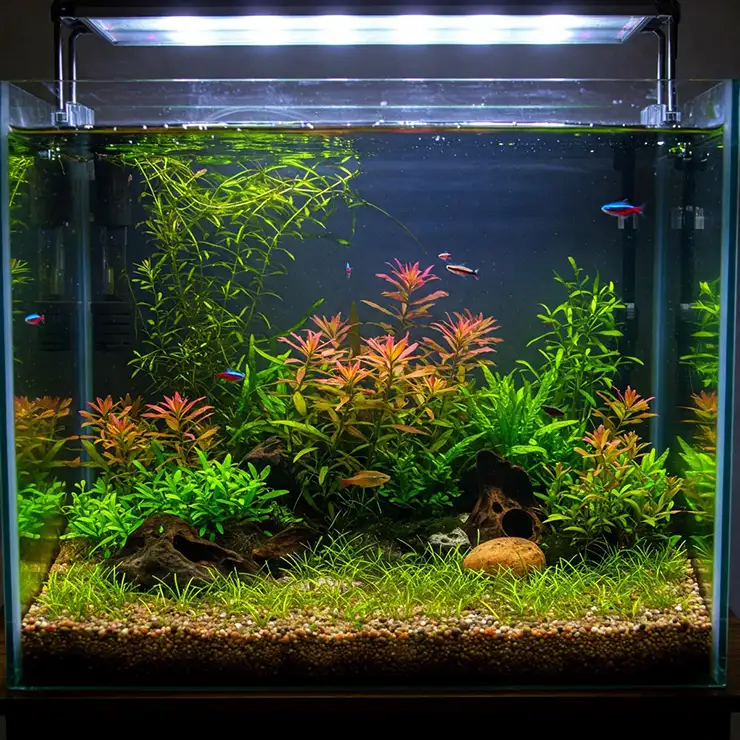
Have you ever wanted to create your own little underwater world but thought you didn’t have enough space? Well, I’ve got great news for you! A 5 gallon tank offers the perfect solution for aspiring aquarists with limited room or those just starting their fishkeeping journey. These compact aquariums have become increasingly popular in recent years, and for good reason – they’re affordable, easy to maintain, and can house some truly fascinating aquatic creatures.
When I first started in the hobby, I was overwhelmed by all the information out there about proper tank size, compatible fish species, and equipment needs. That’s why I’ve created this comprehensive guide to help you navigate the exciting world of 5 gallon tanks and nano aquariums. Throughout this article, I’ll share everything you need to know about selecting the right fish for a 5 gallon tank, setting up a thriving nano aquarium fish tank, and maintaining your mini underwater ecosystem.
From suitable fish species to essential equipment recommendations and maintenance schedules, we’ll cover it all. By the end of this guide, you’ll have all the knowledge you need to create a stunning small aquarium that will thrive for years to come. So let’s dive in and explore the fascinating world of 5 gallon tanks together!
Understanding 5 Gallon Tanks: Size and Limitations
Before diving into the details of setting up a 5 gallon tank, it’s important to understand what exactly we’re working with. A 5 gallon tank typically measures around 16″ x 8″ x 10″, giving you enough space to create a beautiful underwater landscape while remaining compact enough to fit on a desk, counter, or small table.
However, size does come with certain limitations. The smaller water volume means less stability in water parameters – temperature fluctuations occur more rapidly, and waste can build up more quickly than in larger tanks. These constraints don’t mean you can’t have a thriving aquarium; they simply require more attention and careful planning.
When I first set up my 5 gallon nano aquarium, I quickly learned that this size requires a balance between creativity and restraint. While it’s tempting to fill your tank with numerous fish and decorations, overcrowding is one of the biggest mistakes beginners make. Remember, less is often more when it comes to nano aquariums!
The good news is that these limitations can actually spark creativity. Working within constraints forces you to be more intentional about your choices, resulting in thoughtfully designed, sustainable ecosystems that can be just as impressive as larger setups – if not more so!
Additionally, 5 gallon tanks are perfect for:
- ✅ Apartment dwellers with limited space
- ✅ Beginners testing the waters of the aquarium hobby
- ✅ Office or classroom environments
- ✅ Creating specialized biotopes for certain species
- ✅ Practicing aquascaping skills before moving to larger tanks
Suitable Fish Species for 5 Gallon Tanks
Choosing the right fish for a 5 gallon tank requires careful consideration. Not all fish species are suited for small aquariums, and putting incompatible or too many fish in a confined space can lead to stress, disease, and premature death. Here are some of the best fish for a 5 gallon tank that will thrive in smaller environments:
1. Betta Fish (Betta splendens)
Bettas are perhaps the most popular choice for 5 gallon tanks, and for good reason. These stunning fish come in a rainbow of colors and fin types, making each one a unique living work of art. Contrary to popular belief, bettas shouldn’t be kept in tiny bowls – a 5 gallon tank provides them with ample swimming space while still being manageable.
I’ve kept several bettas over the years, and they each developed distinct personalities. Some were curious explorers who would interact with me whenever I approached the tank, while others preferred to build elaborate bubble nests among floating plants. These intelligent fish recognize their owners and will often swim to the front of the glass when you approach.
For optimal betta health in a 5 gallon tank:
- ✅ Maintain water temperature between 76-80°F
- ✅ Include plants (live or silk) for resting spots
- ✅ Provide gentle filtration to avoid stressing their delicate fins
- ✅ Keep them as solitary fish (males will fight with other bettas)
- ❌ Don’t house them with fin-nipping species
The Tetra Crescent 5 Gallon Acrylic Aquarium Kit is a fantastic starter setup for a betta fish. This sleek, modern tank includes a curved front panel that minimizes distortion, allowing you to fully appreciate your betta’s vibrant colors. The kit comes with an internal filter and LED lighting, providing everything you need to get started. The Tetra Crescent is particularly suited for bettas as its filter provides gentle water movement that won’t stress their delicate fins.
2. Dwarf Puffer Fish (Carinotetraodon travancoricus)
For something truly unique, consider dwarf puffers. These tiny predators pack big personalities into small bodies, reaching only about an inch in length. Their expressive eyes and ability to change color make them fascinating to observe.
Dwarf puffers are one of the few species that can be kept in small groups in a 5 gallon tank. I’ve maintained a pair in my nano aquarium, and their curious behavior and hunting instincts provided endless entertainment. They would eagerly follow my finger along the glass and carefully stalk tiny snails I added as treats.
Important considerations for dwarf puffers:
- ✅ Heavily plant the tank to create territories and hiding spots
- ✅ Include small snails in their diet for teeth maintenance
- ✅ Maintain excellent water quality with frequent testing
- ✅ Keep them in species-only tanks (they may nip at other fish)
- ❌ Don’t keep more than 3 in a 5 gallon tank
3. Chili Rasboras (Boraras brigittae)
These tiny jewels add a pop of vibrant red to any nano aquarium fish tank. At less than an inch long, chili rasboras are perfect for small spaces and can be kept in small schools that create beautiful, dynamic displays.
I’ve maintained a group of 6-8 chili rasboras in a heavily planted 5 gallon setup, and their constant, gentle movement brought the entire aquarium to life. These peaceful schooling fish remain small throughout their lives, making them ideal long-term inhabitants for nano tanks.
For happy chili rasboras:
- ✅ Keep them in groups of at least 6
- ✅ Include plenty of plants for security
- ✅ Provide dim lighting or floating plants for shade
- ✅ Feed high-quality micro foods
- ❌ Don’t house them with larger, aggressive fish
4. Endler’s Livebearers (Poecilia wingei)
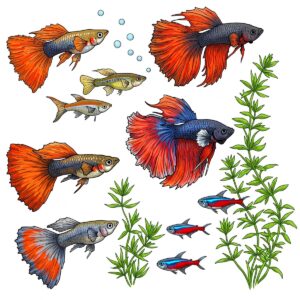
Endler’s livebearers bring vibrant colors and constant activity to small tanks. Males display stunning patterns of orange, black, and metallic green, while females are more subdued but interesting in their own right. Their peaceful nature makes them compatible with various nano tank inhabitants.
In my experience with these lively little fish, a trio of one male and two females created a perfect balance in my 5 gallon setup. The males constantly displayed their colors, creating flashes of brilliance as they darted among the plants.
For successful Endler keeping:
- ✅ Maintain temperatures between 72-78°F
- ✅ Include floating plants for fry to hide (they breed readily)
- ✅ Provide plant cover along with open swimming areas
- ✅ Feed varied diet including quality flakes and occasional live foods
- ❌ Don’t mix them with aggressive fish that might nip their colorful fins
5. Shrimp and Snail Communities
While not fish, decorative shrimp and snails create fascinating communities that thrive in 5 gallon tanks. Cherry shrimp, with their bright red coloration, are particularly popular and can be kept in larger groups than fish due to their minimal bioload.
I’ve maintained thriving colonies of red cherry shrimp in 5 gallon tanks for years. Watching them forage among plants, molt as they grow, and eventually carry eggs (the females develop a distinctive “saddle” of eggs under their shells) provides a unique window into invertebrate life.
For a successful shrimp tank:
- ✅ Cycle the tank completely before adding shrimp
- ✅ Include plenty of moss and plants for grazing and hiding
- ✅ Add leaf litter (like Indian almond leaves) for additional food sources
- ✅ Ensure stable parameters (shrimp are sensitive to changes)
- ❌ Don’t use copper-based medications (lethal to invertebrates)
When choosing fish for a 5 gallon tank, always research their adult size and temperament. Many fish sold as “suitable for small tanks” actually require much larger spaces as they mature. Responsible stocking is essential for both the welfare of your aquatic pets and the sustainability of your nano ecosystem.
Setting Up a Successful Nano Aquarium Fish Tank
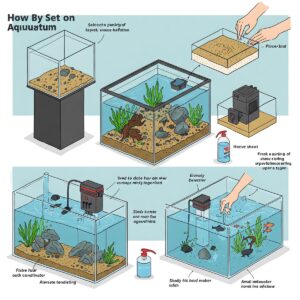
Creating a thriving environment in a 5 gallon tank requires careful planning and execution. The limited water volume means less room for error, but with the right approach, you can establish a stable, beautiful nano aquarium. Here’s my step-by-step guide to setting up your small aquatic world:
Step 1: Choose the Right Tank
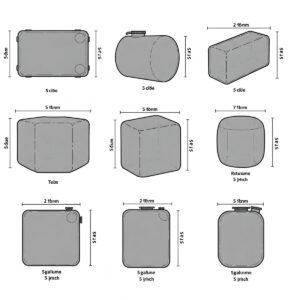
Not all 5 gallon tanks are created equal. When selecting your aquarium, consider:
- Shape: Rectangular tanks provide more surface area for gas exchange than tall, narrow ones
- Material: Glass tanks maintain more stable temperatures than acrylic, though acrylic is lighter
- Accessibility: Choose a tank with easy access for maintenance
- All-in-one vs. custom: Kits can simplify setup, but custom components offer more control
The Fluval Spec V 5 Gallon Desktop Aquarium Kit stands out as one of the best options on the market. This sleek, modern tank includes an integrated three-stage filtration system and powerful LED lighting, all housed in a stylish design that looks great in any room. What I particularly love about the Fluval Spec V is its hidden filter compartment that keeps equipment out of sight while maintaining excellent water quality. The tank’s etched glass gives it a premium look that far exceeds its price point.
Step 2: Create a Stable Foundation
Before adding water, establish a solid foundation:
- Place your tank on a level, sturdy surface that can support at least 50 pounds
- Position it away from direct sunlight and heating/cooling vents
- Install an appropriate background (optional but enhances appearance)
- Add 1-2 inches of suitable substrate
For nano aquarium substrates, I recommend:
- ✅ Fine gravel or sand for fish-only tanks
- ✅ Nutrient-rich aquasoil for planted tanks
- ✅ Specialized shrimp substrates that buffer pH for invertebrate tanks
- ❌ Avoid large, rough gravel that traps debris and wastes space
The Seachem Flourite Black Sand is my go-to substrate for 5 gallon tanks. This specialized planted tank substrate looks natural while providing essential nutrients for plant roots. Unlike other planted substrates that break down over time, Flourite Black Sand maintains its integrity for years, making it a one-time investment in your tank’s foundation. It’s dark color also makes fish colors pop while helping them feel secure.
Step 3: Install Essential Equipment
A 5 gallon tank needs properly sized equipment:
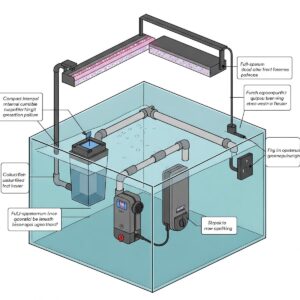
- Filter: Choose one rated for 5-10 gallons with adjustable flow
- Heater: 25-50 watt adjustable heater (unless keeping cold water species)
- Lighting: LED lights appropriate for your setup (planted tanks need stronger lights)
- Thermometer: Essential for monitoring temperature stability
When it comes to heaters for small tanks, the Hygger 50W Submersible Aquarium Heater has revolutionized nano tank keeping. This compact, fully submersible heater includes a built-in thermostat and external temperature controller, allowing precise temperature management without bulky equipment. The Hygger Submersible Heater features an automatic shut-off safety feature if water levels drop too low—a crucial safeguard for small tanks where evaporation happens quickly.
Step 4: Aquascape Your Tank
Here’s where creativity meets functionality. When arranging your hardscape and plants:
- Create depth by placing taller elements toward the back
- Leave swimming space for fish
- Establish distinct zones (open water, planted areas, caves)
- Consider plant needs (lighting, nutrients, growth patterns)
For 5 gallon tanks, I recommend these plant species:
- ✅ Anubias nana (low light, attaches to hardscape)
- ✅ Java moss (versatile, excellent for shrimp)
- ✅ Cryptocoryne wendtii (compact, various colors)
- ✅ Salvinia or frogbit (floating plants that reduce light and absorb nutrients)
- ❌ Avoid fast-growing stem plants that will quickly overtake small tanks
Step 5: Cycle Your Tank
Perhaps the most crucial step is establishing beneficial bacteria:
- Add a source of ammonia (fish food, pure ammonia, or cycling products)
- Test water regularly to track the nitrogen cycle
- Wait for ammonia and nitrite to read zero while nitrates appear
- Perform a water change before adding livestock
This process typically takes 3-6 weeks. Patience during cycling prevents fish stress and death—there are no shortcuts to a properly established biological filter!
Step 6: Add Livestock Gradually
Even after cycling, add fish slowly:
- Start with just 1-2 small fish or a small group of shrimp
- Wait 1-2 weeks before adding more
- Monitor water parameters closely after each addition
- Have a quarantine procedure for new additions
Step 7: Establish a Maintenance Routine
From day one, create a consistent maintenance schedule:
- Regular testing of water parameters
- Small, frequent water changes (25% weekly)
- Gentle substrate cleaning with each water change
- Equipment checks and cleaning
API Freshwater Master Test Kit is essential for properly maintaining a 5 gallon tank. This comprehensive testing kit includes tests for pH, ammonia, nitrite, and nitrate—all critical parameters for small aquariums where water quality can change rapidly. The API Master Test Kit is more accurate than test strips and provides years of testing capability, making it far more economical in the long run than disposable alternatives.
💎 Time to Turn Your Small Space into a Thriving Underwater Paradise! 💦🐠
Ready to start your nano aquarium journey? The equipment mentioned above forms the foundation of a successful setup. Click on any highlighted product to check current pricing and availability—these are the exact products I’ve used in my own tanks with exceptional results!
Essential Equipment for 5 Gallon Setups
When working with a nano aquarium fish tank, choosing appropriately sized equipment is crucial. Unlike larger tanks that can accommodate standard-sized filters and heaters, 5 gallon tanks require specialized equipment that won’t overwhelm the limited space while still providing adequate filtration, heating, and illumination.
Filtration Options
Filtration is particularly important in small tanks since waste can accumulate quickly. Here are the best options for 5 gallon setups:
Sponge Filters
Sponge filters provide gentle, effective biological filtration that’s perfect for small tanks with delicate inhabitants like bettas or shrimp.
Pros:
- Gentle water movement
- Excellent biological filtration
- Inexpensive and reliable
- Creates beneficial microorganisms for fry or shrimp
Cons:
- Limited mechanical filtration
- Requires an air pump (additional equipment)
- Takes up internal tank space
The Hygger Aquarium Double Sponge Filter offers exceptional value for 5 gallon tanks. This compact filter provides dual-sponge filtration that’s gentle enough for bettas and shrimp while still effectively removing debris. The Hygger Sponge Filter includes an adjustable air flow control valve, allowing you to customize the filtration strength to suit your specific livestock.
Hang-on-Back (HOB) Filters
These filters hang on the back rim of the aquarium, saving valuable internal space.
Pros:
- Good mechanical, biological, and chemical filtration
- Easy to access for maintenance
- Doesn’t take up internal tank space
- Adjustable flow rates
Cons:
- Can create too much current for some species
- May be noisy if water level drops
- Limited space for filter media
Internal Filters
Compact internal filters can be positioned anywhere within the tank.
Pros:
- Fully submersible and hidden behind decor
- Often include spray bars to diffuse flow
- Multiple filtration media options
- Adjustable positioning
Cons:
- Occupies internal tank space
- May be visible in aquascape
- Limited media capacity
Heater Considerations
Temperature stability is crucial in small tanks, where external factors can quickly affect water temperature.
Key factors to consider:
- Wattage: 25-50 watts is ideal for 5 gallon tanks
- Adjustability: Choose fully adjustable models for precise control
- Safety features: Auto-shutoff if water level drops
- Size: Compact designs save valuable space
The standard rule is 5 watts per gallon, but I recommend slightly oversizing to 7-10 watts per gallon for 5 gallon tanks to maintain stability during temperature fluctuations.
Lighting Systems
Lighting serves both aesthetic and biological functions in your nano aquarium:
LED Lighting
Modern LED systems offer numerous advantages for small tanks:
Pros:
- Energy efficient
- Low heat output
- Customizable intensity and spectrum
- Slim profiles that don’t add bulk
Cons:
- Quality systems can be relatively expensive
- Some budget options lack intensity for plant growth
For planted 5 gallon tanks, look for:
- PAR values of at least 30-50 at substrate level
- Full spectrum output with red and blue wavelengths
- Timer functionality or dimming capabilities
- Heat dissipation features
The Finnex Stingray 2 Aquarium LED Light provides the perfect balance of performance and value for 5 gallon tanks. This ultra-slim fixture delivers impressive output for its size, with specially designed 7000K daylight LEDs that promote healthy plant growth while making fish colors pop. The Finnex Stingray 2 includes blue night-time LEDs that create a moonlight effect, allowing you to enjoy your aquarium during evening hours without disrupting your fish’s sleep cycle.
Substrate Choices
The foundation of your tank affects water chemistry, plant growth, and overall aesthetics:
Inert Substrates
- Gravel: Traditional, available in many colors, good for fish-only tanks
- Sand: Natural appearance, prevents debris accumulation, gentle for bottom-dwellers
Active Substrates
- Aquasoils: Buffer pH, provide nutrients for plants, create natural appearance
- Specialized shrimp substrates: Buffer water to specific parameters for sensitive species
For 5 gallon planted tanks, I’ve found that a 1-1.5 inch layer of quality aquasoil provides the perfect balance between nutrition and space conservation.
CO2 Systems
While not essential for all setups, CO2 can dramatically improve plant growth in planted nano tanks:
Nano CO2 Options
- Paintball CO2 systems: Compact and refillable
- Disposable cartridge systems: Convenient but higher long-term cost
- DIY yeast systems: Economical but less precise
For beginners, I recommend starting without CO2 and choosing easy, low-tech plants. If you decide to add CO2 later, the Fluval Mini Pressurized 20g-CO2 Kit offers a perfect entry point. This compact system is specifically designed for nano tanks, providing precise CO2 diffusion without the complexity of larger setups. The Fluval CO2 Kit includes everything needed to get started: a CO2 cylinder, regulator, bubble counter, and diffuser.
Equipment Comparison
To help you visualize the best options for different tank goals, here’s a comparative table:
| Equipment Type | Best for Beginners | Best for Planted Tanks | Best for Shrimp/Bettas | Best Budget Option |
|---|---|---|---|---|
| Filter | Sponge Filter | HOB with Customizable Media | Gentle Sponge Filter | DIY Sponge Filter |
| Heater | Pre-Set 25W | Adjustable 50W | Fully Adjustable 25W | Basic 25W Preset |
| Lighting | Basic LED | High-Output Planted LED | Medium LED with Red Spectrum | Clip-on LED Light |
| Substrate | Fine Gravel | Aquasoil | Shrimp-Specific Substrate | Pool Filter Sand |
| Additional | None Required | Nano CO2 Kit | Indian Almond Leaves | None Required |
💬 Just one click – help others make better buying decisions too!😊
Maintenance Schedule for Small Tanks
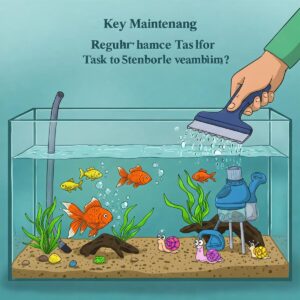
Maintaining water quality in a 5 gallon tank requires more diligence than in larger aquariums. The smaller water volume means waste products and toxins can build up more quickly, potentially stressing or harming your aquatic pets. Here’s a comprehensive maintenance schedule that will keep your nano aquarium thriving:
Daily Tasks (2-3 minutes)
- ✅ Feed appropriately (small amounts, remove uneaten food after a few minutes)
- ✅ Visually check all inhabitants for signs of stress or disease
- ✅ Ensure equipment is functioning properly (filter running, heater light cycling on/off)
- ✅ Check water temperature
- ❌ Don’t overfeed – this is the #1 cause of water quality issues in small tanks!
Weekly Tasks (15-20 minutes)
- ✅ Test water parameters (ammonia, nitrite, nitrate, pH)
- ✅ Perform 20-30% water change using treated water at the same temperature
- ✅ Gently vacuum substrate in open areas (avoid disturbing planted areas)
- ✅ Wipe algae from glass surfaces
- ✅ Rinse filter media in old tank water if flow is reduced
- ❌ Never replace all filter media at once – this removes beneficial bacteria
The Python No Spill Clean and Fill Aquarium Maintenance System has transformed water changes for countless aquarists, including myself. While originally designed for larger tanks, this system works beautifully for 5 gallon tanks when combined with a flow control valve. The Python No Spill connects directly to your faucet, eliminating the need for buckets and minimizing spills. It makes the water change process so convenient that you’ll be more likely to maintain your regular maintenance schedule.
Monthly Tasks (30-45 minutes)
- ✅ Deep clean filter (rinse media in old tank water, never soap)
- ✅ Check and clean equipment (heater, thermometer, etc.)
- ✅ Trim and maintain plants
- ✅ Evaluate and adjust fertilization routine if needed
- ✅ Clean tank rim and cover to prevent mineral buildup
- ❌ Don’t clean too aggressively – some beneficial microorganisms live on surfaces
Quarterly Tasks (1-2 hours)
- ✅ Replace carbon media if used
- ✅ Check and clean impeller in filter
- ✅ Deep clean hardscape (remove and scrub if necessary)
- ✅ Evaluate overall tank balance and make adjustments
- ✅ Test GH/KH if keeping sensitive species
- ❌ Don’t replace substrate – this disrupts the established ecosystem
Yearly Tasks
- ✅ Replace filter media that’s breaking down (while keeping some old media)
- ✅ Check and replace worn equipment parts
- ✅ Evaluate lighting (bulbs may need replacement if plant growth declines)
- ✅ Deep clean areas under hardscape that collect detritus
- ❌ Don’t completely tear down a stable tank – partial renovations are less stressful
Special Maintenance Considerations for 5 Gallon Tanks
Small tanks have unique maintenance requirements that larger aquariums don’t:
Water Change Volume and Frequency
While larger tanks might do well with 25% weekly water changes, nano aquariums often benefit from smaller, more frequent changes. Consider:
- Twice-weekly 15% changes rather than once-weekly 30%
- Using airline tubing for precision during water removal
- Matching water parameters exactly before adding new water
Evaporation Management
Evaporation affects small tanks more dramatically:
- Mark your desired water level and top off with dechlorinated water as needed
- Consider an auto-top off system for consistency
- Remember that evaporation concentrates minerals but removes only water
Temperature Stability
Small tanks are vulnerable to temperature swings:
- Monitor temperature at different times of day
- Consider placing tank away from windows, vents, and exterior walls
- Use slightly oversized heaters with proper thermostats
Algae Prevention
The small environment can quickly develop algae problems:
- Maintain consistent lighting period (6-8 hours initially)
- Use fast-growing plants to outcompete algae
- Consider floating plants to reduce light intensity
- Introduce cleanup crew appropriate for tank size (small snails, shrimp)
Digital Tracking Tools
I’ve found that maintaining a log of water parameters helps identify trends before they become problems. Consider using:
- Dedicated aquarium apps that track parameters over time
- Simple spreadsheets with date, parameters, and maintenance notes
- Photo documentation to track plant growth and aquascape development
Emergency Preparation
Having emergency supplies on hand is especially important for small tanks where conditions can change rapidly:
- Extra filter media (cycled if possible)
- Water conditioner
- Quarantine container
- Basic medication kit
- Battery-operated air pump for power outages
🔍 Ready to Simplify Your Maintenance Routine? 🧹🌊
The right tools make maintaining your 5 gallon tank a breeze! The products mentioned above will help you establish an efficient maintenance routine that keeps your aquatic ecosystem healthy and beautiful. Click on any highlighted item to see current pricing and availability!
Common Mistakes to Avoid with Small Tanks
Even experienced aquarists can make errors when working with nano aquariums. The reduced water volume magnifies the impact of mistakes, but awareness of these common pitfalls can help you avoid them. Let me share some of the lessons I’ve learned—sometimes the hard way—about what not to do with a 5 gallon tank.
Overstocking
Perhaps the most common mistake is putting too many fish in a small space. It’s tempting to add “just one more” fish to your beautiful setup, but overstocking has serious consequences:
- ❌ Excessive waste production overwhelms the biological filter
- ❌ Reduced swimming space creates stress and aggression
- ❌ Oxygen depletion can occur, especially at night
- ❌ Stunted growth and shortened lifespan for fish
Solution: Follow the one-inch-per-gallon rule as a maximum (not a target), and reduce this further for active or messy fish. For a 5 gallon tank, that means no more than 5 inches of fish total. Remember that this is an upper limit—fewer fish often means healthier, more active specimens.
Improper Cycling
Many beginners rush the tank cycling process or don’t understand its importance:
- ❌ Adding fish to an uncycled tank exposes them to toxic ammonia and nitrite
- ❌ “Fish-in” cycling causes unnecessary stress and often death
- ❌ Using products that claim to instantly cycle tanks without understanding their limitations
Solution: Always fully cycle your tank before adding fish (typically 3-6 weeks). Use a liquid test kit to confirm zero ammonia and nitrite readings before adding livestock. Products containing beneficial bacteria can help speed the process but aren’t instant solutions.
Improper Equipment Sizing
Using equipment designed for larger tanks can cause problems in nano aquariums:
- ❌ Oversized filters create excessive current that stresses fish
- ❌ High-wattage heaters can overheat small volumes quickly
- ❌ Standard-sized decorations waste valuable space
Solution: Choose equipment specifically designed for tanks under 10 gallons. Look for adjustable flow rates on filters and proportionally sized heaters with reliable thermostats.
Inconsistent Maintenance
Small tanks require consistent care—neglect quickly leads to problems:
- ❌ Skipping water changes allows waste products to accumulate
- ❌ Irregular feeding schedules can lead to overfeeding or starvation
- ❌ Neglecting to test water regularly misses early warning signs
Solution: Create and follow a maintenance schedule as outlined in the previous section. Set reminders on your phone or calendar to ensure consistency.
Poor Temperature Management
Temperature stability is particularly challenging in small volumes:
- ❌ Placing tanks near windows, heaters, or AC vents
- ❌ Using undersized or unreliable heaters
- ❌ Failing to account for equipment heat (lights, filters)
Solution: Position your tank in a location with stable ambient temperature. Use a quality heater with a separate thermometer to verify readings. Consider a temperature controller for valuable or sensitive livestock.
Improper Water Change Technique
How you perform water changes matters in small tanks:
- ❌ Changing too much water at once (shock to system)
- ❌ Using untreated tap water directly in the tank
- ❌ Adding replacement water at a different temperature
- ❌ Stirring up substrate excessively, releasing trapped waste
Solution: Stick to smaller, more frequent water changes (15-20% twice weekly rather than 40% once weekly). Always treat water and match temperature before adding. Use a control valve on your siphon to gently clean substrate without disturbing the entire tank.
The Seachem Prime Water Conditioner is essential for proper water changes in small tanks. This concentrated formula instantly neutralizes chlorine and chloramine while detoxifying ammonia, nitrite, and nitrate—providing an extra safety margin in small water volumes. What sets Seachem Prime apart is its incredible concentration: a single bottle treats up to 5,000 gallons, making it extremely economical despite its premium quality.
Inappropriate Species Selection
Not all fish are suitable for life in a 5 gallon tank:
- ❌ Choosing fish that grow too large (common goldfish, plecos, etc.)
- ❌ Selecting active swimmers that need long horizontal runs
- ❌ Mixing incompatible species with different environmental needs
- ❌ Adding schooling fish in numbers too small for their wellbeing
Solution: Research adult sizes and natural behaviors before purchasing. Focus on species that naturally inhabit small spaces or have evolved to thrive in limited territories. When in doubt, ask experienced nano tank keepers for recommendations.
Over-decoration
Limited space requires careful decoration choices:
- ❌ Using large, bulky decorations that reduce swimming space
- ❌ Creating insufficient hiding places
- ❌ Blocking filter intake or outflow
- ❌ Using sharp decorations that can injure fish with delicate fins
Solution: Choose proportionally sized decorations. Opt for vertically-oriented hardscape to maximize floor space. Create multiple small hiding places rather than one large cave. Ensure decorations don’t interfere with equipment function.
Inappropriate Lighting
Lighting mistakes are common in small tanks:
- ❌ Using lights designed for larger tanks (too intense, causes algae)
- ❌ Leaving lights on too long (12+ hours)
- ❌ Insufficient lighting for plant needs
- ❌ Sudden lighting changes (shocking fish)
Solution: Choose an appropriately sized LED light with adjustable intensity. Start with 6-8 hour photoperiods and adjust based on plant growth and algae development. Consider a ramp-up/down feature or timer for consistency.
Neglecting Research
Perhaps the most fundamental mistake is failing to research before acting:
- ❌ Impulse purchases without understanding care requirements
- ❌ Following outdated or incorrect advice
- ❌ Rushing setup instead of planning carefully
- ❌ Not learning about the nitrogen cycle
Solution: Take time to research thoroughly before starting your tank. Join online communities dedicated to nano aquariums, read books on small-tank keeping, and speak with experienced hobbyists. Knowledge is the foundation of successful fishkeeping.
🚨 Don’t Let Mistakes Derail Your Nano Aquarium Journey! 🌊🔍
Avoiding these common pitfalls will dramatically increase your chances of success with a 5 gallon tank. The products mentioned above will help you establish a proper foundation for your aquatic ecosystem. Click on any highlighted item to find current pricing and availability!
Creating a Balanced Ecosystem
A truly successful 5 gallon tank is more than just a container of water with fish—it’s a complete, self-sustaining ecosystem where various organisms work together in balance. Creating this equilibrium requires understanding the relationships between different tank inhabitants and how they contribute to the overall health of your nano aquarium fish tank.
The Nitrogen Cycle: Foundation of Balance
The nitrogen cycle is the biological process that converts toxic ammonia (from fish waste, uneaten food, and decaying matter) into less harmful compounds. In a 5 gallon tank, establishing and maintaining this cycle is critical:
- Ammonia producers – Fish and other livestock produce waste containing ammonia
- Primary converters – Beneficial bacteria (Nitrosomonas) convert ammonia to nitrite
- Secondary converters – Different bacteria (Nitrobacter) convert nitrite to nitrate
- Nitrate removers – Plants consume nitrate, regular water changes remove excess
To support a healthy nitrogen cycle in your 5 gallon tank:
- ✅ Fully cycle the tank before adding livestock
- ✅ Add fish gradually to avoid overwhelming beneficial bacteria
- ✅ Include live plants to absorb nitrates naturally
- ✅ Maintain regular water changes to remove accumulated nitrates
- ✅ Avoid over-cleaning filter media (beneficial bacteria live there)
The DrTim’s Aquatics One & Only Live Nitrifying Bacteria can jumpstart the nitrogen cycle in your 5 gallon tank. This specially formulated bacteria solution contains the exact strains needed to establish beneficial bacterial colonies quickly and efficiently. What makes DrTim’s One & Only particularly effective is that it contains live bacteria specifically adapted to freshwater aquarium conditions, not generic or dormant strains found in some competing products.
The Role of Plants in Small Tanks
Live plants contribute tremendously to the balance of nano aquariums:
- Biological filtration – Plants absorb ammonia and nitrate directly
- Oxygenation – Plants release oxygen during photosynthesis
- Natural habitat – Plants provide security and reduce stress for fish
- Competing with algae – Healthy plants consume nutrients that would otherwise feed algae
- pH buffering – Plants help stabilize pH through various biological processes
For a balanced 5 gallon ecosystem, aim for a moderate to heavy plant load with a variety of species that occupy different “niches”:
- Carpeting plants (foreground)
- Mid-height plants (midground)
- Tall stem plants (background)
- Floating plants (surface)
- Epiphytes attached to hardscape
The Tropica 1-2-Grow! Tissue Culture Plants provide the perfect start for a balanced nano ecosystem. These laboratory-grown plants arrive completely free of snails, algae, and pesticides—a critical advantage for small tanks where unwanted hitchhikers can quickly become problematic. The Tropica 1-2-Grow cups contain healthy, genetically identical specimens with well-developed root systems that establish quickly in new setups.
Cleanup Crews for 5 Gallon Tanks
A well-planned cleanup crew helps maintain balance by consuming various forms of waste:
Suitable Cleanup Crew Members
- Nerite Snails (1-2 maximum)
- Excellent algae eaters
- Won’t reproduce in freshwater
- Remain small enough for nano tanks
- Amano Shrimp (3-5 maximum)
- Consume various algae types
- Scavenge detritus and leftover food
- Entertaining to watch as they forage
- Malaysian Trumpet Snails (start with 5-10)
- Burrow through substrate preventing anaerobic spots
- Consume detritus in hard-to-reach areas
- Active primarily at night
- Cherry Shrimp (10-15 can thrive if tank is established)
- Graze on biofilm and soft algae
- Process decomposing plant matter
- Can form self-sustaining colonies in healthy tanks
Remember that even cleanup crews produce waste, so don’t overstock!
Balancing Light, CO2, and Nutrients
The balance between light, carbon dioxide, and nutrients determines the success of planted nano aquariums:
Light
- For low-tech setups: 6-8 hours of moderate lighting
- For high-tech setups: 8-10 hours of stronger lighting with possible siesta period
- Consider a gradual ramp-up/down to mimic natural transitions
CO2
- Low-tech tanks can succeed with plants that don’t require supplemental CO2
- For better plant growth, consider:
- Liquid carbon supplements for mild enhancement
- Paintball CO2 systems scaled for nano tanks
- DIY systems (though less precise)
Nutrients
- Base fertilization in substrate (root tabs or nutritive substrate)
- Water column fertilizers dosed at reduced rates for nano tanks
- Monitor plant health to adjust fertilization (yellowing, holes, stunted growth indicate deficiencies)
The Seachem Flourish Excel provides an excellent carbon supplement for 5 gallon planted tanks without the complexity of CO2 injection systems. This liquid carbon source not only promotes plant growth but also has mild algaecidal properties that help maintain balance in small ecosystems. The Flourish Excel is particularly beneficial in nano tanks where space constraints make traditional CO2 setups challenging.
Environmental Stability
Small water volumes are inherently less stable than larger ones, requiring attention to:
- Temperature consistency – Use quality heaters and monitor for fluctuations
- pH stability – Include pH-buffering materials (certain substrates, driftwood, leaves)
- Mineral balance – Understand and adjust for GH/KH needs of specific species
- Oxygen levels – Ensure good surface agitation without creating excessive current
Stocking Strategy for Balance
A balanced nano tank requires thoughtful stocking decisions:
- Bioload distribution – Consider multiple small fish rather than one large fish
- Behavioral compatibility – Choose species that occupy different regions of the tank
- Feeding compatibility – Ensure all inhabitants can compete effectively for food
- Waste production – Some species (e.g., goldfish) produce far more waste than others
Monitoring Ecosystem Health
Regular observation helps maintain balance:
- Visual indicators – Clear water, active fish, healthy plant growth
- Testing parameters – Ammonia, nitrite, nitrate, pH, GH, KH
- Fish behavior – Normal swimming, feeding, and social interactions
- Plant health – New growth, good coloration, absence of algae
Troubleshooting Imbalances
Even well-planned ecosystems can develop problems. Common issues and solutions include:
| Issue | Potential Causes | Solutions |
|---|---|---|
| Algae Bloom | Excess light or nutrients | Reduce lighting period, increase plant mass, add floating plants |
| Declining Plant Health | Nutrient deficiency, insufficient light | Evaluate fertilization, adjust lighting, check for carbon limitations |
| Rising Nitrates | Overstocking, overfeeding, insufficient plant mass | Increase water changes, add fast-growing plants, review stocking |
| pH Instability | Low buffering capacity, decomposing matter | Add buffering materials, check for dead plant material or uneaten food |
| Bacterial Bloom | Immature biological filter, excess organic matter | Patience during cycling, water changes, reduce feeding |
🌿 Create Your Perfect Underwater Ecosystem Today! 🐟💫
The balanced approach outlined above, combined with the quality products mentioned, will help you create a thriving miniature ecosystem in your 5 gallon tank. Click on any highlighted product to check current availability and start your journey toward aquatic harmony!
Aquascaping Ideas for 5 Gallon Tanks
The limited dimensions of a 5 gallon tank might seem constraining at first glance, but they actually present a wonderful creative challenge for aquascaping. With thoughtful planning, these small containers can showcase stunning underwater landscapes that rival their larger counterparts in beauty and impact. Let’s explore some effective aquascaping approaches specifically designed for nano aquarium fish tanks.
Nature Aquarium Style
Inspired by Japanese aquascaping master Takashi Amano, this style recreates natural landscapes in miniature:
Key elements:
- Focal point driftwood or stone
- Asymmetrical, triangular layout
- Carpeting plants in foreground
- Stem plants in background
- Negative space for visual rest
5-gallon adaptation tips:
- Choose smaller hardscape materials (nano-sized driftwood pieces)
- Focus on micro species of plants (Anubias ‘Petite’, mini Java fern)
- Create the illusion of depth through careful placement of smaller elements in the back
- Use fine-grained substrate to maintain scale
The Lifegard Aquatics Ultra Clear Nano Tank provides the perfect canvas for nature-style aquascaping with its rimless, ultra-clear glass design that maximizes viewing from all angles. The Lifegard Ultra Clear features beveled edges that eliminate distortion, allowing you to fully appreciate the detailed aquascape you create. Its open-top design accommodates emerging plants that enhance the natural appearance of your miniature landscape.
Iwagumi Style
This minimalist Japanese rock arrangement creates a sense of calm and focuses on simplicity:
Key elements:
- Odd number of stones (typically 3 or 5)
- Main “oyaishi” stone as focal point
- Supporting “fukuishi” and “soeishi” stones
- Carpet plants as primary vegetation
- Open swimming space
5-gallon adaptation tips:
- Use smaller seiryu stones to maintain proportion
- Consider dwarf hairgrass or monte carlo as carpeting plants
- Position hardscape to create the illusion of distance
- Keep plant species limited to one or two types for cohesion
Jungle Style
For those who love lush, plant-dominated aquascapes:
Key elements:
- Dense, varied plant selection
- Limited visibility through the tank
- Multiple leaf shapes and textures
- Minimal visible hardscape
- Natural, wild appearance
5-gallon adaptation tips:
- Focus on small-leafed plant species
- Create distinct layers from carpet to surface
- Use fast and slow growing species for texture variation
- Include floating plants for overhead cover
- Consider adding leaf litter for natural look and water conditioning
The UNS Controsoil Extra Fine Aquarium Substrate creates the perfect foundation for jungle-style aquascapes in 5 gallon tanks. This premium planted tank substrate provides ideal nutrients and pH buffering while its extra-fine grain size maintains proper scale in small tanks. The UNS Controsoil encourages robust root development while its dark color creates natural contrast that makes plants and fish stand out dramatically.
Biotope Aquascaping
Recreating specific natural habitats can be fascinating in small tanks:
Popular 5 gallon biotope ideas:
- Blackwater Creek
- Tannin-stained water (using botanicals like Indian almond leaves)
- Sand substrate with leaf litter
- Twisted roots and branches
- Limited planting (anubias, java fern, mosses)
- Species from South American blackwater systems (like chili rasboras or scarlet badis)
- Southeast Asian Shallow Stream
- Sand substrate with small rounded stones
- Moderately planted with regional species
- Driftwood arranged to mimic submerged roots
- Suitable for betta fish or sparkling gouramis
- Nano Rice Paddy
- Soil substrate sloped toward back
- Emergent growth plants (rice, pennywort)
- Simple hardscape mimicking field boundaries
- Perfect for keeping Thai micro crabs or pea puffers
- Urban Stream Margin
- Modern interpretation with clean lines
- Smooth stones and contemporary hardscape
- Limited, precise planting
- Open swimming areas for nano fish
Hardscape-Focused Designs
Some of the most striking nano tanks emphasize architectural hardscape over plants:
Approaches to consider:
- Dragon Stone Formations
- Dramatic, textured stone as centerpiece
- Minimal strategic planting in crevices
- Open swimming areas
- Clean negative space to emphasize rock texture
- Twisted Root Systems
- Spider wood or mangrove root as primary element
- Moss and small anubias attached to wood
- Minimal substrate plants
- Focus on negative space between branches
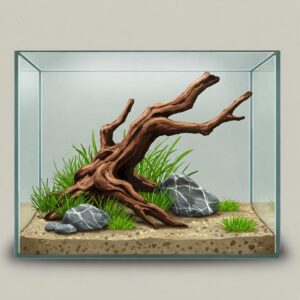
The Spiderwood Nano Aquarium Driftwood creates instant visual impact in hardscape-focused designs. These naturally twisted, branching pieces add dramatic vertical elements to 5 gallon tanks while providing perfect attachment surfaces for mosses and epiphytes. What makes Spiderwood particularly valuable for nano tanks is its lightweight nature and intricate branching that creates the illusion of a much larger underwater landscape.
Scale Considerations for Nano Tanks
Creating convincing aquascapes in small tanks requires attention to scale:
Techniques for maintaining proper scale:
- Use smaller-leaved plant species (Anubias ‘Petite’ instead of standard Anubias)
- Choose fine-textured hardscape materials
- Create greater depth perception through layered planting
- Use perspective tricks (smaller elements toward back)
- Employ the “rule of thirds” for balanced composition
Specialized Nano Tank Styles
Some aquascaping approaches work particularly well in the 5 gallon format:
- Wabi-Kusa Style
- Semi-aquatic approach with plants growing above water
- Focus on transition between underwater and emersed growth
- Minimal hardscape supporting emerged plants
- Low water level (tank only 50-75% filled)
- Paludarium Approach
- Combination of land and water areas
- Vertical hardscape creating terrestrial zones
- Semi-aquatic and terrestrial plants
- Can support some amphibious species
- Creates multiple viewing zones in limited space
- Dutch Planted Tank
- Focus on structured plant groupings
- “Streets” between plant groups
- Minimal visible hardscape
- Emphasis on contrasting leaf colors and textures
- Regular pruning to maintain form
Plant Selection for 5 Gallon Aquascapes
Choosing appropriately sized plants is crucial for successful nano aquascaping:
Ideal foreground plants:
- Monte Carlo (Micranthemum ‘Monte Carlo’)
- Dwarf hairgrass (Eleocharis acicularis ‘Mini’)
- Marsilea hirsuta
- Moss species (Christmas, flame, weeping)
Ideal midground plants:
- Anubias nana ‘Petite’
- Bucephalandra species (various)
- Cryptocoryne parva
- Hygrophila ‘Compact’
Ideal background plants:
- Rotala ‘H’ra’ (kept trimmed)
- Limnophila sessiliflora (trimmed regularly)
- Pogostemon erectus
- Vallisneria nana
Floating/surface plants:
- Amazon frogbit (limited quantity)
- Salvinia minima (controlled growth)
- Red root floater
- Dwarf water lettuce (removed as it grows)
The GlasGarten Bacter AE provides essential microscopic food that supports the growth of biofilm in your nano tank. This powder encourages the development of beneficial bacteria and microorganisms that serve as natural food for shrimp and other microfauna, creating a more balanced ecosystem. The Bacter AE is particularly valuable in newly established tanks, helping jumpstart the biological processes that make aquascapes thrive.
Aquascaping Tools for Nano Tanks
Working in small tanks requires specialized tools:
- Curved scissors for precise trimming in tight spaces
- Fine tweezers for plant placement
- Small substrate spatula for detail work
- Pipettes for spot fertilization
- Mini algae scraper sized for nano tanks
🎨 Ready to Create Your Underwater Masterpiece? 🖌️🌊
The aquascaping styles outlined above, combined with the recommended products, will help you transform your 5 gallon tank into a stunning underwater landscape. Click on any highlighted product to check current pricing and start your creative journey today!
FAQ
❓ Which fish species are best for a 5 gallon tank?
❓ How many fish can I safely keep in a 5 gallon aquarium?
❓ What equipment do I need to set up a successful 5 gallon nano aquarium?
❓ How often should I change water in my 5 gallon tank?
❓ Can I grow live plants in a 5 gallon tank without CO2 injection?
Conclusion
Throughout this comprehensive guide, we’ve explored the fascinating world of 5 gallon tanks and the unlimited possibilities they offer. From suitable fish species to essential equipment, maintenance routines, common mistakes to avoid, and creative aquascaping ideas, you now have all the knowledge needed to create a thriving nano aquarium fish tank in your home, office, or classroom.
The beauty of 5 gallon tanks lies in their accessibility and versatility. They provide an affordable entry point into the aquarium hobby while challenging experienced aquarists to master the art of balance in a confined ecosystem. Whether you’re drawn to the vibrant personality of a betta fish, the community dynamics of tiny rasboras, or the unique behaviors of dwarf puffers, there’s a 5 gallon setup that can showcase these aquatic wonders in their best light.
Remember that success with small tanks comes from understanding their limitations and working within them rather than fighting against them. By choosing appropriate livestock, maintaining consistent care routines, and providing properly sized equipment, your nano aquarium can become a stunning, thriving ecosystem that brings joy for years to come.
As you embark on your 5 gallon tank journey, don’t be afraid to experiment with different aquascaping styles and plant combinations. The relatively small investment required means you can reinvent your nano aquarium as your skills and interests evolve. Join online communities focused on nano tanks to share your experiences and learn from others who share your passion.
I hope this guide has inspired you to explore the rewarding world of 5 gallon tanks and nano aquarium keeping. With patience, research, and care, you’ll create an underwater masterpiece that serves as a beautiful, living focal point in your space.
💦 Start Your Nano Aquarium Journey Today! 🐠🌿
The equipment, livestock, and techniques discussed in this article provide everything you need to create a thriving 5 gallon ecosystem. Click on any highlighted product to check current pricing and start building your perfect nano aquarium!

Recommended for You:
- 10 Gallon Fish Tank Complete Guide: Heaters, Betta Care, and Setup Tips
- Complete Guide to 60 Gallon Fish Tank Dimensions: Everything You Need to Know in 2025
- 7 Best 75 Gallon Fish Tank Options for Amazing Aquatic Displays in 2025
Disclaimer: This article contains affiliate links. If you purchase products through these links, we may earn a small commission at no additional cost to you.
✨ Found this helpful? Share it with your friends! 💬🤗
