
In This Article
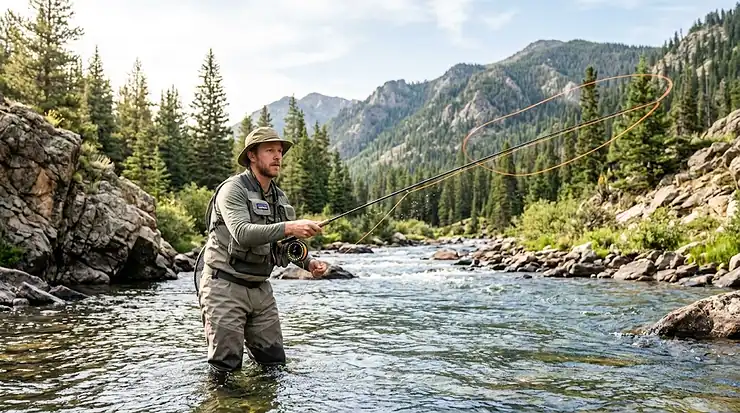
If you only ever own one fly rod, there’s a strong case for making it a 6 weight fly rod. It’s the rod that splits the difference between finesse and muscle, and that’s exactly why so many guides reach for it before anything else in the rack. A 6wt fly rod trout setup can turn over a size-18 dry fly on a calm morning, then switch to punching a heavy streamer through a stiff afternoon breeze without missing a beat.
In my experience guiding and fishing dozens of these rods, the biggest mistake new anglers make is treating a 6 weight like an “upgrade” rod they’ll grow into later. That’s backwards. For most freshwater situations — and plenty of light saltwater ones — a 6 weight fly rod is the first rod that should go in your quiver, not the last. Below, I’ve broken down seven real, currently available rods spanning every budget, along with the practical knowledge that separates a good purchase from a rod that gathers dust in the garage.
What Is a 6 Weight Fly Rod?
A 6 weight fly rod is a fly fishing rod rated to cast 6-weight fly line, typically built 8’6″ to 9’6″ long with a medium to fast action. It sits in the middle of the broader fly rod weight classification system — heavier than the trout-focused 4 and 5 weights, but lighter than dedicated bass and saltwater rods in the 8 to 10 weight range. Most anglers use it for trout, smallmouth bass, and windy-day streamer fishing.
What that means in practice: you get enough backbone to handle bigger flies and tougher conditions, but the rod still protects light tippet well enough for technical dry-fly presentations. It’s the rod most guides hand a first-time client because it forgives casting mistakes while still performing for the angler who knows what they’re doing.
Quick Comparison Table
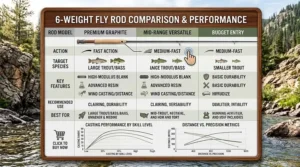
| Rod | Length/Weight | Action | Best For | Price Range |
|---|---|---|---|---|
| Wild Water Standard Combo | 9′, 5/6wt | Medium-fast | Total beginners | $70–$100 |
| Piscifun 9′ 6wt Graphite | 9′, 6wt | Medium | Budget single rod | $50–$70 |
| Redington Crosswater 690-4 | 9′, 6wt | Medium-fast | Learning to cast | $70–$160 |
| Maxcatch Premier 9′ 6wt | 9′, 6wt | Medium-fast/Fast | Value-conscious upgraders | $70–$150 |
| Echo Base Kit 690/4 | 9′, 6wt | Medium-fast | Mid-range outfit shoppers | $160–$210 |
| Orvis Clearwater 906-4 | 9′, 6wt | Medium-fast | Long-term quiver rod | $150–$220 |
| Sage Foundation 690-4 | 9′, 6wt | Fast | Premium, USA-made | $650–$800 |
Looking at the spread above, the gap between the cheapest and most expensive rod here is roughly tenfold, but the performance gap is nowhere near that dramatic. The Wild Water and Piscifun rods get beginners casting competently within an afternoon, while the Sage Foundation rewards anglers who already have the casting stroke to exploit its faster action. Budget shoppers should note that jumping from the absolute cheapest option to something like the Redington or Maxcatch buys real durability, not just a nicer-looking blank.
💬 Just one click — help others make better buying decisions too! 😊
The Top 7 6 Weight Fly Rods — Expert Analysis
1. Wild Water Standard Fly Fishing Combo Starter Kit (5/6wt, 9′)
The Wild Water Standard Combo stands out because it’s a complete rod-and-reel package built specifically with first-time fly anglers in mind. The 9-foot, 4-piece IM8 graphite blank weighs in around 4.4 ounces, and that extra weight compared to premium rods actually helps newer casters feel the rod load on the back cast — something glassy, ultra-light blanks don’t always communicate as clearly. The die-cast aluminum reel comes pre-spooled with floating line, backing, and a tapered leader, so there’s no guesswork about matching gear.
What most buyers overlook about combo kits like this one is that the included flies and fly box aren’t just filler — having three working patterns on hand means you can be fishing within an hour of opening the box. This is the rod I’d recommend to someone who isn’t sure they’ll stick with fly fishing yet and doesn’t want to gamble $300 to find out.
✅ Easy to cast for beginners
✅ Everything included (reel, line, flies, case)
✅ Lifetime warranty on the rod
❌ Reel drag is basic
❌ Not built for aggressive saltwater use
Price & Verdict: Around $70–$100 for the full kit. At the time of research, this remains one of the best entry points into fly fishing without committing to premium gear.
2. Piscifun 9′ 6wt Graphite Fly Rod
The Piscifun graphite rod uses an IM7 carbon fiber blank with chromed guides, and it’s built to be the rod you don’t feel guilty scratching on a johnboat. The 4-piece design with alignment dots makes setup nearly foolproof, which matters more than spec sheets suggest — a rod that’s annoying to assemble gets left at home.
In my experience, the medium action on this blank suits anglers still developing timing on their forward cast, since it’s more forgiving of a rushed stroke than a fast-action rod would be. The budget Sword variant from the same brand pushes this even further down in price, trading a bit of refinement for an entry point around $40, and it still pulls a 4.7-star average from actual buyers.
✅ Extremely affordable
✅ Decent for ponds, small rivers, panfish
✅ Easy 4-piece assembly with alignment dots
❌ Heavier swing weight than premium rods
❌ Loses backbone past 50–60 feet
Price & Verdict: Around $50–$70 for the standard graphite rod (the Sword variant runs closer to $40). A genuinely solid “first rod” pick.
3. Redington Crosswater 690-4
The Redington Crosswater has built a reputation as one of the most-recommended budget fly rods on the market, and the 6-weight, 9-foot, 4-piece version explains why. The medium-fast graphite blank gives you a noticeably crisper feel than entry rods a notch below it, which translates to tighter loops once you’ve got 20–30 casts of practice under your belt.
What the spec sheet won’t tell you is how forgiving this rod is of slightly-too-late timing on the back cast — a common beginner error that punishes faster rods much more severely. Redington backs it with a straightforward one-year warranty, and the included rod sock case is genuinely useful for tossing in a truck or drift boat.
✅ Smooth, forgiving medium-fast action
✅ Available as rod-only or full outfit
✅ Strong reputation among guides for client rods
❌ Combo reel is entry-level
❌ Cosmetic finish shows wear faster than premium rods
Price & Verdict: Around $70–$100 for the rod alone, or up to $160 for the complete outfit with reel and line. A dependable step up from ultra-budget rods.
4. Maxcatch Premier 9′ 6wt
The Maxcatch Premier uses an IM8 30T carbon fiber blank with the company’s MaxLinQ II layering, which in practice means a noticeably lighter swing weight than rods at a similar price point. Ceramic stripping guides reduce line friction during long casts — a detail that matters more once you’re trying to shoot 40+ feet of line to a feeding fish rather than just lobbing a fly out 20 feet.
What most buyers overlook here is how customizable the combo options are: you can pair the Premier rod with different reel grades depending on whether you want a pure budget setup or something closer to mid-range performance. For anglers who’ve outgrown a starter kit but aren’t ready to spend Orvis or Sage money, this is the rod I point them toward.
✅ Lighter in hand than the price suggests
✅ Ceramic guides reduce wear on fly line
✅ Flexible combo configurations
❌ Cork handle quality varies by batch
❌ Limited US-based customer support compared to domestic brands
Price & Verdict: Around $70–$150 depending on whether you buy rod-only or a full combo. Strong value-for-performance pick.
5. Echo Base Kit 690/4 (9′, 6wt)
The Echo Base Kit punches well above its price class, and owners frequently mention it holding its own against rods costing two to three times as much. The medium-fast action blank is paired with Echo’s own large-arbor reel, already spooled with line, backing, and leader — a genuinely turnkey setup.
In my experience, the biggest selling point isn’t any single spec but the overall balance: rod and reel are matched by the manufacturer rather than bundled together as an afterthought, so the outfit casts the way it’s supposed to right out of the box. The Cordura case is also sturdy enough to survive being thrown in a truck bed, which matters more than it sounds for gear that’s going to live outdoors.
✅ Rod and reel matched for proper balance
✅ Performs like a noticeably pricier rod
✅ Standard warranty on the rod, 12-month on the reel
❌ A few buyers report shipping damage to the reel
❌ Not the lightest combo in this lineup
Price & Verdict: Around $160–$210 for the complete kit. A genuine mid-range sweet spot.
6. Orvis Clearwater 906-4 (9′, 6wt)
The Orvis Clearwater line has earned its reputation as the rod anglers buy once and keep for a decade. According to Orvis’s own Clearwater product line, the series is designed in Vermont and built to deliver more performance than the price tag suggests. The 906-4 model — 9 feet, 6-weight, 4-piece — uses a medium-fast Helios-derived taper with a half-wells handle and a black nickel aluminum reel seat, giving it a noticeably more refined feel in hand than budget alternatives.
What the spec sheet doesn’t capture is Orvis’s 25-year, no-questions-asked warranty, which fundamentally changes how you can treat the rod. Step on it, slam a car door on it, whatever — Orvis repairs or replaces it. That kind of backing means this rod can be both your “nice” rod and your backup rod for life, since replacing a broken section never becomes a financial gut-punch.
✅ Excellent build quality for the price tie
r ✅ Industry-leading 25-year warranty
✅ Versatile enough for trout, bass, and light saltwater
❌ Stiffer feel than ultra-premium fast-action rods
❌ Step up in price from the budget tier
Price & Verdict: Around $150–$220 for the rod, more as a full outfit. One of the best long-term investments on this list.
7. Sage Foundation 690-4 (9′, 6wt)
The Sage Foundation is the rod for anglers who already know exactly what they want from a fast-action blank. Built from Sage’s Graphite IIIe material and weighing roughly 3.25 ounces, it passes through the same 27 sets of skilled hands as Sage’s flagship rods, just with a slightly older blank technology to keep the price down relative to the top-tier X series.
In my experience, the payoff here is line speed: a fast action generates tighter loops and more authority into the wind, which is exactly what you want when you’re punching a streamer across a river on a gusty afternoon. This isn’t the rod for someone still learning to time a cast — it rewards an established stroke and punishes a sloppy one.
✅ USA-made with lifetime warranty
✅ Excellent line speed and wind performance
✅ Comes as a complete outfit with Sage Spectrum C reel
❌ Significant price jump from every other rod here
❌ Fast action is unforgiving for beginners
Price & Verdict: Around $650–$800 for the complete outfit. The clear premium choice if budget isn’t the deciding factor.
✨ Don’t Miss These Exclusive Deals!
🔍 Take your fly fishing setup to the next level with these carefully selected rods. Click on any highlighted item to check current pricing and availability. The right 6 weight fly rod will help you create memorable days on the water for years to come!
How to Choose a 6 Weight Fly Rod
- Decide your primary target species first. A 6wt fly rod trout setup prioritizes a softer, more forgiving tip, while a bass- or streamer-focused build wants more backbone in the lower half.
- Match the action to your casting experience. Medium-fast rods like the Redington Crosswater or Maxcatch Premier forgive timing errors; fast rods like the Sage Foundation demand a tighter stroke.
- Consider the length for your water. A standard 9′ rod handles most rivers and lakes; an 8’6″ rod suits tighter small streams.
- Check what’s actually included. A “rod” and an “outfit” are different purchases — outfits bundle a matched reel and line, which matters for casting balance.
- Factor in warranty coverage. Orvis and Sage both offer exceptional lifetime coverage, which changes the long-term math on a higher upfront price.
- Buy the line before obsessing over the rod. A mismatched or cheap line will make even a great rod cast poorly.
- Be honest about your budget ceiling. Every rod on this list will catch fish; the differences show up in feel, durability, and how long the gear lasts under regular use.
6wt Fly Rod for Trout: Medium vs Large Trout Setups
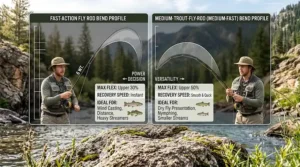
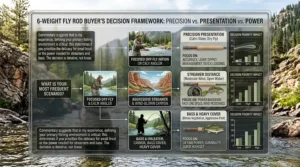
A 6wt fly rod trout setup isn’t a single thing — it shifts depending on the size of fish and water you’re targeting. For a medium trout fly rod application — your average 12 to 18-inch river trout on dry flies and nymph rigs — a medium-fast action like the Redington Crosswater or Orvis Clearwater gives you enough delicacy to avoid spooking fish while still handling an indicator rig.
Step up to a large trout rod scenario — big tailwater browns, streamer-eating rainbows, or trophy water known for double-digit-pound fish — and the math changes. Here, the faster action and extra backbone of something like the Sage Foundation earns its keep, since you need the power to set a hook at distance and control a strong fish without babying 4X tippet for ten minutes. Conservation groups like Trout Unlimited consistently encourage landing big trout quickly and keeping them in the water as much as possible, which a rod with adequate backbone makes far easier than fighting a fish on underpowered gear. The Maxcatch Premier and Echo Base sit in a comfortable middle ground, handling both ends of this spectrum reasonably well without specializing in either.
Streamer Fishing and Wind Casting Rod Performance
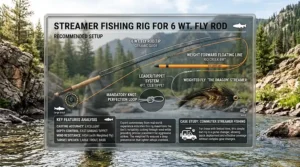
If streamer fishing is your main use case, the 6 weight fly rod earns its reputation as a workhorse. Throwing weighted articulated streamers all day requires a rod that loads efficiently with heavier flies — something the Sage Foundation and Orvis Clearwater both do well thanks to their stiffer butt sections. A wind casting rod doesn’t need to be exotic; it just needs enough line speed to punch through a steady 15-20 mph headwind — classified as a “fresh to strong breeze” on the NOAA Beaufort wind scale — instead of getting pushed back at you.
What most anglers overlook is that the same fast action that helps in wind can work against you on calm days with small flies, where a slower-loading rod presents more delicately. That’s why a versatile pick like the Maxcatch Premier or Echo Base — both medium-fast — often outperforms a specialized fast rod for anglers who fish a mix of conditions rather than committing to streamers exclusively.
Real-World Scenario: Matching the Rod to Your Fishing Style
The weekend river angler: Fishing local rivers two or three times a month for trout and the occasional smallmouth, this angler is best served by the Echo Base Kit or Redington Crosswater — durable enough for regular use, affordable enough that a mid-season upgrade doesn’t sting.
The budget-first beginner: Someone testing whether fly fishing is for them before investing real money should start with the Wild Water Standard Combo or Piscifun graphite rod. Both get you on the water for under $100 total, accessories included.
The serious angler chasing bigger water: An angler regularly fishing larger rivers, lakes, or light saltwater for bigger trout and bass wants the extra performance ceiling of the Orvis Clearwater or Sage Foundation — rods that won’t become a limiting factor as casting skill improves.
Practical Usage Guide: Setup, Care & Casting Tips
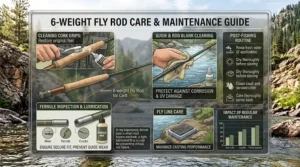
Getting the most out of any 6 weight fly rod starts before you ever make a cast. Align the ferrule dots on multi-piece rods carefully when assembling — forcing a misaligned joint is the single most common way these rods get damaged in their first season. Wipe down ferrules occasionally with a dry cloth; never wax them, since wax causes sections to bind rather than slide together smoothly.
For casting, focus on a smooth acceleration through the stroke rather than a hard snap — medium-fast and fast rods both reward a controlled tempo over brute force. When storing rods between trips, leave multi-piece rods broken down in their tube rather than leaving them assembled and leaned in a corner, which is a common way tips get snapped. Rinse saltwater exposure off reel seats and guides with fresh water after every trip, and re-check rod sock zippers periodically, since a torn sock case is how rods end up scratched in transit.
6 Weight vs 5 Weight Fly Rod: Which Should You Buy?
| Factor | 5 Weight | 6 Weight |
|---|---|---|
| Best for | Small-to-medium trout, dry flies | Trout, bass, streamers, windy days |
| Wind performance | Struggles above 10-15 mph | Handles 15-20 mph reasonably well |
| Fly size range | Lighter flies only | Wide range, including heavier streamers |
| Versatility | Narrower use case | Broader all-around use case |
The table makes the case clearly: a 5 weight is the better dry-fly specialist, but a 6 weight fly rod covers more scenarios without feeling like a compromise in any of them. If you’re buying a single rod to do everything — trout, bass, windy afternoons, the occasional heavier streamer — the 6 weight is the safer, more versatile choice. Anglers who already own a dedicated dry-fly rod and want a true complementary second rod should lean toward the 6 weight specifically for its wind and big-fly advantages.
Common Mistakes When Buying a 6 Weight Fly Rod
Buyers regularly make the same handful of errors. Skipping the line entirely and assuming “any 6wt line will do” leads to poor casting performance even on a great rod — match line weight precisely, and consider a slightly heavier line on faster rods to help them load. Another common mistake is buying a rod-only setup without budgeting for a reel and line, then being surprised by the added cost.
Some buyers also default to the most expensive option assuming it guarantees better results, when in fact a fast-action premium rod can be harder to cast well for someone still developing technique. Finally, many anglers skip a rod sock or case upgrade, then wonder why a relatively inexpensive rod develops cosmetic damage within a season of truck and boat travel.
What to Expect: Real-World Performance
On the water, the difference between these rods shows up most clearly in two situations: fighting wind and presenting delicate flies. Faster rods like the Sage Foundation cut through a stiff breeze noticeably better, while medium-action rods like the Piscifun or Wild Water combo present small dry flies with a softer touch that spooks fewer cautious trout.
Distance casting separates the field too. Most anglers will find budget rods comfortable and accurate out to 40–50 feet, with performance dropping off noticeably beyond that. The Orvis Clearwater and Sage Foundation maintain accuracy and line control well past 60 feet, which matters on big rivers and stillwaters where fish sit further out.
Long-Term Cost & Maintenance
Sticker price tells only part of the cost story. A budget rod purchased two or three times over a decade due to breakage or wear can end up costing more than a single premium rod backed by a strong warranty. Orvis’s 25-year no-questions-asked policy and Sage’s lifetime warranty effectively eliminate replacement cost as long as you register and use the warranty properly — a real factor in total cost of ownership that’s easy to overlook when comparing sticker prices alone.
Routine maintenance costs are minor across the board: occasional line cleaning, periodic guide inspection for grooving, and basic care add up to maybe $20–30 a year regardless of which rod you buy. The real cost differentiator is replacement risk, not day-to-day upkeep.
Features That Actually Matter (And Those That Don’t)
Guide material (ceramic stripping guides, hard chrome snake guides) genuinely matters for long-term durability and smooth casting — this is worth paying attention to. Reel seat material and warranty terms matter significantly too, since they affect both feel and long-term cost. Rod action matters enormously for how forgiving the rod is to your specific casting stroke.
On the other hand, cosmetic finish and color are almost entirely personal preference with no performance impact. Marketing terms like “tournament grade” or “pro series” on budget rods rarely correlate with any measurable performance advantage — read the actual blank material and guide specs instead of the marketing copy on the box.
Frequently Asked Questions
❓ What size fly line goes on a 6 weight fly rod?
❓ Is a 6 weight fly rod good for trout?
❓ Can you use a 6 weight fly rod for bass?
❓ What's the best 6 weight fly rod for beginners?
❓ How much does a good 6 weight fly rod cost?
Conclusion
A 6 weight fly rod earns its reputation as the most versatile tool in a fly angler’s lineup for good reason — it bridges delicate trout presentations and windy, big-fly streamer days without forcing a real compromise in either direction. Whether you’re starting out with the Wild Water Standard Combo or stepping into premium territory with the Sage Foundation, every rod on this list represents genuine value within its price tier.
The right choice ultimately comes down to your casting experience, target species, and how much you value warranty backing versus upfront savings. Start with an honest assessment of those three factors, and the right 6 weight fly rod for your situation becomes a much easier decision.
Recommended for You
- 5 Weight Fly Rod for Trout: 7 Best Picks for 2026
- 7 Best Dropshot Rods for Bass Fishing in 2026
- Best Jerkbait Rod for Bass: 7 Picks That Actually Work (2026)
Disclaimer: This article contains affiliate links. As an Amazon Associate, I earn from qualifying purchases. If you purchase products through these links, we may earn a small commission at no additional cost to you.
✨ Found this helpful? Share it with your friends! 💬🤗
