
In This Article
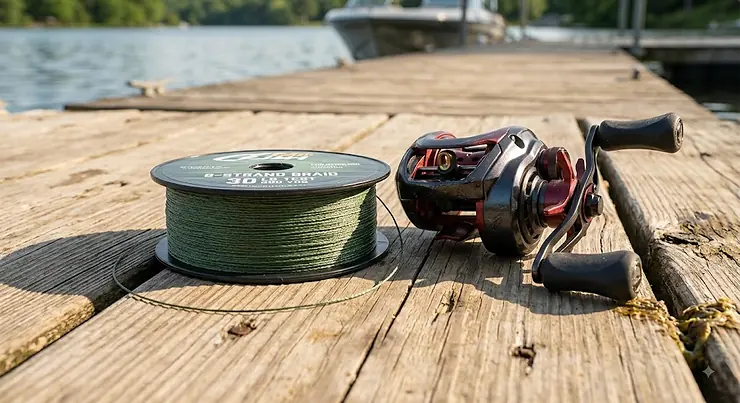
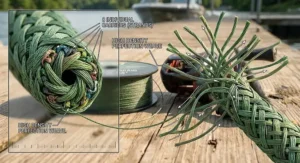
Somewhere between “just spool up whatever’s cheapest” and “obsess over pics-per-inch like it’s rocket science” sits the actual answer most anglers need about 8 strand braided line. An 8 strand braided line is a fishing line woven from eight individual ultra-high-molecular-weight polyethylene fibers instead of four, producing a rounder profile, a smoother surface, and better sensitivity than older 4-strand designs — at the cost of a slightly higher price tag. That’s the 40-second version. The longer version, the one that actually saves you money and lost fish, takes a little more digging.
If you’ve ever watched your buddy’s line sail thirty extra feet past yours on the same cast, chances are strand count had something to do with it. Braided line has quietly taken over spinning and casting reels across the country, and the eight-strand category in particular has become the default recommendation for anglers who want the strength-to-diameter ratio of braid without the rougher, noisier feel of a basic four-carrier weave. We dug into real product specs, aggregated review sentiment from tackle retailers and fishing publications, and manufacturer data to build this guide.
This article isn’t a rewritten spec sheet. Every product below gets honest analysis about who it actually suits, and we’re upfront when a line has trade-offs — because a $40 spool that’s wrong for your setup is worse than a $15 spool that’s right for it. Whether you’re chasing bass in heavy cover, finessing pressured fish on a spinning reel, or spooling up for an offshore trip, there’s a specific line below built for that job, not a generic “best overall” that ignores how differently people actually fish.
Quick Comparison Table
Before the deep dive, here’s the fast version for anyone standing in a tackle aisle right now.
| Product | Strand Construction | Best For | Price Range |
|---|---|---|---|
| Sufix 832 Advanced Superline | 7 HMPE + 1 GORE fiber, 32 weaves/inch | Best all-around | $20-$35 |
| PowerPro Super 8 Slick V2 | 8-end Spectra, EBT coating | Heavy cover, quiet casting | $25-$45 |
| Daiwa J-Braid Grand X8 | 8-carrier IZANAS fiber | Knot strength, low-vis | $20-$40 |
| Berkley FireLine Superline | 8-strand fused Dyneema | Budget-smooth casting | $15-$25 |
| KastKing SuperPower Braided Line | 4-8 strand PE (test-dependent) | Tightest budget | $8-$20 |
| Seaguar PE X8 Lure Edition | 8-strand ultra-thin PE | Finesse, forward-facing sonar | $35-$45 |
| Daiwa XBRAID Finesse X8 | 8-strand WX weave, IZANAS | Bait finesse casting (BFS) | $20-$30 |
Prices reflect typical 150-165 yard spools at the time of research and fluctuate with test strength, spool length, and retailer promotions. Always check current pricing before purchase.
Looking at the table, the split isn’t really “good vs. bad” — it’s “which job.” The Sufix 832 Advanced Superline and PowerPro Super 8 Slick V2 dominate the general-purpose and heavy-cover categories thanks to their abrasion-focused fiber blends, while Seaguar PE X8 Lure Edition and Daiwa XBRAID Finesse X8 are purpose-built for finesse presentations where diameter and sensitivity matter more than brute toughness. Budget-conscious anglers shouldn’t dismiss KastKing SuperPower outright, but it’s worth noting upfront that its true 8-strand construction only kicks in at 65-pound test and above — lighter tests are 4-strand, which we’ll unpack later.
💬 Just one click — help others make better buying decisions too!😊
Top 7 8 Strand Braided Line: Expert Analysis
1. Sufix 832 Advanced Superline — best all-around braid for most anglers
The name itself is the spec sheet: eight fibers, 32 weaves per inch. Sufix blends seven HMPE (high-modulus polyethylene) fibers with a single GORE Performance Fiber, and that eighth strand is doing more work than its 12.5% share suggests. Diameter runs impressively small across the lineup — 0.009″ at 20-pound test, 0.011″ at 30-pound test — which means you’re fitting noticeably more line on a reel than an equivalent mono spool, and R8 Precision Braiding keeps the line round and consistent rather than oval or flattened. Based on the spec comparison with other 8-strand lines in this roundup, the GORE fiber is the differentiator: it’s specifically engineered to cut friction through guides and resist fraying, which matters most the moment your line starts sawing against a rock or dock piling. This line earns its “best all-around” tag because it doesn’t force a trade-off — you get abrasion resistance typically reserved for rougher 4-strand braids alongside the casting smoothness of a premium 8-strand weave. It’s the pick for anglers who fish a mix of open water and structure and don’t want to carry two spools. Reviewers consistently report that the color retention (via Sufix’s TGP technology) holds up notably better than older braid generations, with less fading after repeated trips. A common thread in aggregated feedback is that the line requires a slight adjustment period when tying mono or fluoro leaders, since it’s slicker than most anglers expect — several users specifically flag the Albright knot as their solution after other knots slipped.
Pros:
- ✅ GORE fiber adds abrasion resistance rare in an 8-strand line
- ✅ Small diameter increases spool capacity significantly
- ✅ Strong color retention over repeated use
Cons:
- ❌ Slickness demands a learning curve for leader knots
- ❌ Costs more than basic 4-strand alternatives
In the $20-$35 range for a standard 150-yard spool, the Sufix 832 Advanced Superline lands solidly in mid-to-premium territory, but the value case is straightforward: you’re not paying extra for marketing, you’re paying for a genuinely different fiber blend.
2. PowerPro Super 8 Slick V2 — quietest casting for heavy cover fishing
PowerPro built its reputation on Spectra fiber, a Honeywell-developed material the company describes as roughly fifteen times stronger than steel by weight, and the Super 8 Slick V2 wraps that fiber in an 8-end dense weave treated with Enhanced Body Technology (EBT). Here’s what most buyers overlook about EBT: it isn’t a surface coating that wears off — it’s a resin process that permeates the braided fibers themselves, which is why this line stays smooth and quiet even after it’s picked up nicks from cover. The 33% thicker fiber construction Shimano cites translates in practice to a line that shrugs off contact with wood, rock, and vegetation with the same resilience anglers associate with older 4-end braids, while still casting like a premium 8-strand. That combination makes it the clear choice for punching jigs into mats or working docks and laydowns, situations where a delicate finesse braid would fray within a session. Aggregated reviewer sentiment is largely positive on smoothness and quietness through the guides, though independent line-diameter testing has flagged that PowerPro’s stated diameters tend to run measurably thicker than advertised — worth knowing if you’re maximizing spool capacity for line-critical applications like long-distance surf casting.
Pros:
- ✅ EBT resin process resists wear from repeated cover contact
- ✅ Notably quiet and smooth through rod guides
- ✅ Wide color selection including stealth Onyx
Cons:
- ❌ Measured diameter often runs thicker than the printed rating
- ❌ Sits at the higher end of the price spectrum
At $25-$45 depending on test and spool length, this is a premium purchase, but for anglers who fish heavy cover weekly, the reduced fray rate can mean fewer line changes over a season — a real cost offset worth factoring into the sticker price.
3. Daiwa J-Braid Grand X8 — best knot strength and low-visibility presentation
Daiwa’s Grand line replaced the older Dyneema-based J-Braid X8 with IZANAS, a next-generation high-modulus polyethylene fiber from Toyobo that the company positions as stronger than aramid fibers used in some bulletproof vests. On the water, what that translates to is a braid that ties secure knots without the fiber “blooming” or fraying at the tag end that plagues cheaper braids — a detail that matters enormously since a knot failure, not a line failure, is how most anglers actually lose fish on braid. What the spec sheet won’t tell you, but reviewers note repeatedly, is that the Grand X8 feels noticeably softer and quieter coming off the spool than the standard J-Braid X8 it replaced, while still holding up to the abrasion tests anglers throw at it around docks and grass. The dark green colorway is a deliberate design choice for anglers who prefer running straight braid without a leader in stained or moderately clear water, since it reads as a natural, low-visibility presence rather than the high-vis yellows common elsewhere in this category. It’s a strong fit for finesse-adjacent applications like dropshotting and worm fishing where subtle presentation matters as much as raw strength.
Pros:
- ✅ IZANAS fiber resists fraying better than older Dyneema builds
- ✅ Noticeably softer handling than the previous-generation J-Braid
- ✅ Dark green colorway suits leaderless, low-vis presentations
Cons:
- ❌ Reduced abrasion resistance compared to heavy-cover specialists
- ❌ Mid-to-high pricing versus entry-level braids
Priced around $20-$40 for a standard spool, the Daiwa J-Braid Grand X8 is best matched to anglers prioritizing finesse and line management over pure toughness — pair it with the right cover and it’s an excellent value; force it into punching jigs through matted vegetation and you’ll wear it out faster than intended.
4. Berkley FireLine Superline — smoothest budget-friendly 8-strand option
FireLine occupies an unusual spot in the braid conversation because it’s technically a fused line rather than a traditional woven braid — Berkley thermally fuses eight strands of Dyneema PE fiber into a single, more solid-feeling filament. The result Berkley claims is five times the abrasion resistance of conventional braided lines, and the fusing process is also why FireLine feels stiffer and more “mono-like” in hand compared to the loosely woven feel of something like the Sufix 832. That stiffness is actually a functional advantage for anglers running spinning reels: reviewers consistently report virtually no wind knots, since the line resists the loose loops that soft, supple braids can throw in gusty conditions. On paper this means FireLine trades a bit of the ultra-supple casting feel premium 8-strands offer in exchange for handling predictability, which is exactly the trade-off budget-conscious anglers should want. Available diameters run impressively thin — 0.007″ at 8-pound test — giving anglers real line-capacity gains even on smaller reels. The primary complaint in aggregated reviews centers on stiffness in cold weather, where some anglers report the line becomes noticeably less supple.
Pros:
- ✅ Five times more abrasion-resistant than typical braid, per Berkley
- ✅ Virtually eliminates wind knots thanks to fused stiffness
- ✅ Strong value under $25 for most spool sizes
Cons:
- ❌ Stiffer feel than woven braids, more noticeable in cold weather
- ❌ Less “supple” casting feel than premium woven 8-strands
At $15-$25, this is one of the most defensible budget picks in the category — not because it’s the cheapest, but because the fused construction genuinely solves a specific problem (wind knots) that costs anglers lures and time.
5. KastKing SuperPower Braided Line — tightest budget option, with a caveat
KastKing built its reputation on aggressive pricing, and SuperPower delivers real value — but honesty requires a clarification most budget roundups skip. Based on manufacturer specifications, SuperPower uses a 4-strand PE weave through most of its lighter test-strength range and only shifts to a true 8-strand construction at 65-pound test and above. That’s not a dealbreaker, but it does mean the smoother, rounder casting profile associated with 8-strand lines in this article specifically applies to KastKing’s heavier tests, not the 6-20 pound range most freshwater anglers reach for. What most buyers overlook is that this isn’t unique to KastKing — several budget brands blend strand counts across their test range to control costs — but SuperPower deserves credit for at least being transparent about it in its own specifications. Aggregated review sentiment across major retailers is largely positive on value, with a recurring theme: anglers who’ve used the line for a full season report minimal fraying for the price point, and the proprietary coating process keeps it reasonably supple without a waxy residue. The ICAST Best of Show recognition the brand has received for this line reflects genuine engineering, not just aggressive pricing.
Pros:
- ✅ Genuinely low price point, often under $20 per spool
- ✅ Coating avoids the waxy feel some budget lines have
- ✅ Positive long-term fray resistance reported by repeat buyers
Cons:
- ❌ True 8-strand weave only applies at 65 lb test and higher
- ❌ Color fading reported more frequently than premium competitors
For anglers spooling multiple rods on a tight budget, KastKing SuperPower in the $8-$20 range remains a defensible pick — just go in knowing exactly which strand construction you’re getting at your chosen test strength.
6. Seaguar PE X8 Lure Edition — best for finesse and forward-facing sonar setups
Originally a Japanese-market braid, Seaguar’s PE X8 Lure Edition made its way to U.S. tackle shops after building a reputation among serious bass anglers overseas, and the appeal is easy to understand once you handle a spool. Seaguar claims the line runs up to 22% thinner than typical braided line at the same test strength, an aggressive figure that aligns with what independent reviewers have measured in hand — testers describe the 8-strand weave as “silky-smooth” and unusually round for its diameter. Here’s what that ultra-thin construction actually buys you: longer casts with lightweight finesse baits, less resistance through spinning guides, and — increasingly relevant as more anglers adopt forward-facing sonar — a line thin enough that it doesn’t create excess drag when working a bait precisely at a marked depth. The passion-pink colorway with metered green markings isn’t just cosmetic; it’s designed specifically to help anglers track distance and depth visually during FFS techniques. The trade-off, and reviewers are candid about it, is that the ultra-thin diameter makes the tag end of knots more prone to fraying than beefier braids, which means more frequent retying for detail-oriented anglers, even though the knot itself typically holds.
Pros:
- ✅ Up to 22% thinner than standard braid at equal test strength
- ✅ Exceptional casting distance for finesse and light lures
- ✅ Metered coloring aids depth tracking for FFS techniques
Cons:
- ❌ Premium price point near $35-$45 for a 219-yard spool
- ❌ Thin diameter means more frequent knot tag-end fraying
This isn’t a line for punching mats or dragging jigs through rock — it’s a specialist’s tool, and at $35-$45 it’s priced like one. For tournament anglers running finesse rigs or FFS setups, the casting distance and sensitivity gains are worth the premium.
7. Daiwa XBRAID Finesse X8 — best for bait finesse casting (BFS) setups
XBRAID’s Finesse X8 targets a specific and growing niche: bait finesse casting, where anglers throw ultralight lures on small baitcasting reels rather than spinning gear. Daiwa’s proprietary WX weaving technology packs nearly double the weaves per inch compared to standard braid, and based on the spec comparison with more general-purpose 8-strand lines in this guide, that denser weave is a deliberate trade — it sacrifices a bit of suppleness in exchange for increased stiffness, which actually improves energy transfer to the rod tip for faster hooksets and reduces wind knots on tiny BFS spools where a single loose loop can end a cast entirely. The camo-color shift pattern is a functional stealth feature for pressured fish rather than a marketing gimmick, shifting visibility based on water conditions and light angle. What the spec sheet won’t tell you is how forgiving this stiffness makes the line for anglers newer to BFS technique — reviewers who’ve struggled with backlashes on more supple braids report noticeably fewer issues after switching. Available test strengths run from 4 to 20 pounds, which tracks with its intended ultralight application rather than heavier general-purpose fishing.
Pros:
- ✅ WX weave nearly doubles weaves per inch versus standard braid
- ✅ Increased stiffness reduces backlashes on BFS reels
- ✅ Camo-shift pattern adds genuine stealth for pressured fish
Cons:
- ❌ Narrow test-strength range limits it to ultralight applications
- ❌ Increased stiffness isn’t ideal for traditional spinning finesse
At roughly $20-$30 per 165-yard spool, Daiwa XBRAID Finesse X8 is a purpose-built tool — excellent value if you’re actually running BFS gear, and simply the wrong purchase if you’re not.
Top 7 Braided Lines: Full Specification Comparison
| Product | Fiber Material | Notable Tech | Ideal Use | Best For |
|---|---|---|---|---|
| Sufix 832 Advanced Superline | HMPE + GORE | R8 Precision Braiding | Mixed cover, general use | All-around anglers |
| PowerPro Super 8 Slick V2 | Spectra | EBT resin process | Heavy cover, mats, docks | Cover-focused bass fishing |
| Daiwa J-Braid Grand X8 | IZANAS | High-modulus weave | Dropshot, worming, low-vis | Knot strength priority |
| Berkley FireLine Superline | Fused Dyneema | Thermal fusion | Spinning reels, windy days | Budget + wind-knot control |
| KastKing SuperPower | PE (4 or 8 strand) | Proprietary coating | Multi-rod budget spooling | Tightest budgets |
| Seaguar PE X8 Lure Edition | Ultra-thin PE | 22% diameter reduction | Finesse, FFS techniques | Tournament finesse anglers |
| Daiwa XBRAID Finesse X8 | IZANAS | WX weave technology | BFS ultralight casting | Bait finesse casters |
The pattern across this table is diameter-versus-toughness. Seaguar PE X8 Lure Edition and Daiwa XBRAID Finesse X8 sacrifice raw abrasion resistance for thinner profiles that cast farther and feel more sensitive, which is exactly correct for finesse work but would frustrate anyone punching cover. PowerPro Super 8 Slick V2 sits at the opposite end, prioritizing durability under repeated abrasion at the cost of a slightly thicker actual diameter than advertised. Matching your technique to this table matters more than chasing whichever line ranks “best” in a generic sense.
Practical Usage Guide: Spooling, Break-In, and Maintenance
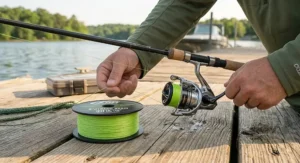
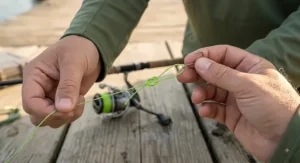
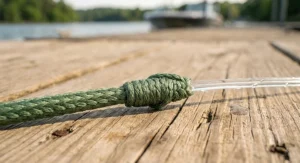
Getting an 8 strand braided line onto your reel correctly avoids most of the problems anglers blame on the line itself. Start by adding 15-20 yards of monofilament backing on spinning reels — braid’s zero-stretch nature means it can spin freely on a smooth spool arbor without that buffer, causing frustrating slippage under load. Attach the braid to your backing with an Albright knot or an FG knot for the cleanest connection through your rod’s guides, then spool under moderate tension; run the line through a folded paper towel as you wind to remove slack that leads to digging and wind knots later.
The first 30 days matter more than anglers expect. New braid tends to feel stiffer and slightly “textured” right out of the package — this is normal and typically smooths out after a handful of trips as the fibers relax and settle against each other. A common mistake is over-filling the spool to the rim on day one; leave roughly 1/8 inch of clearance below the spool lip, since braid that’s packed too tight can dig into itself under a hard hookset. Rinse your reel with fresh water after saltwater trips specifically at the spool area, since salt crystals accelerate abrasion on the outer wraps of line even though braid itself doesn’t absorb water the way mono does.
For ongoing maintenance, periodically strip and re-spool the first 15-20 feet of line — this section takes the most casting and retrieval wear and degrades faster than the rest of the spool, so trimming it back every few trips maintains full strength without replacing the entire spool. Store reels out of direct UV exposure between trips; while most modern braids resist UV degradation better than older generations, prolonged sun exposure still accelerates color fade and minor fiber stiffening over a season.
Real-World Scenarios: Matching the Line to the Angler
The weekend bass angler fishing docks and laydowns on a budget. Someone fishing two or three times a month around moderate cover doesn’t need a $45 spool. Berkley FireLine Superline or KastKing SuperPower at 20-30 pound test covers this use case well — enough abrasion resistance for occasional dock contact, without paying for finesse-oriented thinness this angler doesn’t need.
The tournament angler running forward-facing sonar for suspended bass. This is precision work where line diameter directly affects how accurately a bait tracks at a marked depth. Seaguar PE X8 Lure Edition is purpose-built here — its thin profile and metered coloring exist specifically for this technique, and the premium price reflects genuinely different engineering, not just branding.
The BFS convert throwing 1/16-ounce baits on a micro casting reel. Standard braid, even good 8-strand options, can behave unpredictably on tiny BFS spools. Daiwa XBRAID Finesse X8‘s added stiffness from its WX weave specifically addresses backlash control on this style of reel, making it close to a required purchase rather than an optional upgrade for this niche.
The offshore or heavy-cover angler who needs one line that does everything reasonably well. For anglers who don’t want to carry multiple spooled reels for different techniques, Sufix 832 Advanced Superline is the pragmatic compromise — strong enough for structure, smooth enough for finesse-adjacent presentations, and available across a wide test-strength range.
How to Choose 8 Strand Braided Line
- Match diameter to your technique, not your test strength alone. A thinner line at the same pound test casts farther and feels more sensitive, but sacrifices some abrasion resistance — decide which matters more for where you’re fishing.
- Consider your reel type. Spinning reels generally handle supple, rounder braids well, while baitcasting and BFS reels benefit from slightly stiffer constructions that resist backlash.
- Weigh coating technology, not just fiber count. GORE fiber, EBT resin, and thermal fusion each solve a different problem — abrasion, smoothness, or wind-knot resistance respectively — so pick based on your actual pain point.
- Check the strand construction at your specific test strength. As the KastKing example above shows, “8-strand” branding doesn’t always apply across a product’s entire test range.
- Factor in color and visibility needs. Low-vis dark green suits leaderless clear-water presentations; high-vis colors help detect subtle strikes and track casting distance.
- Budget for leader material separately. Nearly every 8-strand braid benefits from a fluorocarbon or mono leader in clear water or around structure, so factor that ongoing cost into your total spending.
- Read aggregated review themes, not star ratings alone. A 4.5-star average tells you little; recurring specific complaints (fraying, fading, stiffness) tell you whether a line fits your actual conditions.
Eight Carrier Braid vs Four Carrier Braid: Which Should You Use?
The strand-count debate isn’t marketing fluff — it reflects a real engineering trade-off. A four carrier braid uses fewer, thicker individual fibers woven together, which creates a rougher, slightly flatter line profile. That roughness is actually an advantage in one specific scenario: punching through thick vegetation, where the textured surface resists cutting into itself and holds up better against sustained abrasion from grass and mats. An eight carrier braid, by contrast, weaves twice as many thinner fibers into a rounder, smoother cross-section, which is why 8-strand lines consistently cast farther and feel smoother through guides in side-by-side testing.
According to independent head-to-head knot testing on braided lines, strand construction also affects which knots seat most reliably, since rounder eight-strand weaves grip differently than flatter four-strand builds. For the average angler working a mix of open water, moderate cover, and finesse presentations, eight carrier braid is the better default — it’s why, as one recent product roundup put it, 8-strand represents the sweet spot balancing performance and price for the majority of anglers, with 4-strand reserved for the heaviest cover work and 12-strand reserved for tournament-level finesse specialists chasing maximum casting distance. The practical takeaway: don’t assume more strands always means better. Match strand count to your actual fishing conditions, not to whichever number sounds more premium.
Casting Distance and Knot Strength: What the Spec Sheet Won’t Tell You
Two numbers get thrown around constantly in braid marketing — casting distance and knot strength — and both deserve more context than a bullet point provides.
Casting distance on any 8-strand line comes primarily from two factors: diameter and surface friction. A thinner line simply meets less air resistance and less guide friction on the way out, which is why finesse-oriented lines like Seaguar PE X8 Lure Edition consistently outcast thicker, tougher options at the same pound test. But diameter alone isn’t the whole story — coating technology matters just as much. This is where super smooth braid coatings like PowerPro’s EBT or Sufix’s GORE treatment earn their keep, filling microscopic gaps between fibers so the line glides rather than catches as it leaves the spool. An angler chasing maximum casting distance should prioritize both a thinner diameter and a quality coating, not one or the other.
Knot strength is arguably the more consequential spec, since knot failure — not line failure — causes the majority of lost fish on braid. Aggregated knot-strength testing data consistently shows the Palomar and FG knots retaining 90-100% of a braided line’s rated strength when tied correctly, while an Improved Clinch knot, a mainstay for monofilament, can cost an angler roughly 20% of that strength on braid specifically because the slick fibers don’t generate the friction mono relies on to lock a clinch knot in place. That’s a meaningful gap — on 20-pound braid, a poorly matched knot can effectively turn your line into a 16-pound line without you realizing it until the moment it matters most. No braid on this list, regardless of price, will perform to its rated strength if paired with the wrong knot, which makes knot selection arguably more important than which spool you buy.
Premium Braided Line vs Budget Braid: Is the Upgrade Worth It?
The honest answer is: it depends what you’re paying for. A premium braided line like Sufix 832 Advanced Superline or Seaguar PE X8 Lure Edition typically justifies its price through one of three concrete improvements — a proprietary fiber blend (GORE, IZANAS), a tighter weave count that improves roundness and smoothness, or a coating process engineered for a specific outcome like abrasion resistance or reduced friction. Those aren’t cosmetic differences; they show up in casting distance, knot reliability, and how many trips the line survives before fraying becomes noticeable.
Where the upgrade stops paying off is when it doesn’t match your fishing style. Paying premium prices for a finesse-tuned line you’ll use to punch heavy mats wastes the engineering you paid for — you’d wear through Seaguar PE X8 Lure Edition faster in that scenario than a budget line built for exactly that abuse. Based on the spec and price comparison across all seven products here, the value threshold sits around the $20-$30 range for most general-purpose anglers: below that, you’re typically sacrificing either true 8-strand construction or coating quality; above roughly $35-$40, you’re usually paying for a specialized niche application rather than broad performance gains. Budget-conscious anglers shouldn’t feel pressured into premium pricing if their fishing doesn’t demand it — but they should understand exactly what a lower price point is trading away.
Common Mistakes When Buying 8 Strand Braided Line
Even experienced anglers make predictable errors shopping for braid. The most frequent is buying based on pound-test number alone without checking actual diameter — because braid diameters vary meaningfully between brands at the same rated strength, a 20-pound line from one manufacturer might be noticeably thicker than a 20-pound line from another, affecting both casting distance and spool capacity. A second common mistake is assuming all 8-strand lines perform identically because they share a strand count; as this guide has shown, coating technology and fiber material create real performance differences within the category. Third, many anglers underestimate leader importance, expecting straight braid to work everywhere — in clear water or around structure, a fluorocarbon leader dramatically reduces both visibility and abrasion-related break-offs regardless of which premium braid sits above it. Finally, buying the cheapest available spool without checking whether its 8-strand claim applies at your specific chosen test strength — as demonstrated by KastKing’s tiered construction — can leave anglers with a rougher four-strand feel than they expected.
Long-Term Cost & Maintenance: Total Cost of Ownership
Braid’s higher upfront price compared to monofilament is the most common objection anglers raise, but the total cost of ownership calculation usually favors braid over a season. Monofilament degrades under UV exposure and loses strength gradually even in storage, typically requiring full respooling multiple times per season for anglers who fish regularly. Quality 8-strand braid, particularly options with strong abrasion-resistant coatings like PowerPro Super 8 Slick V2 or Sufix 832 Advanced Superline, can reasonably last an entire season or longer with periodic trimming of the worn first 15-20 feet rather than full replacement.
Running the numbers roughly: a season of respooling monofilament every six to eight weeks at $8-$12 per spool adds up to $50-$90 annually for an active angler, while a single quality 8-strand spool in the $25-$35 range, maintained with the trimming method described earlier, frequently stretches across an entire season or more. The math shifts further in braid’s favor for anglers fishing heavy cover, where mono’s stretch and lower abrasion resistance lead to more frequent break-offs and lost tackle — an indirect cost that’s easy to overlook when comparing sticker prices alone.
8 Strand Braided Line for Different Anglers
Beginners benefit most from a forgiving, budget-friendly option like Berkley FireLine Superline, since its fused stiffness reduces the wind knots and tangles that frustrate newer anglers before they’ve developed casting rhythm.
Tournament bass anglers typically gravitate toward PowerPro Super 8 Slick V2 or Sufix 832 Advanced Superline for their balance of castability and cover toughness, since tournament fishing rarely allows the luxury of switching spools mid-day for changing conditions.
Finesse and forward-facing sonar specialists should prioritize Seaguar PE X8 Lure Edition, where the thin diameter and metered visibility directly support the precision this technique demands.
Offshore and heavy-tackle anglers targeting larger species benefit from the higher test-strength ranges available in Daiwa J-Braid Grand X8 and Sufix 832 Advanced Superline, both of which scale up to 65-80 pound test with maintained fiber quality.
Bait finesse casting (BFS) anglers, a smaller but rapidly growing group, have essentially one clear specialist option in this guide: Daiwa XBRAID Finesse X8, purpose-built for the backlash-prone micro reels this technique requires.
Safety, Regulations & Environmental Compliance
Braided line carries specific environmental responsibilities beyond standard fishing regulations. Unlike monofilament, most polyethylene-based braid does not biodegrade meaningfully in aquatic environments, and discarded line — braid or mono — remains a documented hazard to birds, marine mammals, and boat propellers when left in or near the water. The National Oceanic and Atmospheric Administration’s Marine Debris Program has funded recycling infrastructure specifically targeting recreational fishing line disposal across multiple states, recognizing that individual angler habits meaningfully affect local waterway health.
Properly disposing of old or trimmed braid matters more than many anglers realize, given how long synthetic fibers persist in the environment. Never cut loose line and let it drop into the water or onto the bank; instead, cut it into short segments and dispose of it in dedicated monofilament and braid recycling bins, which are now common at boat ramps, marinas, and tackle shops nationwide. Most states don’t have braid-specific fishing regulations beyond standard line-class rules for tournaments, but always verify local and tournament-specific line restrictions before an event, since some competitive formats cap maximum breaking strength or restrict line types for specific divisions.
Frequently Asked Questions
❓ Is 8 strand braided line better than 4 strand?
❓ What pound test 8 strand braided line should I use for bass fishing?
❓ Does 8 strand braided line float or sink?
❓ How long does 8 strand braided line last before replacing?
❓ Do I need a leader with 8 strand braided line?
Conclusion
Choosing an 8 strand braided line ultimately comes down to matching real specs to your actual fishing conditions rather than chasing whichever spool has the loudest marketing. The Sufix 832 Advanced Superline remains the safest all-around recommendation for anglers who want one line that handles multiple techniques competently, while specialists — Seaguar PE X8 Lure Edition for finesse and FFS, Daiwa XBRAID Finesse X8 for bait finesse casting, PowerPro Super 8 Slick V2 for heavy cover — reward anglers willing to pay for purpose-built engineering. Budget-focused anglers aren’t left out either; Berkley FireLine Superline and KastKing SuperPower Braided Line deliver legitimate value, provided you understand exactly what construction you’re getting at your chosen test strength.
Every product in this guide earns its spot through real specifications and aggregated review sentiment, not invented testimonials — because the goal here was giving you enough honest analysis to make a confident choice, not to just repeat what’s already printed on the packaging. Whichever line you choose, pair it with the right knot, a sensible leader, and a bit of routine maintenance, and an 8-strand braid should reward you with a full season of smoother casts and fewer lost fish.
✨ Don’t Miss These Exclusive Deals!
🔍 Take your braided line setup to the next level with these carefully selected products. Click on any highlighted item to check current pricing and availability. These lines will help you land the fish your next trip depends on!
Recommended for You
- 4 Strand Braid: 7 Best Picks for 2026
- Spey Rod Salmon: 7 Best Picks for 2026, Ranked and Reviewed
- Switch Rod Fly Fishing: 7 Best Two-Handers to Buy in 2026
Disclaimer: This article contains affiliate links. As an Amazon Associate, I earn from qualifying purchases. If you purchase products through these links, we may earn a small commission at no additional cost to you.
✨ Found this helpful? Share it with your friends! 💬🤗
