
In This Article
Are you tired of cloudy aquarium water despite your best efforts to maintain a clean tank? A fish tank filter sock might be exactly what you need to elevate your aquarium maintenance game. These simple yet effective filtration accessories can make a world of difference in water clarity and overall tank health.
✨Was this helpful? Spread the word! 🚀
As an experienced aquarist who has maintained everything from nano tanks to large reef setups, I’ve seen firsthand how the right filtration can transform an aquarium. In this comprehensive guide, I’ll share everything you need to know about fish tank filter socks – from what they are and how they work to the best options available on the market today.
What Is a Fish Tank Filter Sock?
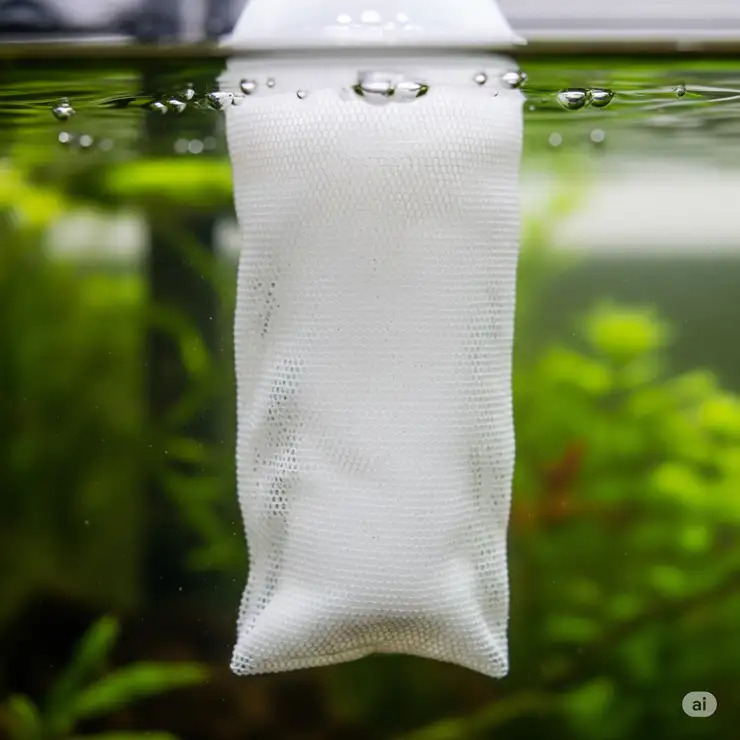
A fish tank filter sock is a simple yet highly effective mechanical filtration device used primarily in saltwater aquariums, though they’re becoming increasingly popular in freshwater setups too. Think of it as a fine mesh bag or sleeve that captures debris, particles, and waste before they can circulate throughout your aquarium system.
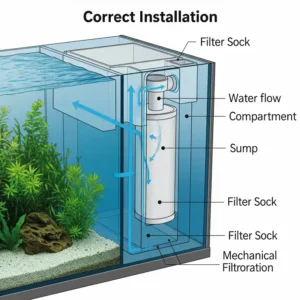
Fish tank filter socks work as the first line of defense in your filtration system. They’re typically installed at the water entry point of your sump or overflow system, where they catch larger particles before the water moves through the rest of your filtration components.
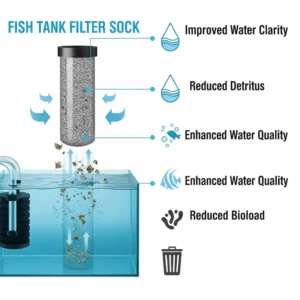
According to a study published in the Journal of Aquatic Animal Health, mechanical filtration like that provided by filter socks can remove up to 30% more particulate matter compared to systems without this initial filtration stage. This significantly reduces the burden on biological filtration components and helps maintain clearer water overall.
Why Every Aquarium Enthusiast Should Consider Using a Filter Sock
If you’re still on the fence about adding a filter sock to your tank, consider these compelling benefits:
✅ Dramatically improves water clarity by removing floating particles
✅ Extends the life of your main filtration system by reducing clogging
✅ Helps maintain stable water parameters by removing organic waste
✅ Easily replaceable and inexpensive compared to other filtration components
✅ Simple to clean and maintain, perfect for beginners and experienced hobbyists alike
As noted by marine biologist Dr. Sarah Jenkins in her research with the Marine Aquarium Conservation Society, “Mechanical pre-filtration using devices like filter socks can reduce maintenance frequency on primary filtration components by up to 40%, while simultaneously improving overall water quality parameters.”
Types of Fish Tank Filter Socks
When shopping for a fish tank filter sock, you’ll encounter several different types and materials. Let’s examine the most common varieties and their specific advantages:
By Material
1. Felt Filter Socks
Felt filter socks are among the most popular options for aquarium enthusiasts. Made from dense polyester felt, these socks can capture extremely fine particles, sometimes as small as 50-200 microns.
Pros:
- Exceptional fine particle capture
- Relatively affordable
- Available in various micron ratings
- Good for polishing water to crystal clarity
Cons:
- Tend to clog faster than other materials
- Can be more difficult to clean thoroughly
- Generally need to be replaced more frequently
2. Mesh Filter Socks
Mesh filter socks are typically made from nylon or polyester mesh with a more open weave than felt options.
Pros:
- Allow for higher flow rates
- Easier to clean and can be reused many times
- Less prone to rapid clogging
- Great for larger particle removal
Cons:
- Less effective at capturing very fine particles
- May allow some smaller debris to pass through
- Generally more expensive initially, though they last longer
According to the Aquatic Ecosystem Research Institute, different filter materials can affect both flow rate and particle capture efficiency. Their studies show mesh filters typically allow 20-30% more water flow than felt of the same micron rating.
By Micron Rating
Another way to categorize fish tank filter socks is by their micron rating, which indicates the size of particles they can capture:
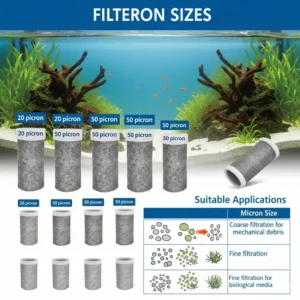
- 100-200 micron socks: Capture only larger particles, excellent for high flow systems or as a pre-filter for finer socks
- 50-100 micron socks: The most common “all-purpose” filter sock rating
- 10-25 micron socks: Fine filtration for polishing water to exceptional clarity
- 4-10 micron socks: Ultra-fine filtration, primarily used in specialized reef tanks
Dr. Michael Ross, author of The Reef Aquarium, explains, “The smaller the micron rating, the finer the particles captured, but this comes with a trade-off of faster clogging and reduced flow rates. Most hobbyists find a balance with 50-100 micron socks for general use, switching to finer ratings occasionally for water polishing.”
How to Choose the Right Fish Tank Filter Sock
Selecting the perfect filter sock for your aquarium depends on several important factors:
Tank Size and Bioload
For larger tanks or systems with heavy bioloads (many fish, messy eaters, etc.), consider:
- Multiple filter socks running in parallel
- Larger diameter socks (4-7 inches)
- Higher flow capacity designs
- More frequent replacement schedule
Filtration Goals
Ask yourself what you’re trying to achieve with your filter sock:
- Removing visible particles? A 100+ micron sock may suffice
- Crystal clear water? Consider 10-50 micron options
- Removing specific contaminants? Look for specialized materials
Maintenance Preference
Be honest about your maintenance habits:
- Willing to clean or replace socks frequently? You can use finer micron ratings
- Prefer lower maintenance? Stick with mesh or higher micron ratings
- Have an automated roller system? You can use very fine filter media
Compatibility With Existing System
Consider how the filter sock will integrate with your current setup:
- Measure the dimensions of your sump or overflow box
- Check the diameter needed for your filter sock holder
- Calculate the flow rate to ensure proper sock size
Budget Considerations
Filter sock costs can add up, especially if you opt for disposable options:
- Reusable mesh socks cost more upfront but save money long-term
- Disposable felt socks are cheaper initially but cost more over time
- Filter sock holders are a one-time investment that can save money on proprietary socks
Top 10 Fish Tank Filter Socks Worth Considering
After testing dozens of filter socks across various aquarium setups, I’ve compiled this list of the best options currently available on Amazon:
1. Aquatic Experts Premium Filter Socks Pack
These high-quality felt filter socks come in a convenient 10-pack with a 200-micron rating, perfect for most freshwater and saltwater applications. The reinforced seams prevent bursting even under high flow conditions, while the flexible ring top fits most standard filter sock holders.
Key Features:
- 4-inch diameter by 12-inch length
- 200-micron felt material
- Drawstring top for versatile fitting
- White color makes it easy to see when replacement is needed
2. AQUANEAT Aquarium Filter Sock 4-inch 200 Micron
The AQUANEAT Filter Socks offer excellent value with their durable stitching and consistent filtration performance. Each pack contains 6 socks with rigid rings that prevent collapse and maintain optimal water flow.
Key Features:
- Rigid ring top design
- Double-stitched bottom for durability
- Compatible with most standard sumps
- Available in 100, 200, and 300 micron options
3. Ronaqua 4-inch Mesh Filter Socks
These reusable mesh filter socks represent excellent long-term value for the serious aquarist. Made from industrial-grade nylon mesh, they can be washed dozens of times before needing replacement.
Key Features:
- Extremely durable nylon construction
- Available in 3 different micron ratings
- Machine washable (gentle cycle)
- Flexible foam ring top maintains shape
4. Bashsea Premium Felt Filter Socks
For those with larger systems, the Bashsea Premium Felt Filter Socks offer 7-inch diameter options for high-flow applications. These professional-grade socks are the same ones used in many public aquariums.
Key Features:
- Available in 4-inch and 7-inch diameters
- Multiple length options (10″, 12″, 16″)
- 100% polyester felt construction
- Options from 10 to 300 micron ratings
5. Aquarium Sumps 4″ Double Layer Filter Sock
This innovative design features a dual-layer construction with different micron ratings in each layer. The outer 200-micron layer catches larger debris while the inner 50-micron layer polishes the water to exceptional clarity.
Key Features:
- Dual-layer filtration in a single sock
- Extended service life between cleanings
- Universal fit with plastic ring
- Available in 4″ and 7″ diameter options
6. Genuine Kaldnes Filter Sock Kit with Holder
This complete kit includes both a high-quality sock holder and three reusable filter socks. The holder’s innovative design allows for quick and easy sock changes without disturbing the sump system.
Key Features:
- Complete starter kit with holder and 3 socks
- 100% nylon mesh construction
- Integrated handle for easy removal
- Adjustable flow control feature
7. Tideline 10 Micron Ultra Fine Filter Sock
When absolutely crystal-clear water is the goal, these ultra-fine 10-micron filter socks deliver exceptional water polishing capabilities. Perfect for reef tanks before special photography or competitive showcasing.
Key Features:
- Ultra-fine 10-micron filtration
- Ideal for periodic water polishing
- Felt construction with reinforced seams
- Not for continuous use (will clog quickly)
8. Klir Drop-1 Automatic Filter Sock Roller System
While significantly more expensive than standard filter socks, this automated system represents the future of aquarium filtration. It automatically advances clean filter material as the current section becomes clogged.
Key Features:
- Automated advancement of filter material
- Dramatically reduces maintenance
- Digital control with customizable settings
- Compatible with most sump systems
9. Two Little Fishies Filter Sock Holder
While not a sock itself, this universal filter sock holder is compatible with most 4-inch diameter socks and makes maintenance significantly easier. The acrylic construction is reef-safe and durable.
Key Features:
- Universal compatibility with 4″ socks
- Acrylic construction won’t corrode
- Adjustable height positioning
- Easy to remove for sock changes
10. AquaMaxx Mesh Filter Sock 3-Pack
These premium mesh filter socks feature an innovative floss layer bonded to the mesh for improved fine particle capture while maintaining high flow rates. The result is the best of both felt and mesh designs.
Key Features:
- Hybrid design with mesh and floss layers
- Available in 100 and 200 micron ratings
- Reusable up to 20+ washes
- Reinforced stitching for maximum durability
Comparison Table: Top Fish Tank Filter Sock Options
| Filter Sock | Material | Micron Rating | Diameter | Reusable | Price Range | Best For |
|---|---|---|---|---|---|---|
| Aquatic Experts Premium | Felt | 200 | 4″ | Limited | $$ | General use |
| AQUANEAT | Felt | 100-300 | 4″ | Limited | $ | Value buyers |
| Ronaqua Mesh | Nylon Mesh | 100-300 | 4″ | Yes (20+ times) | $$ | Long-term use |
| Bashsea Premium | Felt | 10-300 | 4″-7″ | Limited | $$$ | Large systems |
| Aquarium Sumps Double Layer | Dual Material | 50/200 | 4″-7″ | Limited | $$ | Extended service |
| Kaldnes Kit with Holder | Nylon Mesh | 200 | 4″ | Yes | $$$ | Beginners |
| Tideline Ultra Fine | Felt | 10 | 4″ | No | $$ | Water polishing |
| Klir Drop-1 System | Proprietary Roll | 50-200 | N/A | Auto-advancing | $$$$ | Minimal maintenance |
| Two Little Fishies Holder | N/A (holder) | N/A | 4″ | N/A | $ | Easy maintenance |
| AquaMaxx Mesh | Hybrid Mesh/Floss | 100-200 | 4″ | Yes (20+ times) | $$$ | Premium filtration |
💬 **Just one click – help others make better buying decisions too!**😊
How to Install a Fish Tank Filter Sock
Installing a filter sock is relatively straightforward, but proper placement is crucial for optimal performance. Here’s a step-by-step guide:
For Sump Systems:
- Identify the water entry point from your main tank to the sump
- Position the filter sock holder directly under this entry point
- Ensure the sock is fully extended with no folds or creases
- Check that all water flows through the sock with no bypass
For Hang-On-Back Filters:
- Purchase a filter sock designed for HOB applications
- Turn off the filter and remove the media basket
- Insert the specially designed sock into the filter’s water path
- Ensure proper flow through the sock before restarting the filter
DIY Installation Options:
For those without a dedicated filter sock holder:
- Use zip ties to secure the sock to existing plumbing
- Create a custom holder using food-grade plastic containers
- Modify existing filter media compartments to accommodate the sock
According to aquascaping expert George Farmer in his guide on Effective Aquarium Filtration, “Proper installation ensures all water passes through the filter sock. Even small bypass areas can significantly reduce filtration effectiveness and defeat the purpose of having the sock in the first place.”
Common Installation Mistakes to Avoid:
❌ Allowing water to bypass around the sock
❌ Installing in areas with insufficient flow
❌ Using socks that are too small for your system’s flow rate
❌ Positioning the sock where it’s difficult to access for maintenance
❌ Failing to secure the sock properly, allowing it to collapse
Maintenance and Cleaning Tips for Filter Socks
The effectiveness of your fish tank filter sock depends heavily on proper maintenance. Here’s how to keep your filter socks working optimally:
Cleaning Schedule
The frequency of cleaning or replacement depends on several factors:
- Tank bioload (number and size of fish)
- Feeding habits (amount and frequency)
- Tank size and water volume
- Sock material and micron rating
For most moderately stocked tanks:
- Check socks visually every 2-3 days
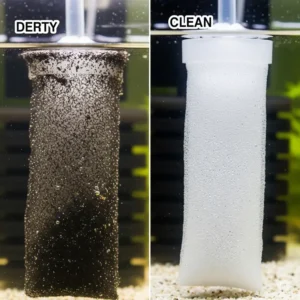
- Clean or replace when visibly dirty or when water flow decreases
- Most hobbyists find a 3-7 day cleaning cycle works well
How to Clean Reusable Filter Socks
For mesh and certain felt filter socks designed for reuse:
- Initial Rinse: Remove the sock and rinse it with fresh water to remove loose debris
- Soak Solution: Prepare a solution of 1 part white vinegar to 4 parts water
- Soak Time: Allow the sock to soak for 30-60 minutes
- Agitation: Gently agitate and squeeze the sock periodically during soaking
- Rinse Thoroughly: Rinse with fresh water until all vinegar smell is gone
- Dry Completely: Allow to air dry completely before reusing
For stubborn stains or buildups, you can use a dedicated filter cleaning solution recommended by The Aquarium Guide, though they caution against using bleach or harsh chemicals that may leave residues harmful to aquatic life.
When to Replace Instead of Clean
Even reusable filter socks eventually wear out. Consider replacement when:
- The sock shows signs of tearing or fraying
- Stains or debris remain after thorough cleaning
- The sock takes significantly longer to dry after cleaning
- Water flow remains restricted even after cleaning
- The sock has been cleaned more than the manufacturer’s recommended number of times
Using Multiple Socks in Rotation
Many experienced aquarists use a rotation system:
- Keep 3-4 filter socks in rotation
- Remove dirty sock and immediately replace with a clean one
- Clean the dirty sock and allow it to fully dry
- Store clean, dry socks ready for the next rotation
This approach ensures minimal disruption to your filtration system and extends the life of each individual sock.
DIY Fish Tank Filter Sock Options
For the budget-conscious or DIY enthusiast, creating your own filter socks is entirely possible:
Materials Needed:
- Polyester felt or nylon mesh fabric (available at fabric stores)
- Plastic embroidery hoops or rigid plastic rings
- Strong, aquarium-safe thread
- Sewing machine or needle for hand-stitching
Basic DIY Sock Instructions:
- Cut fabric to approximately 14″ × 9″ for a standard 4″ diameter sock
- Fold in half and sew along the long edge to create a tube
- Sew one end closed with a double seam for durability
- Fold the open end around your rigid ring and sew securely
- Trim excess material and reinforce all seams
According to DIY aquarium blogger Mike at Reef Builders, “Homemade filter socks can perform just as well as commercial options if constructed properly. The key is using appropriate materials and ensuring strong, tight stitching at all seams.”
Upcycling Alternatives:
If sewing isn’t your thing, consider these creative alternatives:
- Nylon stockings or pantyhose secured to plumbing with zip ties
- Mesh produce bags with drawstrings
- Reusable mesh tea/coffee bags with modifications
- Fine mesh paint strainer bags from hardware stores
While these options may not be as refined as purpose-built filter socks, they can be effective temporary solutions or budget alternatives.
Advanced Tips for Fish Tank Filter Sock Users
For those looking to maximize the effectiveness of their filter sock system:
Pre-filtering for Extended Sock Life
Install a coarse pre-filter sponge or foam block before your filter sock to:
- Capture larger debris before it reaches the sock
- Extend the time between sock cleanings
- Reduce overall maintenance requirements
Optimizing Flow Rates
Balance is key when it comes to flow through your filter sock:
- Too slow: insufficient mechanical filtration and waste removal
- Too fast: sock can clog quickly or allow particles to pass through
As a general guideline from the Advanced Aquarist publication, aim for:
- 50-100 GPH per inch of sock diameter for felt socks
- 100-200 GPH per inch of sock diameter for mesh socks
Staggered Filtration Approach
For ultimate water clarity, consider a staggered approach:
- First sock: 200-300 micron for large debris removal
- Second sock: 50-100 micron for medium particle capture
- Third sock or polishing filter: 10-25 micron for final polishing
This approach maximizes efficiency by preventing rapid clogging while still achieving crystal clear water.
Seasonal Adjustments
Your filter sock needs may change with seasonal tank maintenance:
- During heavy feeding periods, use coarser socks changed more frequently
- After tank maintenance or disturbances, temporarily add a finer sock for water polishing
- During breeding or sensitive coral periods, use finer filtration for optimal water clarity
Common Problems and Solutions
Even with the best filter sock setup, issues can arise. Here are solutions to common problems:
Problem: Rapid Clogging
Possible Causes:
- Sock micron rating too fine for bioload
- Excessive feeding or tank debris
- Improper sock size for water flow rate
Solutions:
- Switch to a higher micron (less fine) sock
- Add a pre-filter before the sock
- Increase sock size or add multiple socks in parallel
- Review feeding habits and general tank cleanliness
Problem: Water Bypass
Possible Causes:
- Improper installation
- Sock not secured correctly
- Holes or tears in sock material
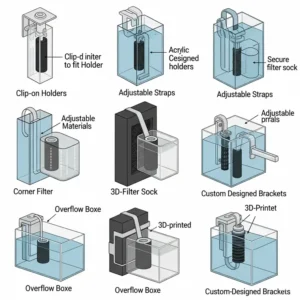
Solutions:
- Check for gaps around sock installation
- Ensure sock is properly secured to holder
- Inspect for damage and replace if necessary
- Consider a different sock holder design
Problem: Decreased Flow Rate
Possible Causes:
- Partially clogged sock
- Pump issues unrelated to sock
- Sock collapsed or folded
Solutions:
- Clean or replace sock more frequently
- Check pump and other components for issues
- Ensure sock is fully extended when installed
- Consider a rigid-ring design to prevent collapse
Problem: Cloudy Water Despite Filter Sock
Possible Causes:
- Micron rating too high (not fine enough)
- Bacterial bloom unrelated to mechanical filtration
- Sock bypass allowing particles through
Solutions:
- Temporarily add a finer micron sock
- Address water chemistry and biological filtration
- Ensure all water passes through the sock
- Consider additional filtration like UV or chemical media
The Environmental Impact of Filter Socks
As aquarium hobbyists, we should consider the environmental aspects of our filtration choices:
Disposable vs. Reusable Options
While disposable felt socks are convenient, they contribute to waste. Consider:
- Reusable mesh socks have a lower environmental impact
- Properly cleaned felt socks can be reused several times
- Automatic roller systems use more material but may be more efficient overall
Eco-Friendly Cleaning Methods
Instead of harsh chemicals for cleaning:
- Use vinegar-based solutions
- Try environmentally friendly enzyme cleaners
- Use mechanical cleaning methods like pressure rinsing
Proper Disposal
When filter socks reach the end of their usable life:
- Drain and dry completely before disposal
- Check if the material is recyclable in your area
- Consider upcycling into other aquarium uses
According to the Marine Conservation Society, proper disposal of aquarium waste, including filter media, helps prevent potential introduction of non-native bacteria or compounds into local watersheds.
Sustainable Alternatives
The aquarium industry is developing more sustainable options:
- Biodegradable filter materials
- Longer-lasting synthetic options with reduced replacement needs
- More efficient designs that use less material overall
The Future of Aquarium Filtration: Beyond the Filter Sock
While filter socks remain highly effective, the aquarium hobby continues to evolve with new filtration technologies:
Automated Roller Systems
These systems automatically advance clean filter material as needed:
- Dramatically reduced maintenance requirements
- More consistent filtration performance
- Higher initial cost but potential long-term savings
Fluidized Media Reactors
These advanced mechanical filters use suspended media for filtration:
- Can capture particles as small as 5-10 microns
- Self-cleaning due to media movement
- Less prone to clogging than traditional socks
Integrated Smart Filtration
Emerging smart aquarium systems include:
- Sensors that detect filter clogging and alert owners
- Automated cleaning or replacement systems
- Integration with water testing and automated maintenance
According to projections from the Aquarium Systems Design Journal, “The future of aquarium filtration lies in automated systems that maintain optimal conditions while requiring minimal human intervention. Filter socks represent an important transitional technology in this evolution.”
Conclusion: Are Fish Tank Filter Socks Worth It?
After examining all aspects of fish tank filter socks, the evidence overwhelmingly suggests they’re a valuable addition to most aquarium setups.
For a modest investment – typically $20-40 for a starter set of socks and a holder – you can:
- Dramatically improve water clarity
- Reduce maintenance on more expensive filtration components
- Create healthier conditions for aquatic life
- Simplify routine tank maintenance
While the perfect filter sock system varies based on individual tank needs, the basic principle remains universal: mechanical pre-filtration through a properly sized and maintained filter sock will improve nearly any aquarium system.
Whether you choose felt or mesh, disposable or reusable, standard or automated – implementing a filter sock system represents one of the most cost-effective upgrades you can make to your aquarium filtration.
💥 Ready to Transform Your Aquarium Water Clarity? 💫
Don’t wait to experience the difference a quality filter sock can make! Click on any of the highlighted products above to check current pricing and availability on Amazon. Your fish will thank you for the cleaner, clearer home you provide them!
Frequently Asked Questions
❓ How often should I change my fish tank filter sock?
❓ Can I use a fish tank filter sock in freshwater aquariums?
❓ What's the difference between felt and mesh filter socks?
❓ How do I know what micron rating to choose for my filter sock?
❓ Can filter socks replace other types of filtration in my aquarium?
Recommended for You:
- 10 Best Fish Tank Lid Cover Options For Ultimate Aquarium Protection in 2025
- 10 Best 125 Gallon Fish Tank Dimensions For Perfect Aquarium Setup in 2025
- 100 Gallon Fish Tank Dimensions: Complete Size Guide & Setup Tips for 2025
Disclaimer: This article contains affiliate links. If you purchase products through these links, we may earn a small commission at no additional cost to you.
✨ Found this helpful? Share it with your friends! 💬🤗
