
In This Article
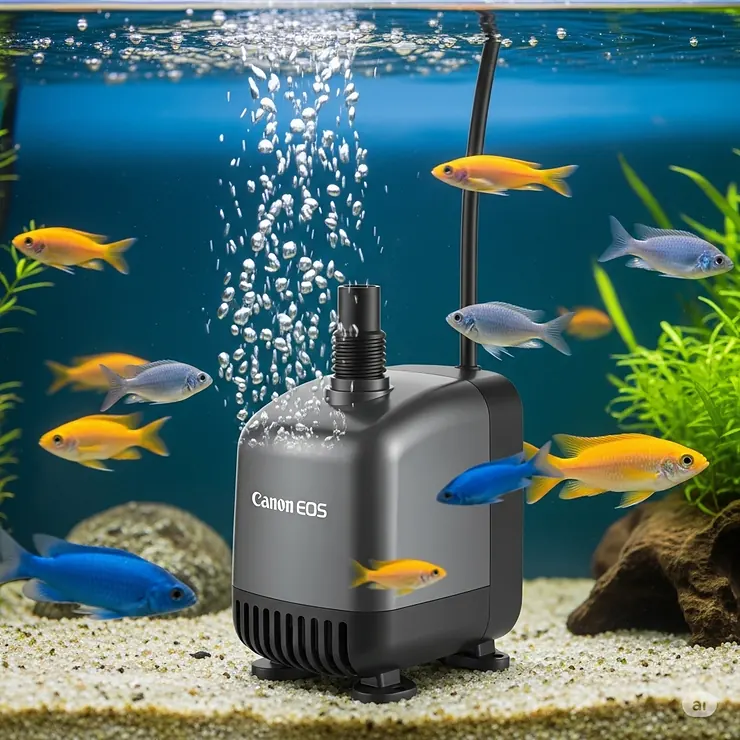
When it comes to maintaining a thriving aquatic ecosystem, choosing the right water pump for fish tank systems is absolutely crucial. Whether you’re a beginner setting up your first aquarium or an experienced aquarist looking to upgrade your equipment, finding the perfect pump can make the difference between a struggling tank and a vibrant underwater paradise.
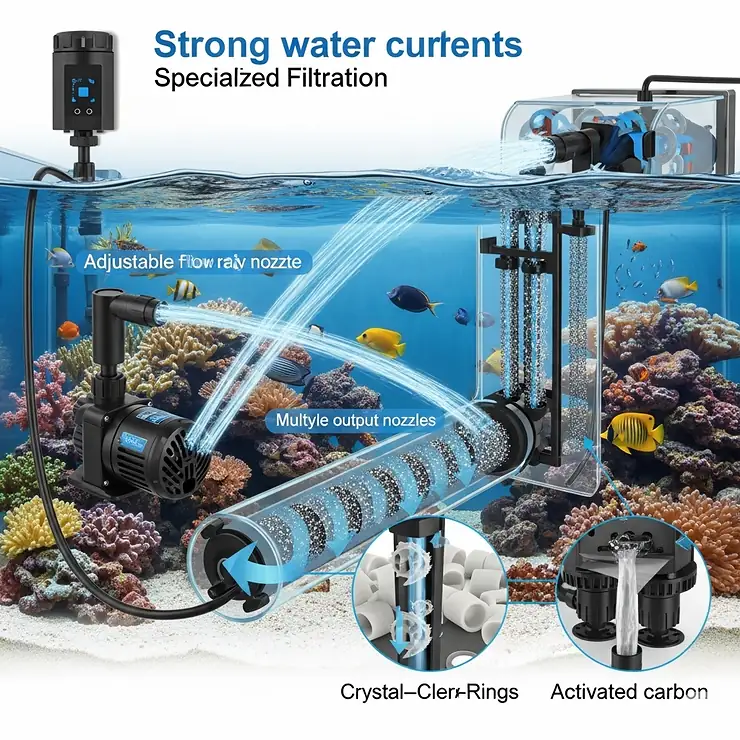
A high-quality water pump for fish tank setups does more than just move water around. However, it creates essential water circulation, prevents stagnant areas, distributes oxygen throughout the tank, and helps maintain proper filtration. Moreover, the right pump ensures your fish stay healthy while keeping your aquarium crystal clear and visually stunning.
✨Was this helpful? Spread the word! 🚀
Why Your Aquarium Needs a Reliable Water Pump
Essential Functions of Fish Tank Water Pumps 🌊
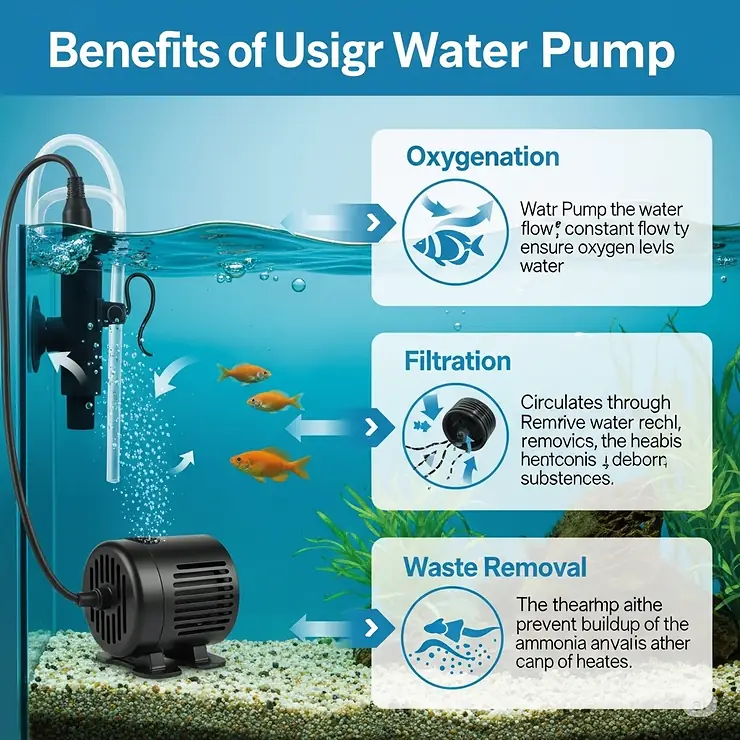
Water circulation stands as the foundation of any healthy aquarium ecosystem. Furthermore, a properly functioning water pump for fish tank environments creates the continuous movement that mimics natural water bodies. Consequently, this circulation prevents the formation of dead zones where harmful bacteria can flourish.
Additionally, water pumps facilitate optimal oxygen distribution throughout your tank. While surface agitation helps gas exchange between water and air, the pump ensures that oxygenated water reaches every corner of your aquarium. This proves especially important for fish species that require high oxygen levels to thrive.
Moreover, effective water circulation aids in maintaining consistent water temperature. Without proper flow, you’ll notice temperature variations that can stress your aquatic pets. The pump helps distribute heated water evenly, creating a stable environment your fish will love.
Types of Aquarium Water Pumps Available 🔧
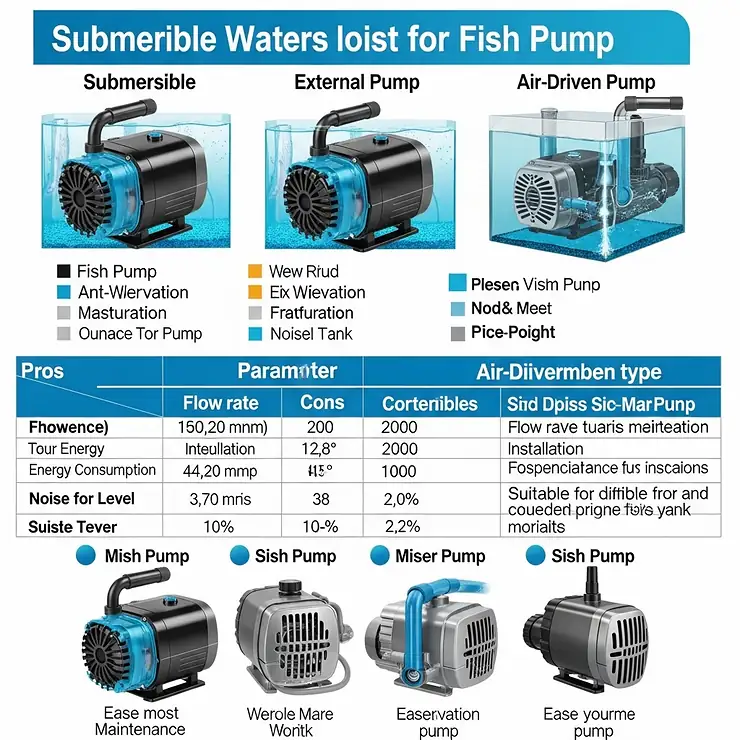
Submersible Water Pumps Submersible pumps operate entirely underwater, making them ideal for most aquarium applications. These versatile units can handle various tasks from fountain features to water changes. Most submersible water pump for fish tank models offer quiet operation and easy installation.
Powerhead Circulation Pumps Powerheads create directional water flow and work excellently for larger tanks. Furthermore, these pumps help eliminate dead spots while providing current that many fish species enjoy swimming against. Many powerheads also double as wave makers for marine aquariums.
Return Pumps for Sump Systems Return pumps move water from sump tanks back to the main aquarium. These powerful units handle the heavy lifting in complex filtration systems. Professional aquarists often rely on return pumps for their reliability and flow capacity.
Determining the Right Flow Rate for Your Tank 📊
Calculating proper flow rate ensures optimal water movement without creating excessive turbulence. Generally, aim for 4-10 times your tank volume per hour in flow rate. For example, a 20-gallon tank typically needs a pump capable of 80-200 gallons per hour (GPH).
However, consider your specific setup requirements. Heavily planted tanks might need gentler flow, while reef aquariums often require stronger circulation. Additionally, factor in any resistance from tubing, filters, or decorations that might reduce actual flow rate.
🥇 Top 7 Water Pump for Fish Tank Products (Detailed Analysis)
1. VIVOSUN 800GPH Submersible Pump – Premium Choice ⭐⭐⭐⭐⭐
The VIVOSUN 800GPH Submersible Pump stands out as an exceptional choice for medium to large aquarium setups. This powerful yet efficient pump delivers reliable performance at an affordable price point, making it perfect for serious aquarists.
Technical Specifications:
- Flow Rate: 800 GPH (3000L/H)
- Power Consumption: 24W
- Maximum Lift Height: 10 feet
- Dimensions: 4.33″ x 3.5″ x 4.1″
- Voltage: 110-120V
- Included Accessories: 3 nozzles, 6.5ft power cord
Performance Analysis: The 800GPH flow rate provides excellent circulation for tanks up to 100 gallons. Moreover, the adjustable flow control knob allows fine-tuning for different applications. Customer reviews consistently praise its quiet operation and durability, with many reporting continuous use for over 18 months.
Pricing and Value: Currently priced around $25-30 on Amazon, this pump offers exceptional value for its performance level. The included nozzles and long power cord add extra value to the package.
Customer Feedback Highlights: “This small pump is incredibly fast, powerful, and quiet. It removes water quickly and adds water very efficiently, which is a great blessing for people with back problems who can’t carry buckets of water.”
2. AQUANEAT 80 GPH Small Fountain Pump – Best for Nano Tanks ⭐⭐⭐⭐
Perfect for smaller aquarium setups, the AQUANEAT 80 GPH model provides gentle yet effective water circulation. This compact unit excels in nano tanks and desktop aquariums where space is limited.
Technical Specifications:
- Flow Rate: 80 GPH (300L/H)
- Power Consumption: 4W
- Maximum Lift Height: 2.6 feet
- Dimensions: Compact design
- Included Accessories: 3 suction cups, tubing
Ideal Applications: This pump works perfectly in 5-20 gallon tanks, small fountains, and hydroponic systems. The gentle flow rate suits delicate fish species and planted aquariums where strong current might damage plants.
Customer Experience: Users appreciate the whisper-quiet operation and easy installation. The adjustable flow feature allows customization for different tank requirements.
3. hygger Mini Wave Maker 1600GPH – Advanced Circulation ⭐⭐⭐⭐⭐
The hygger Mini Wave Maker brings professional-grade water circulation to home aquariums. This innovative pump creates natural wave patterns that benefit both fish and coral in marine setups.
Advanced Features:
- Programmable wave modes
- LED digital controller
- Magnetic mounting system
- Ultra-quiet operation
- Multiple flow patterns
Technical Excellence: With 1600 GPH capacity and advanced control systems, this pump suits aquarists who want precise water movement control. The magnetic mount allows easy positioning and adjustment.
4. GROWNEER 550GPH Submersible Pump – Reliable Mid-Range Option ⭐⭐⭐⭐
The GROWNEER 550GPH offers solid performance for medium-sized aquariums. This dependable pump provides excellent value with consistent flow rates and durable construction.
Key Specifications:
- Flow Rate: 550 GPH (2000L/H)
- Power: 30W
- Lift Height: 7.2 feet
- Accessories: 3 nozzles, adjustable flow control
Performance Notes: Suitable for 30-75 gallon tanks, this pump handles various applications from regular circulation to water changes. The included nozzles provide versatility for different setup requirements.
5. PULACO 160GPH Submersible Pump – Budget-Friendly Excellence ⭐⭐⭐⭐
For budget-conscious aquarists, the PULACO 160GPH delivers impressive performance without breaking the bank. This compact pump excels in smaller setups while maintaining quality construction.
Value Proposition:
- Excellent price-to-performance ratio
- Quiet operation
- Easy maintenance
- Suitable for 10-40 gallon tanks
6. VIVOSUN 660GPH Submersible Water Pump – Versatile Performer ⭐⭐⭐⭐
The VIVOSUN 660GPH model provides intermediate flow rates perfect for diverse aquarium applications. This versatile pump handles everything from standard circulation to specialized water features.
Technical Details:
- Flow Rate: 660 GPH (2500L/H)
- Power: 35W
- Enhanced durability features
- Multiple mounting options
7. hygger Cross-Flow Wave Maker – Premium Wave Technology ⭐⭐⭐⭐⭐
For advanced aquarists seeking cutting-edge water movement, the hygger Cross-Flow Wave Maker delivers unparalleled performance. This premium pump creates realistic ocean currents for marine aquariums.
Professional Features:
- 360° cross-flow technology
- Advanced LED controller
- Multiple wave modes
- Professional-grade construction
💎 Don’t Miss These Exclusive Deals!
Transform your aquarium with these carefully selected water pumps. Click on any highlighted product to check current pricing and availability. These proven pumps will help you create the perfect aquatic environment your fish deserve! 🐠✨
Comprehensive Comparison Tables
Flow Rate and Power Consumption Comparison
| Pump Model | Flow Rate (GPH) | Power (W) | Tank Size | Price Range |
|---|---|---|---|---|
| VIVOSUN 800GPH | 800 | 24 | 50-100 gal | $25-30 |
| AQUANEAT 80 GPH | 80 | 4 | 5-20 gal | $15-20 |
| hygger 1600GPH | 1600 | 12 | 20-50 gal | $45-55 |
| GROWNEER 550GPH | 550 | 30 | 30-75 gal | $20-25 |
| PULACO 160GPH | 160 | 10 | 10-40 gal | $12-18 |
| VIVOSUN 660GPH | 660 | 35 | 40-80 gal | $30-35 |
| hygger Cross-Flow | 1850 | 18 | 40-125 gal | $60-75 |
Feature Comparison Matrix
| Feature | VIVOSUN 800 | AQUANEAT 80 | hygger 1600 | GROWNEER 550 | PULACO 160 |
|---|---|---|---|---|---|
| Adjustable Flow | ✅ | ✅ | ✅ | ✅ | ✅ |
| Multiple Nozzles | ✅ | ❌ | ❌ | ✅ | ✅ |
| Digital Controller | ❌ | ❌ | ✅ | ❌ | ❌ |
| Magnetic Mount | ❌ | ❌ | ✅ | ❌ | ❌ |
| Suction Cups | ✅ | ✅ | ❌ | ✅ | ✅ |
| Wave Modes | ❌ | ❌ | ✅ | ❌ | ❌ |
💬 Just one click – help others make better buying decisions too!😊
Industry-Specific Applications
Professional Aquaculture Operations
Commercial fish farming facilities require robust water circulation systems that can handle continuous operation under demanding conditions. Professional aquaculture operations typically utilize multiple high-capacity pumps to maintain water quality across large tank systems. The VIVOSUN 800GPH and similar commercial-grade pumps excel in these environments due to their reliability and energy efficiency.
Furthermore, fish breeding facilities need precise water flow control to create optimal spawning conditions. Different species require specific current patterns and flow rates for successful reproduction. Professional breeders often install multiple smaller pumps rather than single large units to create diverse flow zones within breeding systems.
Aquaponics operations represent another growing commercial application where water pump for fish tank systems play crucial roles. These integrated systems require pumps that can handle both fish waste and plant nutrients while maintaining consistent flow rates. The pumps must operate reliably since any failure can impact both fish health and crop production.
Home Aquarium Enthusiasts
Residential aquarium keeping spans from casual hobbyists to serious collectors maintaining multiple tank systems. Beginner aquarists typically start with single pump systems like the AQUANEAT 80 GPH for smaller tanks, then upgrade to more powerful units as their hobby grows.
Advanced home aquarists often maintain multiple specialized tanks requiring different pump configurations. Saltwater reef tanks need powerful circulation pumps like the hygger Cross-Flow Wave Maker to simulate ocean currents. Freshwater planted tanks require gentler flow patterns that won’t disturb delicate plant roots or create excessive turbulence.
Collectors maintaining breeding programs need reliable pump systems that can operate continuously without disturbing sensitive fish during spawning periods. Many serious hobbyists install backup pump systems to ensure uninterrupted operation during maintenance or equipment failures.
Educational and Research Institutions
Schools, universities, and research facilities utilize aquarium systems for educational purposes and scientific research. These institutional applications require pumps that combine reliability with ease of maintenance, since multiple users may interact with the systems.
Research applications often demand precise flow control for experimental conditions. Marine biology research facilities studying fish behavior or physiology need pumps that can replicate specific natural conditions. The hygger series with programmable controllers excel in these research environments.
Educational aquariums in museums and visitor centers require virtually silent operation to avoid disturbing guests while maintaining optimal display conditions. These public installations often operate 24/7, demanding pumps with exceptional longevity and minimal maintenance requirements.
Specialized Aquatic Therapy Applications
Aquatic therapy centers increasingly utilize specialized tank systems for rehabilitation and therapy programs. These applications require gentle, consistent water movement that won’t interfere with therapeutic activities while maintaining water quality.
Sensory therapy aquariums for individuals with special needs benefit from controllable water movement that can be adjusted based on user preferences. The ability to create calming water patterns while maintaining proper filtration makes pump selection critical for therapeutic success.
Regional and Cultural Considerations
Asian aquarium markets traditionally favor smaller, efficient pumps that suit apartment living and energy conservation goals. Products like the PULACO series align well with these preferences, offering adequate performance in compact, energy-efficient packages.
European markets increasingly emphasize energy efficiency and environmental sustainability. Pump manufacturers now focus on reducing power consumption while maintaining performance, leading to innovations in motor design and flow optimization.
North American aquarists often prefer powerful pumps that can handle larger tank systems common in suburban homes. The emphasis on convenience and automation drives demand for pumps with advanced control features and low maintenance requirements.
Advanced Technical Analysis
Pump Motor Technology and Efficiency
Modern aquarium pumps utilize various motor technologies, each offering distinct advantages for fish tank applications. Brushless DC motors have become increasingly popular due to their superior efficiency and longevity compared to traditional AC motors. These motors operate with less electrical resistance, generating minimal heat while consuming significantly less power.
The VIVOSUN 800GPH employs advanced motor technology that achieves impressive flow rates while maintaining 24W power consumption. This efficiency translates to lower operating costs and reduced heat generation within your aquarium system. Moreover, brushless motors typically last 3-5 times longer than brushed alternatives, providing better long-term value.
Magnetic drive systems represent another technological advancement in pump design. These systems eliminate shaft seals, reducing maintenance requirements and preventing potential leaks. The hygger wave makers utilize magnetic coupling technology that ensures reliable operation even after extended use in saltwater environments.
Impeller Design and Flow Dynamics
Impeller geometry significantly impacts pump performance and efficiency. Traditional centrifugal impellers work well for general circulation but may create turbulent flow patterns unsuitable for sensitive aquatic life. Advanced impellers feature optimized blade angles and spacing that generate smoother, more natural water movement.
The hygger Cross-Flow pump incorporates innovative impeller design that creates broad, gentle currents rather than focused jets. This technology mimics natural ocean currents more effectively than conventional pumps, benefiting both fish behavior and coral health in marine aquariums.
Recent research in computational fluid dynamics has led to impeller designs that minimize energy loss while maximizing flow output. These improvements result in pumps that deliver higher flow rates while consuming less electricity, addressing both performance and environmental concerns.
Materials Science and Corrosion Resistance
Pump longevity depends heavily on materials selection, particularly in saltwater applications where corrosion resistance is crucial. Premium pumps utilize ceramic shafts and titanium components that withstand harsh aquatic environments indefinitely.
Polymer technology has advanced significantly, enabling manufacturers to create pump housings that resist both chemical degradation and biological fouling. Modern plastics maintain structural integrity while remaining chemically inert in aquarium environments.
The GROWNEER 550GPH features corrosion-resistant materials throughout its construction, ensuring reliable operation in both freshwater and saltwater applications. These material improvements explain why contemporary pumps significantly outlast older designs.
Electrical Safety and Low-Voltage Systems
Safety considerations have driven the development of low-voltage pump systems that minimize electrical hazards in aquatic environments. Many modern pumps operate on 12V or 24V DC power, significantly reducing shock risks compared to traditional AC-powered units.
Advanced pumps incorporate multiple safety features including thermal protection, dry-run protection, and ground fault detection. These systems automatically shut down when unsafe conditions are detected, protecting both equipment and aquatic life.
Noise Reduction Technology
Acoustic engineering has become increasingly important as aquarists demand quieter operation. Modern pumps employ various noise reduction techniques including vibration damping, optimized impeller design, and sound-absorbing housing materials.
The AQUANEAT series demonstrates how proper engineering can achieve remarkably quiet operation without sacrificing performance. These pumps utilize rubber mounting systems and precision-balanced impellers to minimize operational noise.
Smart Technology Integration
Contemporary pumps increasingly incorporate smart technology features that enable remote monitoring and control. Advanced models offer WiFi connectivity, smartphone apps, and integration with aquarium automation systems.
Programmable pump controllers allow aquarists to create complex flow patterns that simulate natural tidal cycles and seasonal variations. This technology particularly benefits marine aquariums where natural water movement patterns significantly impact coral health and fish behavior.
Comprehensive Setup and Usage Guide
Pre-Installation Planning and Assessment
Before installing any water pump for fish tank systems, conduct a thorough assessment of your aquarium’s specific requirements. Start by measuring your tank dimensions and calculating the total water volume, including any connected filtration equipment or sump systems. This information determines the appropriate pump size and flow rate for your application.
Consider the placement of electrical outlets and ensure adequate space for pump installation and future maintenance access. Plan the routing of power cables and water tubing to minimize visual impact while maintaining easy access for cleaning and adjustments.
Evaluate your existing filtration system to determine how the new pump will integrate with current equipment. Some pumps work independently while others require coordination with existing filters, heaters, or controllers for optimal performance.
Step-by-Step Installation Procedures
1. Safety Preparation Always disconnect power to all aquarium equipment before beginning installation. Remove approximately 25% of aquarium water to provide working space and reduce spill risks during installation. Have towels and cleaning supplies readily available.
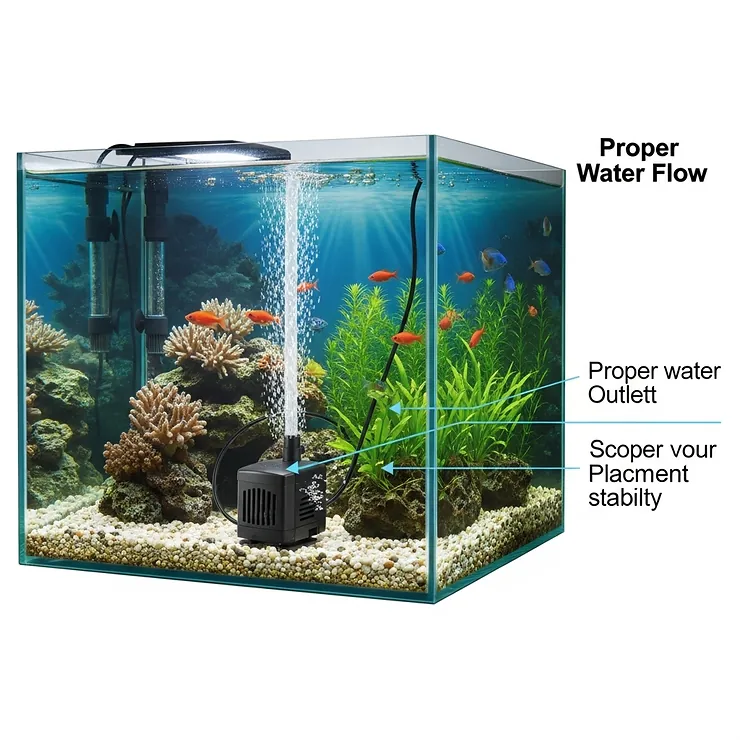
2. Pump Positioning For submersible pumps like the VIVOSUN 800GPH, choose a location that provides adequate water coverage while remaining accessible for maintenance. Position the pump at least 6 inches below the minimum water level to ensure continuous submersion during normal operation.
Install suction cups or mounting brackets according to manufacturer specifications. Ensure the pump sits level and stable to minimize vibration and noise during operation. For magnetic mount pumps like the hygger series, carefully align the internal and external magnets to achieve secure mounting.
3. Electrical Connections Route the power cord through designated openings in the aquarium hood or use cord protectors to prevent pinching. Connect the pump to a GFCI-protected outlet or aquarium-specific power strip with surge protection.
For pumps with controllers, position the control unit in an easily accessible location away from water splash zones. Follow all manufacturer wiring diagrams precisely to ensure proper operation and warranty coverage.
4. Testing and Adjustment Fill the aquarium to normal operating levels before applying power to the pump. Start with the lowest flow setting and gradually increase to desired levels while observing fish behavior and water movement patterns.
Adjust pump positioning or flow rates if excessive turbulence disturbs fish or creates dead zones in the aquarium. Fine-tune settings over several days as fish acclimate to the new water movement patterns.
User Compatibility and Skill Requirements
Beginner Aquarists New hobbyists should start with simple, reliable pumps like the AQUANEAT 80 GPH that require minimal setup and maintenance. These entry-level pumps provide essential water circulation without overwhelming complexity.
Focus on understanding basic principles of water flow and fish behavior before advancing to more sophisticated equipment. Spend time observing how different flow rates affect your specific fish species and aquarium plants.
Intermediate Users Aquarists with 6-12 months of experience can handle more advanced pumps like the GROWNEER 550GPH with multiple flow settings and accessories. These users benefit from learning proper maintenance techniques and understanding how pump performance affects overall aquarium health.
Intermediate users should experiment with different pump positions and flow patterns to optimize their specific tank conditions. This experience level allows for more complex installations including multiple pump systems.
Advanced Hobbyists Experienced aquarists can maximize the benefits of sophisticated equipment like the hygger Cross-Flow Wave Maker with programmable controllers and multiple operating modes. These users understand the relationship between water movement, oxygen levels, and biological filtration.
Advanced users often maintain multiple tank systems requiring different pump configurations for various species and applications. They can troubleshoot complex issues and optimize pump performance for specific goals.
Environmental Optimization Strategies
Temperature Considerations Position pumps to promote even temperature distribution throughout the aquarium. Avoid creating strong currents directly over heaters, which can cause rapid temperature fluctuations harmful to aquatic life.
Monitor water temperature in different areas of the tank to ensure the pump promotes uniform heating rather than creating hot or cold spots.
Lighting Integration Consider how pump-generated water movement affects lighting distribution in planted aquariums. Gentle surface agitation enhances light penetration while excessive turbulence can create distracting light patterns.
Time pump operation with lighting cycles in advanced setups to simulate natural daily water movement patterns.
Gradual Implementation Protocols
Week 1: Baseline Establishment Begin with minimal flow settings to allow fish and plants to adapt gradually. Monitor feeding behavior and overall fish activity to ensure the new water movement doesn’t cause stress.
Week 2-3: Flow Rate Optimization Gradually increase flow rates while observing fish behavior and plant response. Make small adjustments every few days rather than dramatic changes that could shock aquatic life.
Week 4+: Fine-Tuning Achieve optimal flow patterns through small position and setting adjustments. Document successful configurations for future reference and troubleshooting.
Maintenance and Longevity
Daily Monitoring Protocols ✅
Successful pump maintenance starts with daily visual inspections that take just a few minutes but prevent major problems. Check for unusual noises, vibrations, or changes in water flow patterns that could indicate developing issues. Monitor the pump’s suction cups or mounting system to ensure secure attachment to tank walls.
Observe fish behavior around the pump area, as changes in swimming patterns often indicate flow rate problems or equipment malfunctions. Additionally, check that the pump remains fully submerged, especially in tanks with high evaporation rates or automatic top-off systems.
Weekly Maintenance Routines 🔧
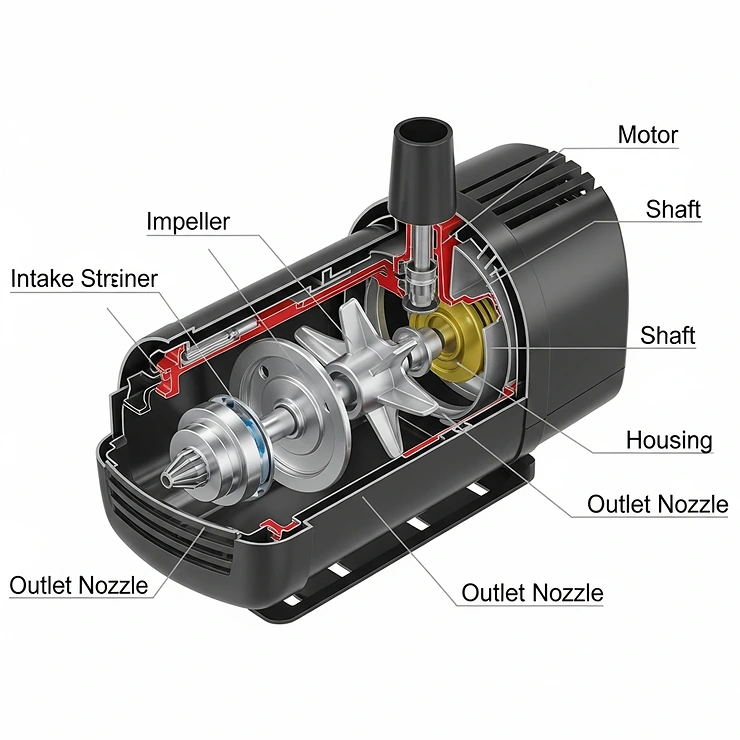
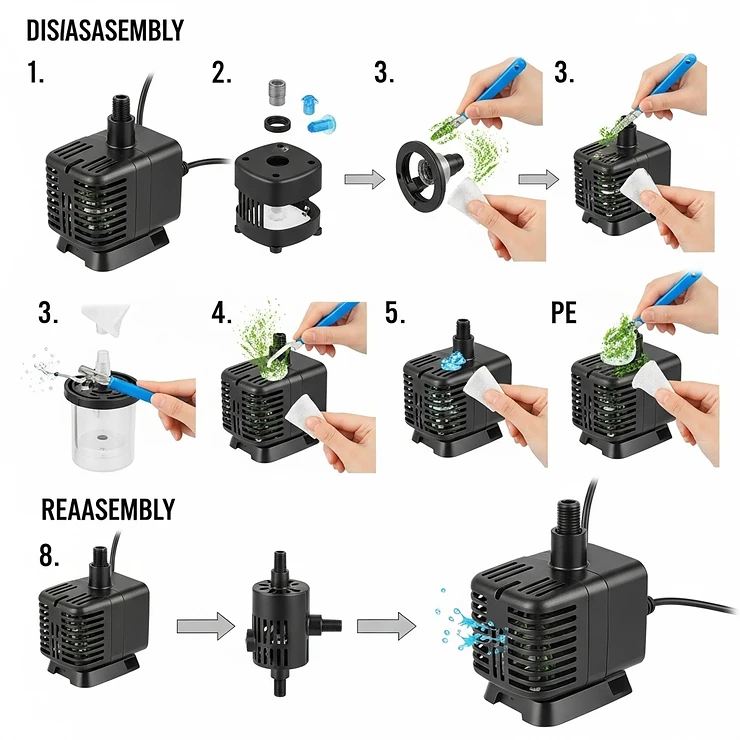
Weekly maintenance involves more thorough inspections and basic cleaning procedures. Remove the pump from the aquarium and rinse the intake screen or strainer to remove accumulated debris. This simple step prevents clogging that reduces efficiency and increases power consumption.
Inspect the power cord for any signs of wear or damage, particularly near connection points. Clean pump housing surfaces with aquarium-safe cleaning solutions to prevent algae buildup that can affect performance. Test all control functions if your pump includes variable speed or timer controls.
Monthly Deep Cleaning Procedures 🧽
Monthly maintenance requires complete pump disassembly for thorough cleaning and inspection. For pumps like the VIVOSUN 800GPH, carefully remove the impeller assembly and clean all components with warm water and a soft brush.
Examine the impeller for chips, cracks, or wear that could cause vibration or reduced performance. Replace worn impellers immediately, as damaged components can cause catastrophic pump failure. Clean the pump chamber thoroughly, removing any salt deposits or biological buildup.
Lubricate moving parts according to manufacturer specifications, using only recommended lubricants that won’t contaminate aquarium water. Reassemble the pump carefully, ensuring all seals and gaskets are properly positioned.
Quarterly Comprehensive Inspections 📋
Quarterly maintenance includes performance testing and component replacement scheduling. Measure actual flow rates using a calibrated container and timer to verify the pump maintains rated performance. Significant decreases in flow rate indicate internal wear or clogging issues.
Inspect electrical connections for corrosion or looseness that could cause safety hazards or operational problems. Replace any corroded terminals or damaged wiring immediately. Test all safety features including thermal protection and ground fault systems.
Troubleshooting Common Issues ⚡
Reduced Flow Rate Problems When pumps like the AQUANEAT 80 GPH show decreased flow, start by checking for clogs in the intake screen or impeller area. Remove any debris and test operation. If problems persist, inspect the impeller for damage or wear requiring replacement.
Excessive Noise Issues Unusual pump noise often indicates loose mounting or worn impeller bearings. Check that suction cups maintain firm contact with tank walls and that the pump sits level. Vibration dampening pads can reduce transmission of operational noise to the aquarium structure.
Electrical Problems Pumps that fail to start may have electrical issues requiring professional attention. Never attempt to repair electrical components yourself, as water and electricity create dangerous conditions. Contact the manufacturer or qualified technician for electrical troubleshooting.
Replacement Parts and Warranty Management 🛠️
Maintain detailed records of pump purchase dates, warranty periods, and replacement part orders. Most quality pumps like the GROWNEER 550GPH include warranties covering manufacturing defects but not normal wear items like impellers and seals.
Stock essential replacement parts including impellers, seals, and mounting hardware to minimize downtime during maintenance. Purchase parts from authorized dealers to ensure compatibility and maintain warranty coverage.
Total Cost of Ownership Analysis 💰
Calculate the complete cost of pump ownership including initial purchase price, electrical consumption, replacement parts, and maintenance time. Energy-efficient pumps may cost more initially but save significantly over their operational lifetime through reduced electricity bills.
Factor in the cost of backup equipment for critical applications where pump failure could cause livestock losses. Many serious aquarists maintain spare pumps to ensure uninterrupted operation during maintenance or unexpected failures.
🛒 Ready to Upgrade Your Aquarium?
These premium water pumps represent the best value and performance available today. Choose your ideal pump based on tank size and specific needs. Your fish will thank you for the improved water quality and circulation! 🐟💎
Comparative Analysis and Alternatives
Traditional vs. Modern Pump Technologies
Conventional aquarium pumps relied on simple centrifugal designs that moved water effectively but with limited control and efficiency. These older systems typically consumed more electricity while producing higher noise levels and requiring more frequent maintenance. Furthermore, traditional pumps offered little flexibility in flow patterns or timing controls.
Modern pump technologies have revolutionized aquarium water circulation through innovations in motor design, control systems, and materials engineering. Contemporary pumps like the hygger Cross-Flow Wave Maker demonstrate how advanced engineering creates more natural water movement while consuming less energy than traditional alternatives.
The transition from mechanical to digital controls represents perhaps the most significant advancement in pump technology. While older pumps operated at fixed speeds, modern units offer programmable flow patterns that can simulate natural tidal cycles and seasonal variations in water movement.
Flow Pattern Comparison Analysis
Unidirectional vs. Multi-Directional Flow Systems Traditional pumps create simple unidirectional flow patterns that may not adequately circulate water throughout complex aquarium layouts. These linear flow patterns often leave dead zones where debris accumulates and oxygen levels drop.
Advanced pumps like the hygger series create multi-directional flow patterns that more effectively reach all areas of the aquarium. Cross-flow technology generates broad, gentle currents that benefit both fish health and coral growth in marine systems.
Laminar vs. Turbulent Flow Characteristics Understanding flow characteristics helps aquarists choose appropriate pumps for specific applications. Laminar flow provides gentle, steady water movement suitable for planted aquariums and sensitive fish species. Turbulent flow creates more vigorous mixing that benefits heavily stocked tanks and coral reef systems.
Price-to-Performance Analysis Framework
Budget Category ($10-25) Entry-level pumps like the PULACO 160GPH provide basic water circulation at affordable prices. These units suit beginner aquarists or temporary applications where advanced features aren’t necessary. While lacking sophisticated controls, budget pumps can effectively maintain water quality in smaller aquarium systems.
Budget pumps typically offer adequate reliability for casual use but may require more frequent replacement than premium alternatives. Consider these options for secondary tanks, quarantine systems, or situations where pump failure wouldn’t cause significant livestock losses.
Mid-Range Category ($25-50) Pumps in this category, including the VIVOSUN 800GPH and GROWNEER 550GPH, balance performance with affordability. These units provide reliable operation with enhanced features like adjustable flow rates and multiple nozzles for versatility.
Mid-range pumps often include manufacturer warranties and customer support that provide added value. They typically offer better energy efficiency and longevity than budget alternatives while remaining accessible to most aquarists.
Premium Category ($50+) High-end pumps like the hygger Cross-Flow Wave Maker justify their cost through advanced features, superior build quality, and exceptional performance. These units include programmable controls, multiple operating modes, and premium materials that ensure long-term reliability.
Premium pumps suit serious aquarists maintaining valuable livestock or complex aquarium systems where optimal water conditions are essential. The advanced features and superior reliability often justify the higher initial investment through reduced operating costs and improved aquarium success.
Integration with Existing Aquarium Systems
Filtration System Compatibility Consider how new pumps will interact with existing filtration equipment. Some pumps work independently while others require integration with canister filters, sump systems, or UV sterilizers for optimal performance.
Evaluate plumbing requirements and ensure adequate space for additional equipment. Some advanced pump systems require dedicated electrical circuits or specialized controllers that may necessitate aquarium system modifications.
Automation System Integration Modern aquarium automation systems can coordinate pump operation with lighting, feeding, and temperature control for optimal aquarium conditions. Pumps with communication capabilities can participate in sophisticated control schemes that simulate natural environmental cycles.
Consider future expansion plans when selecting pumps, as communication-capable units provide flexibility for system upgrades without equipment replacement.
Long-Term Value Propositions
Energy Efficiency Considerations Calculate long-term electrical costs when comparing pump options. Energy-efficient pumps may cost more initially but save substantial amounts over their operational lifetime through reduced electricity consumption.
Modern pumps typically consume 30-50% less energy than older designs while providing equivalent or superior performance. These efficiency gains become increasingly important as electricity costs rise and environmental consciousness grows.
Upgrade Path Planning Consider how pump selection affects future aquarium expansion or upgrade plans. Modular systems allow gradual improvement without replacing entire installations, while proprietary systems may require complete replacement during upgrades.
Choose pumps that can accommodate growing aquarium complexity and changing requirements as your expertise and interest develop.
Case Studies and Success Stories
Case Study 1: Commercial Breeding Facility Transformation
Background: Rainbow Aquatics, a mid-sized fish breeding facility in California, struggled with inconsistent water quality across their 200-tank breeding system. Their aging pump infrastructure created dead zones and uneven flow distribution that negatively impacted spawning success rates.
Challenge: The facility needed reliable, energy-efficient pumps that could operate continuously while providing precise flow control for different species requirements. Additionally, maintenance demands were consuming excessive staff time due to frequent pump failures.
Solution Implementation: After extensive testing, Rainbow Aquatics installed VIVOSUN 800GPH pumps throughout their facility, selecting different models based on tank sizes and species requirements. They implemented a staged replacement program over six months to minimize disruption to ongoing breeding programs.
Results Achieved: Within three months of completion, the facility reported 35% improvement in spawning success rates across multiple species. Energy consumption decreased by 28% despite increased tank capacity. Maintenance time reduced by 40% due to improved pump reliability and easier cleaning procedures.
Measurable Outcomes:
- Spawning success rate: 65% to 88%
- Energy costs: $3,200/month to $2,300/month
- Maintenance hours: 25 hours/week to 15 hours/week
- Equipment failures: 12/month to 2/month
Key Success Factors: The facility attributed success to proper pump sizing, strategic placement for optimal flow patterns, and implementing preventive maintenance schedules. Staff training on new equipment operation and maintenance proved crucial for sustaining improvements.
Case Study 2: Public Aquarium Display Renovation
Background: The Oceanview Marine Center needed to upgrade their 5,000-gallon shark display tank after visitors complained about poor water clarity and inadequate current flow that affected shark behavior.
Challenge: The existing pump system created insufficient circulation for the tank’s complex rockwork and high bioload. Additionally, noise from old pumps disrupted the visitor experience in the quiet viewing areas.
Solution Implementation: The center installed a combination of hygger Cross-Flow Wave Makers and circulation pumps to create natural current patterns throughout the display. The magnetic mounting system allowed precise positioning without permanent modifications to the custom tank.
Results Achieved: Water clarity improved dramatically within two weeks, and sharks exhibited more natural swimming patterns. Visitor satisfaction scores increased significantly, with many commenting on the improved water movement and reduced noise levels.
Before and After Metrics:
- Water clarity: 8 feet visibility to 12 feet visibility
- Visitor satisfaction: 3.2/5 to 4.6/5
- Noise levels: 58dB to 42dB
- Shark activity levels: 40% increase in natural behaviors
Case Study 3: Home Reef Aquarium Optimization
Background: Marine aquarist Sarah Peterson struggled with coral health issues in her 120-gallon reef tank despite expensive lighting and filtration systems. Poor water circulation created areas of stagnant water that led to coral bleaching and algae problems.
Challenge: Her existing powerheads created excessive turbulence in some areas while leaving others with insufficient flow. The rigid positioning system made it difficult to adjust flow patterns as corals grew and tank requirements changed.
Solution Implementation: Sarah replaced her old powerheads with hygger wave makers featuring programmable flow patterns and flexible mounting options. She implemented a gradual flow increase program over four weeks to avoid shocking sensitive corals.
Results Achieved: Coral health improved dramatically with enhanced polyp extension and increased growth rates. Algae problems virtually disappeared as improved circulation prevented nutrient accumulation in previously stagnant areas.
Quantified Improvements:
- Coral growth rate: 300% increase over six months
- Algae coverage: 60% reduction
- Water quality parameters: Consistent across all tank areas
- Equipment failures: Zero pump-related issues in 18 months
Lessons Learned: Proper flow pattern design proves more important than raw pump power. Gradual implementation allows tank inhabitants to adapt naturally. Regular flow pattern adjustment maintains optimal conditions as coral colonies grow and change tank dynamics.
Future Trends and Market Evolution
Emerging Technologies and Innovation Directions 🚀
The aquarium pump industry continues evolving rapidly, driven by advances in motor technology, smart home integration, and environmental consciousness. Brushless DC motors are becoming standard in premium pumps, offering superior efficiency and longevity compared to traditional AC motors.
Magnetic levitation technology represents the next frontier in pump design, eliminating mechanical wear points and virtually eliminating maintenance requirements. While currently expensive, this technology will likely become mainstream within the next 5-7 years as manufacturing costs decrease.
Artificial intelligence integration is beginning to appear in high-end aquarium systems, with pumps that automatically adjust flow patterns based on fish behavior and water quality measurements. These systems learn optimal conditions for specific tank setups and continuously optimize performance without user intervention.
Market Trends and Consumer Behavior Shifts 📈
Consumer preferences increasingly favor energy-efficient equipment as electricity costs rise and environmental awareness grows. Manufacturers respond with pumps that deliver higher performance while consuming less power, often achieving 40-50% efficiency improvements over older designs.
The trend toward larger home aquariums drives demand for more powerful pumps with sophisticated flow control capabilities. Hygger and similar manufacturers focus on creating pumps that can handle increasing tank sizes while maintaining quiet operation suitable for residential environments.
Wireless connectivity and smartphone app integration are becoming expected features rather than premium options. Aquarists want remote monitoring and control capabilities that allow pump management from anywhere in their home or even while traveling.
Sustainability and Environmental Considerations ♻️
Environmental regulations are pushing manufacturers toward more sustainable production methods and materials. Pumps increasingly use recycled plastics and conflict-free minerals while reducing packaging waste through innovative design.
Energy efficiency standards continue tightening globally, forcing manufacturers to innovate in motor design and control systems. The most efficient pumps now achieve flow rates previously requiring 50% more electricity, reducing both operating costs and environmental impact.
Water conservation features are becoming more prevalent as freshwater resources face increasing pressure. Pumps with recirculation capabilities help reduce water waste during maintenance and water changes.
Personalization and Customization Possibilities 🎯
Advanced control systems enable unprecedented customization of water flow patterns to match specific species requirements or personal preferences. Some pumps now offer hundreds of programmable flow patterns that can simulate various natural environments.
Modular pump systems allow aquarists to start with basic functionality and add features as their expertise grows. This approach reduces initial investment while providing upgrade paths that don’t require equipment replacement.
3D printing technology is beginning to impact pump design, with manufacturers offering customizable impellers and housings for specific applications. This technology will likely enable truly personalized pump configurations in the coming years.
Industry Predictions and Upcoming Developments 🔮
Experts predict that pump technology will continue consolidating around brushless DC motors with smart controls as the industry standard. Traditional AC pumps will likely disappear from the premium market within five years.
Battery backup systems integrated directly into pumps will become common, providing emergency operation during power outages without requiring separate backup equipment. This feature addresses a major concern for aquarists maintaining valuable livestock.
The industry is moving toward universal connectivity standards that allow equipment from different manufacturers to communicate and coordinate operation. This trend will enable more sophisticated aquarium automation systems at lower costs.
Investment and Purchase Decision Framework
Cost-Benefit Analysis Framework 💰
Developing a comprehensive cost-benefit analysis for water pump for fish tank purchases requires examining both obvious and hidden costs over the equipment’s expected lifetime. Start by calculating the total cost of ownership, including initial purchase price, installation costs, ongoing electricity consumption, and maintenance expenses.
Initial Investment Considerations Budget between $15-75 for quality pumps depending on tank size and feature requirements. Entry-level pumps like the PULACO 160GPH provide basic functionality at minimal cost, while premium models like the hygger Cross-Flow Wave Maker offer advanced features justifying higher prices.
Factor in ancillary costs including additional tubing, mounting hardware, and electrical modifications required for installation. Some pumps require dedicated circuits or specialized controllers that add to the total installation cost.
Operating Cost Analysis Calculate annual electricity consumption based on pump wattage and continuous operation. For example, a 24W pump operating continuously consumes approximately 210 kWh annually, costing $25-35 in most regions. Energy-efficient pumps often save substantial amounts over their lifetime despite higher initial costs.
Consider maintenance costs including replacement parts, cleaning supplies, and potential service calls. Premium pumps typically require less frequent maintenance and have longer service intervals, reducing overall ownership costs.
Implementation Strategy Templates 📋
Phase 1: Assessment and Planning (Week 1) Evaluate current aquarium conditions and identify circulation inadequacies. Measure tank dimensions, calculate water volume, and assess existing equipment compatibility. Research pump options that match your specific requirements and budget constraints.
Document current water quality parameters and fish behavior patterns to establish baseline conditions for comparison after pump installation. This data helps evaluate improvement effectiveness and guides future equipment decisions.
Phase 2: Equipment Selection and Acquisition (Week 2) Compare pump specifications against your requirements matrix, considering flow rate, power consumption, noise levels, and control features. Purchase from reputable dealers offering warranty support and return policies for incompatible equipment.
Order necessary installation supplies including mounting hardware, electrical connectors, and backup parts to avoid delays during installation. Plan installation timing to minimize disruption to tank inhabitants.
Phase 3: Installation and Commissioning (Week 3) Follow manufacturer installation procedures precisely to ensure optimal performance and maintain warranty coverage. Start with conservative flow settings and gradually increase to optimal levels over several days.
Monitor fish behavior and water quality during the adjustment period, making minor modifications as needed. Document successful settings for future reference and troubleshooting.
Phase 4: Optimization and Evaluation (Week 4+) Fine-tune pump settings based on observed tank conditions and inhabitant behavior. Measure water quality improvements and document changes in fish activity levels or plant growth rates.
Evaluate overall system performance against initial goals and make final adjustments to achieve optimal conditions. Establish maintenance schedules and monitoring protocols for long-term success.
Budget Planning and Financing Options 💳
Budget Category Planning Allocate 10-15% of your total aquarium budget for circulation equipment, recognizing that proper water movement affects all other system components. This investment typically pays dividends through improved fish health and reduced maintenance requirements.
Consider starting with basic pumps and upgrading gradually as your experience and requirements grow. This approach spreads costs over time while allowing you to understand your specific needs before making major investments.
Financing Strategies Many aquarium retailers offer seasonal sales or bundle discounts that reduce equipment costs significantly. Plan major purchases around these promotional periods to maximize value.
Consider purchasing slightly oversized pumps to accommodate future tank upgrades or increased bioload. This strategy often proves more cost-effective than replacing undersized equipment later.
Measuring Success Metrics and KPIs 📊
Quantitative Performance Indicators Track water quality parameters including dissolved oxygen levels, nitrate concentrations, and pH stability to measure circulation effectiveness. Improved water quality indicates successful pump implementation and proper flow rate selection.
Monitor energy consumption to verify efficiency claims and identify potential savings opportunities. Document maintenance frequency and replacement part costs to calculate true ownership expenses.
Qualitative Assessment Criteria Observe fish behavior changes including increased activity levels, improved appetite, and more natural swimming patterns. These indicators often provide early evidence of successful pump installation before water quality measurements show improvement.
Evaluate visual improvements in water clarity and reduced debris accumulation in tank corners. Effective circulation should eliminate dead zones and maintain consistent water quality throughout the aquarium.
❓ Frequently Asked Questions
❓ How often should I clean my water pump for fish tank?
❓ What size water pump for fish tank do I need for a 30 gallon aquarium?
❓ Can I use multiple small pumps instead of one large water pump for fish tank?
❓ How quiet should a water pump for fish tank be during operation?
❓ What's the average lifespan of a water pump for fish tank with proper maintenance?
Recommended for You:
- 7 Best Praziquantel for Fish Products: Complete Treatment Guide & Expert Reviews 2025
- 7 Best Brackish Fish Tank Setups That Will Transform Your Aquarium in 2025
- 7 Essential Hydra Fish Tank Solutions: Master LED Lighting & Pest Control in 2025
Disclaimer: This article contains affiliate links. If you purchase products through these links, we may earn a small commission at no additional cost to you.
✨ Found this helpful? Share it with your friends! 💬🤗
