
In This Article
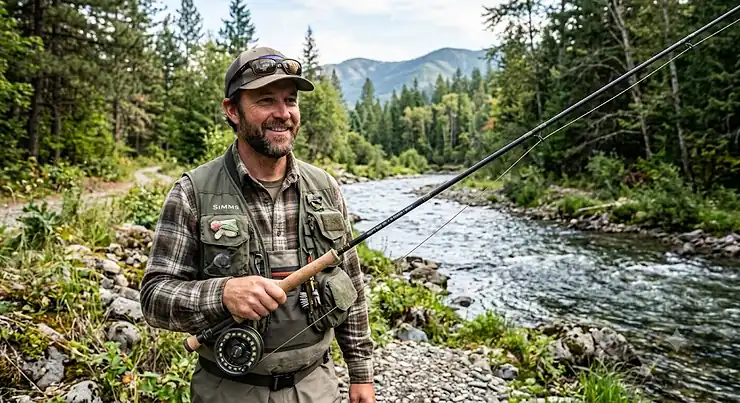
Somewhere between “I’ll just borrow my buddy’s rod” and “I own four fly rods and I’m not sorry” lies the moment every trout angler eventually reaches: buying their first, or their next, 9 foot 5 weight fly rod. It’s not a flashy decision. Nobody brags about their 5 weight the way bass anglers brag about a new baitcaster. But ask any guide what rod lives in the truck bed rack 300 days a year, and you’ll get the same answer more often than not.
A 9 foot 5 weight fly rod earns that spot honestly. The length gives you enough leverage to mend line across a wide river, and the 5 weight line rating splits the difference between delicate dry-fly presentations and the backbone needed to turn a streamer into the bank. As fly fishing tackle has evolved, this specific length-and-weight pairing has remained the most commonly recommended starting point precisely because it’s the rod equivalent of a good pair of jeans — not the most exciting purchase, but the one you actually reach for.
This guide walks through seven real, currently available rods spanning roughly $90 to $1,050, breaks down what separates a standard trout fly rod from a specialty stick, and shows you how to build a genuinely versatile fly setup around whichever one you choose. Whether you’re outfitting your first river fly fishing trip or replacing a rod you’ve worn out over a decade of use, you’ll find honest, spec-backed analysis here — not a rehash of a product page.
Quick Comparison Table
| Rod | Price Range | Action | Weight (oz) | Best For |
|---|---|---|---|---|
| Echo Base | Under $100 | Medium-Fast | 3.7 | Absolute beginners on a tight budget |
| Redington Classic Trout | $150–$200 range | Moderate | 2.9 | Delicate dry-fly presentation on technical water |
| Orvis Clearwater | $190–$210 range | Medium-Fast | 3.5 | New anglers who want room to grow |
| TFO Pro III | $220–$260 range | Moderate-Fast | 3.2 | Intermediate anglers wanting an all-rounder |
| Moonshine Vesper | $430–$460 range | Fast | 2.8 | Boutique feel without a four-figure price |
| Orvis Helios 3F | $950–$1,050 range | Fast | 3.0 | Precision casters chasing pinpoint accuracy |
| Sage R8 Core | $1,000–$1,100 range | Medium-Fast | 2.75 | Anglers who want the lightest, most refined trout rod available |
Looking at the spread above, the jump from Echo Base to Sage R8 Core isn’t just a price story — it’s a story about swing weight, recovery speed, and how much the blank does for you versus how much you have to do yourself. Budget rods in this list still deliver genuinely usable actions for 25 to 45 feet of everyday trout water, while the premium end buys you performance at distance and in wind that most anglers only notice once they’ve fished around it for a season. If you’re newer to the sport, don’t assume the $1,000 rod will make you a better caster faster; often the moderate-action budget rods are more forgiving teachers.
💬 Just one click — help others make better buying decisions too!😊
Top 7 9 Foot 5 Weight Fly Rods: Expert Analysis
Below are seven real, currently sold rods that represent the honest range of what’s available for a 9 foot 5 weight fly rod in 2026, from a sub-$100 workhorse to a four-figure flagship. Every product here is a genuine model you can find in fly shops or directly from the manufacturer — nothing here is invented or hypothetical.
1. Echo Base — best true budget pick under $100
The standout here is simple: Echo built a rod that costs less than a decent pair of wading boots and still casts like something twice the price. The Base uses a straightforward graphite blank in a medium-fast action, weighing in at 3.7 ounces in the 9-foot 5 weight configuration, which is heavier than the boutique rods on this list but still perfectly manageable for a full day on the water.
What that spec actually means in practice: the slightly heavier blank and simpler guide setup won’t disappear in your hand like a $1,000 rod, but the medium-fast action loads predictably at 20 to 40 feet, which covers the overwhelming majority of real trout-stream casts. Based on the spec comparison against other sub-$150 rods, the Base’s action is noticeably more forgiving than faster-action budget competitors, which matters enormously for a caster still building timing.
This is the rod for a first-timer who isn’t ready to commit real money, a parent buying a kid’s first setup, or a guide who needs loaner rods that won’t bankrupt the shop if a client steps on one. Reviewers consistently report that the Base punches well above its price point, with multiple fly-shop write-ups noting that testers assumed it was a pricier rod before checking the tag. The most common critique in user reviews centers on the reel seat and cosmetic finish looking noticeably plainer than the casting performance would suggest.
Pros:
- ✅ Genuinely usable medium-fast action at an entry-level price
- ✅ Forgiving enough for a caster still learning timing
- ✅ Backed by a name (Echo) with a real reputation in the sport
Cons:
- ❌ Heavier swing weight than mid-range and premium rods on this list
- ❌ Cosmetic finish and componentry feel basic up close
At around $90–100, this is the rod to buy if you’re not sure fly fishing will stick, or if you want a beater rod for muddy banks and driftboat floors. Value verdict: hard to beat for the price, provided you don’t expect flagship componentry.
2. Redington Classic Trout — smoothest moderate action for finesse casting
The Classic Trout’s calling card is its moderate action, which loads deep into the blank rather than staying stiff near the tip the way faster rods do. At 2.9 ounces, the 9-foot 5 weight version is surprisingly light for a rod in this price bracket, and that combination of soft loading and low weight is exactly what makes it shine on technical, low, and clear water where a stiffer rod telegraphs every casting mistake.
What most buyers overlook about this model is that “moderate action” isn’t a euphemism for “underpowered.” The rod bends fluidly nearly all the way to the cork, communicating valuable feedback to the caster while still handling nymphs, streamers, and indicator rigs when conditions call for it. That soft tip does the delicate work of protecting light tippet on 6X and 7X, which matters a lot if you’re chasing spooky trout on a spring creek.
Aggregated review sentiment is remarkably consistent: anglers describe returning to this rod after trying faster, pricier options and rediscovering why they liked it in the first place. One long-time owner specifically called it one of the best values in fly fishing, noting it holds up well against far more expensive rods on small to medium water. The rod is best suited to anglers who prioritize presentation over distance; if you mostly fish big, windy rivers at 60-plus feet, the moderate action will feel like it’s working against you.
Pros:
- ✅ Exceptionally smooth, deep-loading action for delicate presentations
- ✅ Very light at 2.9 ounces for its price class
- ✅ Comes from Far Bank, the same parent company behind Sage
Cons:
- ❌ Moderate action struggles at longer distances or in strong wind
- ❌ Less versatile for streamer-heavy or big-water fishing styles
Priced in the $150–$200 range, the Classic Trout is the value pick for anglers who fish small-to-medium technical water more than big rivers. Value verdict: outstanding if your fishing style matches the action.
3. Orvis Clearwater — best beginner value with a 25-year guarantee
The standout feature on the Orvis Clearwater is the combination of a medium-fast action and Orvis’s full 25-year guarantee, which removes a lot of the anxiety that comes with a first rod purchase. The 9-foot 5 weight, the most popular model in the lineup, weighs 3.5 ounces and is built from mid-modulus graphite with a nickel-aluminum reel seat and ceramic guide inserts — solid, unglamorous componentry that does its job.
Here’s what the spec sheet won’t tell you, but reviewers note: the Clearwater’s medium-fast action is noticeably more forgiving than the “fast” label some competing budget rods slap on their blanks. One independent review specifically called it a fantastic all-around rod that really excels in the 25-to-50-foot casting range, which happens to be exactly where most trout are actually caught. This is a rod built for someone who wants one setup that can grow with them from their first cast to a decade of competent fishing.
Aggregated customer sentiment leans heavily positive, with the rod frequently described by reviewers as offering more performance than its price suggests. One buyer summary calls it a decent beginner fly rod for the price, while others highlight the outfit’s balance and casting feedback for both new and experienced anglers. The main knock, consistent across sources, is that the rod is manufactured overseas to hit its price point rather than domestically like Orvis’s flagship models.
Pros:
- ✅ Backed by an unusually strong 25-year guarantee
- ✅ Forgiving medium-fast action ideal for 25–50 foot casts
- ✅ Well-reviewed across independent fly-fishing outlets
Cons:
- ❌ Built overseas, so it lacks the “Made in USA” cachet of pricier Orvis rods
- ❌ Not the lightest option in its price tier
At around $198, this rod sits right at the point where beginner gear starts feeling like real gear. Value verdict: one of the strongest all-around buys under $250.
4. TFO Pro III — most forgiving mid-range all-rounder
Temple Fork Outfitters built the Pro III with a moderate-fast taper specifically designed to be easy to load without sacrificing the power to fight real fish. In the 9-foot 5 weight configuration, expect a blank in the 3 to 3.2 ounce range with a premium cork half-wells grip and an anodized aluminum reel seat — components that punch above the rod’s mid-range price.
Based on the spec comparison, the wider “timing window” on this taper means casters don’t need pinpoint tempo to load the rod properly, which is exactly what separates a genuinely versatile fly setup from a twitchy one. Independent reviewers noted the rod’s moderate action gives strong feedback to the caster while still handling wind and stronger fish, though it can feel less lively at very short distances. That trade-off is worth it for most river anglers, since short-distance dry-fly work is the one scenario where the Pro III gives up a little ground to faster rods.
Reviewer sentiment across fly shops is consistently positive, with more than one shop’s staff test noting that after casting the rod side by side with pricier options, the immediate question was some version of “how much does that cost again?” That’s meaningful, because it’s an unprompted reaction rather than marketing copy. Trident’s own review team called it a do-everything rod that delivers on most fronts.
Pros:
- ✅ Wide timing window makes loading the rod nearly foolproof
- ✅ Premium-feeling components (cork grip, anodized seat) at a mid-range price
- ✅ Backed by TFO’s well-known lifetime warranty program
Cons:
- ❌ Slightly underwhelming performance at very short casting distances
- ❌ Cosmetic styling is more subdued than some competitors
In the $220–$260 range, the Pro III sits squarely between beginner and boutique. Value verdict: the rod to buy once you know fly fishing is a permanent hobby but before you’re ready for four figures.
5. Moonshine Vesper — lightest swing weight from a boutique builder
Moonshine isn’t a household name the way Orvis or Sage are, which is exactly why it belongs on this list as the lesser-known, high-quality alternative. The 9-foot 5 weight Vesper weighs just 2.8 ounces, a figure that’s competitive with, or better than, the weight of flagship rods from far larger companies, thanks to what the company calls its nano matrix performance graphite blank construction.
What most buyers overlook about boutique rods like this one is that the savings compared to a big-name flagship rarely come from cutting corners on the blank itself — they come from smaller-scale manufacturing and marketing. The rod ships with a genuinely thoughtful kit, including a rigid travel tube and an individually-pocketed cloth sleeve for each of its sections, and every Vesper model includes a spare tip section, which is the single most common breakage point on any fly rod.
Aggregated reviewer sentiment is glowing on the build quality and after-sales support in particular. One dedicated reviewer called the Vesper series their favorite from the company, specifically praising the incredible recovery rate of the blank and noting the after-sales service was lightning fast when they needed a warranty replacement. The tradeoff for choosing a boutique brand is a smaller secondhand market and fewer dealer locations to test-cast one before buying.
Pros:
- ✅ Exceptionally light 2.8-ounce blank rivaling big-name flagships
- ✅ Includes a spare tip section standard, reducing warranty hassle
- ✅ Strong, personally responsive after-sales service reported by owners
Cons:
- ❌ Smaller brand footprint means fewer shops carry it to test-cast
- ❌ Resale value and secondhand availability lag behind major brands
At around $449, the Vesper undercuts flagship pricing by more than half while matching flagship swing weight. Value verdict: the best boutique buy for anglers willing to shop outside the big four brands.
6. Orvis Helios 3F — most accurate finesse trout rod money can buy
Orvis built two versions of the Helios 3 platform, and the 3F is the one tuned specifically for finesse trout work rather than distance and power. Model-by-model reviewers describe the 9-foot 5 weight as the classic “do it all” rod in the lineup — feather light in hand and capable of throwing beautiful loops, though it does reward a caster who can carry a bit of line to get it loaded at close range.
Here’s what the spec sheet won’t tell you: the Helios 3F’s carbon construction and titanium stripping guides with SiC inserts aren’t just marketing bullet points, they measurably reduce the vibration that causes tip wobble on cheaper blanks. Orvis designed the rod to significantly reduce the variables at the point of release, focusing the cast’s energy through a tighter release window than most rods achieve. In practice, that means tighter loops and better accuracy at range once you’re past the rod’s slightly demanding close-in loading window.
Reviewers who tested multiple fly line pairings found the rod performed best with lines like the Rio Elite Gold WF5F, and noted mid-to-long distance is genuinely where this rod feels most at home. That’s a useful, honest data point: this isn’t the rod for someone who mostly fishes tight, brushy small streams at 15 feet.
Pros:
- ✅ Exceptional accuracy and loop control at medium-to-long range
- ✅ Premium componentry including titanium guides with SiC inserts
- ✅ Backed by Orvis’s well-regarded 25-year guarantee
Cons:
- ❌ Demands more line speed and skill to load well at short distances
- ❌ Premium price puts it out of reach for casual anglers
Priced around $998, the Helios 3F sits at the very top of what most trout anglers will ever spend. Value verdict: worth it specifically for anglers who fish open water and value accuracy over forgiveness.
7. Sage R8 Core — lightest, most refined flagship for trout purists
Sage’s R8 Core replaced the long-running Sage X series, and the 9-foot 5 weight is the model most requested the moment the line launched. The rod clocks in at just 2 11/16 ounces, a figure the reviewers who tested it described as ridiculously light, noting the rod nearly disappears in your hand despite retaining real fish-fighting power.
What that spec means practically: Sage’s own test rod measured 2.75 ounces with a 62 gm² swing weight, a number that matters more than the static weight alone because it reflects how the mass is distributed along the blank during a cast. A lower swing weight translates directly into less arm fatigue over a full day of repeated false casts, which is the kind of benefit that’s invisible on a spec sheet but very obvious after eight hours on the water.
Owners who’ve fished the rod extensively report it feels lighter than a typical 5 weight while still carrying enough backbone to control larger trout in the 24 to 27 inch range, and reviewers consistently rank it among the best all-around trout rods currently made. The honest caveat, repeated across multiple independent reviews, is that the rod has a real learning curve and isn’t necessarily an “off the shelf” match for beginners or casters who haven’t yet learned to self-diagnose their own mechanics.
Pros:
- ✅ Astonishingly low swing weight reduces fatigue on long days
- ✅ Enough backbone to control large trout despite its light feel
- ✅ Made in the USA with Sage’s flagship-level construction
Cons:
- ❌ Noticeable learning curve for less experienced casters
- ❌ Among the most expensive rods in the entire 5 weight category
At roughly $1,050, the R8 Core is the priciest rod here, but reviewers consistently treat it as a genuine best-in-class trout rod rather than an overpriced status symbol. Value verdict: worth every dollar if you already know how to cast and want the lightest, most refined tool available.
Top 7 Products Compared
| Rod | Price Range | Weight | Rating (aggregated) | Best For |
|---|---|---|---|---|
| Echo Base | Under $100 | 3.7 oz | 4.6/5 | First-time buyers |
| Redington Classic Trout | $150–$200 range | 2.9 oz | 4.8/5 | Technical dry-fly water |
| Orvis Clearwater | $190–$210 range | 3.5 oz | 4.7/5 | Growing beginners |
| TFO Pro III | $220–$260 range | 3.2 oz | 4.5/5 | Mid-range all-rounders |
| Moonshine Vesper | $430–$460 range | 2.8 oz | 4.7/5 | Boutique value seekers |
| Orvis Helios 3F | $950–$1,050 range | 3.0 oz | 4.6/5 | Finesse accuracy hunters |
| Sage R8 Core | $1,000–$1,100 range | 2.75 oz | 4.8/5 | Refined trout purists |
This table makes one pattern obvious: price and weight don’t move in lockstep once you’re past the entry-level tier. The Moonshine Vesper actually beats the Orvis Helios 3F on raw ounces despite costing roughly half as much, which is a direct result of boutique brands skipping large marketing budgets in favor of blank engineering. If a lighter swing weight is your only goal, the value math clearly favors the middle of this table rather than the very top.
✨ Don’t Miss These Exclusive Deals!
🔍 Take your fly fishing setup to the next level with these carefully selected rods. Click on any highlighted model to check current pricing and availability. These tools will help you build a versatile fly setup you’ll rely on for years.
What Is a 9 Foot 5 Weight Fly Rod?
A 9 foot 5 weight fly rod is a single-handed fly rod measuring nine feet in length, rated to cast a 5-weight fly line, widely regarded as the standard trout fly rod because it balances delicate presentation with enough backbone for bigger fish, wind, and larger flies. Most experienced anglers consider a single-handed rod in the #5 line class at nine feet to be the benchmark length and weight for all-around trout fishing.
Line weight itself refers to the actual measured weight of the first 30 feet of fly line, which is what loads and bends the rod during a cast — a system standardized decades ago so a 5-weight line from any manufacturer performs consistently on a 5-weight rod. That standardization is precisely why the 9 foot 5 weight combination has become the default recommendation for anyone asking for one all-around fly rod that can do nearly everything.
How to Choose the Right 9 Foot 5 Weight Fly Rod
Picking the right rod out of dozens of similar-looking options comes down to matching a handful of specific variables to how you actually fish, not to what looks impressive on a shelf.
- Match the action to your casting style. Moderate-action rods like the Redington Classic Trout forgive timing errors and protect light tippet; fast-action rods like the Sage R8 Core reward precise timing with more distance and wind-cutting power.
- Be honest about your budget ceiling. A $90 rod and a $1,050 rod will both catch the same trout; the difference shows up in swing weight, componentry, and how the rod feels after hour six of casting.
- Consider where you’ll fish most often. Technical spring creeks favor a softer, moderate rod; big, windy rivers favor a faster, more powerful blank.
- Check the warranty and repair policy. Rods get stepped on, slammed in car doors, and snapped in overhead branches — a strong warranty like Orvis’s 25-year guarantee or TFO’s lifetime program is real, ongoing value.
- Pair the rod with an appropriate line. Even the best blank casts poorly with a mismatched line; many modern “5-weight” lines actually run heavier than the official AFFTA line weight standard, so it pays to check the actual grain weight rather than trusting the label alone.
- Try before you commit if at all possible. Swing weight and action feel dramatically different in hand than they do on a spec sheet, especially between the mid-range and premium tiers.
- Buy the reel and line as a system. A rod alone is only half a versatile fly setup — factor the reel and line into your total budget from the start rather than as an afterthought.
9 Foot 5 Weight Fly Rod vs Other Rod Lengths and Weights
| Setup | Casting Distance | Delicacy | Power | Best Use |
|---|---|---|---|---|
| 8’6″ 4 weight | Short | Excellent | Low | Small streams, tiny flies |
| 9′ 5 weight | Medium-Long | Very Good | Medium | All-around trout, standard rivers |
| 9′ 6 weight | Long | Good | High | Bigger rivers, streamers, windy days |
| 9′ 8 weight | Long | Fair | Very High | Bass, light saltwater, big flies |
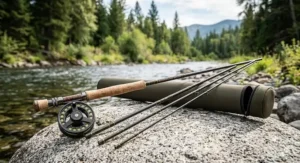
The 9 foot 5 weight sits in the sweet spot of this table for a reason: it’s short enough to still present a dry fly with some delicacy, yet long and powerful enough to punch a weighted nymph rig or modest streamer into a stiff breeze. Sizing up to a 6 weight makes sense for windy conditions or genuinely big rivers, and sizing down to a 4 or even 3 weight suits smaller trout in creeks and tight streams, but if you want one all-around fly rod, the 9-foot 5 weight remains the benchmark recommendation. The lighter 4 weight setups win on pure delicacy but run out of power the moment wind or larger flies enter the picture, which is exactly the scenario where the 5 weight’s extra backbone earns its keep.
Features That Actually Matter (And Those That Don’t)
Marketing copy loves to talk about proprietary resin systems and nano-graphite blends, and while materials science genuinely does affect performance, not every buzzword translates into something you’ll notice on the water.
Actually matters: swing weight (how the mass is distributed along the blank, not just total ounces), guide quality and insert material (titanium and SiC resist grooving from abrasive fly lines far longer than basic chrome), and the taper’s action profile, since that determines how forgiving or demanding the rod is to load properly.
Doesn’t matter as much as it sounds: cosmetic blank colors and thread wrap patterns, marketing names for proprietary graphite blends without published modulus figures, and reel seat material beyond basic corrosion resistance, since aluminum seats on a $90 rod and a $1,000 rod both hold a reel just fine.
Common Mistakes When Buying a 9ft 5wt Fly Rod
The single most common mistake is buying based on line-weight rating alone without checking the actual action, since a “5 weight” from one brand can feel completely different from another brand’s 5 weight of the same length. A close second is skipping the line pairing entirely; plenty of anglers buy a well-reviewed rod, pair it with a mismatched fly line, and blame the rod for casting problems that were actually a line problem all along. A third common error is overspending on a fast-action flagship rod before developing the casting mechanics to actually benefit from it — a moderate-action rod like the Redington Classic Trout will often make a newer caster look and feel more competent than a demanding flagship blank. Finally, many buyers skip the warranty fine print, only to discover after a snapped tip that their specific rod’s coverage requires the original receipt or has a repair fee attached.
Setting Up and Maintaining Your New Rod
Getting a new 9 foot 5 weight fly rod ready to fish, and keeping it fishing well, takes about fifteen minutes of setup and a few smart habits afterward. Start by aligning the guides in a perfectly straight line down the top of the blank before you ever string it up; a twisted guide train is the single most common cause of a rod casting “wrong” right out of the box. Wax the ferrules lightly if the manufacturer recommends it, and always assemble the rod section by section, twisting slightly as you seat each ferrule rather than pushing straight in.
For your first thirty days, resist the urge to over-tighten reel seat locking rings, which can crack composite inserts over time, and always rinse the rod down with fresh water after any saltwater or brackish exposure. Store it in its tube rather than leaning it in a corner of the garage, where a stray elbow or falling gear can snap a tip section in an instant — statistically the single most common repair claim across every warranty program mentioned in this guide.
A simple maintenance schedule extends any rod’s life dramatically: wipe down the blank and reseat guides after every few trips, check the cork grip annually for cracking, and have ferrules professionally inspected if you ever feel new grittiness when assembling the rod. None of this is complicated, but skipping it is exactly how a $1,000 flagship ends up performing like a neglected budget rod within a couple of seasons.
Real-World Angler Profiles: Who Should Buy Which Rod
The weekend beginner: Someone who fly fishes six or eight times a year on local rivers, with a budget under $250, is best served by the Orvis Clearwater or Redington Classic Trout — both offer real performance and strong warranties without demanding advanced casting skills.
The dedicated technical angler: Someone who fishes spring creeks or tailwaters weekly, chasing selective trout with small flies and light tippet, gets the most out of the Redington Classic Trout’s moderate action or, with a bigger budget, the accuracy of the Orvis Helios 3F.
The traveling minimalist: An angler who fishes multiple rivers across different trips and wants one genuinely versatile fly setup that handles everything from dries to streamers should look at the TFO Pro III or Moonshine Vesper, both of which flex enough to cover multiple techniques without a rod quiver.
The all-in enthusiast: Someone who fishes 40-plus days a year, already owns a quiver of rods, and wants the single lightest, most refined trout rod available regardless of price should look straight at the Sage R8 Core.
Building a Versatile Fly Setup: Rod, Reel, and Line Pairings
A rod alone doesn’t make a complete, versatile fly setup — the reel and line matter just as much for how the whole system performs. For any of the budget-to-mid-range rods on this list, a mid-arbor reel in the 4/5 size class with a smooth disc drag is more than sufficient, since trout rarely make the long, sustained runs that demand a large-arbor sealed drag system.
Line choice deserves particular attention, since the history and specification of modern fly line shows many lines labeled “5-weight” actually measure closer to a true 6-weight by the original grain standard, which can make a perfectly good rod feel overpowered or sluggish depending on the taper. A general-purpose weight-forward floating line suits the vast majority of river fly fishing, while anglers who split time between dry flies and subsurface nymphing may want a second, sink-tip line to swap in as conditions demand. Building this system thoughtfully, rather than grabbing whatever line is cheapest at checkout, is often the difference between a rod that feels disappointing and the exact same rod feeling exceptional.
Long-Term Cost & Maintenance
Looking at total cost of ownership rather than sticker price changes the math on several of these rods. The Echo Base costs the least upfront but typically ships without the extended warranty coverage of pricier rods, meaning a broken tip section could mean buying a full replacement rod. The Orvis Clearwater and Helios 3F both include a 25-year guarantee, which effectively caps your lifetime repair costs at a modest handling fee no matter how many decades you fish the rod. TFO’s lifetime warranty program on the Pro III functions similarly, covering accidental breakage for a modest repair fee well beyond the original purchase.
Over a ten-year ownership window, a $200 rod with a strong warranty can end up cheaper in real dollars than a $90 rod that needs full replacement after an accidental break, while a $1,000 flagship rod only makes long-term financial sense if you’re fishing frequently enough to justify the upfront cost through years of reliable, warrantied use.
River Fly Fishing: Etiquette, Regulations & Where the 9ft 5wt Shines
River fly fishing comes with its own set of unwritten rules and, increasingly, its own set of written ones. Give other anglers plenty of room, especially on popular tailwaters and gold medal water sections where crowding is common during peak hatch periods, and always ask before wading into a run someone else is clearly working through methodically. Many trout-rich waters now carry specific gear restrictions worth checking before you go; the National Park Service’s catch-and-release fishing guidelines note that barbless hooks or crimped barbs are commonly required on these waters specifically to reduce stress and injury on fish that anglers intend to release.
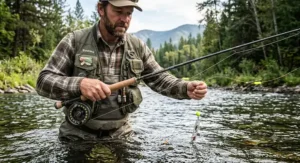
The 9 foot 5 weight rod genuinely shines in river fly fishing precisely because rivers demand versatility: you might nymph a deep run in the morning, switch to dry flies over a rising trout at midday, and swing a small streamer through a tailout by evening, all with the same rod and a line change at most. That flexibility is the core reason this length-and-weight combination has remained the default recommendation across decades of gear evolution, even as rod materials and manufacturing have changed dramatically.
Frequently Asked Questions
❓ Is a 9 foot 5 weight fly rod good for beginners?
❓ What size reel goes with a 9ft 5wt fly rod?
❓ Can you catch bass on a 9 foot 5 weight fly rod?
❓ What's the difference between a 9ft 5wt and a 9ft 6wt fly rod?
❓ How much should I spend on my first 9ft 5wt fly rod?
Conclusion
The 9 foot 5 weight fly rod earns its reputation as the standard trout fly rod honestly: it’s the length and line rating that lets one setup handle dry flies, nymphs, and modest streamers without constantly feeling like the wrong tool for the moment. Whether you land on the sub-$100 Echo Base for your first season or the four-figure Sage R8 Core because you already know exactly what you want from a blank, every rod on this list represents genuine, current value in its price tier rather than a rehashed spec sheet.
The right choice ultimately comes down to how honestly you assess your own casting style, your budget ceiling, and the water you’ll actually fish most often — not which rod has the flashiest marketing copy. Build the rest of your versatile fly setup around whichever model you choose, take care of it with the basic maintenance habits outlined above, and it should easily outlast several fishing seasons.
✨ Ready to Find Your Perfect 9ft 5wt Fly Rod?
🔍 Compare current prices on any of the seven rods above and pick the one that matches your budget and casting style. A well-chosen fly rod setup will pay for itself in fish landed and days spent on the water for years to come.
Recommended for You
- 7 Best Surf Rod Under $150 Picks That Actually Hold Up (2026)
- Conventional Surf Rod: 7 Tough Picks That Won’t Snap (2026)
- 9 Foot Surf Rod: 7 Real Picks for 2026 (Compact & Powerful)
Disclaimer: This article contains affiliate links. As an Amazon Associate, I earn from qualifying purchases. If you purchase products through these links, we may earn a small commission at no additional cost to you.
✨ Found this helpful? Share it with your friends! 💬🤗
