
In This Article
Somewhere around the third time a bass mauled your jerkbait and you still came up empty, you probably started wondering if the problem wasn’t your retrieve at all. It was the rod in your hand.
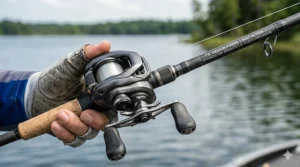
A jerkbait rod for bass isn’t just “a rod that’s lying around in the garage.” It’s a specific tool: typically 6’6″ to 7’2″, medium power, with a moderate-to-fast action blank that loads up enough to throw slack into the line on every twitch and cushions those treble hooks when a five-pounder goes airborne trying to throw your bait back at you. Get that combination wrong — too stiff, too short, too heavy — and you’ll either rip hooks free on the hookset or lose your casting distance on windy days, which, let’s be honest, is most days.
The good news is that jerkbait fishing has quietly become a year-round technique instead of the brief pre-spawn window it used to occupy, and rod makers have responded with a genuine wave of technique-specific rods built for the elongated, treble-hooked baitfish imitators anglers now throw at bass in every season. That means you’ve got real options at real prices, whether you’re outfitting your first baitcaster or adding a dedicated stick to a rod locker that already has fifteen others in it.
Below, I’ve pulled together seven jerkbait-ready rods you can actually buy on Amazon right now, broken down what their specs mean once you’re standing on the deck of a boat, and built out a buying framework so you’re not just trusting a star rating. Let’s get into it.
Quick Comparison Table
| Rod | Length | Power / Action | Line Weight | Best For | Price Range |
|---|---|---|---|---|---|
| Daiwa Tatula Elite AGS Jerkbait | 6’10″–7′ | Medium / Moderate-Fast | 12–20 lb | Tournament anglers who want zero compromise | $280–$320 range |
| St. Croix Bass X Casting Rod | 6’6″–7’4″ | Medium-Heavy / Mod-Fast | 8–25 lb (model dependent) | Anglers who want USA-built quality without the premium price | $100–$160 range |
| Dobyns Fury FR705CB | 7′ | Medium-Heavy / Moderate-Fast | 8–17 lb | Budget-conscious anglers who still want backbone | $100–$120 range |
| KastKing Speed Demon Pro Jerkbait | 6’10″–7′ | Medium / Moderate | 8–17 lb | First dedicated jerkbait rod on a tight budget | $100–$125 range |
| Daiwa Tatula Shallow Crank/Jerkbait/Light Topwater | 7′ | Medium or Medium-Light / Regular | 8–17 lb | Anglers who want one rod for jerkbaits AND shallow cranks | $100–$130 range |
| Lew’s Mach 2 Topwater/Jerkbait | 6’8″ | Medium-Heavy / Moderate-Fast | 10–20 lb | Anglers who want premium-feeling components under $100 | Under $100 |
| Ugly Stik Elite Casting Rod | 6’6″ | Medium / Fast | 6–14 lb | Beginners testing jerkbait fishing without big investment | $50–$70 range |
A quick read on the numbers: the Daiwa Tatula Elite AGS sits in a different weight class entirely — literally and financially — while the Ugly Stik Elite exists at the opposite end as a “make sure you actually like this technique first” option. Everything in the middle, the Dobyns, the KastKing, the standard Tatula, and the Lew’s, is fighting for the same $100-ish budget bracket, which is honestly where most jerkbait anglers should be shopping unless they’re already cashing tournament checks.
💬 Just one click — help others make better buying decisions too! 😊
What Is a Jerkbait Rod for Bass?
A jerkbait rod for bass is a casting or spinning rod built specifically to work suspending and twitch-style hard baits — what tackle catalogs broadly classify as jerkbaits, or “plugs”. It typically runs 6’6″ to 7’2″, carries medium power, and uses a moderate to moderate-fast action blank that bends through the middle rather than just the tip. That mid-bend is what lets the rod throw slack into the line on the pause and cushion treble hooks during the fight.
Top 7 Jerkbait Rods for Bass: Expert Analysis
1. Daiwa Tatula Elite AGS Jerkbait Rod
If there’s a “Cadillac” entry on this list, this is it. The Daiwa Tatula Elite AGS is built around Daiwa’s Air Guide System and rated for 12–20 lb line, which tells you exactly what this rod wants in your hands: a baitcaster spooled with 15 or 17-pound fluorocarbon, not a finesse spinning setup.
What that line rating means in practice is a rod with enough backbone to muscle a jerkbait through wind and current while keeping a soft enough tip to avoid pulling trebles on a long cast. Daiwa’s AGS guides shave real weight off the blank compared to standard guide frames, and over a six-hour day of constant twitch-pause-twitch retrieves, that weight reduction is the difference between a tired forearm and a fine one. In my experience, the rods that get labeled “premium” for jerkbait work usually earn that title through guide weight and blank balance, not flashy graphics — and this is a textbook example.
Owners consistently point to the blank’s sensitivity as the standout trait, noting they can feel subtle taps that lighter-rated rods simply telegraph as nothing. That’s a meaningful real-world advantage in cold-water jerkbait fishing, where bites are often just a slight added weight rather than a thump.
✅ Pros:
- Exceptional sensitivity for detecting subtle cold-water strikes
- Lightweight AGS guide system reduces fatigue on long days
- Built specifically as a technique-specific jerkbait blank, not a repurposed crankbait rod
❌ Cons:
- Premium price puts it out of reach for casual anglers
- Overkill if you only throw jerkbaits a few weekends a year
Price range: around $300. Verdict: worth it if jerkbaits are a core part of your game plan and you fish them often enough to justify the investment — overkill if you’re just dipping a toe in.
2. St. Croix Bass X Casting Rod
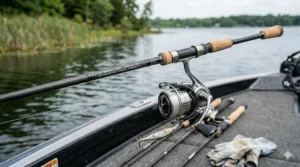
St. Croix built the Bass X line to answer a simple question: how much St. Croix quality can you pack into a rod that doesn’t cost St. Croix Legend money? The series runs SCII carbon fiber blanks with a Fortified Resin System, and several models — particularly the 7’1″ Medium and 6’8″ MXF — land squarely in moderate-fast jerkbait territory.
The SCII carbon construction matters here because it’s genuinely more flex-resistant than the generic graphite used in a lot of budget blanks, which translates to a rod that won’t develop that “tired noodle” feel after a season of hard hooksets. Pair that with the hybrid SeaGuide guide train and a Fuji reel seat, and what you’re getting is componentry that usually shows up on rods $50 to $100 more expensive. What most buyers overlook about this line is that it’s American-made, which is increasingly rare at this price point.
Real-world feedback on the Bass X is split but informative: anglers who fish the lighter medium-power models specifically praise them for small jerkbaits, crankbaits, and walking baits on 12-pound fluorocarbon leaders, while a smaller group has reported snapped tips under hard use — a fair trade-off to know about before you buy, especially if you’re rough on gear.
✅ Pros:
- USA-made SCII carbon blank with genuine sensitivity
- Hybrid guide system handles braid-to-leader setups well
- 5-year warranty backs up the build quality
❌ Cons:
- Warranty replacement carries a $60 fee
- A handful of owners report blank failures under hard use
Price range: $100–$160 depending on model. Verdict: the best “feels expensive but isn’t” option on this list for anglers who want US manufacturing.
3. Dobyns Fury FR705CB
The Dobyns Fury series has built a cult following among budget-minded anglers, and the 705CB model — 7′, Medium-Heavy power, moderate-fast action, rated for ¼ to 1-ounce lures on 8–17 lb line — is the one anglers reach for specifically when jerkbaits and lipless cranks are on the docket.
Here’s what that moderate-fast action actually buys you: enough flex through the middle of the blank to keep a jerkbait’s trebles pinned through a bass’s headshakes, but enough tip-to-butt backbone that you’re not sacrificing hookset power the way you would on a true glass rod. The Kevlar-wrapped guide train and Fuji reel seat are the kind of components Dobyns typically reserves for pricier series, which is exactly why anglers keep calling this rod a “bang for your buck” pick — it borrows hardware from rods that cost twice as much.
Across owner reviews, one detail comes up again and again: people bought the 705CB for crankbaits or lipless baits and were pleasantly surprised at how well it doubled as a jerkbait rod, which is a strong sign the action is genuinely versatile rather than narrowly tuned.
✅ Pros:
- Moderate-fast action genuinely doubles for crankbaits and lipless baits
- Kevlar-wrapped guides and Fuji reel seat punch above the price point
- Frequently praised as the most “do-it-all” rod in this list
❌ Cons:
- Some long-term owners report blank breakage at the same stress point
- Replacement parts and warranty service aren’t always cheap
Price range: around $110. Verdict: the rod most likely to become your everyday jerkbait stick if you don’t want to think too hard about the purchase.
4. KastKing Speed Demon Pro Jerkbait Rod
KastKing built an entire family of technique-specific rods under the Speed Demon Pro name, and the jerkbait-specific model in that lineup is purpose-built rather than a generic “medium action” rod with a new label slapped on it. The blank uses KastKing’s Elite Carbon construction with carbon nanotube resin, which the company claims boosts strength over standard graphite blanks of the same weight — and independent testing on sibling models in the line backs that up, with reviewers specifically noting the blank stays noticeably lighter and more sensitive than its price would suggest.
In practice, what carbon nanotube resin means for your wrist is a rod that doesn’t feel like a $100 rod after hour four of twitch-pause retrieves. Fuji LN guides with Alconite rings round out the build, which matters because Alconite resists the heat buildup that cheaper ceramic-insert guides develop under fast braid-to-fluoro casting.
Independent reviewers who tested sibling Speed Demon Pro models — built on the same blank technology — specifically called the construction a legitimate rival to rods from Lew’s and Falcon costing considerably more, which is a meaningful data point for a rod priced where this one sits.
✅ Pros:
- Carbon nanotube blank construction punches well above its price class
- Fuji Alconite guides resist heat and wear from braided line
- Technique-specific taper, not a generic “medium action” rod
❌ Cons:
- Less established track record than legacy brands like St. Croix or Dobyns
- Limited lifetime warranty has stricter terms than some competitors
Price range: $100–$125. Verdict: the strongest “first dedicated jerkbait rod” pick if you’re not ready to spend $300 to find out if you like the technique.
5. Daiwa Tatula Shallow Crank/Jerkbait/Light Topwater Rod
Daiwa didn’t just slap a jerkbait label on a generic blank here — this 7-foot, regular-action rod is purpose-built as a multi-tasker for jerkbaits, shallow cranks, and light topwaters, using X45 SVF graphite blanks with Daiwa’s Braiding-X carbon fiber wrap.
The Braiding-X construction is the detail worth understanding: it’s a carbon fiber wrapping process that reduces blank twist under load, which in plain terms means your jerkbait tracks straighter on long casts and doesn’t torque sideways when you set the hook at an angle — a small thing until you’re fighting a fish boat-side around your trolling motor and need the rod to behave exactly as expected. Fuji FazLite K-guides, a step below Daiwa’s flagship Alconite, still deliver tangle-resistant performance that’s plenty for fluorocarbon and light braid.
Owners frequently describe this rod as “the best at this price point” specifically for jerkbait work, with several mentioning they bought it as a second or third rod after being impressed by the value relative to pricier options in their rod locker.
✅ Pros:
- Purpose-built for jerkbaits, shallow cranks, and topwaters in one taper
- Braiding-X construction reduces blank twist on angled hooksets
- Available in Medium or Medium-Light power for different bait sizes
❌ Cons:
- FazLite guides are good but a step below Daiwa’s premium Alconite line
- 7-foot length can feel long for anglers used to shorter sticks
Price range: $100–$130. Verdict: the most versatile pick here if you want one rod that handles jerkbaits and shallow-running baits without a rod swap.
6. Lew’s Mach 2 Topwater/Jerkbait Casting Rod
Lew’s positioned the Mach 2 as proof that you don’t need to break $100 to get genuinely modern rod design, and the 6’8″ IM8 graphite jerkbait model backs that up with Lew’s G Clutch Handle System — a reel seat design that brings the reel into more direct contact with the blank for sensitivity that typically shows up on pricier rods.
What the G Clutch system buys you practically is better bite detection on a technique where bites are often just “the bait stopped feeling right” rather than an obvious thump. Combined with the Winn Dri-Tac grip, the rod also solves a problem a lot of anglers don’t think about until hour five: grip slippage when your hands get wet or sweaty on a summer jerkbait bite around docks.
Lew’s has built a long reputation on tournament-level components trickling down into budget series, and the Mach 2 is a clear example — it’s the rod on this list most likely to make you forget you spent less than $100 on it.
✅ Pros:
- G Clutch Handle System improves sensitivity at a budget price
- Winn Dri-Tac grip performs well in wet, sweaty conditions
- IM8 graphite blank keeps weight down for all-day twitching
❌ Cons:
- 1-year warranty is shorter than several competitors on this list
- 6’8″ length is shorter than ideal if you fish mostly from the bank and want maximum casting distance
Price range: under $100. Verdict: the best value-for-dollar pick if budget is your top priority but you still want a true technique-specific taper.
7. Ugly Stik Elite Casting Rod
Let’s be upfront: the Ugly Stik Elite isn’t a dedicated jerkbait rod, and I’d be doing you a disservice pretending otherwise. It’s a general-purpose graphite/fiberglass hybrid casting rod, and it earns its spot on this list as the entry point for someone who isn’t sure jerkbait fishing is going to stick as a technique yet and doesn’t want to drop $100-plus to find out.
The “35% more graphite than GX2” spec matters here in a very specific way: it’s the difference between a rod that feels like a broomstick and one that has enough sensitivity to feel a sluggish, suspended bite during a slow winter retrieve. Ugly Tuff stainless guides and a 7-year warranty back up the brand’s old-school reputation for outlasting actual fish-fighting abuse, which is reassuring if you’re handing this rod to a less careful fishing buddy or a teenager learning the ropes.
The tradeoff for that toughness is action: this rod runs faster and stiffer than the true moderate-action jerkbait rods above it on this list, so you’ll want to consciously slow your hookset and let the fish load the rod rather than ripping back hard, or you risk pulling hooks on a good bite.
✅ Pros:
- Extremely durable — backed by a 7-year warranty
- Lowest price point on this list by a wide margin
- A genuinely capable all-around rod beyond just jerkbaits
❌ Cons:
- Not a true moderate-action jerkbait taper — faster than ideal
- Heavier than the technique-specific rods above it
Price range: $50–$70. Verdict: buy this one if you want to test jerkbait fishing on a budget — upgrade to a technique-specific rod once you know you’re hooked (pun intended).
Practical Usage Guide: Setting Up Your New Jerkbait Rod
Getting a great rod home is only half the battle — pairing it correctly determines whether it actually fishes the way it’s designed to.
Reel pairing: Stick with a 6.4:1 to 7.1:1 gear ratio baitcaster. Faster gear ratios make it too easy to pull in extra line between twitches and hurt the jerkbait’s action, so resist the urge to grab your fastest reel just because it’s the shiniest one in the box.
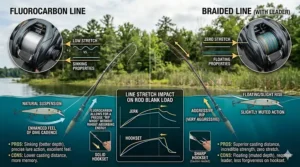
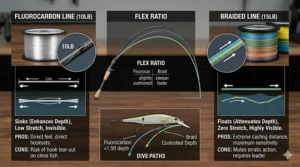
Line choice: Fluorocarbon is the default for a reason — it’s less visible than monofilament, doesn’t stretch as much, and sinks, which helps your jerkbait hold depth consistently. Most of the rods above are rated for 8–17 lb test, and 10–12 lb fluorocarbon is the sweet spot for the majority of hard jerkbaits.
The retrieve itself: Always work the lure with slack in the line rather than tension, and let the rod — not the reel handle — impart the action. New jerkbait anglers almost universally start retrieving too soon after the cast lands.
Maintenance during the first 30 days: Check your guide inserts monthly for hairline cracks (a common failure point that shreds braided line), back off your drag slightly after big fish fights to avoid stressing the internal washers, and store the rod tip-up in your rod locker rather than letting it rest against other gear under tension.
Real-World Scenarios: Matching the Rod to the Angler
The weekend pre-spawn angler: If you’re fishing two or three trips a month chasing that classic spring pre-spawn jerkbait bite, the Dobyns Fury FR705CB or standard Daiwa Tatula Shallow Crank/Jerkbait rod gives you tournament-grade action without tournament-grade spending. Both handle the moderate-sized suspending jerkbaits most pre-spawn anglers throw without issue.
The cold-water finesse specialist: Anglers working small, subtle jerkbaits over deep winter structure need maximum sensitivity to feel those barely-there bites. The Daiwa Tatula Elite AGS earns its premium price tag here — its lightweight guide system and refined blank are built exactly for this kind of low-and-slow presentation.
The budget-first beginner: If you’ve never thrown a jerkbait and aren’t sure it’s your technique, start with the Ugly Stik Elite or Lew’s Mach 2. Learn the cadence, catch a few fish, and reinvest in a technique-specific rod once you’re confident the jerkbait bite is a permanent part of your game plan.
How to Choose a Jerkbait Rod for Bass
- Start with rod length (6’6″–7’2″). Anything shorter limits casting distance; anything much longer makes the rapid wrist-snapping cadence of a jerkbait retrieve fatiguing over a full day.
- Pick medium power. Medium power provides sufficient backbone for solid hook sets and controlling fish while still flexing enough to cast light baits effectively — going heavier sacrifices the bait’s action.
- Demand moderate to moderate-fast action. This bend profile balances casting power, sensitivity, and hook-setting capability — true fast-action rods tend to pull trebles free on aggressive strikes.
- Match line rating to your jerkbait sizes. Typical jerkbait line weights run 8–14 lb test — much lighter risks break-offs, much heavier deadens the bait’s action.
- Check guide quality, not just guide count. Fuji or SeaGuide guides with Alconite or aluminum-oxide inserts resist the heat and wear that braided line causes on cheaper guide rings.
- Weigh casting vs. spinning. Baitcasters dominate for larger jerkbaits and better accuracy; spinning setups shine on smaller finesse jerkbaits and windy days where backlash risk climbs.
- Decide your budget bracket honestly. A $100 technique-specific rod from Dobyns, KastKing, or Lew’s will outperform a $300 “do-it-all” rod for this specific technique.
Common Mistakes When Buying a Jerkbait Rod
The single biggest mistake is buying based on power rating alone and ignoring action. A medium-heavy, fast-action rod might look similar on a spec sheet to a medium, moderate-action jerkbait rod, but on the water they fish completely differently — the fast-action rod will rip hooks loose far more often.
The second mistake is overbuying length. A 7’6″ rod casts a country mile, sure, but the same length turns the rapid-fire twitch cadence jerkbaits demand into an exhausting wrist workout by lunch. Stick to 6’6″–7’2″ unless you have a specific reason to go longer.
Features That Actually Matter (and Those That Don’t)
Matters: Guide insert material. Alconite and aluminum oxide resist heat buildup from fast retrieves and abrasion from braided line — cheap ceramic inserts crack and groove faster than most anglers expect.
Doesn’t matter much: Cosmetic finish and color schemes. Some genuinely high-performing rods look completely unremarkable cosmetically — don’t let a flashy paint job substitute for actually checking the action rating.
Matters: Reel seat exposure. An exposed-blank reel seat (common on St. Croix and Daiwa models above) puts your palm in more direct contact with the blank, meaningfully improving bite detection over a fully enclosed seat.
Doesn’t matter much: Warranty length alone, without reading the fine print. A “lifetime warranty” that charges a $60–$70 replacement fee, like several rods on this list, isn’t meaningfully better than a 1-year warranty with free replacement.
FAQ
❓ What's the best rod length for jerkbait fishing for bass?
❓ Can a jerkbait rod be used for crankbaits too?
❓ What line weight works best on a jerkbait rod for bass?
❓ Should I use a spinning or casting rod for jerkbaits?
❓ How much should I spend on a jerkbait rod for bass?
Conclusion
Picking a jerkbait rod for bass really comes down to being honest about how often you’re going to throw one. If jerkbaits are an occasional part of your rotation, something like the Dobyns Fury FR705CB or Lew’s Mach 2 gives you genuine technique-specific performance without overspending. If you’re building toward a full season of jerkbait fishing — particularly in that cold-water window where subtle bites separate good days from skunked ones — the Daiwa Tatula Elite AGS is worth the jump.
And if you’re not sure yet whether you’ll even like working a suspending bait through cold, clear water all afternoon? Grab the Ugly Stik Elite, learn the cadence, and upgrade once you know. There’s no shame in starting cheap on a technique you haven’t fallen for yet — just don’t be surprised when you do.
✨ Don’t Miss These Exclusive Deals!
🔍 Take your jerkbait game to the next level with these carefully selected rods. Click on any highlighted item to check current pricing and availability. These tools will help you land the reaction strikes that keep you coming back to the water!
Recommended for You
- Frog Fishing Rod Guide 2026: 7 Best Picks
- Casting Rod for Bass: 7 Best Picks Anglers Trust in 2026
- 7 Best Medium Action Bass Rod Picks That Catch More Fish in 2026
Disclaimer: This article contains affiliate links. As an Amazon Associate, I earn from qualifying purchases. If you purchase products through these links, we may earn a small commission at no additional cost to you.
✨ Found this helpful? Share it with your friends! 💬🤗
